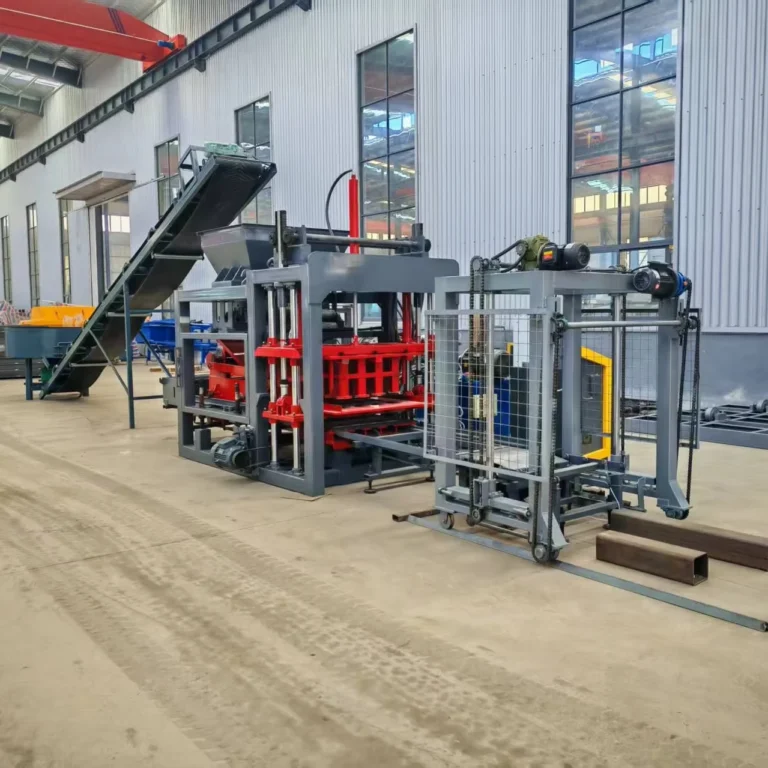
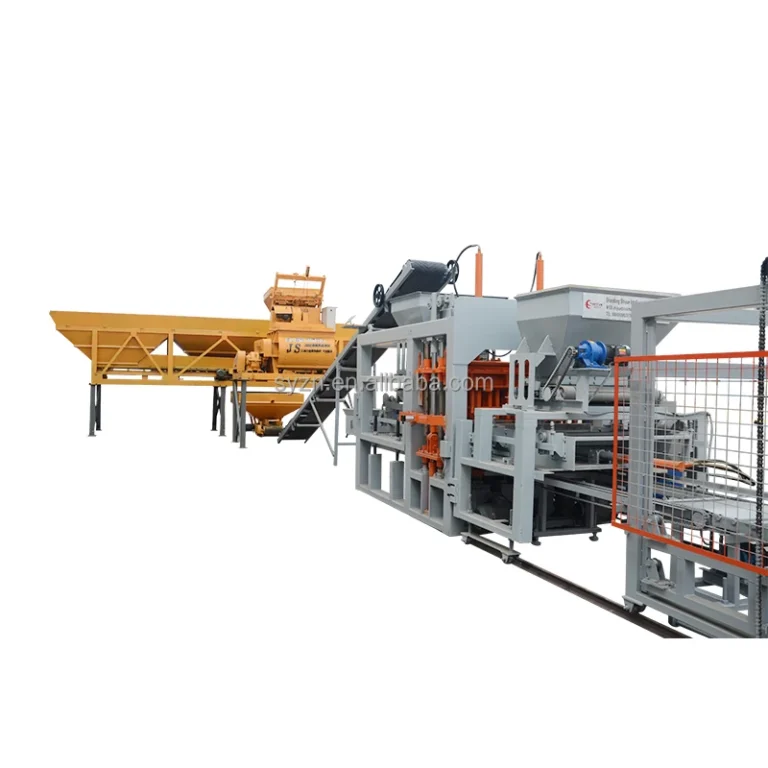
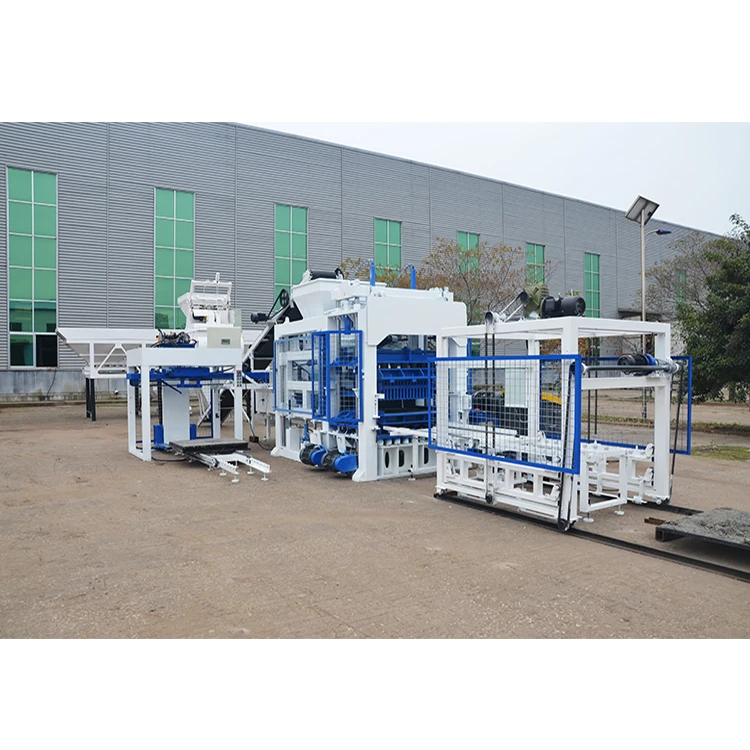
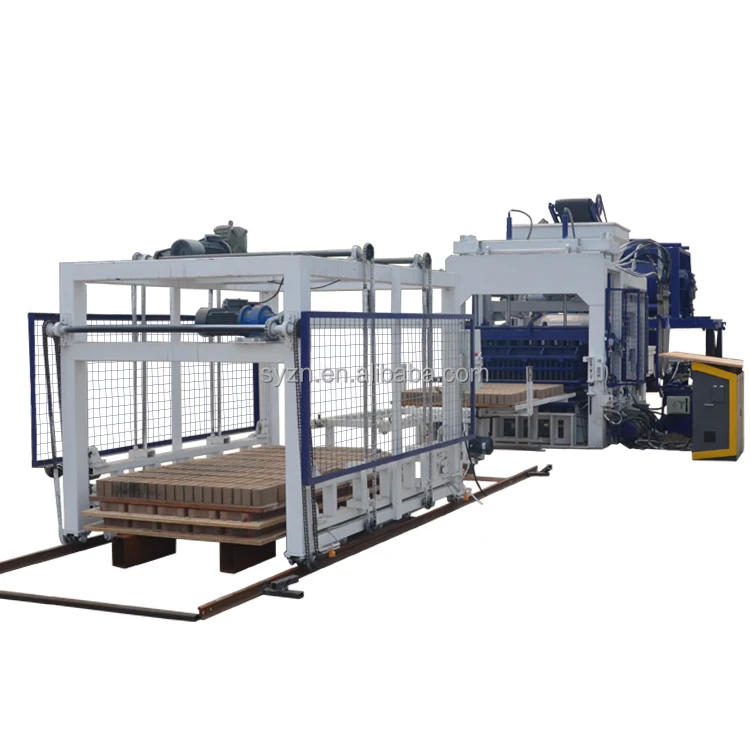
Matched System Supply — we configure the QT6-15 press, moulds, pallets and handling as one line rather than quoting the machine alone and leaving the rest to chance.
Technical Specifications
| Parameter |
Value |
| Model |
QT6-15 |
| Product Type |
Hollow Block Making Machine |
| Overall Dimensions (L×W×H) |
8200×1700×2950 mm |
| Total Mass |
7 T |
| Overall Power |
37 kW |
| Vibration Form |
Platform Vibration |
| Vibration Frequency |
0-60 Hz (adjustable) |
| Vibration Force |
45 kN |
| Moulding Mode |
Automatic loading, vibration moulding |
| Demolding Method |
Hydraulic |
| Pallet Size |
880×850 mm |
| Molding Cycle |
15-20 s (basis not stated in source — confirm block format and material) |
| Control System |
PLC with touch screen, built-in fault diagnosis, safe logic interlock |
| Hydraulic System |
Independent integrated hydraulic station |
| Factory Area Required |
1200 m² |
| Compressive Strength of Blocks |
More than 15 MPa |
| Raw Material Adaptability |
Waste ash, slag, and various aggregates |
Application Suitability
| Application |
Material or Output |
| Hollow block production |
Crushed stone, cement, waste ash — 400×200×200 mm (6 pcs/mould) and 400×150×200 mm (8 pcs/mould) |
| Solid brick production |
Cement, sand, slag — 240×115×53 mm (32 pcs/mould) |
| Rectangular paving brick |
Aggregate, cement, pigment — 200×100×60 mm (21 pcs/mould) |
| Zigzag interlocking paving brick |
Aggregate, cement, pigment — 225×112.5×60 mm (15 pcs/mould) |
| Multi-cellular and bearing blocks |
Waste ash, slag blends for structural and non-structural use |
What "15-20 Seconds per Cycle" Actually Means for Your Daily Output
A cycle time only matters when you know which block format and mix design it was measured on.
I once watched a buyer sign off on a block machine based on a headline cycle number, only to discover on site that their local aggregate — high in clay content — forced the vibration time up and cut real daily output nearly in half. That is the gap between a catalogue figure and a production plan. With the QT6-15, the 15-20 second cycle must be validated against your specific hollow block, solid brick or paver format and your actual raw material before the machine ships. [NEED_CITE: impact of aggregate gradation and clay content on block compaction cycle time]

Where the QT6-15 Sits in the Full Machine Range
The QT6-15 occupies the mid-to-high tier of our automatic block machine lineup. It delivers PLC-controlled vibration moulding and hydraulic demolding without requiring the footprint or capital of a high-capacity line. For a buyer comparing automatic, semi-automatic and mobile options, this model is the entry point into consistent, format-flexible production with a fixed plant setup. The 1200 m² factory area requirement keeps it within reach of first-plant entrepreneurs while still serving established producers expanding capacity.
Matching the Press to Your Product Mix
A block machine range only delivers value when the press, mould inventory and pallet logistics align with the formats your market actually buys. The QT6-15 block machine manufacturer configuration supports mould changes across hollow block, solid brick and two paving formats on a single 880×850 mm pallet. That pallet size was chosen to balance mould area with the turning radius of standard forklifts in a curing yard. [NEED_CITE: pallet sizing conventions for medium-output block plants and curing area logistics] If your product mix leans heavily toward one format — say, 400×200×200 mm hollow blocks for local housing projects — we calculate your realistic daily output on that specific format, not a blended average.
How Vibration Force, Hydraulic Pressure and Pallet Size Shape Block Quality
The 45 kN vibration force and adjustable 0-60 Hz frequency work together with the hydraulic demolding system to compact the mix into a dense, consistent block. Vibration alone does not guarantee strength — the hydraulic system must hold pressure long enough for the material to lock, which is why the QT6-15 uses an independent integrated hydraulic station isolated from the main frame vibration. This separation protects seals and valves from dust and shock loading, extending service intervals. The platform vibration form directs energy upward through the pallet, meaning pallet flatness and rigidity directly affect block dimensional accuracy. A warped or undersized pallet will produce uneven compaction regardless of how well the press is tuned.
The Cost of Skipping Configuration Details Before Shipment
When voltage, frequency and PLC display language are not confirmed before production, the machine arrives on site and sits idle while panels are rewired or operators struggle with an unfamiliar interface. I have seen commissioning delayed by weeks because a 50 Hz motor was shipped to a 60 Hz market. With the QT6-15, those details are locked in at the quotation stage — not discovered at the container door. The same applies to pallet specification: ordering pallets that do not match your existing curing racks or forklift fork width turns a smooth start-up into a manual handling bottleneck. [NEED_CITE: common causes of commissioning delays in exported concrete block machinery]
Why Source the QT6-15 From This Range
Block machinery is our single focus, so the QT6-15 is specified alongside its moulds, pallets and handling equipment as a matched system — not assembled from separate suppliers after the fact. Configuration is set against your actual mix design and local aggregate, meaning we run trial pressings with your material before the machine leaves the factory. Mould design covers the formats your market sells, and custom mould drawings are available when standard formats do not fit. Automation level is selectable, so a buyer can begin with semi-automatic pallet handling and add automatic stacking later without replacing the press. Installation support includes operator training so your team can run the PLC touch screen and diagnose faults independently from day one.
Documentation & Verification
- Line layout and capacity calculation stating the specific block format assumed for each output tier
- Machine specification sheet confirming voltage, frequency and PLC display language before production
- Mould drawing and format list covering every block type in your product plan, including custom designs
- Factory test record with trial pressing results on your submitted raw material sample
- Packing photographs showing machine condition and configuration prior to container loading
Installation, Commissioning & Support
- 1200 m² factory area with level concrete floor to support the 7 T machine mass and pallet circulation
- 37 kW total power supply with dedicated circuit and confirmed voltage and frequency matching the PLC and hydraulic motor
- Machine shipped in dismantled sections for container loading, with reassembly guidance on site
- PLC touch screen calibrated to operator language, fault diagnosis system tested during first-run commissioning
- Operator training covering mould change procedure across hollow, solid and paving formats on the 880×850 mm pallet
- Wear parts list and mould maintenance schedule provided at handover for planned replacement intervals
What We Need to Configure Your QT6-15
To move from a general enquiry to a firm configuration, share your target block formats with dimensions, your daily output requirement per format, and a sample or analysis of your local aggregate and cement type. Let us know your site voltage and frequency, your preferred PLC display language, and the dimensions of your existing curing area and forklift so we can match pallet specification accordingly. If you are replacing an existing press, tell us the pallet size and mould formats currently in use so the transition does not disrupt your curing and handling setup.
Frequently Asked Questions
Q: How is the QT6-15 capacity verified, and which block format does each output figure assume?
A: Each output figure in the specification table is tied to a specific block format and mould cavity count — for example, 6 pieces per mould for a 400×200×200 mm hollow block. Before shipment, we run trial pressings with your actual raw material to confirm the cycle time and daily output on the formats you plan to produce, rather than relying on a generic catalogue number.
Q: Where does the QT6-15 sit compared to semi-automatic and mobile tiers?
A: The QT6-15 is a fully automatic, PLC-controlled fixed-plant machine positioned above semi-automatic and mobile egg-laying models in both output and automation. It requires a dedicated 1200 m² factory area but delivers consistent multi-format production. Buyers who need on-site flexibility without a fixed plant typically start with a mobile tier instead.
Q: What plant footprint does the QT6-15 require?
A: The press itself measures 8200×1700×2950 mm, but the full line including pallet circulation, raw material feeding and curing rack handling requires approximately 1200 m². This is smaller than high-capacity automatic lines but larger than semi-automatic setups, making it suitable for mid-scale producers who want format flexibility without a major expansion.
Q: How are voltage, frequency and PLC language confirmed before production?
A: These are locked in during the quotation stage, not after the machine is built. We confirm your site voltage and frequency, specify the hydraulic motor and PLC hardware accordingly, and set the touch screen display to your operator language. A confirmation document is signed off before the QT6-15 enters production.
Q: Can I start with a lower automation level and add features later?
A: Yes. The QT6-15 platform supports a selectable automation level, so you can begin with manual pallet handling and add automatic stacking or cubing as your production volume grows. The PLC control system and hydraulic station remain the same, so upgrades integrate without replacing the core press.

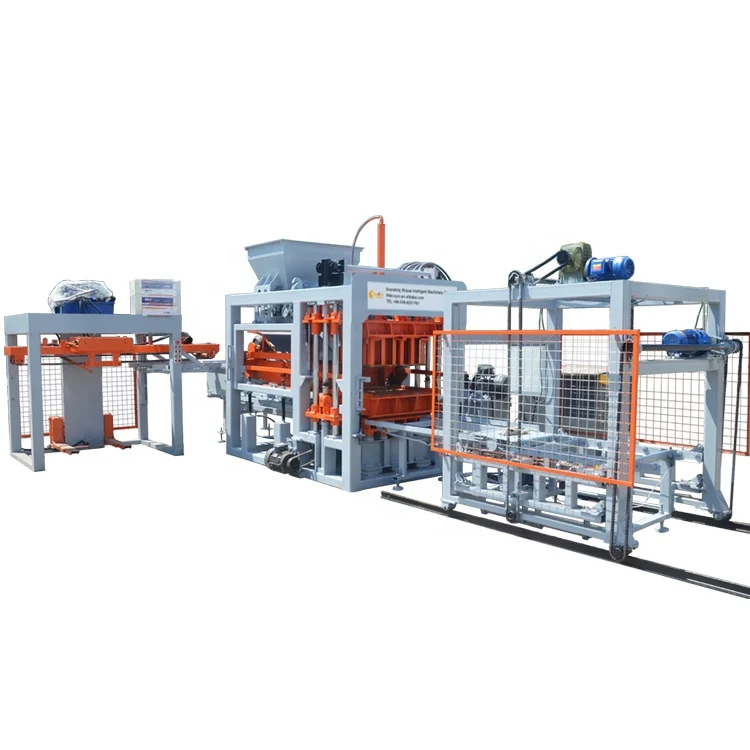
 High quality block machine