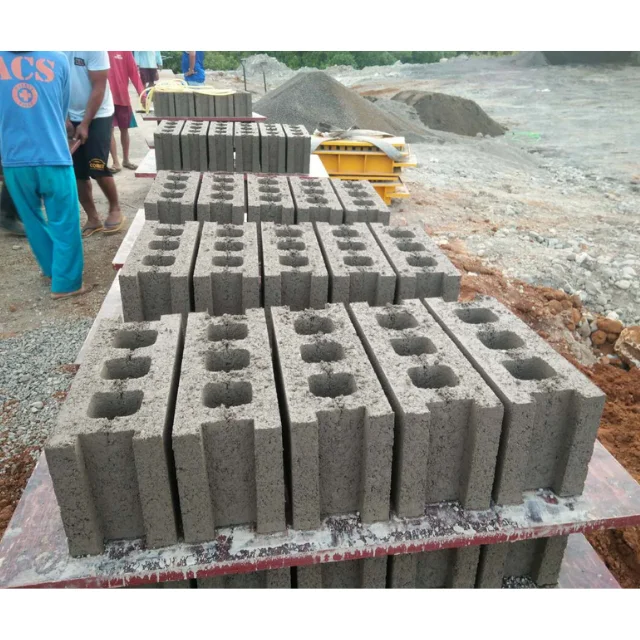
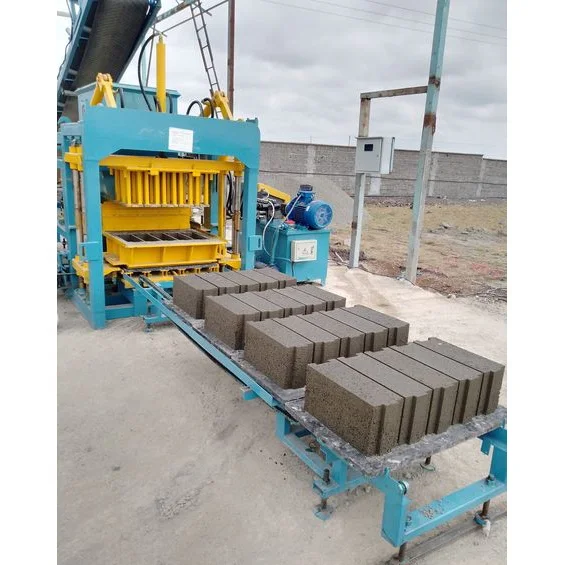
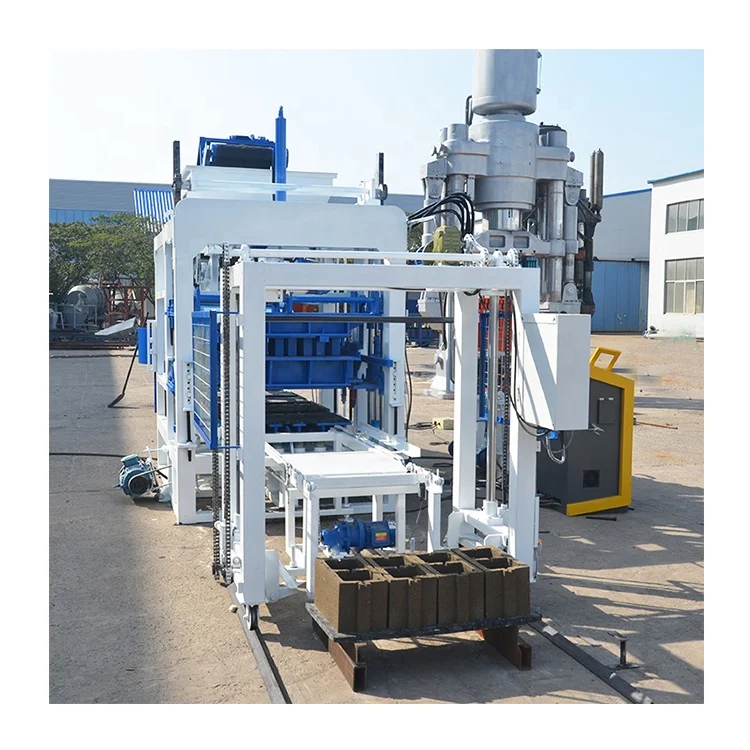
Matched system design — the QT6-15 block machine, pallet, mould, and handling stations are specified together rather than sourced from separate suppliers, ensuring the vibration force, hydraulic pressure, and cycle time align with your local aggregate and target block format.
Technical Specifications
| Parameter |
Value |
| Model |
QT6-15 |
| Product Type |
Concrete Block Making Machine |
| Overall Dimensions (L×W×H) |
8200 × 1700 × 2950 mm |
| Total Mass |
7 T |
| Vibration Form |
Platform Vibration |
| Vibration Frequency |
0–60 Hz (adjustable) |
| Vibration Force |
45 kN |
| Moulding Mode |
Automatic load, vibration moulding |
| Demolding Method |
Hydraulic |
| Pallet Size |
880 × 850 mm |
| Molding Cycle |
15–20 s (basis to be confirmed per block format and material) |
| Overall Power |
37 kW |
| Control System |
PLC with touch screen |
| Factory Area Required |
1,200 m² |
| Block Compressive Strength |
More than 15 MPa |
| Raw Material Adaptability |
Waste ash, slag, cement |
| Output – Hollow Block 400×200×200 mm |
8,640–11,520 pcs / 8 hr |
| Output – Hollow Block 400×150×200 mm |
11,520–15,360 pcs / 8 hr |
| Output – Solid Brick 240×115×53 mm |
46,080–61,440 pcs / 8 hr |
| Output – Rectangular Paver 200×100×60 mm |
17,280–23,040 pcs / 8 hr (molding cycle 20–25 s) |
| Output – Zigzag Paver 225×112.5×60 mm |
17,280–23,040 pcs / 8 hr (molding cycle 20–25 s) |
| Warranty |
1 year for the whole machine (without spare parts) |
Application Suitability
| Application |
Material or Output |
| Hollow block production for load-bearing walls |
Crushed stone, cement, and waste ash blends |
| Solid brick manufacturing for masonry infill |
Slag, fly ash, and cement mixes |
| Rectangular and zigzag paving block production |
Aggregate-rich mixes for surface durability |
| On-site block production for housing projects |
Locally available volcanic ash or river sand with cement |
| Replacement press for existing block plants |
Formats matching current market demand without retooling the curing yard |
What the Quoted Cycle Time Actually Means for Your Daily Tally
A 15-second cycle on one block format does not translate to the same daily count across every mould you plan to run.
Buyers frequently compare machines by a single headline number, then discover the figure was measured on a lightweight hollow block while their actual production focuses on dense pavers that need a longer press cycle and heavier vibration. I have seen plants in Southeast Asia receive a QT6-15 Concrete Block Making Machine manufacturer quote listing the top-tier output, only to learn on commissioning that the local volcanic aggregate required a slower feed and longer vibration phase. [NEED_CITE: aggregate density and vibration tuning for block consistency] The gap between catalogue capacity and site capacity is where projects lose money. That is why we calculate the daily tally per format before the order is signed.

Where the QT6-15 Sits in the Full Machine Range
The QT6-15 occupies the mid-to-high output tier of our automatic concrete block making machine range. Buyers stepping up from a semi-automatic press or from a smaller automatic model typically land here when their daily target exceeds what a single-shift workshop can sustain but does not yet justify the footprint of a high-capacity line. The 1,200 m² factory area requirement gives a clear picture of the curing yard, pallet return conveyor, and raw material bay you need to plan for.
Choosing Between Automatic Tiers Without Overspending on Capacity
Moving from semi-automatic to fully automatic means the pallet feeding, stacking, and cubing stations run without manual intervention. The QT6-15 supports a PLC-controlled workflow with a touch screen interface, allowing one operator to manage the press while the downstream stations handle output. If your current operation uses manual pallet handling, this model offers a practical next step. Buyers who anticipate further volume growth can later add an automatic cubing station without replacing the press itself. [NEED_CITE: automation upgrade paths in block production lines]
Vibration Force, Hydraulic Pressure, and Pallet Size in Practice
The 45 kN vibration force combined with hydraulic demolding determines how densely the mix is compacted and how cleanly the block releases from the mould. On porous mixes with high ash content, the adjustable 0–60 Hz frequency lets the operator dial in the right amplitude so the block holds shape without cracking at the edges. The 880 × 850 mm pallet size must match the curing racks and forklift tines already in your yard; ordering a pallet dimension that does not fit your existing racks means rebuilding the curing area before the first block is stacked. The 37 kW overall power draw requires a dedicated circuit, and confirming voltage and frequency before production avoids costly rewiring on arrival.
The Cost of Ignoring Voltage and Language Before Shipment
A machine configured for 380 V / 50 Hz arriving at a site wired for 415 V / 60 Hz will either trip breakers repeatedly or burn out the hydraulic pump motor within the first week. I have watched commissioning stall for days while an electrician sourced a step-down transformer in a remote Indonesian district. The PLC display language matters equally — if the fault codes appear in a script the operator cannot read, every minor alarm becomes a production halt. [NEED_CITE: voltage and frequency standards by export market] Confirming these details during the quotation stage costs nothing; fixing them after the container is unpacked costs time and money.
Why Procurement Teams Source the QT6-15 Here
Block machinery is our single focus, so the press, mould, pallet, and handling equipment are specified as one matched system. We configure the vibration and hydraulic settings against your actual mix design and local aggregate, not a catalogue default. Mould design covers the formats your market sells, including custom drawings if standard shapes do not fit. The automation level is selectable — you can start with semi-automatic pallet handling and add stacking later. Installation support includes on-site commissioning and operator training so the crew runs the machine independently before our team leaves.
Documentation & Verification
- Line layout drawing showing pallet flow and curing rack positions for the QT6-15 footprint
- Capacity calculation sheet stating the exact block format behind each output figure
- Mould drawing and format list matching your target product dimensions
- Voltage, frequency, and PLC display language confirmation signed before production
- Factory test record on your specified mix before the machine is crated
Installation, Commissioning & Support
- Foundation pad leveled to ±5 mm across the 8,200 mm machine length to prevent frame twist
- Dedicated 37 kW circuit with correct voltage and frequency confirmed before power-on
- Hydraulic station isolated from main vibration to extend seal life on the QT6-15
- PLC touch screen calibrated to operator language and fault-code library during commissioning
- Mould change procedure practiced on-site so the crew achieves format swaps within a single shift
- Wear parts list with hydraulic seals and vibration springs identified for first reorder
What to Share Before Requesting a Quote
Send the block formats your market currently sells, the daily volume you need per format, and a sample of your local aggregate. Include your site voltage, frequency, and the pallet dimensions your curing racks accept. If you are replacing an existing press, note the current pallet size and the automation stations already in place so the QT6-15 Concrete Block Making Machine manufacturer proposal fits your line without redundant equipment.
Frequently Asked Questions
Q: How is the output capacity of the QT6-15 verified, and which block format does the headline number assume?
A: Every capacity figure we quote states the exact block format and dimensions behind it. The 8,640–11,520 pieces per eight-hour shift, for example, refers specifically to a 400×200×200 mm hollow block. Paver and solid brick outputs are listed separately with their own cycle times, so you can match the number to the format you actually intend to run.
Q: Where does the QT6-15 sit compared to semi-automatic and higher-tier automatic machines?
A: It bridges the gap between semi-automatic presses that rely on manual pallet handling and high-capacity lines with fully automatic cubing. The 1,200 m² factory area requirement and 37 kW power draw define a mid-range investment. Buyers can begin with semi-automatic pallet return and add stacking modules later without replacing the press.
Q: What factory footprint is needed, and how does it compare to smaller models in the range?
A: The QT6-15 requires roughly 1,200 m² to accommodate the press, pallet return conveyor, raw material bay, and curing racks. Smaller semi-automatic models operate in under half that space but produce fewer formats per shift. The footprint figure lets you plan the yard layout before the machine arrives rather than rearranging after installation.
Q: Can the automation level be upgraded after the initial purchase?
A: Yes. The QT6-15 control system supports modular additions such as automatic pallet feeding and stacking stations. If you start with manual pallet handling to reduce initial investment, the PLC architecture allows downstream automation to be integrated later without a full control replacement.
Q: How do pallet size and material choices affect the curing area and forklift requirements?
A: The standard 880 × 850 mm pallet must align with your existing curing rack spacing and forklift tine width. Choosing a pallet material — bamboo, steel, or composite — influences pallet weight and how many loaded racks a single forklift can move per hour. Confirming these details during the quotation stage prevents costly yard modifications after delivery.

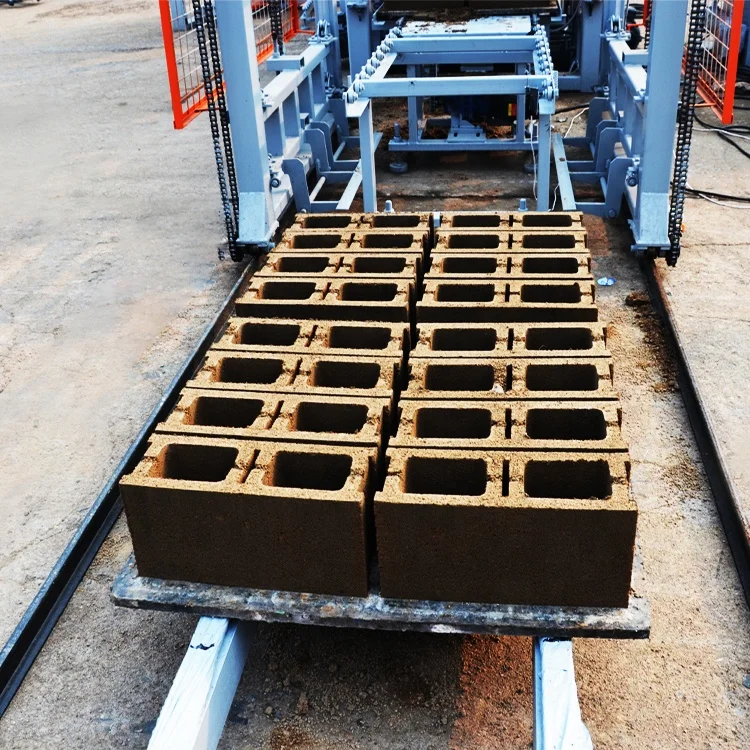
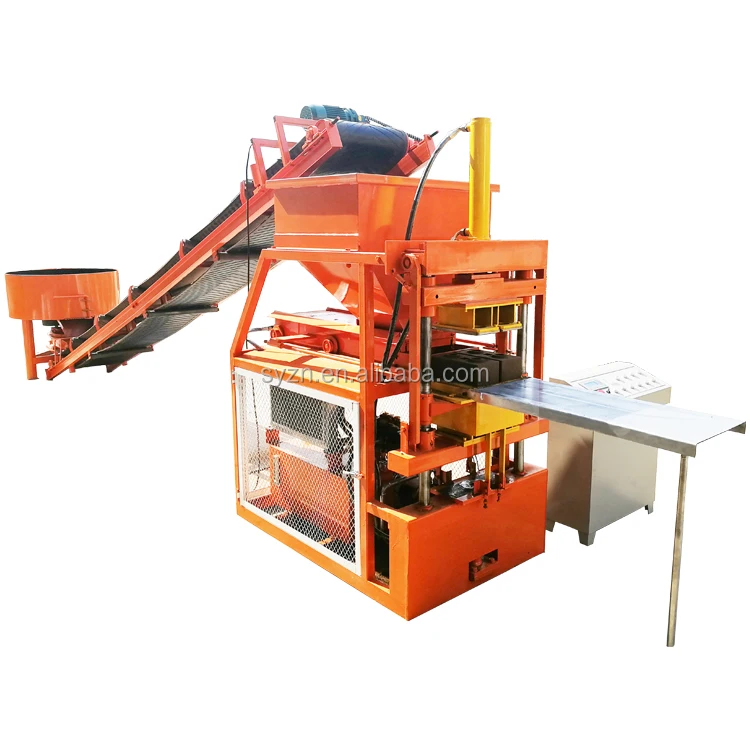 High quality block machine