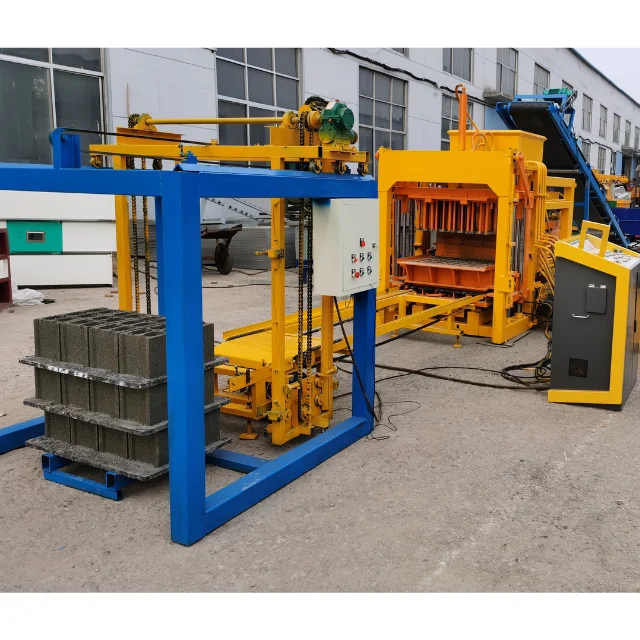
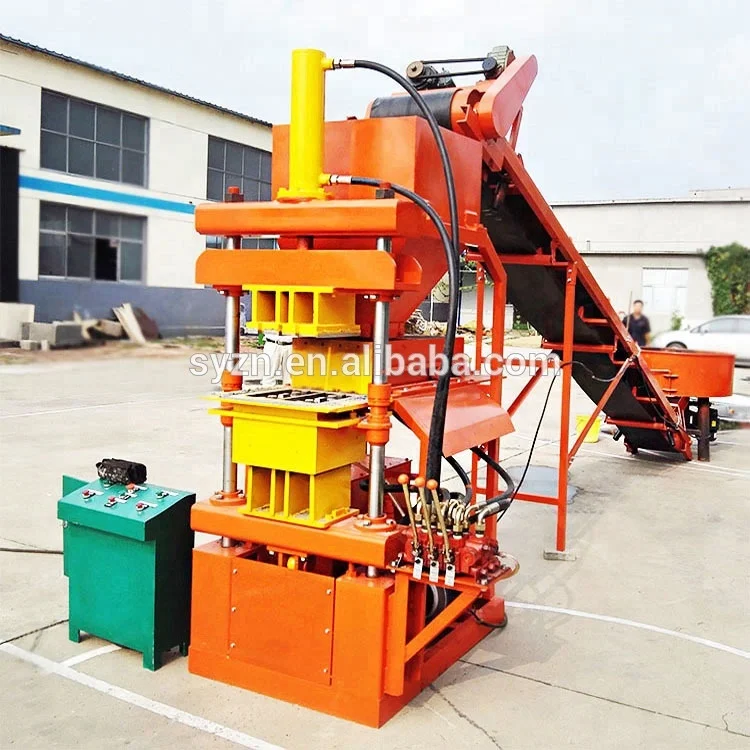
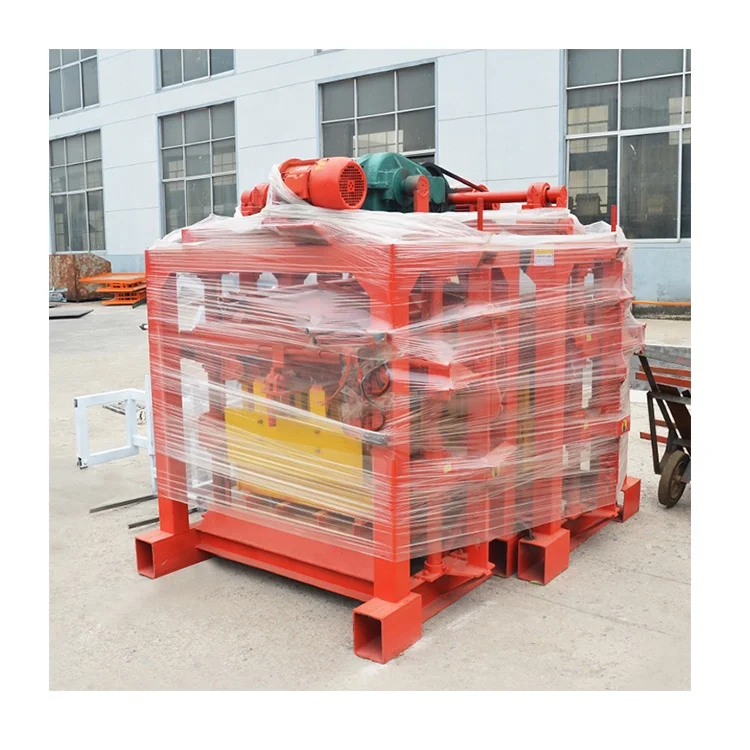
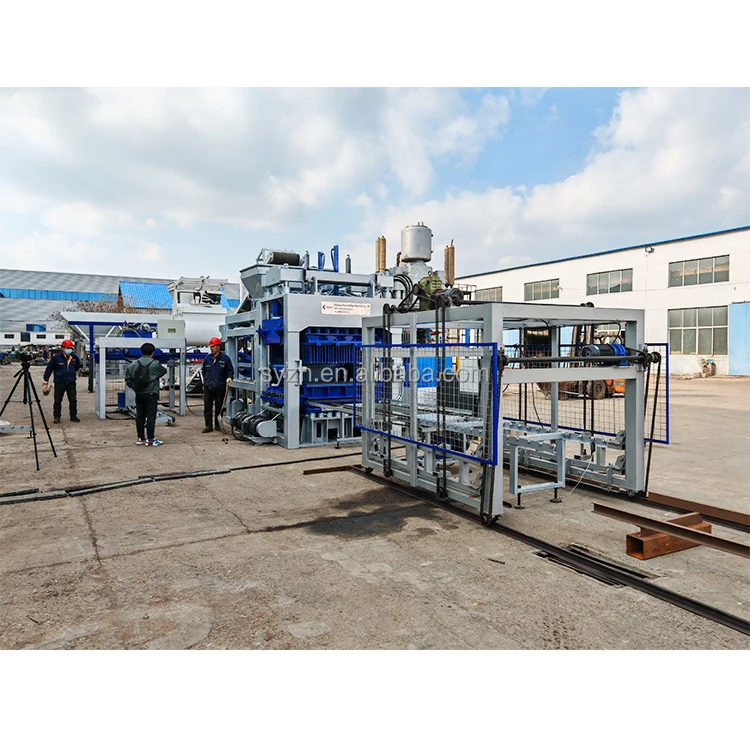
Matched System Supply — block machine, mould, pallet and handling equipment are specified together for the QT5-15, not assembled from separate vendors.
Technical Specifications
| Parameter |
Value |
| Model |
QT5-15 |
| Product Type |
Hydraulic Hollow Block Making Machine |
| Overall Dimensions (L×W×H) |
7400 × 1950 × 2800 mm |
| Total Mass |
5000 kg |
| Overall Power |
32 kW |
| Vibration Form |
Platform Vibration |
| Vibration Frequency |
0–60 Hz |
| Vibration Force |
80 kN |
| Moulding Mode |
Automatic loading with vibration moulding |
| Demolding Method |
Hydraulic |
| Pallet Size |
1100 × 550 mm |
| Molding Cycle |
15–20 s (format dependent) |
| Control System |
PLC with touch screen interface |
| Hydraulic System |
Independent integrated hydraulic station |
| Factory Area Requirement |
1000 m² |
| Raw Material Compatibility |
Fly ash (up to 70%), slag, gangue, sand, crushed stone, cement, water |
| Output — Hollow Block 400×200×200 mm |
900–1200 pcs/h, 7200–9600 pcs/8hr (basis: 5 pcs/mould, 15–20 s cycle) |
| Output — Hollow Block 400×150×200 mm |
1080–1440 pcs/h, 8640–11520 pcs/8hr (basis: 6 pcs/mould, 15–20 s cycle) |
| Output — Solid Brick 240×115×53 mm |
5760–7680 pcs/h, 46080–61440 pcs/8hr (basis: 32 pcs/mould, 15–20 s cycle) |
| Output — Rectangular Paver 200×100×60 mm |
3600–4500 pcs/h, 28800–36000 pcs/8hr (basis: 25 pcs/mould, 20–25 s cycle) |
| Output — Zigzag Paver 225×112.5×60 mm |
2304–2880 pcs/h, 18432–23040 pcs/8hr (basis: 16 pcs/mould, 20–25 s cycle) |
| Block Compressive Strength |
>15 MPa |
| Mould Change System |
Quick replacement for multi-format production |
| Automation Level |
Automatic (pallet feeding, material feeding, vibrating, demoulding) |
| Voltage & Frequency |
Configurable to buyer site (basis to be confirmed) |
| PLC Display Language |
Configurable at order (basis to be confirmed) |
| Warranty |
1 year for whole machine (excluding spare parts) |
Application Suitability
| Application |
Material or Output |
| Hollow block production plants |
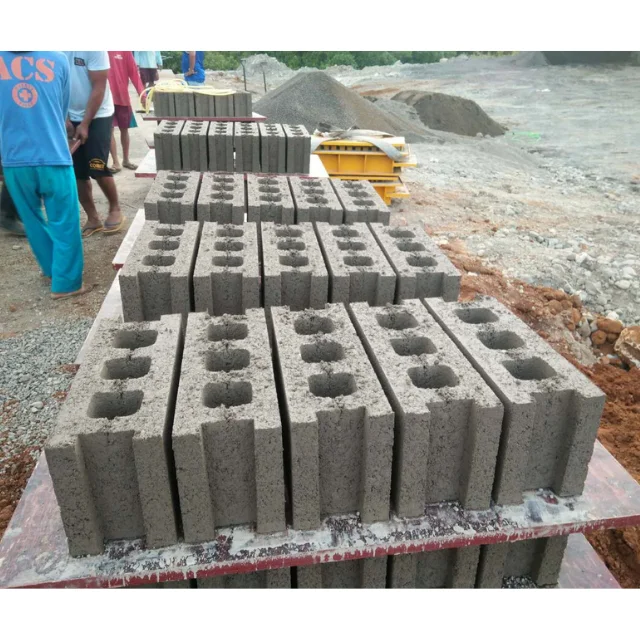
Fly ash, sand, crushed stone, cement mixes for 400×200×200 mm and 400×150×200 mm formats |
| Solid brick manufacturing |
Cement-aggregate blends for 240×115×53 mm standard bricks |
| Paving block and interlocking brick production |
High-strength concrete mixes for 200×100×60 mm rectangular and 225×112.5×60 mm zigzag pavers |
| On-site construction block making |
Local aggregate and cement for project-specific hollow block volumes |
| Building material manufacturers adding formats |
Quick mould change across hollow, solid, and paver categories on one pallet size |
| First block plant startups |
Mid-tier automatic line within approximately 1000 m² factory footprint |
Why Quoted Capacity Figures Mislead Buyers
Every QT5-15 hollow block machine manufacturer should state output per format, because a single cycles-per-hour number hides the real daily production picture.
Output only means something when tied to a specific block size, mould cavity count, and cycle time.
I have watched buyers receive quotations claiming thousands of pieces per hour, only to discover that figure assumed a solid brick mould with 32 cavities — while they actually needed hollow blocks with 5 cavities per cycle. The gap between catalogue claims and workshop reality causes more disputes than almost any other specification issue. When you evaluate the QT5-15, look at the output rows above and find the exact format you plan to sell. Those figures include the mould cavity count and cycle time as their basis, so you can calculate your own shifts and daily targets without guesswork. [NEED_CITE: common capacity misrepresentation in block machinery quotations]

Where the QT5-15 Sits in the Full Machine Range
The QT5-15 occupies the mid-tier position in the automatic block machine lineup, bridging the gap between small workshop-scale semi-automatic presses and high-capacity automatic lines. For a buyer surveying options, this model delivers continuous automatic cycling — pallet feeding, material distribution, vibration, and hydraulic demoulding — without requiring the larger factory footprint or higher investment that top-tier machines demand. It suits operations that have outgrown manual pallet handling but are not yet ready for a fully continuous high-volume plant.
Comparing This Tier Against Semi-Automatic and Mobile Options
Semi-automatic machines in the range require operators to handle pallets manually between cycles, which limits daily output and increases labour demand. Mobile and egg-laying machines eliminate pallets entirely but sacrifice format flexibility and consistent block density. The QT5-15 hollow block machine manufacturer configuration keeps pallets in the process for uniform curing and stacking, while the PLC-controlled cycle removes the operator from each individual press stroke. For buyers weighing their first automatic purchase against a semi-automatic investment, the difference comes down to whether your daily volume targets justify the pallet-handling automation that this tier provides. [NEED_CITE: automation tier comparison in concrete block production equipment]
Platform Vibration Force and Hydraulic Pressure Interaction
The 80 kN vibration force operating across a 0–60 Hz frequency range works together with the independent hydraulic station to compact raw material inside the mould. Higher vibration frequency suits fine-aggregate mixes like fly ash blends, while lower frequency with sustained hydraulic pressure produces denser blocks from coarse crushed stone. The platform vibration design means the entire pallet surface receives uniform energy, reducing density variation between the centre and edges of each block. The 32 kW overall power rating covers both the vibration motors and the hydraulic pump simultaneously, so the press does not lose pressure during the vibration phase. Mould change time determines how quickly you switch between formats — the quick replacement system on the QT5-15 means a format change does not consume an entire shift.
What Happens When Pallet Size Is Chosen Wrong
A pallet dimension mismatch causes problems that surface weeks after installation, not during the factory test. The 1100 × 550 mm pallet on the QT5-15 must align with your existing curing racks, forklift tine spacing, and stacking area. Buyers who skip this check end up manually restacking every block onto different racks, which erases the automation advantage they paid for. Voltage and frequency carry a similar hidden cost — a machine wired for the wrong supply sits idle while transformers are sourced locally, delaying commissioning by weeks. [NEED_CITE: electrical specification mismatches in exported industrial machinery]
Why Buyers Choose This Source for Mid-Tier Automatic Lines
Block machinery remains the single focus here, which means the QT5-15 press, its moulds, pallets, and handling equipment are configured as one matched system rather than sourced from unrelated suppliers. Every configuration starts from your actual mix design and local aggregate, not a catalogue default — a machine set up for fly ash at 70% content behaves very differently from one tuned for pure sand and cement. Mould design covers the formats your market actually buys, and custom drawings are accepted when standard formats do not match local demand. The automation level is selectable, so you can start with the QT5-15 automatic cycle and plan upgrades within the same product family as volume grows. Installation support includes operator training at your site, ensuring the crew understands cycle adjustment, mould change procedure, and daily maintenance before the commissioning team leaves.
Documentation & Verification
- Line layout and capacity calculation stating the block format assumed for each output figure
- Machine specification sheet confirming voltage, frequency, and PLC display language before production
- Mould drawing and format list showing all available block types with corresponding cycle times
- Pallet specification verified against buyer curing rack dimensions and forklift capacity
- Factory test record on your chosen block format and mix design before dispatch
- Hydraulic and electrical schematic for local maintenance team reference
Installation, Commissioning & Support
- Foundation must accommodate the 7400 × 1950 mm footprint and 5000 kg total mass with level tolerance
- Dedicated electrical circuit required for the 32 kW overall power draw at confirmed voltage and frequency
- Machine ships partially dismantled; reassembly on site includes hydraulic station connection and PLC cabinet wiring
- First-run commissioning includes cycle time calibration to your specific block format and raw material mix
- Operator training covers PLC touch screen navigation, mould change procedure, and emergency stop protocols
- Wear parts list identifies hydraulic seals and vibration motor brushes with recommended replacement intervals
What to Prepare Before Requesting a Quotation
To size the QT5-15 correctly for your operation, share the block formats you plan to produce along with your target daily output per format. Confirm the factory area available — this model requires approximately 1000 m² including curing and pallet return space. Provide your local voltage, frequency, and preferred PLC display language so the electrical system matches your site from day one. If you already have curing racks or forklifts in place, send their dimensions so the 1100 × 550 mm pallet specification can be verified against your existing equipment.
Frequently Asked Questions
Q: Where does the QT5-15 fit compared to semi-automatic and higher-output models?
A: The QT5-15 sits in the mid-tier automatic range, above semi-automatic machines that require manual pallet handling and below high-capacity lines designed for continuous large-volume production. It offers full automatic cycling with PLC control while keeping the factory area requirement and investment level accessible for growing operations evaluating their first automatic press.
Q: How does the 1000 m² factory area compare to other tiers?
A: Smaller semi-automatic machines typically need less floor space since they omit automatic pallet feeders and stackers, while top-tier automatic lines require significantly more room for continuous pallet circulation and cubing systems. The QT5-15 footprint balances automatic functionality with a manageable area that suits mid-scale block plants and expanding workshops.
Q: What pallet size does this model use, and why does it matter?
A: The QT5-15 uses 1100 × 550 mm pallets, which must match your curing rack spacing and forklift dimensions. Other models in the range use different pallet sizes, so verifying compatibility before ordering prevents costly restacking work and ensures the automatic pallet feeding system integrates with your existing curing infrastructure.
Q: Can automation be upgraded later within the same product family?
A: Yes, the product family supports upgrading from semi-automatic through to higher automation levels as production volume grows. Starting with the QT5-15 automatic cycle gives you PLC control and automatic material feeding, and additional automation stations can be discussed for future integration without replacing the core press.

 High quality block machine