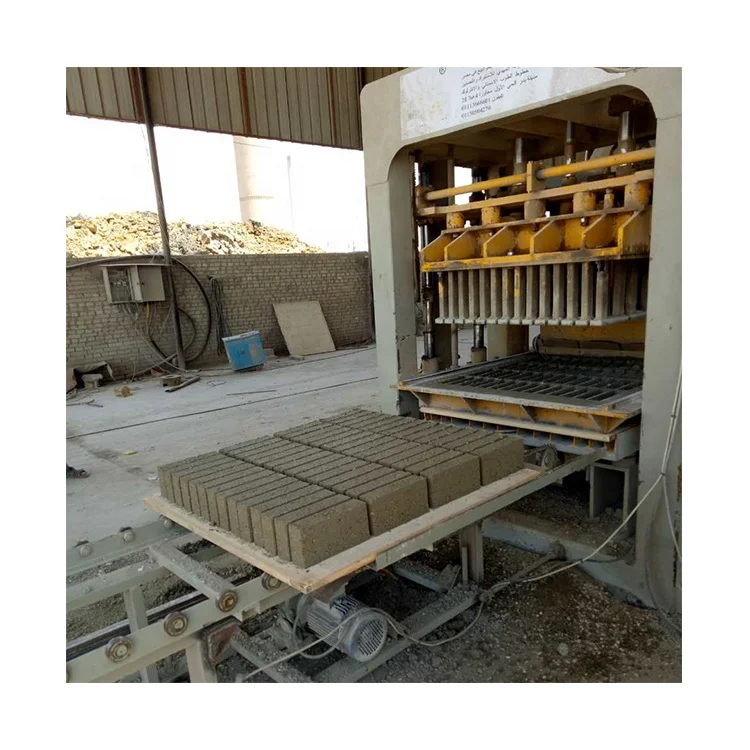
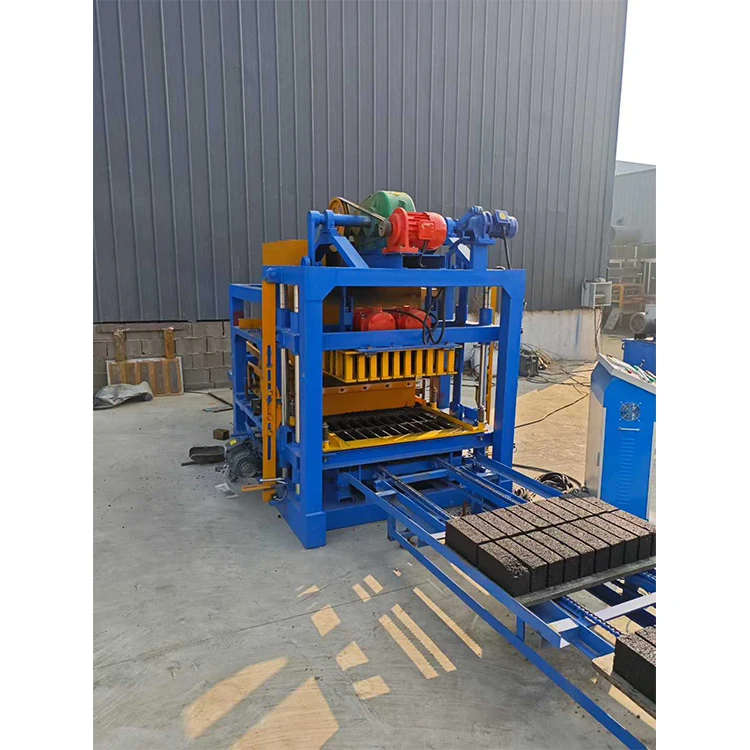
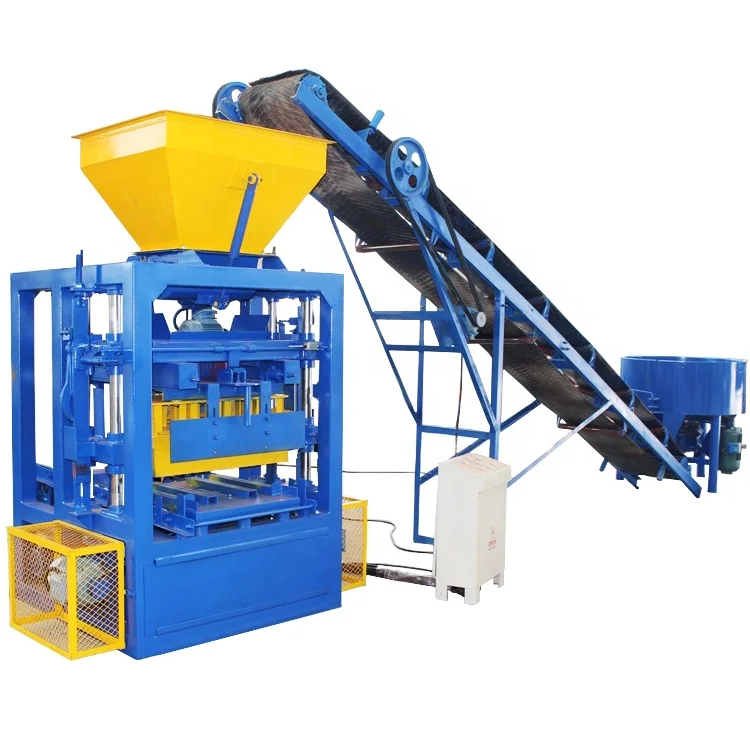
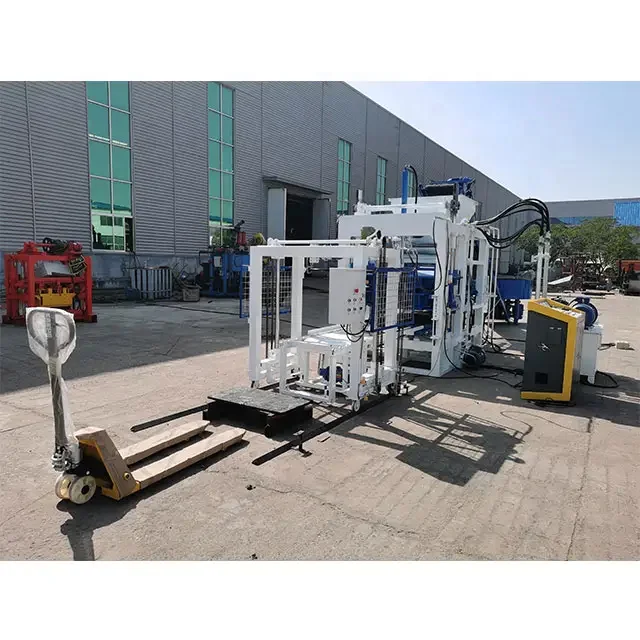
Matched System Design — the QT6-15 block machine, pallet and mould are specified together against your local aggregate and target format, not pulled from separate catalogues.
Technical Specifications
| Parameter |
Value |
| Model |
QT6-15 |
| Product Type |
Automatic Concrete Block Making Machine |
| Rated Power |
31.25 kW |
| Voltage & Frequency |
Configured to buyer’s local voltage (basis to be confirmed) |
| Control System |
PLC (brand and language basis to be confirmed) |
| Overall Dimensions (L×W×H) |
7100 × 1500 × 3000 mm |
| Net Weight |
8500 kg |
| Hydraulic Pressure |
16–21 MPa |
| Vibration Form |
Platform vibration |
| Moulding Cycle |
15–20 seconds |
| Pallet Size |
850 × 680 mm |
| Output Capacity (Hollow Block 400×200×200 mm) |
6 pcs/mould, 16–20 s cycle, 8,640 pcs/day |
| Output Capacity (Porous Block 240×115×90 mm) |
14 pcs/mould, 15–18 s cycle, 22,400 pcs/day |
| Output Capacity (Standard Block 240×115×53 mm) |
30 pcs/mould, 14–17 s cycle, 54,400 pcs/day |
| Applicable Mould Formats |
Hollow block, solid block, paver, interlocking block, curbstone, colored paver |
| Raw Materials |
Crushed stone, sand, cement, fly ash, dust, gravel, slag |
| Automation Level |
Automatic (stacking and pallet handling scope basis to be confirmed) |
Application Suitability
| Application |
Material or Output |
| Commercial hollow block supply |
Crushed stone and cement mix, 400×200×200 mm format |
| Standard solid brick production |
Sand, fly ash and cement, 240×115×53 mm format |
| Interlocking paver manufacturing |
Colored concrete mix on 850 × 680 mm pallet |
| Housing project on-site block works |
Local aggregate with site-specific moisture content |
| Curbstone and kerb production |
High-density gravel mix with extended vibration cycle |
Why "Cycles per Hour" Tells You Nothing About Real Daily Output
A cycle time only matters when you know which block format fills that cycle.
Most quotations lead with a single headline capacity figure and leave the block format buried in fine print. I have watched buyers commit to a QT6-15 block machine manufacturer based on a number that assumed standard bricks, then discover their actual product — 400 mm hollow blocks — cuts that figure to a fraction. The discrepancy is not a machine fault; it is a quoting convention that hides the variable that matters most. [NEED_CITE: block format assumptions in capacity quotations]

Placing the QT6-15 Within the Full Machine Range
The QT6-15 sits in the mid-to-high output tier, bridging the gap between small workshop semi-automatic presses and high-capacity fully automatic lines. For a buyer surveying options, this QT6-15 block machine manufacturer model offers platform vibration with hydraulic pressure at a scale that suits regional block supply operations and large housing projects alike. The 850 × 680 mm pallet size positions it above entry-level mobile machines while keeping the plant footprint manageable for a first-time installation.
Output Tiers and Where Each Format Lands
Daily output shifts dramatically across formats. On hollow blocks at 400×200×200 mm the QT6-15 produces 8,640 pieces per day based on a 16–20 second cycle with six pieces per mould. Switch to standard bricks at 240×115×53 mm and the same press delivers 54,400 pieces per day based on a 14–17 second cycle with thirty pieces per mould. Understanding where your primary product lands on this range determines whether this tier serves your market volume or whether you need to step up or down. [NEED_CITE: daily shift length assumptions in block output calculations]
Reading the Specifications That Actually Shape Production
Hydraulic pressure at 16–21 MPa works together with platform vibration to compact the mix into dense, consistent blocks. Higher pressure alone does not guarantee strength; the vibration must distribute the material evenly before the press closes, which is why the QT6-15 pairs both forces on a single platform. The moulding cycle of 15–20 seconds covers the range from porous blocks to hollow blocks, with shorter cycles applying to smaller formats. Pallet size at 850 × 680 mm must match the curing racks and forklifts already on your site — a mismatch here creates a bottleneck downstream that no press speed can fix. Rated power of 31.25 kW determines the electrical supply requirement and should be confirmed against your site transformer capacity before the machine enters production.
The Cost of Skipping the Format Conversation
When a buyer orders without confirming which block format drives their revenue, the machine arrives configured for a cycle time that does not reflect actual production. Mould changes then consume hours instead of minutes, and the format flexibility the buyer paid for never materializes. I have seen pallet specifications chosen without regard to the curing area dimensions, leaving wet blocks stacked by hand in the yard because the pallets do not fit the existing racks. Voltage and PLC display language left unconfirmed delay commissioning by days while an electrician and translator are sourced locally. [NEED_CITE: common commissioning delays from unconfirmed electrical specifications]
Why Buyers Source This Tier From Us
Block machinery is our single focus, so the QT6-15 is never sold as a standalone press — the mould, pallet and handling equipment are specified as one matched system. Configuration starts with your local aggregate and target block format, not a catalogue default, which means the vibration and pressure settings reflect the mix you can actually source. Mould design covers the formats your market sells, including custom drawings when standard formats do not match local demand. Automation level is selectable, letting a buyer begin with basic pallet handling and add stacking and cubing later as volume grows. Documentation includes a line layout with capacity stated per format, so the output assumption is transparent before the order is placed.
Documentation & Verification
- Line layout with capacity calculation stating the block format assumed for each figure
- Machine specification sheet confirming pallet size, hydraulic pressure and vibration form
- Mould drawing and format list for verification against your local market products
- Voltage, frequency and PLC display language confirmation before production begins
- Factory test record on your specified block format before dispatch
- Hydraulic and electrical schematic for your site engineer to review
Installation, Commissioning & Support
- Foundation plan matched to the 8500 kg net weight and 7100 × 1500 × 3000 mm footprint
- Electrical supply confirmed to local voltage and frequency before the 31.25 kW motor is wired
- Machine arrives with platform vibration and hydraulic system pre-assembled for faster commissioning
- PLC display language set to your operator’s preference before the control panel is powered on
- Mould change procedure trained on-site using the actual formats in your production schedule
- Wear parts list provided with hydraulic and vibration component replacement intervals
What We Need Before Quoting
To place the QT6-15 correctly in your production setup, share the block format that drives your daily volume, the local aggregate type and moisture range, and the shift length you plan to run. Confirm your site voltage, frequency and the language your operators need on the PLC display. If you have existing curing racks or forklifts, send the pallet dimensions they accept so the 850 × 680 mm pallet can be verified or adjusted.
Frequently Asked Questions
Q: How is daily output calculated for each block format on the QT6-15?
A: Daily output is calculated from the pieces per mould multiplied by the number of cycles in a standard shift, using the cycle time specific to each format. Hollow blocks at 400×200×200 mm yield 8,640 pieces per day based on six pieces per mould and a 16–20 second cycle. Shift length and format must both be stated for the figure to be meaningful.
Q: Where does the QT6-15 sit compared to semi-automatic and higher-tier automatic models?
A: The QT6-15 occupies the mid-to-high output tier with platform vibration and hydraulic pressure, sitting above semi-automatic machines that require manual pallet handling and below high-capacity lines with fully automatic stacking and cubing. It suits buyers who need consistent mid-to-high volume without the investment of a top-tier automatic line.
Q: What plant footprint does the QT6-15 require and which supporting stations are needed?
A: The press itself measures 7100 × 1500 × 3000 mm, but the full line includes raw material feeding, mixing, pallet feeding and curing rack handling. Total footprint depends on the automation level selected and the curing area needed for your daily output. A line layout is provided showing each station relative to the press.
Q: Can the automation level be upgraded after initial installation?
A: The automation scope is selectable at order and can be expanded later. A buyer can start with basic pallet handling and add automatic stacking and cubing as production volume grows, provided the original line layout预留 space for the upgrade stations.
Q: What voltage and control language options are confirmed before shipment?
A: Voltage and frequency are configured to your local electrical supply before production begins. The PLC display language is set to your operator’s preference and confirmed in writing. Both specifications are documented on the machine specification sheet and verified during the factory test.

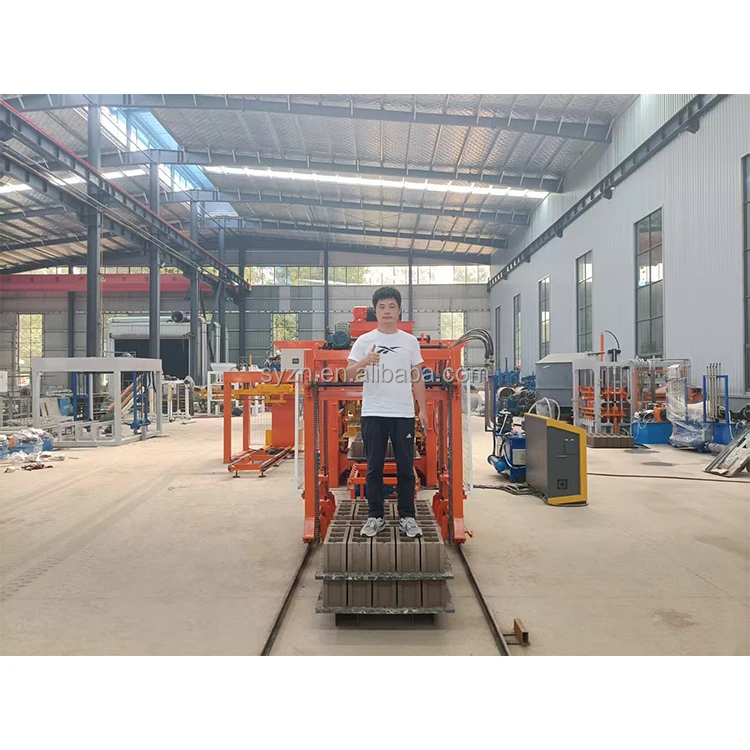
 Automatic block machine