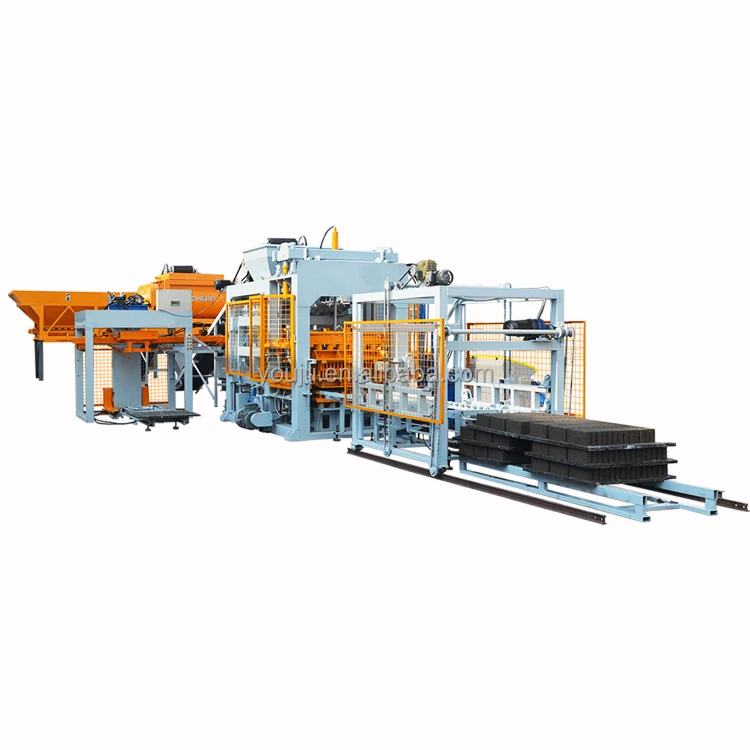
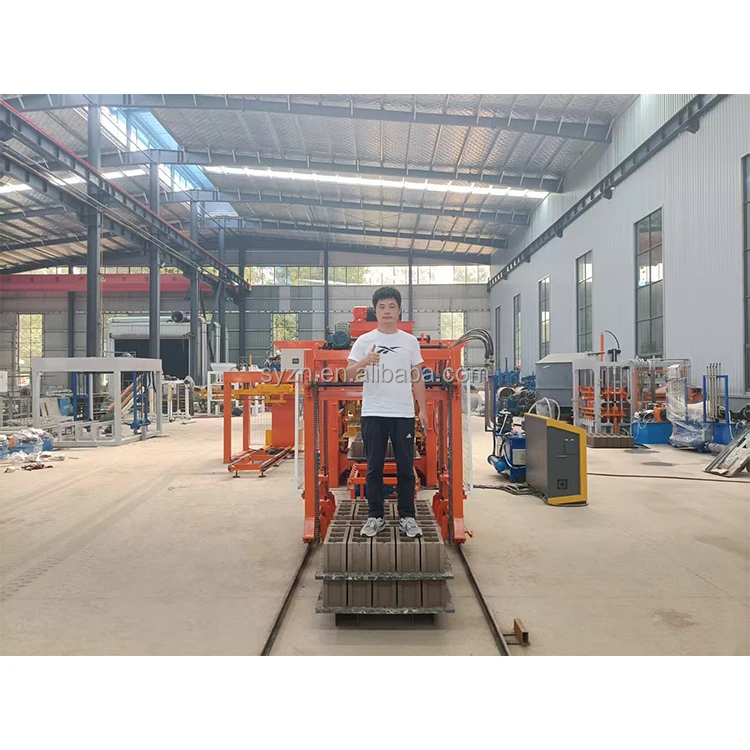
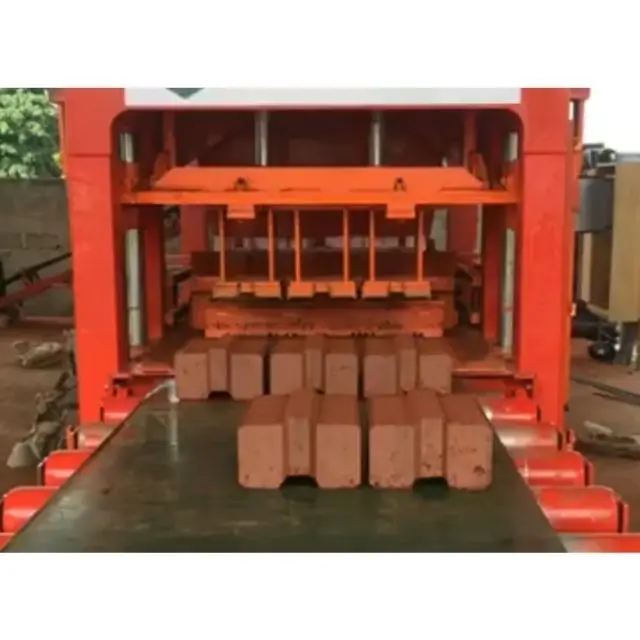
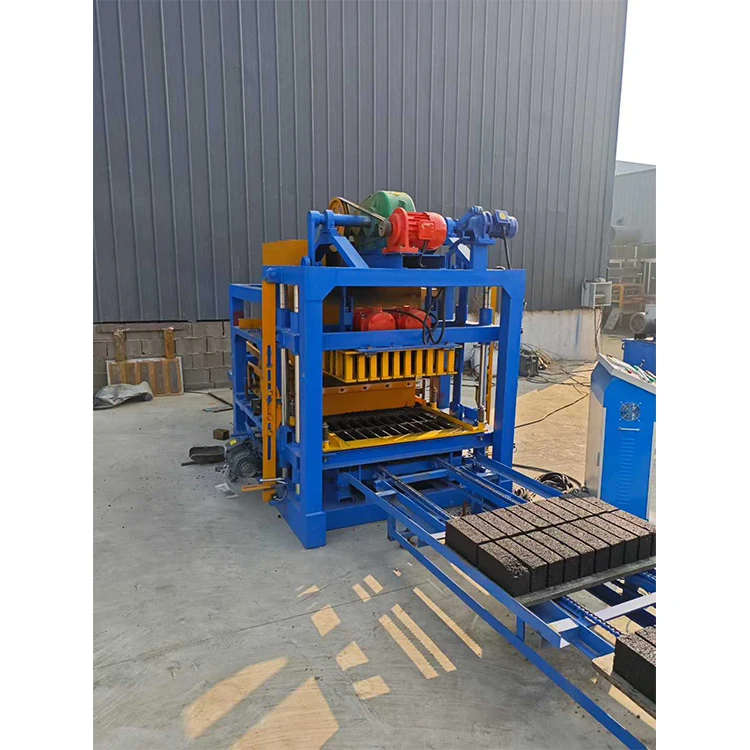
Matched System Sizing — the QT6-15 is specified with pallet, mould, and handling as one envelope rather than a press sold in isolation.
Technical Specifications
| Parameter |
Value |
| Model |
QT6-15 |
| Product Type |
Automatic Concrete Block Making Machine |
| Molding Way |
Vibration and hydraulic pressing |
| Rated Pressure |
21 MPa |
| Molding Cycle |
15s–20s (basis not stated in source — confirm block format, material, thickness) |
| Pallet Size |
900 × 700 mm |
| Main Machine Weight |
6,000 kg |
| Output — Hollow Block 400×200×200 mm |
6 pcs/pallet, 1,440 pcs/h, 11,520 pcs/8 h |
| Output — Paving Brick 200×100×60 mm |
21 pcs/pallet, 5,040 pcs/h, 40,320 pcs/8 h |
| Output — Solid Brick 240×115×53 mm |
32 pcs/pallet, 7,680 pcs/h, 61,440 pcs/8 h |
| Raw Materials |
Cement, sand, fly ash, stone powder, slag |
| Automation Level |
Automatic (simple or fully automatic line options available) |
| Supporting Equipment Options |
JS500 mixer, 8 m belt conveyor, automatic stacker, cement silo, screw conveyor, cement scale, batching machine, pallet feeder, pallet separator |
| Voltage |
Customizable to local voltage |
| Warranty |
1 year (excluding wear parts) |
| Assembly State |
Stationary production line |
Application Suitability
| Application |
Material or Output |
| Hollow block production |
Crushed stone, sand, cement, fly ash blends |
| Paving brick manufacturing |
Stone powder and cement with pigment layers |
| Solid brick forming |
Slag, sand, and cement mixes |
| Kerbstone and curb units |
Coarse aggregate with high cement content |
| Colored pavement bricks |
Surface layer pigments over standard concrete |
Where the Automatic Block Machine Range Actually Starts and Stops
Capacity figures only matter when tied to a specific block format.
Buyers often compare machines by a single "pieces per hour" number. That number usually assumes one block size and one mix. On the shop floor, when the mould changes to a different format, the real daily output shifts. I have seen plants purchase a mid-tier press expecting continuous high output, only to discover that thicker kerbstones demand longer cycles and slower throughput. The QT6-15 sits in the middle of the automatic block machine range, so understanding where it fits compared to smaller semi-automatic units and larger high-capacity lines is essential before committing capital. [NEED_CITE: block machine capacity calculation methods]
Placing the QT6-15 on the Automatic Block Machine Range
The QT6-15 occupies the mid-tier position, aimed at plants that have outgrown semi-automatic egg-laying machines and need consistent pallet-based production. Below it, smaller machines run lower volumes with manual pallet handling. Above it, higher-tier automatic lines add fully integrated stacking, cubing, and curing rack systems. This tier suits entrepreneurs building a first stationary line or existing producers moving from manual pallet collection to automatic feeding.
What Changes When You Move Up or Down the Range
Stepping up to a higher tier typically means larger pallets, faster cycle times on standard formats, and a fully automatic stacker that cubes output without manual intervention. Stepping down sacrifices that automation, requiring workers to move wet pallets by hand. The QT6-15 can be configured with either a simple line or a fully automatic line, so the buyer decides the automation depth at the quotation stage. This flexibility matters when the budget allows the press but not yet the full stacking system. [NEED_CITE: automation levels in concrete block production]
Reading the Pressure and Vibration Numbers Together
The 21 MPa rated pressure works alongside vibration to compact the concrete mix into the mould cavity. Pressure alone does not guarantee density; the vibration force must match the aggregate particle size and moisture content of the local mix. A fly ash blend flows differently than a crushed stone mix, so the vibration amplitude and frequency need adjustment per material. The 900 × 700 mm pallet size defines the maximum mould footprint, which in turn determines how many blocks fit per cycle. Mould change time between formats depends on the clamping system, and this should be confirmed before ordering if the plant plans frequent format switches.

The Hidden Cost of a Mismatched Line Configuration
Quotations sometimes list the press alone, leaving pallet handling, stacking, and curing as unaddressed items. When those stations are missing, workers manually carry wet pallets, which slows the press and creates inconsistent curing conditions. Pallet size must also match the curing area dimensions and the forklift the plant already owns. Ordering a pallet size that does not fit existing racks means buying new racks or cutting pallets down. These mismatches surface only after installation, when rework costs more than specifying them correctly upfront. [NEED_CITE: block plant layout and material handling planning]
Why Sourcing the Full Line from One Supplier Matters
The QT6-15 can be quoted as a matched system where the press, moulds, pallets, and handling equipment are specified together. Machine configuration is set against the buyer’s actual mix design and local aggregate rather than a catalogue default. Mould design covers the formats the local market sells, including custom drawings when standard moulds do not fit. Automation level is selectable, allowing a buyer to start with a simple line and add automatic stacking later. Installation includes commissioning support and operator training on the specific configuration delivered.
Documentation & Verification
- Line layout showing capacity calculation per block format for the QT6-15
- Mould drawing and format list confirming every block type in the quotation
- Voltage and control language confirmation sheet before production begins
- Factory test record on your specified block format before dispatch
- Hydraulic and electrical schematic for on-site maintenance reference
Installation, Commissioning & Support
- Foundation must support the 6,000 kg main machine weight with level anchoring points
- Voltage customizable to local supply — confirm phase and frequency before wiring
- Stationary line assembly requires overhead clearance for the belt conveyor and mixer
- JS500 mixer commissioning includes calibration against your local aggregate moisture
- Pallet feeder alignment checked during commissioning to prevent pallet jamming at start-up
- Wear parts list provided with reorder codes for hydraulic seals and vibration components
What to Include in Your Inquiry
Share the block formats your market sells, along with target daily output per format. Provide your local raw material types and typical aggregate grading so the vibration and pressure settings can be matched. Include your site voltage, frequency, and preferred PLC display language to avoid delays at commissioning.
Frequently Asked Questions
Q: How is output capacity verified per block format on the QT6-15?
A: Each output figure is stated alongside the specific block dimensions and pcs-per-pallet count. For example, the hollow block figure assumes 400×200×200 mm at 6 pcs per pallet. Actual throughput on your format depends on mould design, mix setting time, and cycle duration, which are confirmed during line configuration.
Q: Where does the QT6-15 sit compared to semi-automatic and higher-tier models?
A: It occupies the mid-tier of the automatic block machine range. Below it, semi-automatic machines require manual pallet handling. Above it, higher-tier lines add integrated stacking and cubing. The QT6-15 can be ordered with either a simple or fully automatic line, bridging both levels.
Q: What voltage and control language options are available for my market?
A: Voltage is customizable to your local supply standard. The PLC display language is confirmed before production so operators can read the interface on day one. Frequency and phase must also be stated in the inquiry to match motors and drives.
Q: Which supporting equipment is included versus optional on the QT6-15?
A: The JS500 mixer, belt conveyor, and pallet feeder can be included in the line quotation. The automatic stacker, cement silo, and batching machine are optional additions. Each item is listed separately so buyers select the automation depth that fits their budget and timeline.
Q: What does the warranty cover, and are wear parts available after commissioning?
A: The warranty covers one year excluding wear parts such as hydraulic seals and vibration components. A wear parts list with reorder codes is supplied at delivery so replacements can be sourced before the first change-out is due.

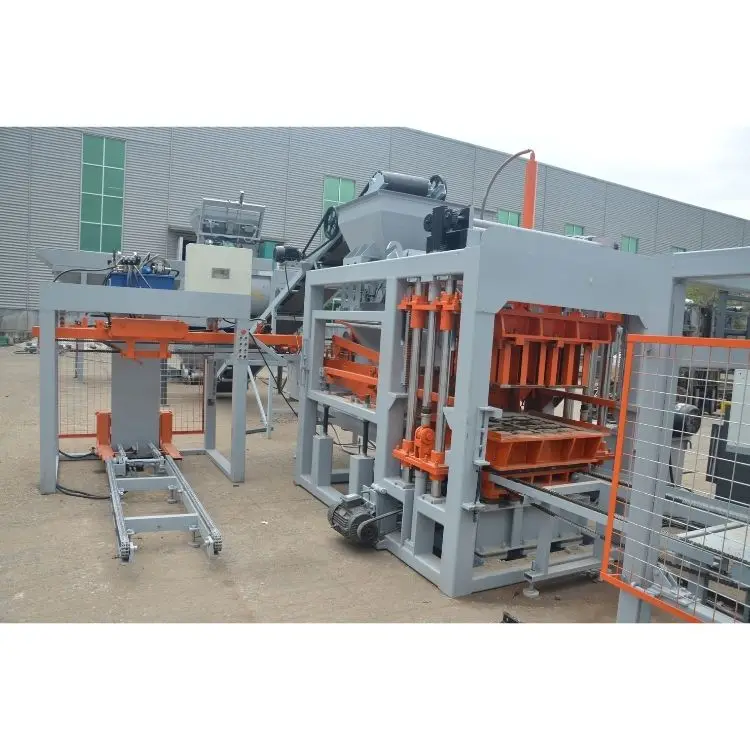
 Automatic block machine