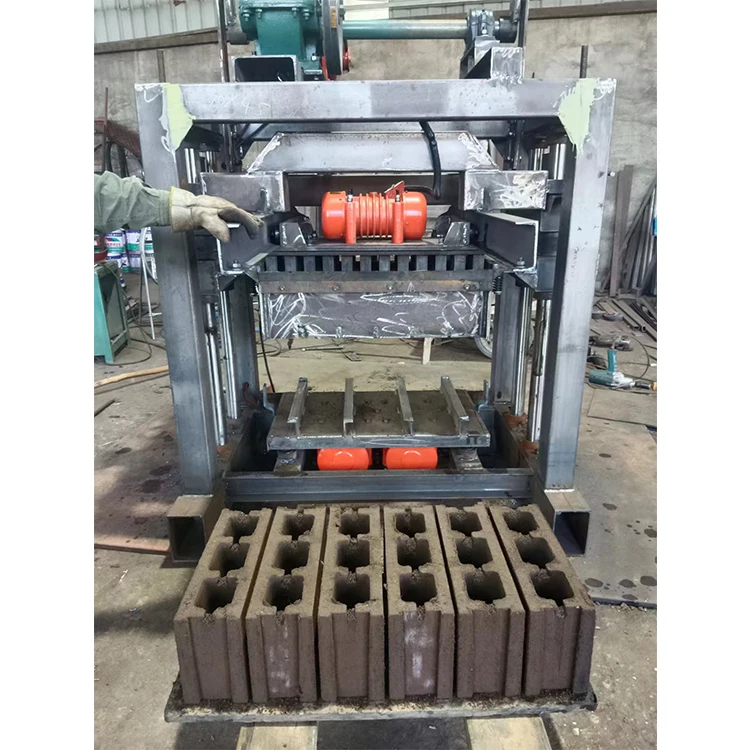
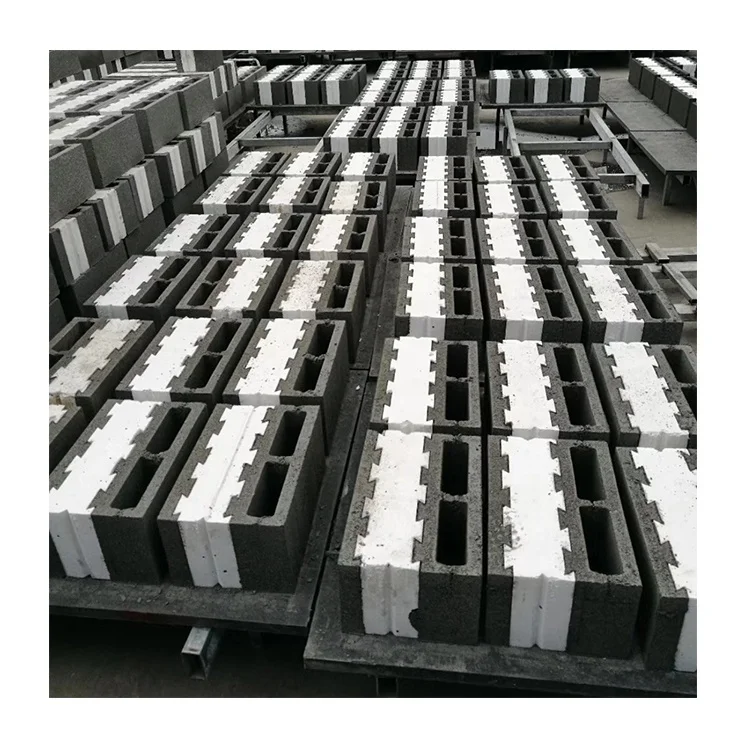
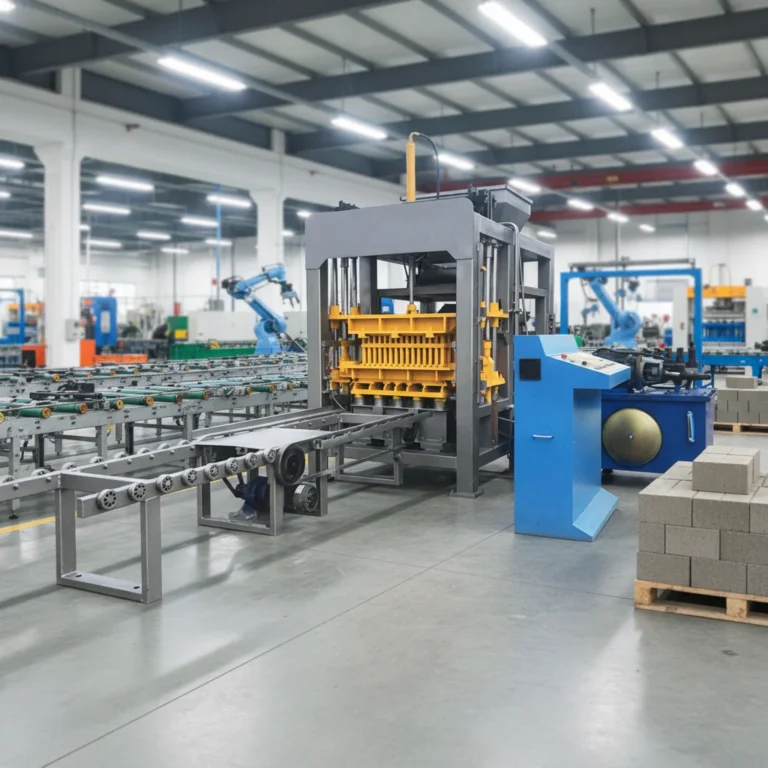
Complete System Integration — The QT6-15 automatic block making machine is specified with batching, mixing, and stacking as one matched line, ensuring each station’s cycle time aligns with the press without manual intervention.
Technical Specifications
| Parameter |
Value |
| Model |
QT6-15 |
| Product Type |
Automatic Concrete Block Making Machine |
| Host Machine Dimension |
5870 × 2220 × 2850 mm |
| Host Machine Weight |
5.5 Tons |
| Molding Area |
1050 × 500 mm |
| Host Machine Power |
31.5 kW |
| Vibration Force |
55 kN |
| Pallet Size |
1100 × 550 × 25 mm |
| Voltage |
Configurable: 220 / 380 / 415 / 440V |
| Molding Period |
15 Seconds (basis not stated in source — confirm block format, material, and thickness) |
| Vibration Method |
Hydraulic + Platform Vibration |
| Vibration Frequency |
2800 – 4500 Times/Minute |
| Control System |
Siemens PLC with independently developed program |
| Motor Brand |
Germany SIEMENS or CE standard equivalent |
| Travel Switch |
France Schneider or Japan Omron |
| Mould Treatment |
Heat treatment and carburizing, 54 – 58 HRC hardness |
| Batching Machine |
PLD1200, 1200L hopper, 4 × 2.5 m³ storage |
| Concrete Mixer |
JS500, 800L charging / 500L discharging, 18.5 kW |
| Stacker |
SY-4, 3 kW, mobile pallet stack |
| Welding Process |
Carbon dioxide protection welding |
Application Suitability
| Application |
Material or Output |
| Hollow block production |
Crushed stone, sand, cement, and fly ash blends |
| Solid block production |
Dense aggregate mixes for load-bearing walls |
| Paving block production |
Fine aggregate and cement for high-compression surfaces |
| Interlocking brick production |
Graded sand and cement with colour pigment options |
| On-site contractor production |
Locally sourced aggregate matched to regional building standards |
Why the Voltage Question Must Come Before the Price
Confirming local voltage, frequency, and PLC language is the single step that prevents weeks of idle equipment after arrival.
Buyers often focus on press capacity and automation tier but leave electrical specifications until the machine is already crated. I once shipped a unit to a West African site where the workshop ran on 415V three-phase supply. The machine arrived configured for 380V, tripped on first energization, and the client stood down the crew while transformers were sourced locally — nearly three weeks of lost production time. That kind of delay is invisible in a quotation comparison but costs far more than any line-item difference. When evaluating an automatic block making machine manufacturer, the electrical confirmation document should sit alongside the capacity calculation [NEED_CITE: voltage and frequency standards by export market].
Where the QT6-15 Sits Across the Range
The QT6-15 occupies the mid-to-upper tier of a complete block machine lineup that stretches from semi-automatic workshop presses to high-capacity fully automatic lines. Its 1050 × 500 mm molding area places it above entry-level models yet below large-format machines intended for continuous two-shift operation. Buyers setting up a first block plant typically find this automatic block making machine manufacturer tier balances output with manageable floor space and a smaller initial outlay.
Matching the Line to Your Investment Stage
A semi-automatic press demands more manual pallet handling but keeps capital requirements lower, while a fully automatic cubing system removes the operator from the stacking zone entirely. The QT6-15 line bridges that gap: the SY-4 mobile stacker automates pallet collection without requiring the full conveyor-rack infrastructure of a high-tier plant. This makes the step up from manual operation practical for contractors who want consistent daily output without overbuilding the facility on day one [NEED_CITE: automation upgrade paths in block production].
Reading the Specifications That Matter on Site
The 55 kN vibration force works together with hydraulic pressure to compact the mix into the mould cavity; insufficient vibration leaves porous blocks, while excessive force fractures green units before ejection. The pallet dimension of 1100 × 550 × 25 mm must match the curing racks and forklift tines already in the buyer’s yard — a mismatched pallet means the entire curing workflow has to be rebuilt around new handling equipment. The PLD1200 batching machine with ±2% ingredient precision controls mix consistency from the start of the line, because variation at the hopper translates directly into block density variation at the press.

The Hidden Cost of a Misconfigured Press
A machine quoted by cycles per hour without naming the assumed block format gives a number that rarely translates to actual daily output. Buyers who discover this gap after commissioning end up running the press harder to meet commitments, accelerating wear on moulds and hydraulic seals. Pallet material chosen without regard to local humidity can warp within weeks, causing misalignment at the feed station and unscheduled downtime. When the PLC display language differs from the operator’s working language, troubleshooting electrical faults becomes slow and error-prone [NEED_CITE: common causes of block machine downtime in export markets].
Why Source This Configuration Here
Block machinery is the sole production focus, so the QT6-15 press, moulds, pallets, and SY-4 stacker are specified as one integrated system rather than assembled from unrelated suppliers. Configuration is set against the buyer’s actual mix design and local aggregate, not pulled from a catalogue default. Moulds are designed and supplied for the formats the buyer’s market demands, with custom drawings available. Automation level is selectable, so a plant can begin at semi-automatic and add stacker or cubing functions later. Installation support includes on-site commissioning with operator training on the Siemens PLC interface.
Documentation & Verification
- Line layout drawing stating block format assumed for 15-second molding period
- Machine specification sheet confirming QT6-15 designation and all electrical ratings
- Mould format list matched to buyer’s target market and pallet dimensions
- Voltage, frequency, and PLC display language confirmation sheet before dispatch
- Factory test record on buyer’s specified block format prior to crating
Installation, Commissioning & Support
- Workshop area of approximately 200 m² required for full QT6-15 line with curing space
- Dedicated 3-phase circuit sized for 31.5 kW host plus batching and mixer loads
- Machine arrives partially dismantled; host frame, mixer, and stacker reassembled on-site
- PLC program parameters calibrated to buyer’s confirmed block format during commissioning
- Operator training covers mould change procedure and Siemens PLC fault diagnostics
- Carburized moulds rated beyond 100,000 cycles; hydraulic seals and travel switches stocked
What to Include with Your Inquiry
To size the QT6-15 line accurately, share the target block formats you sell most, your planned daily output per format, and the aggregate materials available at your site. Include the local supply voltage and frequency so the motor and control panel can be configured before production starts.
Frequently Asked Questions
Q: How is the QT6-15 output capacity calculated, and which block format is assumed?
A: The 15-second molding period appears in source data but does not state which block format, wall thickness, or mix composition it assumes. Real daily output depends on the specific mould installed, the curing cycle, and shift length. Always request a capacity calculation that names the exact block format before comparing machines across suppliers.
Q: Where does this model sit in the range, and when should I step up or down?
A: The QT6-15 is positioned for buyers who need automatic batching and stacking without the floor space and capital of a high-capacity continuous line. Step down to a semi-automatic tier if daily volumes are modest. Step up if two-shift operation and fully automatic cubing are planned from the outset.
Q: What plant footprint and workshop area does the full line require?
A: The host machine measures 5870 × 2220 × 2850 mm, and the full line with batching, mixer, and stacker needs roughly 200 m². This figure does not include curing racks or raw material storage. Confirm ceiling height and column spacing before finalizing the layout.
Q: Which voltage configurations are available for the target market?
A: The electrical system is configurable for 220, 380, 415, or 440 volts. Voltage, frequency, and the PLC display language must be confirmed in writing before the machine enters production. This prevents on-site transformer sourcing and commissioning delays after arrival.
Q: What is included in the full line quotation versus what must be sourced separately?
A: The standard package covers the PLD1200 batcher, JS500 mixer, QT6-15 press, and SY-4 stacker. Pallets, curing racks, forklift, and foundation work are typically buyer-supplied. Confirm pallet material and size so they match the stacker and existing handling equipment.

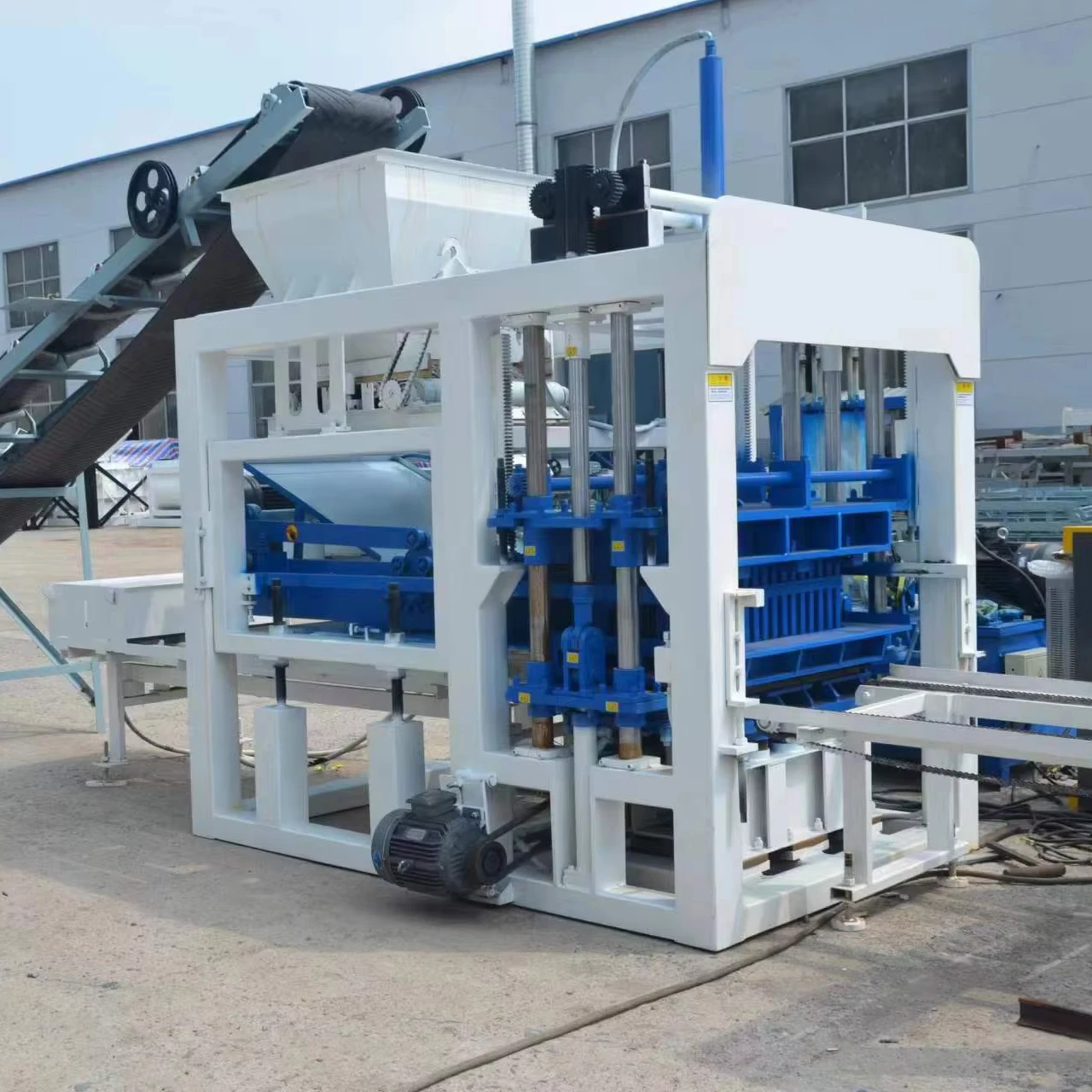
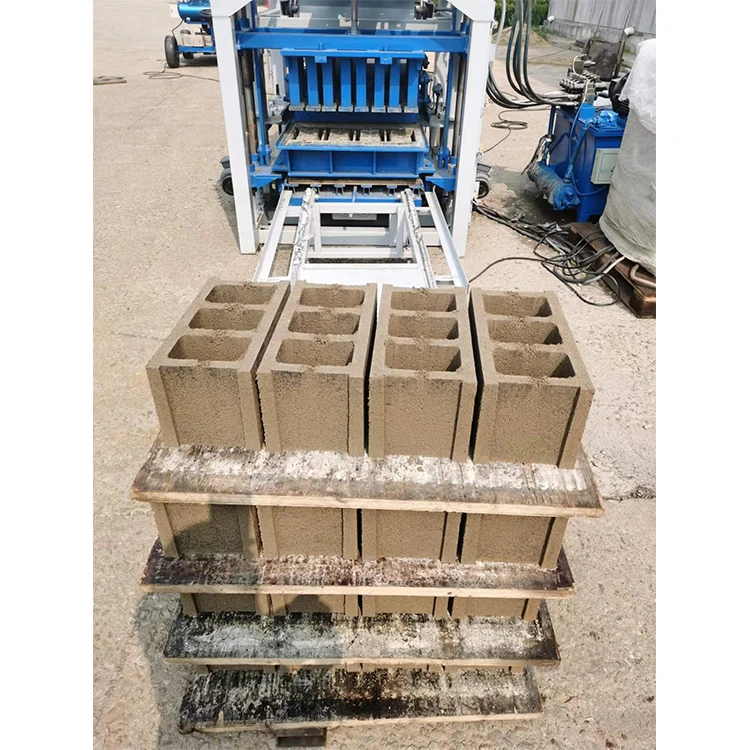 High quality block machine