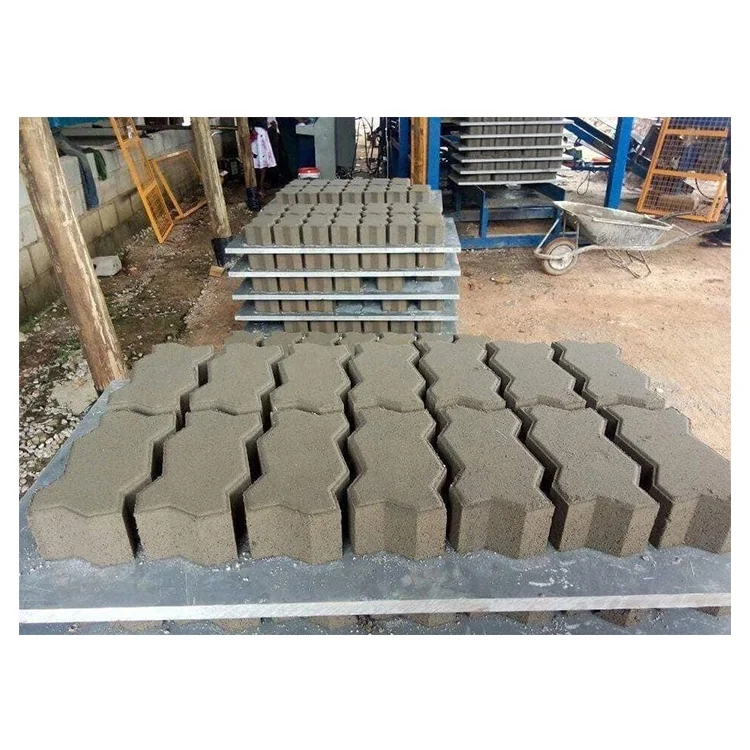
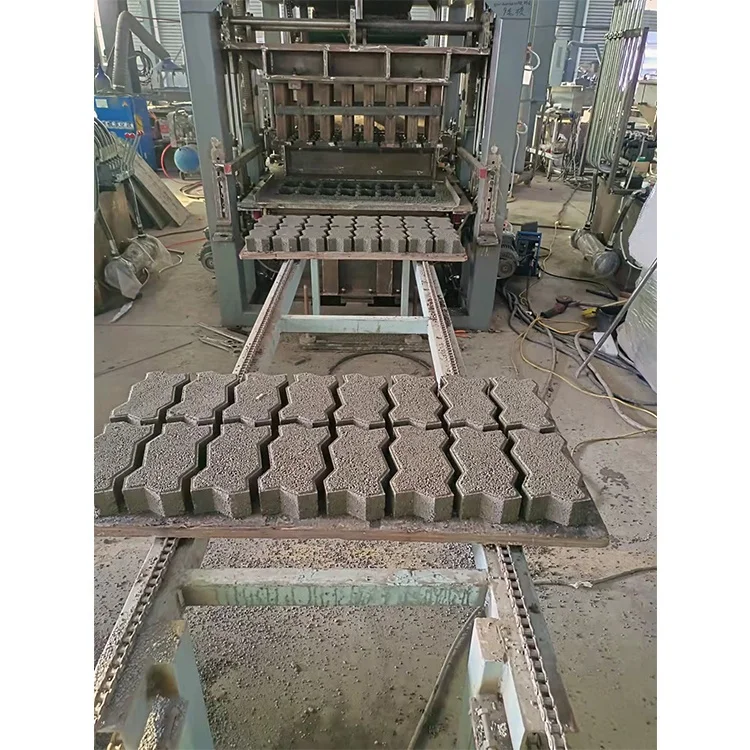
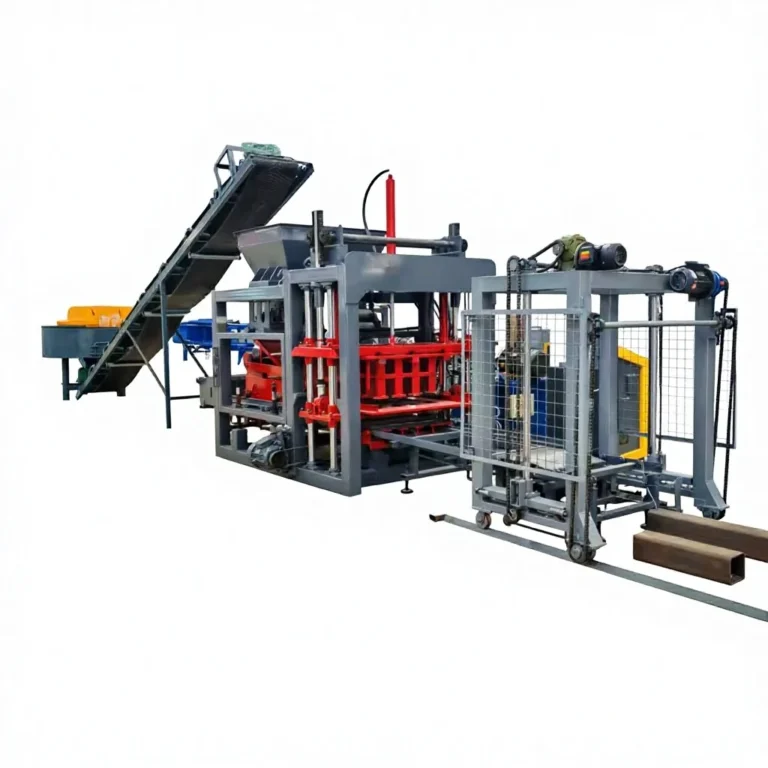
Matched System Sizing — the QT6-15 is specified as press, mould, pallet and handling together, not assembled from separate suppliers, so capacity aligns across the line.
Technical Specifications
| Parameter |
Value |
| Model |
QT6-15 |
| Product Type |
Automatic Hydraulic Block Making Machine |
| Host Machine Dimensions |
5870 × 2220 × 2850 mm |
| Host Machine Weight |
5.5 Tons |
| Molding Area |
1050 × 500 mm |
| Workshop Area |
200 m² (source value — verify against manufacturer catalog) |
| Host Machine Power |
31.5 kW |
| Vibration Force |
55 kN |
| Vibration Method |
Hydraulic + Platform Vibration |
| Vibration Frequency |
2800–4500 times/min |
| Pallet Size |
1100 × 550 × 25 mm |
| Voltage |
220/380/415/440V (Customized) |
| Molding Period |
15 Seconds (basis not stated in source — confirm block format / material / thickness) |
| Control System |
Siemens PLC with independently developed control program |
| Motor Brand |
Germany SIEMENS or CE standard brand |
| Travel Switch |
France Schneider / Japan Omron |
| Mould Heat Treatment |
Carburizing treatment, hardness 54–58 HRC, lifespan >100,000 cycles |
| Welding |
CO₂ protection welding, CE standard materials |
| Batching Machine (PLD1200) |
Hopper capacity 1200L, storage 4×2.5 m³, productivity 56 m³/h, ingredient precision ±2%, weight 4500 kg, dimensions 12000×2200×2500 mm |
| Concrete Mixer (JS500) |
Charging volume 800L, discharging volume 500L, capacity 25 m³/h, mixing motor 18.5 kW, max aggregate size 60 mm, weight 2800 kg, dimensions 4490×3030×5280 mm |
| Stacker (SY-4) |
Power 3 kW, mobile pallet stack, suitable for hollow block and pavers, weight 600 kg |
| Automation Level |
Automatic (PLC controlled, batching + mixing + pressing + stacking) |
| Warranty |
1 year for whole machine (excluding spare parts) |
| Output Capacity |
Not stated with block format basis (basis not stated in source — confirm block format / material / thickness) |
| Standards |
CE |
Application Suitability
| Application |
Material or Output |
| Hollow block production |
Crushed stone, sand, cement, and fly ash blends for load-bearing and partition walls |
| Solid block production |
Dense aggregate mixes for structural masonry and foundation courses |
| Paving block production |
Fine-graded sand and cement for pedestrian and light-traffic paved surfaces |
| Interlocking brick production |
Soil-cement or concrete mixes for dry-stack retaining and decorative walls |
| On-site contractor production |
Local aggregate and cement for project-specific block formats without a fixed plant |
What "15 Seconds per Cycle" Actually Means for Your Daily Output
Cycle time only matters when you know which block format it was measured on.
The QT6-15 automatic block making machine manufacturer quotes a 15-second molding period, but that figure shifts depending on whether you are pressing a 400×200×200mm hollow block, a 60mm paving block, or a thinner interlocking brick. Vibration duration, hydraulic dwell, and feed-box travel all change with format and mix stiffness. Without a stated block format, a cycle number becomes a marketing line rather than a planning tool [NEED_CITE: block format assumptions in capacity calculations]. I have watched buyers size their curing yards and forklift shifts around a headline cycle rate, only to find real daily output falls well short once the actual product is on the pallet.

Where the QT6-15 Sits in the Full Machine Range
The Shiyue range starts at mobile egg-laying units for on-site work, moves through semi-automatic presses for smaller workshops, and climbs to high-capacity fully automatic lines. The QT6-15 automatic block making machine sits in the mid-tier, bridging entry-level semi-automatic setups and high-volume plants. Buyers planning a first block plant can see whether this tier covers their daily target without overspending on a line they will not fully load in year one.
Comparing Investment and Footprint Across Tiers
A semi-automatic machine pulls less power and needs a smaller curing yard, but it also ties labour to every pallet movement. The QT6-15 line includes a PLD1200 batching unit, JS500 mixer, and SY-4 stacker, so the footprint expands to roughly 200 m² once material flow and stacking space are counted. That figure matters when you are deciding between a mid-tier automatic line and a higher-tier plant that may demand double the floor space and a dedicated transformer [NEED_CITE: typical workshop area requirements for mid-tier block lines].
How Vibration and Pressure Define Block Density
The 55 kN vibration force combined with hydraulic pressure determines how tightly aggregate particles pack inside the mould. Higher vibration frequency (2800–4500 cycles/min) works well for fine-graded paving mixes, while coarser hollow-block mixes need longer dwell at lower frequency to avoid segregation. The carburizing-treated moulds at 54–58 HRC hardness resist abrasive wear from crushed stone, keeping dimensional tolerance consistent across production runs. Matching vibration profile to your local aggregate and cement ratio is what separates blocks that pass a compression test from those that chip on demoulding.
The Cost of Skipping Pallet and Handling Checks
If the pallet size in the quotation does not match the curing racks and forklift tines already on site, blocks end up stacked by hand or re-palletised before they cure. Pallet material also affects vibration transmission; a warped timber pallet absorbs energy that should be driving aggregate into the mould corners. Confirming pallet spec before the machine ships avoids a week of manual handling that was never budgeted for [NEED_CITE: pallet handling mismatches in block plant commissioning].
Why Buyers Source This Tier from Shiyue
Block machinery is the sole product focus, so the QT6-15 is quoted as a matched system: press, mould, pallet, batching, mixing, and stacking all sized to the same cycle rhythm. Configuration starts from the buyer’s actual mix design and target block format rather than a catalogue default. Mould design covers the formats the buyer’s market sells, with custom drawings available. Voltage, frequency, and PLC display language are locked before production, so the control cabinet arrives ready for local power and operators.
Documentation & Verification
- Line layout and capacity calculation stating the block format assumed for each output figure
- Machine specification sheet confirming voltage, frequency, and PLC display language
- Mould drawing and format list matching the buyer’s target block dimensions
- Pallet specification aligned with curing area and forklift capacity on site
- Factory test record demonstrating cycle time under a defined block format
- Operation and maintenance manual with wear parts and mould replacement intervals
Installation, Commissioning & Support
- Foundation slab must support 5.5-ton host machine plus dynamic vibration loads
- Dedicated circuit sized for 31.5 kW host plus batching and mixer auxiliary loads
- Machine arrives dismantled; host frame, hydraulic station, and PLC cabinet reassemble on site
- Commissioning includes vibration frequency tuning to buyer’s specific mix and block format
- Operator training covers PLC navigation, mould change procedure, and daily greasing points
- Wear parts list identifies high-wear items and recommended reorder intervals
What to Prepare Before Requesting a Quote
Share your target block formats with dimensions, daily output requirement, local aggregate type and source, available workshop length and ceiling height, and the voltage and frequency at your site. If you already have curing racks or a forklift, send the pallet dimensions and tine spacing so the QT6-15 automatic block making machine line can be configured around what is already in place.
Frequently Asked Questions
Q: How is the QT6-15’s output capacity calculated, and which block format is assumed?
A: Output depends on block format, mix stiffness, and vibration dwell. The 15-second cycle figure must be tied to a specific block dimension and material blend. Request a capacity calculation that states the exact format, so daily planning reflects the product you will actually sell, not a generic number.
Q: Where does the QT6-15 sit in the Shiyue range compared to semi-automatic and higher-tier machines?
A: It occupies the mid-tier between entry-level semi-automatic presses and high-capacity fully automatic lines. Buyers compare investment level, workshop footprint, and labour requirement across tiers to decide whether this output bracket matches their current demand without oversizing the plant.
Q: What voltage, frequency, and PLC language options are available, and when must they be confirmed?
A: Voltage is configurable across 220, 380, 415, and 440V at 50 or 60 Hz. PLC display language is selectable. Both must be locked before production starts so the control cabinet and motor nameplates arrive correct for the destination site, avoiding commissioning delays.
Q: What plant footprint and workshop area does the QT6-15 line require?
A: The host machine alone is 5870 × 2220 mm, but the full line including batching, mixing, and stacking expands the working area. A 200 m² workshop is referenced in source data and should be verified against the specific line layout and curing yard arrangement planned for your site.
Q: Can I start with a semi-automatic configuration and upgrade to full automatic later?
A: The Shiyue range allows buyers to begin with semi-automatic pallet handling and add automatic stacking or cubing later. Confirming the upgrade path at the quotation stage ensures the press frame and PLC are provisioned for future modules without replacing the core machine.

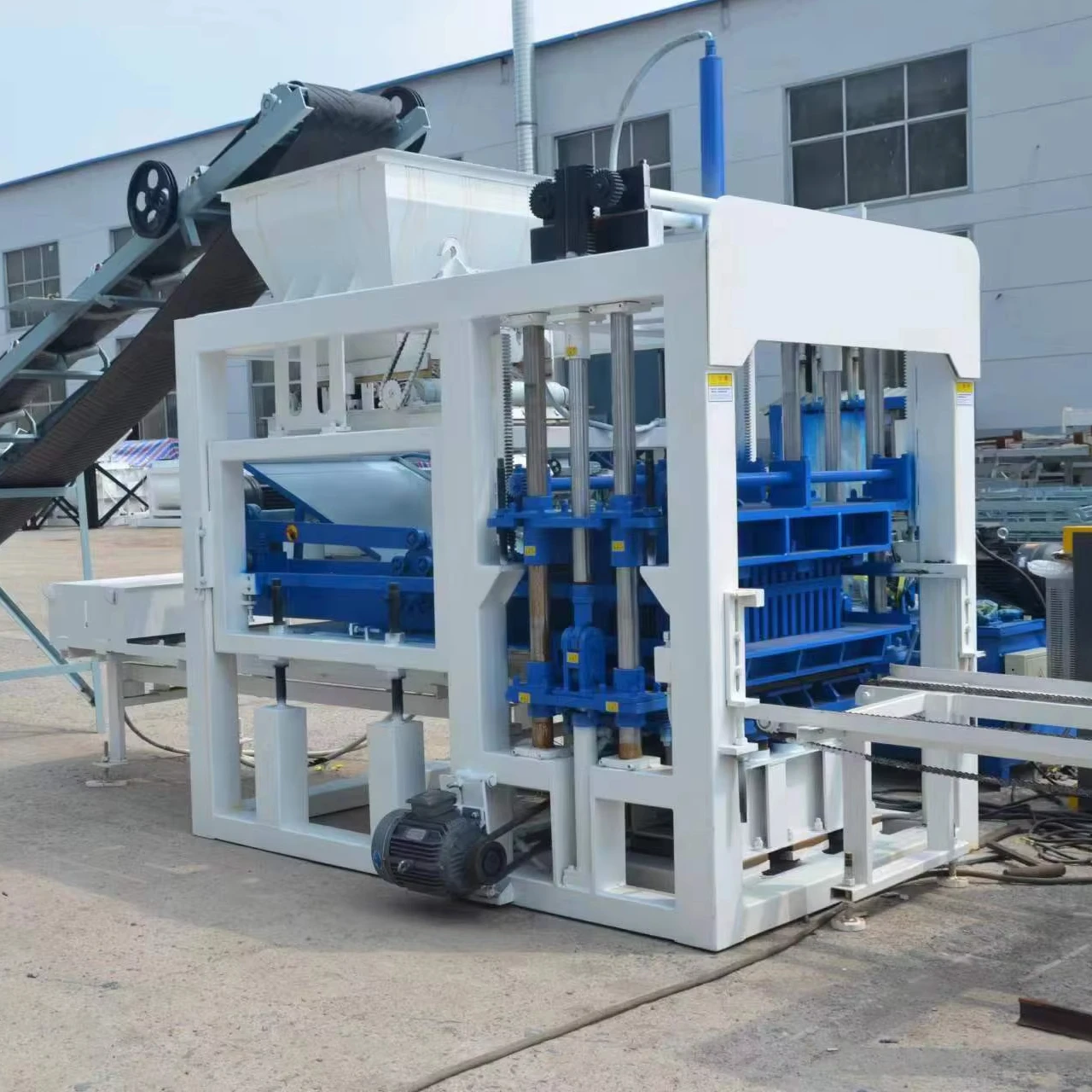
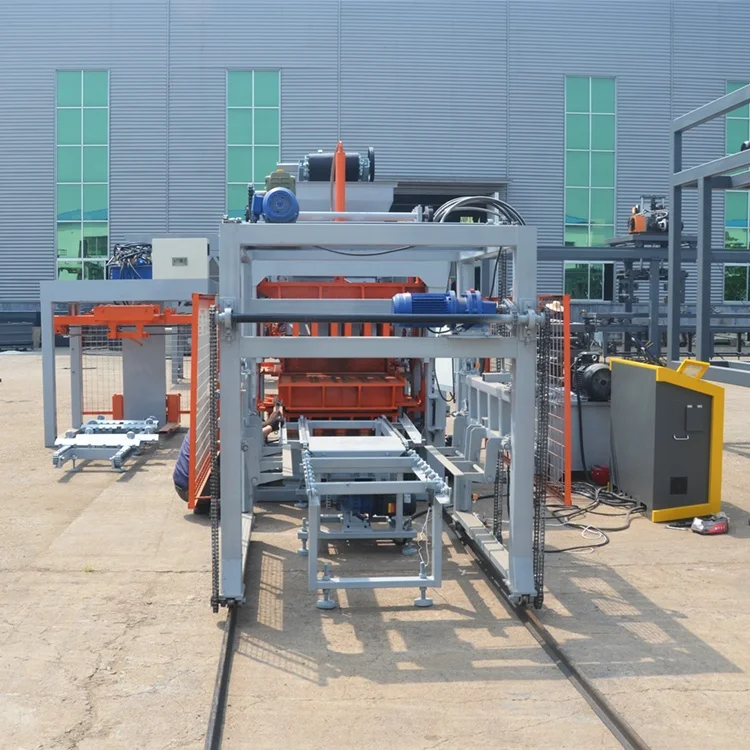 High quality block machine