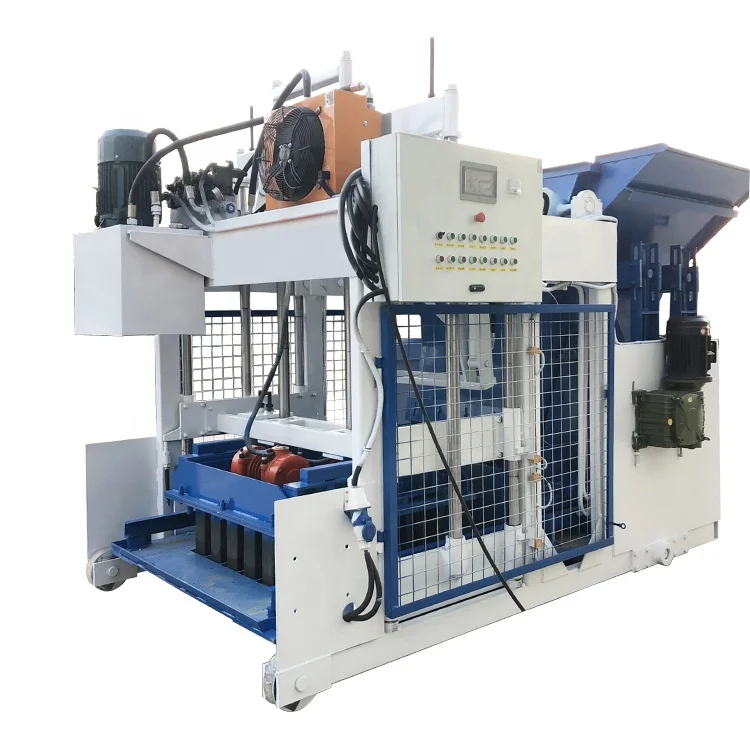
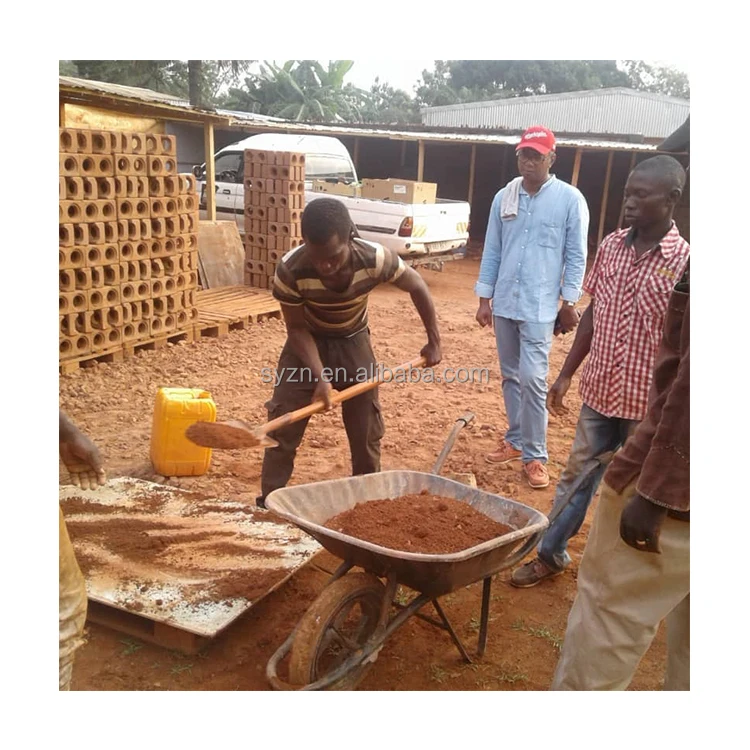
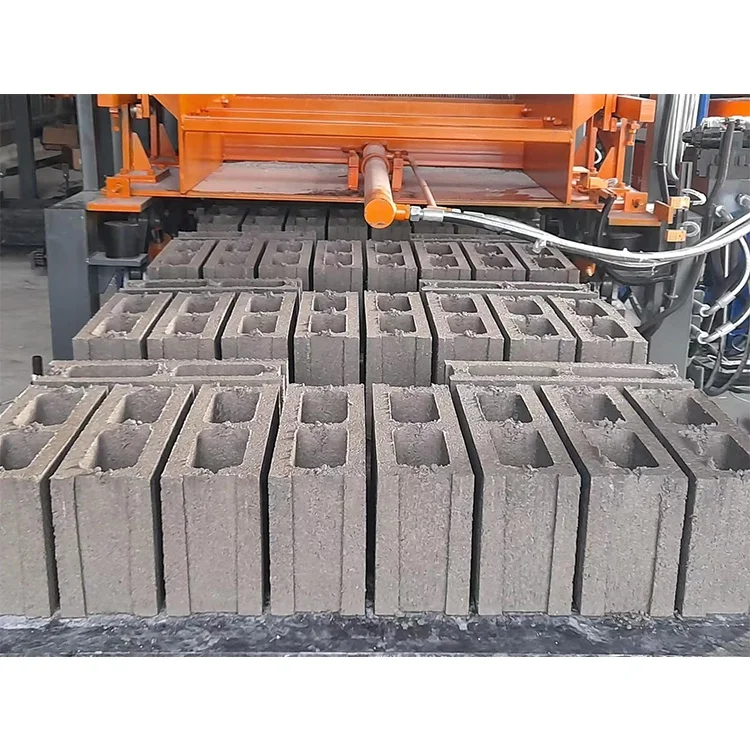
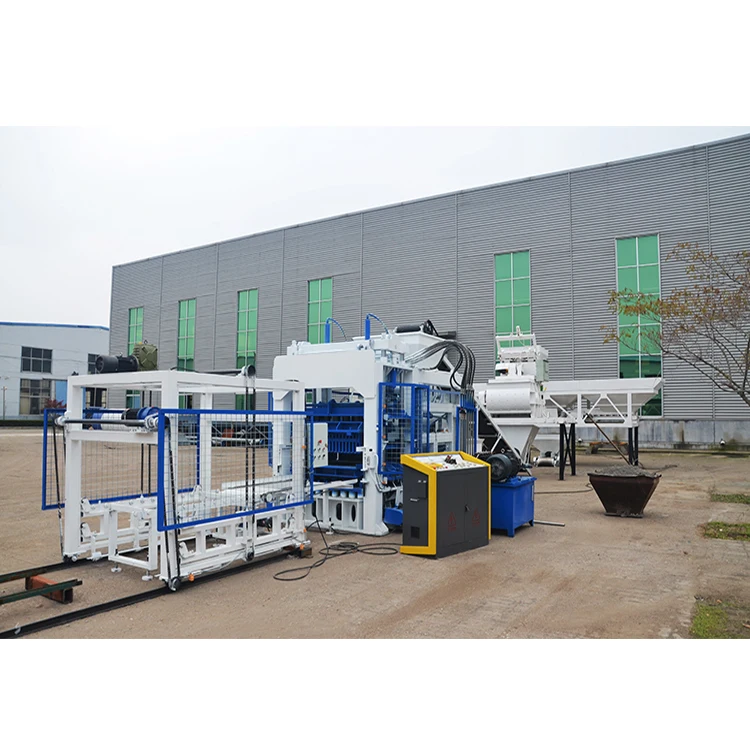
Matched system configuration — the QT5-15 block machine, JS500 mixer, pallet feeder and hydraulic station are specified together so cycle times align across every station on the line.
Technical Specifications
| Parameter |
Value |
| Model |
QT5-15 |
| Product Type |
Automatic Concrete Block Making Machine |
| Overall Dimensions (L×W×H) |
7100×1600×2610 mm |
| Molding Cycle |
15 s (basis not stated in source — confirm block format / material / thickness) |
| Vibration Frequency |
0–60 Hz |
| Vibration Force (Exciting Power) |
40 kN |
| Total Power |
33.5 kW |
| Mixer Model |
JS500 |
| Pallet Size |
1100×550 mm |
| Total Weight |
5 T |
| Control System |
PLC control system |
| Hydraulic Station |
High-pressure hydraulic station (included) |
| Included Line Equipment |
Block making machine, hydraulic station, PLC control system, pallet feeder, brick conveyor, block sweeper |
| Free Accessories |
Manual hydraulic trolley, spare parts, tools |
| Applied Products |
Paver, solid block, hollow block, curbstone (mould change required) |
| Raw Materials |
Crushed stones, sand, cement, dust, fly ash |
| Automation Level |
Fully automatic |
| Output — Hollow Block 400×200×200 mm |
5 pcs/mould, 450 pcs/hr, 3600 pcs/8 hr |
| Output — Hollow Block 400×150×200 mm |
6 pcs/mould, 540 pcs/hr, 4320 pcs/8 hr |
| Output — Solid Brick 400×100×200 mm |
8 pcs/mould, 720 pcs/hr, 5760 pcs/8 hr |
| Voltage & Frequency |
To be confirmed before commissioning |
| PLC Display Language |
To be confirmed before commissioning |
| Key Features |
PLC control, pallet feeder, brick conveyor, block sweeper, high-pressure hydraulic station |
Application Suitability
| Application |
Material or Output |
| Hollow block production for building walls |
Crushed stone, sand, cement, fly ash — 400×200×200 mm or 400×150×200 mm formats |
| Solid brick manufacturing |
Cement, sand, crushed stone dust — 400×100×200 mm format |
| Paving block production for roads and walkways |
Crushed stone and cement with mould change |
| Curbstone production for civil construction |
High-density mix with mould change |
| On-site block production for housing projects |
Locally sourced aggregate with site-specific mix design |
What "450 Pieces per Hour" Actually Means on a Block Machine Line
A capacity figure without the block format attached is meaningless for daily planning.
I once worked on a shipment where the buyer received a brochure number quoted in cycles, then discovered their market primarily sold a different block size. The real output was barely half of what they budgeted for. On the QT5-15, the 450 pieces per hour figure applies specifically to 400×200×200 mm hollow blocks — switch to a smaller solid brick format and the per-mould count rises, but the pressing area limits how many cavities fit. An Automatic Concrete Block Making Machine manufacturer should always state which format each number assumes, and here every capacity row names the exact dimensions [NEED_CITE: block output capacity calculation standards by format].

Where the QT5-15 Sits in the Full Machine Range
The QT5-15 occupies the middle position in the SHIYUE automatic line. Below it sit semi-automatic models that require manual pallet handling and lower capital outlay, suited for workshops producing limited formats. Above it, higher-tier automatic lines add cubing systems, larger pallet sizes, and faster cycle times for plants running multiple shifts. This mid-tier positioning means a buyer gets full PLC-controlled automation without the footprint and infrastructure cost of a high-capacity installation. For a first-time Automatic Concrete Block Making Machine manufacturer buyer or a contractor replacing a manual press, this tier bridges the gap between workshop-scale and industrial-scale production.
How the Line Equipment Connects Around the Press
A block machine does not operate alone. The JS500 mixer feeds material to the hopper, the pallet feeder delivers boards to the press in time with each cycle, and the brick conveyor moves finished blocks to the curing area. If any station runs slower than the press, the QT5-15 sits idle waiting. The block sweeper cleans pallets before they return to the feeder, closing the loop. This matched configuration prevents the common situation where the press is capable of higher output but supporting equipment creates a bottleneck [NEED_CITE: block production line synchronization requirements].
Reading the Specification Sheet for Production Impact
The 40 kN vibration force works together with the high-pressure hydraulic station to compact the mix into dense blocks — vibration settles the aggregate while hydraulic pressure locks it in place. The 1100×550 mm pallet size determines how many block cavities fit in one press stroke, directly controlling the per-mould count shown in the capacity table. The 0–60 Hz vibration frequency range allows adjustment for different aggregate sizes: coarser crushed stone needs lower frequency for deeper penetration, while finer sand benefits from higher frequency for surface finish. The 33.5 kW total power must be matched with the correct voltage and frequency for the destination country before the Automatic Concrete Block Making Machine manufacturer begins electrical assembly. The 15-second molding cycle is the baseline — actual cycle time depends on block height and material flow characteristics.
The Cost of Skipping the Configuration Conversation
Buyers who order a block machine by catalogue number alone often discover after arrival that the pallet size does not match their existing curing racks, or that the PLC display language is set to one their operators cannot read. Voltage mismatches delay commissioning by weeks while transformers are sourced locally. A mix designed for river sand produces weak blocks when the buyer’s local quarry only supplies crushed stone with high fines content. These are not manufacturing defects — they are configuration gaps that surface only when the machine meets the buyer’s actual conditions [NEED_CITE: common block machine commissioning delays by cause].
Why Source This Automatic Concrete Block Making Machine Manufacturer
Block machinery is our single focus, so the QT5-15 arrives with mould, pallet and handling equipment specified as one system rather than assembled from separate suppliers. Configuration is set against the buyer’s actual mix design and target block format, not a catalogue default. Mould design covers the formats the buyer’s market sells, with custom drawings available for non-standard sizes. The automation level is selectable — a buyer can start with the included PLC system and add stacking or cubing equipment later. Installation support includes operator training so the crew knows mould change procedure, vibration tuning, and daily maintenance before the first production run [NEED_CITE: block machinery supplier scope and documentation standards].
Documentation & Verification
- Line layout drawing showing QT5-15 station positions with pallet flow direction
- Capacity calculation sheet stating the block format assumed for each output figure
- Mould drawing and format list confirming available block sizes before production
- Voltage, frequency, and PLC display language confirmation recorded before assembly
- Factory test record and packing photographs provided before container loading
Installation, Commissioning & Support
- Foundation plan based on the 7100×1600 mm footprint and 5 T operating weight
- Electrical supply confirmed for the 33.5 kW total power requirement before shipment
- Machine arrives in dismantled sections for container loading, reassembled on site
- PLC parameters and vibration frequency tuned to the buyer’s mix during commissioning
- Operator training covers mould change, pallet feeder adjustment, and hydraulic station checks
- Wear parts list and mould maintenance schedule included with free spare parts kit
Before You Request a Quotation
To size the QT5-15 correctly, tell us the block formats your market actually sells, the daily output you need per format, and the raw materials available locally including aggregate type and moisture content. Confirm the voltage and frequency at your site, the PLC display language your operators require, and whether your existing curing area uses pallets of a specific size. If you are replacing an older press, note the current pallet dimensions and forklift capacity so the supporting equipment aligns with what you already have.
Frequently Asked Questions
Q: How is the QT5-15 positioned within the full SHIYUE block machine range?
A: The QT5-15 is the mid-tier automatic model. Below it are semi-automatic machines for smaller workshops with lower investment. Above it are higher-capacity automatic lines with larger pallets and faster cycles for multi-shift plants. It suits first-time plant owners or contractors upgrading from manual production who need full automation without the footprint of a high-capacity system.
Q: What block formats does the capacity table assume, and how do I verify output for my market?
A: The published figures assume specific formats: 400×200×200 mm hollow block at 450 pcs/hr, 400×150×200 mm hollow block at 540 pcs/hr, and 400×100×200 mm solid brick at 720 pcs/hr. If your market buys a different size, request a capacity calculation for that exact format with your mix design.
Q: Can I start semi-automatic and upgrade the QT5-15 later?
A: The QT5-15 ships as a fully automatic line with PLC control, pallet feeder, conveyor and sweeper included. Additional automation such as automatic stacking or cubing can be added as separate stations when production volume justifies the investment, without replacing the press itself.
Q: What electrical and control details must I confirm before the machine ships?
A: Voltage, frequency, and PLC display language are configured during assembly and must be confirmed before production begins. Mismatched voltage delays commissioning. Provide your site supply specifications and the language your operators will use on the control screen.
Q: What plant footprint does the QT5-15 require compared to other models?
A: The machine itself measures 7100×1600 mm, but total line footprint depends on mixer placement, pallet return path, and curing area layout. Smaller semi-automatic models need less space, while larger automatic lines require more room for stacking and cubing stations. Submit your site dimensions for a line layout drawing.

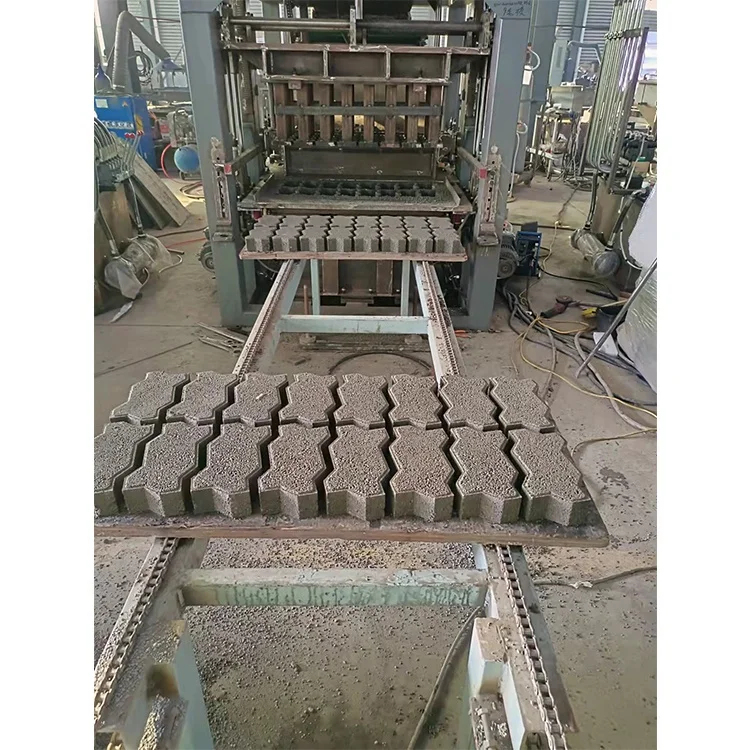
 High quality block machine