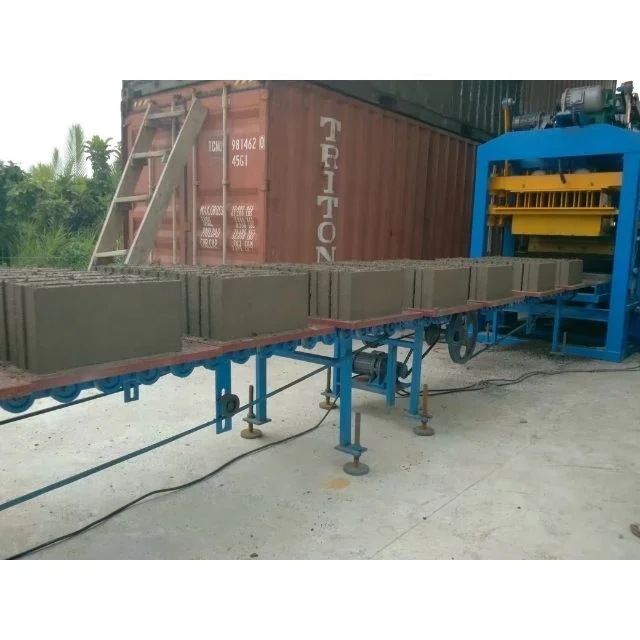
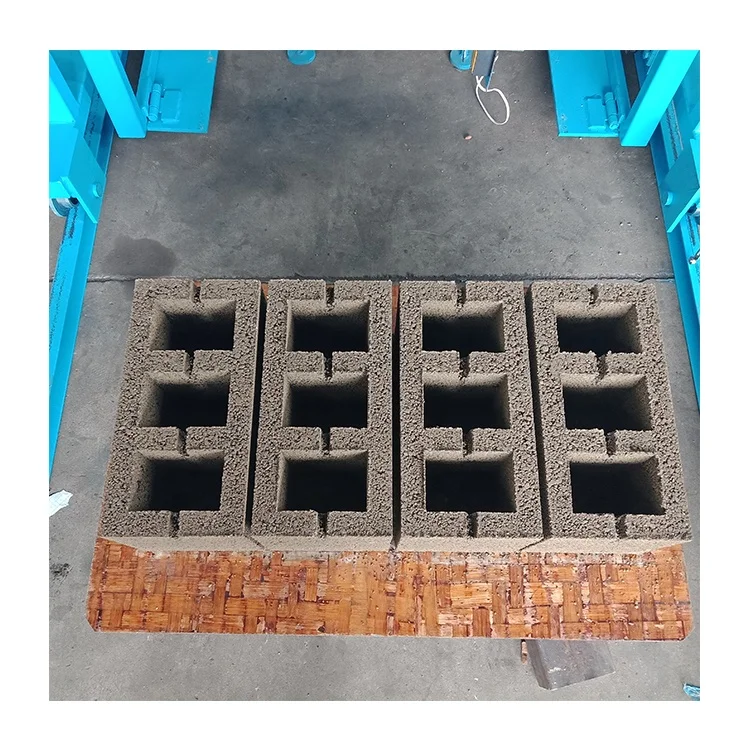
Mid-Tier Range Clarity — the QT6-15 automatic block machine occupies a defined position in our output tier ladder, with capacity figures stated per block format rather than as a single headline number.
Technical Specifications
| Parameter |
Value |
| Model |
QT6-15 |
| Product Type |
Automatic Concrete Block Making Machine |
| Rated Pressure |
21 MPa |
| Molding Method |
Vibration and hydraulic pressing |
| Molding Cycle |
15 s – 20 s |
| Pallet Size |
900 × 700 mm |
| Main Machine Weight |
6000 kg |
| Control System |
PLC |
| Voltage & Frequency |
Customizable to local supply (basis to be confirmed) |
| Automation Level |
Automatic (simple line or full line) |
| Output — Hollow Block (400×200×200 mm) |
1440 pcs/h; 11,520 pcs per 8-hour shift |
| Output — Paving Brick (200×100×60 mm) |
5040 pcs/h; 40,320 pcs per 8-hour shift |
| Output — Solid Brick (240×115×53 mm) |
7680 pcs/h; 61,440 pcs per 8-hour shift |
| Supported Mould Formats |
Hollow block, paving brick, solid brick, interlocking brick, curbstone |
| Raw Materials |
Cement, sand, fly ash, stone powder, slag |
| Simple Line Configuration |
JS500 mixer, 8 m conveyor belt, automatic stacker |
| Full Line Configuration |
Cement silo, screw conveyor, cement scale, batching machine, pallet loader, block and pallet separator |
| Warranty |
1 year (excluding wearing parts) |
| Assembly State |
Top cylinder removed for container loading; reassembly on site |
| Standards |
CE (basis to be confirmed) |
Application Suitability
| Application |
Material or Output |
| Hollow block production for building walls |
Crushed stone, cement, sand aggregate mix |
| Paving brick production for sidewalks and plazas |
Cement, sand, stone powder with optional color pigment |
| Solid brick manufacturing for load-bearing structures |
Fly ash, cement, slag blend |
| Interlocking brick for retaining walls and slopes |
Stone powder, cement, sand |
| Curbstone production for road edges |
Coarse aggregate, cement, stone dust |
What "11,520 Blocks per Shift" Actually Means for the QT6-15 Automatic Block Machine
Capacity only matters when tied to the block format you intend to sell.
The headline number on a brochure rarely tells you which block it assumes. I have stood on curing yards where the daily pallet count fell well short because the quoted figure was based on a small solid brick while the buyer was running hollow blocks. With the QT6-15 automatic block machine, every output figure above is linked to a specific mould dimension. When you know which format your market demands, you can read the right number from the table and plan curing space, pallet inventory, and shift staffing around it. [NEED_CITE: mismatch between quoted and actual block output in plant commissioning reports]

Where the QT6-15 Sits in the Output Tier Ladder
Our range spans from small workshop machines up through high-capacity automatic lines. The QT6-15 occupies the mid-tier slot, bridging the gap between entry-level semi-automatic presses and the larger-format models designed for continuous two-shift operation. For a buyer setting up a first automatic plant or replacing an ageing machine, this tier offers a footprint that fits inside a standard industrial bay while still delivering pallet volumes that justify a dedicated curing yard.
Choosing Between Simple Line and Full Line Configurations
The distinction between the simple line and the full line comes down to how much manual handling you are willing to accept at the press entry and exit points. The simple line pairs the QT6-15 with a JS500 mixer, an 8 m conveyor, and an automatic stacker — enough to get blocks off the press and into the curing area without hand-carrying pallets. The full line adds a cement silo, batching machine, pallet loader, and block-and-pallet separator, closing the loop so that raw material dosing and pallet circulation run continuously. [NEED_CITE: automation level selection criteria for medium-capacity block plants]
Reading the Specifications That Shape Daily Output
The 21 MPa rated pressure and the vibration system work together to compact the mix into the mould cavity. Higher pressure alone does not guarantee block strength; the vibration frequency must also match the particle size of the local aggregate so that fines fill the voids between coarse particles. The 900 × 700 mm pallet size is a dimension you should cross-check against your existing curing racks and forklift fork spacing — a mismatch here means either new racks or slow manual repositioning every cycle. The 15 s – 20 s molding cycle determines how many pallets pass through the press per hour, but the actual throughput also depends on how fast the upstream mixer can deliver fresh material and how fast the stacker can clear finished pallets. If the mixer falls behind, the press idles regardless of its rated cycle time.
The Cost of Skipping Configuration Details Before Shipment
I once arrived at a commissioning site where the PLC display was still set to Chinese characters, and the local operators could not navigate the menu. We lost three full shifts before I rewrote the interface on a laptop. Beyond language, voltage and frequency must match the site transformer; a 380 V / 50 Hz machine plugged into a 440 V / 60 Hz supply will burn out motor windings within weeks. These are not exotic edge cases — they repeat on sites across East Africa and Southeast Asia with predictable regularity. Confirming the control language and electrical specification before the crate leaves the factory avoids delays that no amount of on-site improvisation can recover. [NEED_CITE: voltage and frequency standards by export market]
Why Buyers Source This Tier Through Our Range
Block machinery is our single focus, which means the QT6-15 is specified as part of a matched system — machine, mould, pallet, and handling equipment are sized together rather than assembled from separate quotations. We set the configuration against your actual mix design and target block format, not a catalogue default. Moulds are designed for the formats your market sells, with custom drawings available when a standard mould does not fit. The automation level is selectable, so you can start with the simple line and add pallet loading or separation later without replacing the press itself.
Documentation & Verification
- Line layout drawing with capacity calculation stated per block format
- Machine specification sheet confirming hydraulic pressure and pallet size
- Mould drawing and format list covering all required block dimensions
- Voltage, frequency, and PLC display language confirmation record
- Factory test record on your specified mix before dispatch
- Operation and maintenance manual with wear parts list
Installation, Commissioning & Support
- Top cylinder removed for container loading; reassembly required on site with overhead crane
- Foundation must accommodate 6000 kg main machine weight plus dynamic vibration loads
- Dedicated electrical circuit required matching confirmed voltage and frequency rating
- PLC display language and parameters set to your specification before operator training begins
- Mould change procedure demonstrated during commissioning with your selected block formats
- Wear parts list and hydraulic seal kit supplied for first replacement cycle
What to Include in Your Inquiry
To size the line accurately, share the block formats you intend to produce and the daily output target for each. Tell us which raw materials are available locally and any existing curing racks or forklifts on site so we can match the pallet size. Confirming your site voltage, frequency, and preferred PLC language up front keeps the commissioning schedule on track.
Frequently Asked Questions
Q: How is the QT6-15 capacity verified, and which block format does each figure assume?
A: Every capacity figure is tied to a specific block dimension and an 8-hour shift. The hollow block number assumes a 400×200×200 mm mould, the paving brick figure assumes 200×100×60 mm, and the solid brick figure assumes 240×115×53 mm. We provide a written capacity calculation that states the format and cycle time used, so there is no ambiguity when you plan production schedules.
Q: Where does the QT6-15 sit compared to semi-automatic and higher-output models in the range?
A: It occupies the mid-tier automatic position. Below it are semi-automatic machines suited to lower daily volumes and smaller footprints. Above it are higher-output automatic lines designed for continuous multi-shift plants. The QT6-15 automatic block machine is typically chosen when a buyer needs automatic pallet handling but is not yet ready for the capital outlay of a full high-capacity line.
Q: What voltage, frequency, and control language options are available?
A: Voltage and frequency are customizable to match the local grid at your site. The PLC display language is confirmed before production so that operators see their working language on day one. We record these settings on the voltage and control confirmation document, which is shared with you for sign-off before the machine ships.
Q: What is included in the simple line versus the full automatic line?
A: The simple line includes a JS500 mixer, an 8 m conveyor belt, and an automatic stacker alongside the press. The full line adds a cement silo, screw conveyor, cement scale, batching machine, pallet loader, and block-and-pallet separator. Both configurations use the same QT6-15 press; the difference is how much upstream batching and downstream pallet handling is automated.
Q: How does mould change work, and what formats are supported?
A: The QT6-15 supports hollow block, paving brick, solid brick, interlocking brick, and curbstone moulds. A mould change involves lifting the current mould out and lowering the replacement in, then adjusting press parameters for the new cavity depth. We provide mould drawings and a format list so you can verify that every block your market requires is covered before the order is finalized.

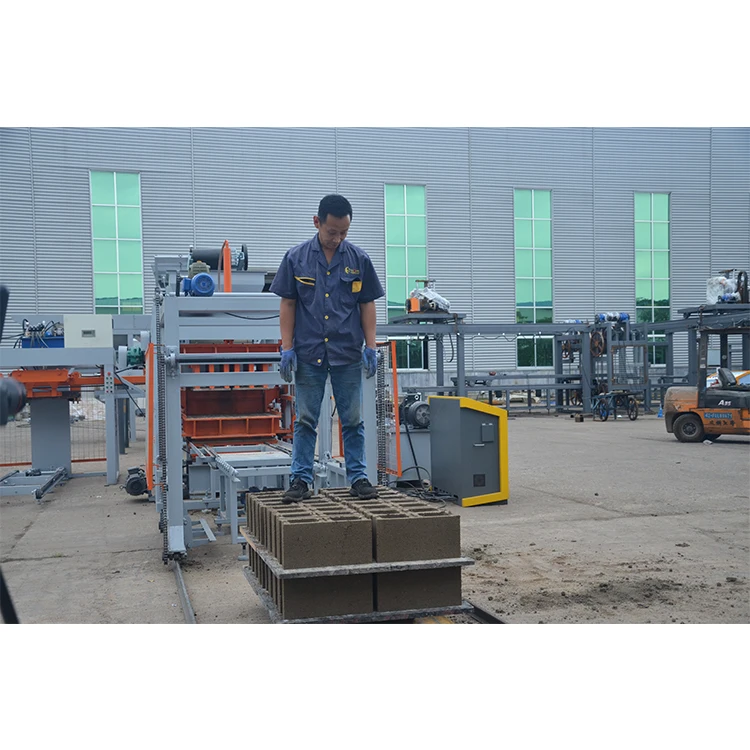
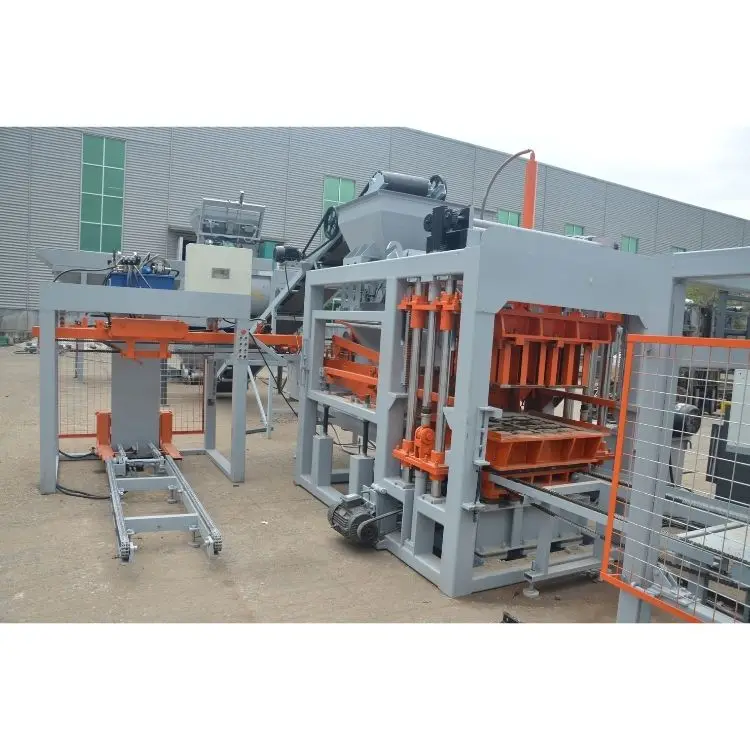 Automatic block machine