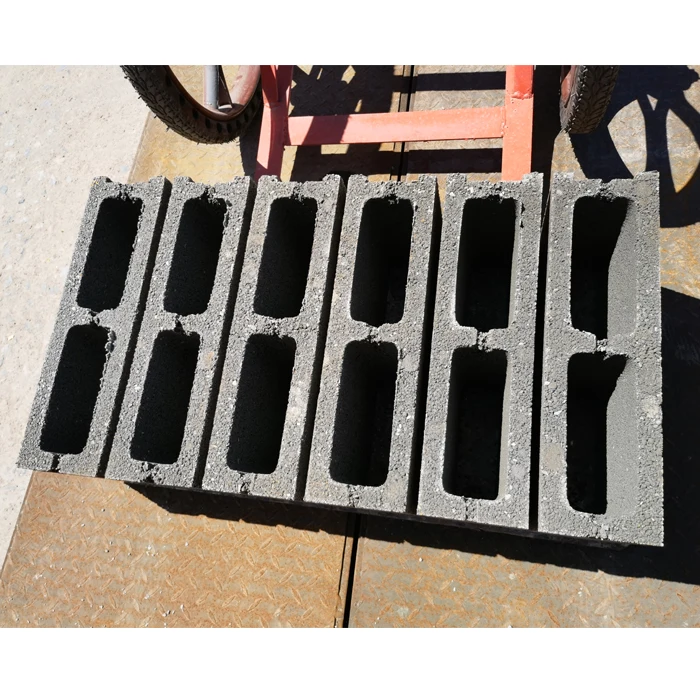
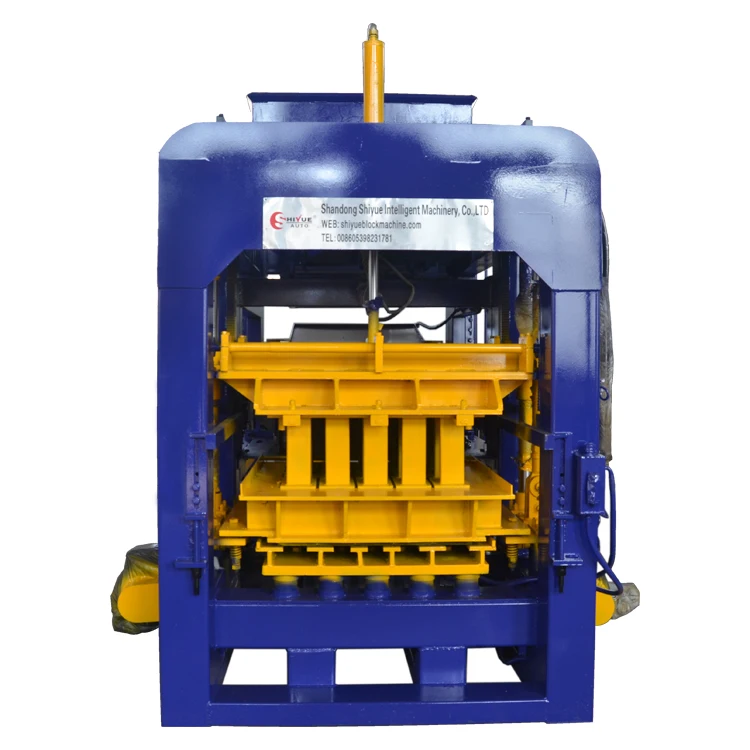
Matched System Specified Around the Buyer’s Actual Block Format — Every output figure on the QT5-15 is stated per block size with mould count and cycle time, so daily tonnage is calculated from the format the plant will actually run, not a catalogue peak.
Technical Specifications
| Parameter |
Value |
| Model |
QT5-15 |
| Product Type |
Fully Automatic Concrete Block Making Machine |
| Overall Dimensions (L×W×H) |
7100×1600×2610 mm |
| Molding Cycle |
15 s |
| Vibration Frequency |
0–60 Hz |
| Exciting Power (Vibration Force) |
40 kN |
| Rated Power |
33.5 kW |
| Mixer Model |
JS500 |
| Pallet Size |
1100×550 mm |
| Net Weight |
5 T |
| Control System |
PLC control system |
| Included Stations |
Block making machine, hydraulic station, PLC control system, pallet feeder, brick conveyor, block sweeper |
| Automation Level |
Fully automatic |
| Output: Hollow Block 400×200×200 mm |
450 pcs/h, 3600 pcs/8 hr (5 pcs/mould, 15 s cycle) |
| Output: Hollow Block 400×150×200 mm |
540 pcs/h, 4320 pcs/8 hr (6 pcs/mould, 15 s cycle) |
| Output: Solid Brick 400×100×200 mm |
720 pcs/h, 5760 pcs/8 hr (8 pcs/mould, 15 s cycle) |
| Applied Products |
Paver, solid block, hollow block, curbstone (via mould change) |
| Raw Materials |
Crushed stone, sand, cement, dust, fly ash |
Application Suitability
| Application |
Material or Output Focus |
| Mid-volume hollow block plant |
400×200×200 mm hollow blocks from crushed stone, sand, and cement at 3600 pcs per 8-hour shift |
| Solid brick production line |
400×100×200 mm solid bricks for load-bearing and partition walls |
| Paver and curbstone supply |
Interlocking pavers and kerbstones switched in by mould change on the same press platform |
| On-site housing project production |
Hollow and solid formats produced locally at the construction site using available aggregate |
| Building material distributor package |
Complete machine, mould, pallet, and handling bundle prepared for import and resale |
What "450 Pieces per Hour" Actually Means on the QT5-15 Automatic Block Making Machine Manufacturer Line
Cycle rate only translates to real output when the block format, mould cavity count, and aggregate condition are all stated together.
A lot of quotations lead with a single hourly number. The buyer then discovers that the figure was measured on a small solid brick, while the format their market actually buys is a large hollow block with fewer cavities per mould and a longer compaction time. On top of that, local aggregate with high clay or moisture content forces the vibration and pressure profile to change, stretching the cycle beyond the catalogue value. I have seen daily output drop to half the quoted figure because the capacity was never tied to the buyer’s real product mix [NEED_CITE: block machine capacity verification by format and aggregate condition]. That is why every output figure for the QT5-15 automatic block making machine manufacturer line is written with the exact block dimensions, cavity count, and cycle time it assumes.

Where the QT5-15 Sits in the Full Machine Range
The QT5-15 occupies the mid-tier of SHIYUE’s fully automatic block machine lineup. It is positioned above the semi-automatic machines that still require manual pallet handling, yet below the high-capacity lines built for continuous two-shift operation. This placement makes it a practical starting point for a first automatic plant that may later add more automation stations or move to a larger press without rebuilding the entire material handling layout.
Automation Stations Included as Standard
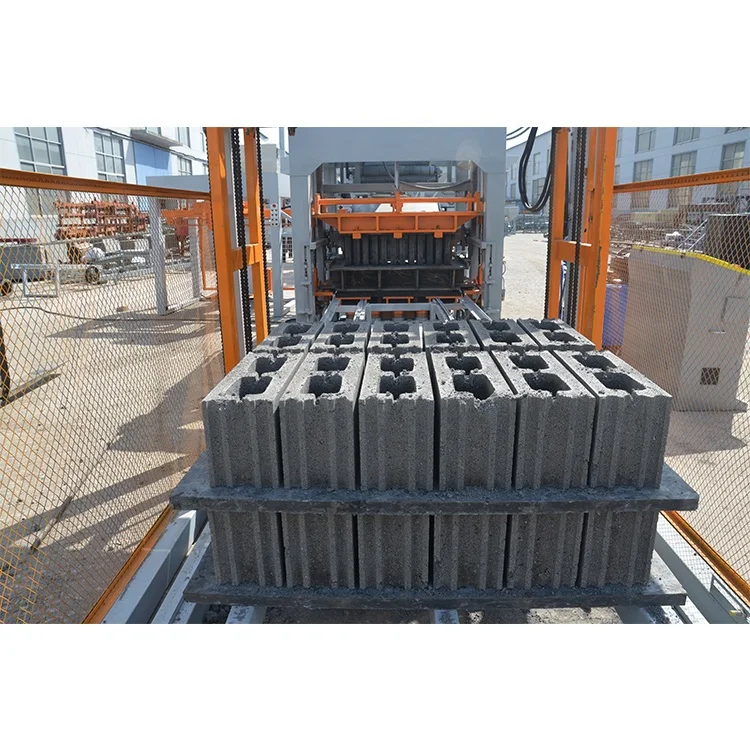
This machine ships as a matched set rather than a bare press. The package includes the hydraulic station, PLC control system, pallet feeder, brick conveyor, and block sweeper. The pallet feeder removes the most labour-intensive step from the operator, while the brick conveyor carries formed blocks away from the press at a pace matched to the 15-second moulding cycle so the press is never left waiting for the next pallet [NEED_CITE: station synchronization in automatic block lines]. The block sweeper cleans the pallet return path, reducing buildup that can affect pallet flatness over time.
Vibration, Pressure, and Pallet Size Explained
The 0–60 Hz vibration frequency range and 40 kN exciting force work together with the hydraulic station to compact the mix into a dense, consistent block. If the vibration is too low for a stiff mix with coarse aggregate, the block comes out with voids and weak corners. If it is too high for a fine sand mix, the material segregates and the surface crumbles. The frequency range allows the operator to dial in the right profile for whatever crushed stone, sand, cement, dust, or fly ash blend is available locally. The 1100×550 mm pallet size is a fixed dimension that determines how many blocks fit on each board and how many boards the curing area can hold at once — a mismatch here means forklifts cannot reach the outer curing rows or pallets pile up faster than they can be cleared.
The Cost of Skipping the Format and Pallet Conversation
When a buyer orders on cycle rate alone, the problems show up on the first week of production. Pallets arrive in a size that does not fit the existing curing racks, forcing the plant to buy new racks or cut pallets down. The mould supplied produces a block format the local market does not buy, so the first mould swap eats into a full shift while the crew learns the changeover sequence. Voltage and PLC language are confirmed after the machine arrives, delaying commissioning by days or weeks [NEED_CITE: commissioning delays from unconfirmed voltage and control language]. These are not warranty issues — they are specification gaps that a matched-system approach is built to prevent.
Why Source the QT5-15 Through This Range
Block machinery is the single focus here, so the press, mould, pallet, and handling equipment are specified as one system rather than assembled from unrelated suppliers. Configuration is set against the buyer’s actual mix design and local aggregate, not a default catalogue setting. Mould design covers the formats the buyer’s market sells, including custom drawings when a standard mould does not match. The automation level is selectable, allowing a buyer to start with the included stations and add further automation as production scales. Installation support includes operator training so the crew can run the PLC cycle, perform mould changes, and handle routine hydraulic maintenance from day one.
Documentation & Verification
- Line layout with capacity calculation stating the block format and mould cavity count assumed for each output figure
- Machine specification sheet confirming pallet size 1100×550 mm against your curing area and forklift dimensions
- Mould drawing and format list showing exact block dimensions for hollow, solid, paver, and curbstone products
- Voltage, frequency, and PLC display language confirmation document signed off before production begins
- Factory test record run on the buyer’s target block format prior to dispatch
Installation, Commissioning & Support
- Foundation must support the 7100×1600 mm machine footprint and 5 T net weight with level tolerance across the pallet travel path
- Dedicated power circuit rated for 33.5 kW total draw, with voltage and frequency matched to the confirmed local supply
- Machine ships in dismantled sections for container loading; on-site assembly aligns the press, pallet feeder, and brick conveyor
- First-run commissioning sets vibration frequency, hydraulic pressure, and cycle timing to the buyer’s mix and block format
- Operator training covers PLC operation, mould change sequence, and daily hydraulic and vibration system checks
- Wear parts and mould list provided with reorder references so replacements are available before the first changeover is due
Before You Send the Inquiry
To size the QT5-15 accurately within the full machine range, share the target block format and dimensions your market buys, the daily output you need based on an 8-hour shift, and a sample or description of the local aggregate and cement you plan to use. Include your workshop or site dimensions, existing curing area layout, and the forklift pallet capacity so the 1100×550 mm pallet can be checked against your handling setup. Confirm the local voltage, frequency, and preferred PLC display language so these are locked in before production starts.
Frequently Asked Questions
Q: How is QT5-15 capacity verified per block format, and what is the real daily output for my target block?
A: Every output figure is stated with the block dimensions, mould cavity count, and cycle time it assumes. For example, 400×200×200 mm hollow blocks are rated at 3600 pieces per 8-hour shift based on 5 cavities per mould and a 15-second cycle. To get a figure for your specific block, share the exact dimensions and we calculate capacity on the same basis.
Q: Where does the QT5-15 sit in the range compared to semi-automatic and high-capacity automatic lines?
A: It is the mid-tier fully automatic option, above semi-automatic machines that require manual pallet handling and below high-capacity lines designed for continuous multi-shift output. It suits a first automatic plant or a growing operation that needs upgrade headroom without replacing the entire line layout.
Q: What automation level does QT5-15 include, and can I start semi-automatic and upgrade later?
A: The standard package includes the PLC control system, pallet feeder, brick conveyor, and block sweeper as fully automatic stations. The automation level is selectable, so a buyer can begin with a simpler configuration and add further automation stations as production volume grows.
Q: Which voltage, frequency, and PLC language options are available for my country?
A: Voltage and frequency are configured to match the buyer’s local supply and must be confirmed before production. The PLC display language is also confirmed at the same stage so operators can read menus and alarms in their working language from the first day of commissioning.
Q: What plant footprint and installation conditions does the QT5-15 line require?
A: The machine itself measures 7100×1600×2610 mm and weighs 5 T. The full line footprint depends on pallet feeder, conveyor, and curing rack layout. A level foundation, dedicated 33.5 kW power circuit, and space for pallet return and block curing are needed before installation begins.

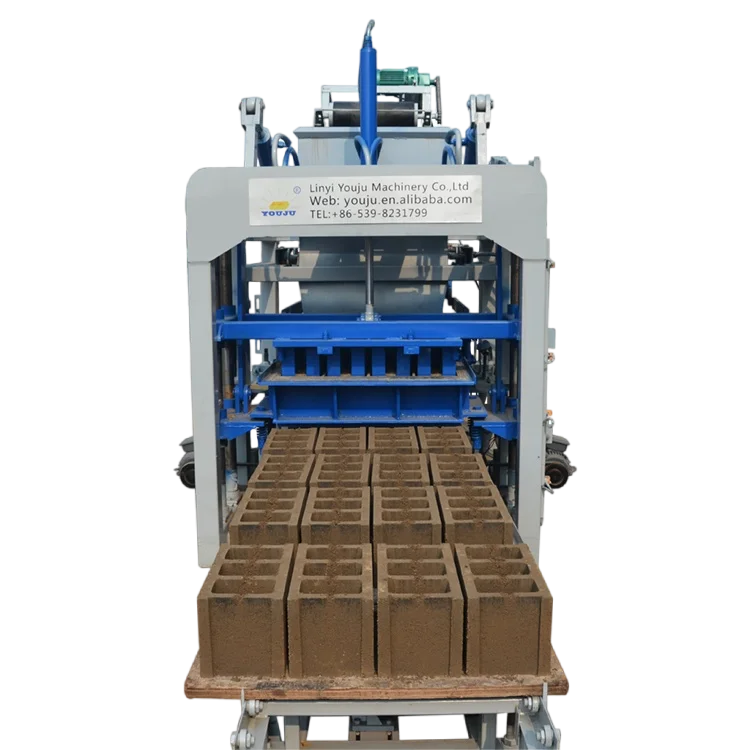 High quality block machine