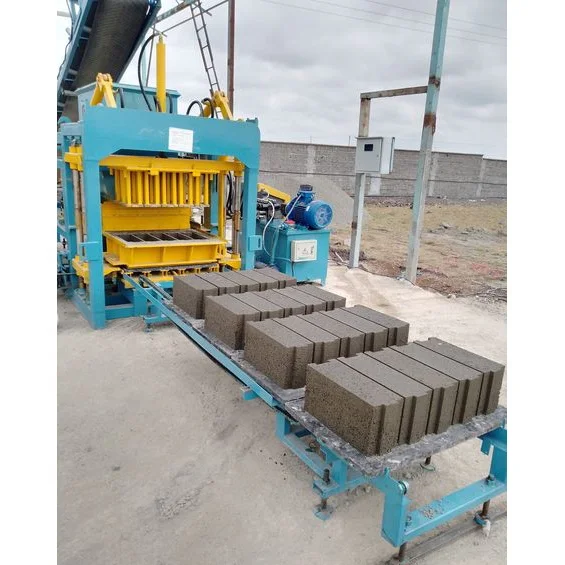
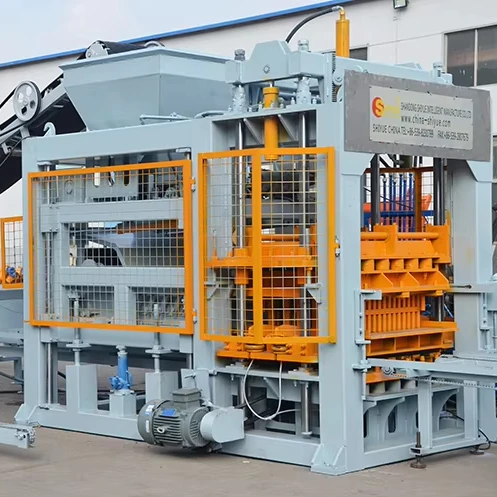
Mid-Tier Automatic Press — The QT415 sits between entry-level semi-automatic models and high-capacity lines, configured as a matched system with mould, pallet, and handling rather than a standalone press, so buyers can place themselves on the full machine range before committing to an investment tier.
Technical Specifications
| Parameter |
Value |
| Model |
QT415 |
| Product Type |
Automatic Concrete Block Making Machine |
| Overall Dimensions (L×W×H) |
4100×1600×2600mm |
| Rated Pressure |
16–21 MPa |
| Main Vibration Form |
Platform Vibration |
| Vibration Frequency |
4200 r/min |
| Vibration Force |
55 kN |
| Pallet Size |
880×550mm |
| Molding Cycle |
25–30s (basis not stated in source — confirm block format / material / thickness) |
| Overall Power |
18.45 kW |
| Total Mass |
4 T |
| Demolding Method |
Hydraulic |
| Applied Products |
Concrete blocks, hollow/solid blocks, pavers, interlocking blocks, curbstone, colored pavers |
| Raw Material Compatibility |
Crushed stone, sand, cement, dust, fly ash, gravel, slag |
| Automation Level |
Full automatic |
| Loading |
1×40HQ container (basic equipment) |
| Warranty |
1 year for whole machine (excluding spare parts) |
Application Suitability
| Application |
Material or Output |
| Hollow block production for building envelopes |
Crushed stone, sand, cement, fly ash blends |
| Solid block manufacturing for load-bearing walls |
Gravel and cement mixes with local aggregate |
| Paving block runs for walkways and yards |
Sand, cement, and fine aggregate with color pigment |
| Interlocking brick production for retaining walls |
Crushed stone and cement at higher pressure settings |
| Curbstone forming for road and site edging |
Coarse aggregate and cement under extended cycle times |
What "25–30 Seconds per Cycle" Actually Means for Your Daily Output
Cycle time without the block format attached is a number that cannot be used to plan a shift.
Many quotations list a single molding cycle as though the press produces every format at the same speed. In practice, a 25-second cycle on a small solid block is very different from the cycle required for a tall hollow block that n* hold. Buyers who plan daily output around the fastest quoted figure end up with a line that falls short by midday. The QT415 block machine for sale carries a 25–30s cycle in general specification sheets, but the real output for hollow block, paver, or interlocking brick must be calculated against the specific format and mix design you intend to run. [NEED_CITE: block machine capacity calculation standards by format and mix design]

Where the QT415 Sits in the Full Machine Range
The automatic block machine lineup spans from small semi-automatic models for workshop-scale output up to high-capacity lines that fill a full industrial plant. The QT415 occupies the middle ground: a full automatic concrete block making machine manufacturer offering for contractors who have outgrown manual pallet handling but are not yet ready for a high-volume line that demands a large curing area and a dedicated stacking crew. Its 4100×1600mm footprint fits a 300m² factory area without crowding the raw material feed zone.
Comparing the QT415 Against the Tiers Above and Below
Below this model, semi-automatic machines require operators to move pallets by hand, which limits sustainable daily output and ties labor costs to the press cycle. Above it, higher-tier automatic lines add pallet return systems, automatic stacking, and cubing, but they also require more floor space, more capital, and a larger curing rack inventory. The QT415 bridges this gap with hydraulic demolding and full automatic pressing while keeping the supporting equipment scope manageable. Buyers evaluating a concrete block making machine manufacturer typically start here when their daily target exceeds what a semi-automatic press can sustain but stays within a single-shift operation. [NEED_CITE: automation level comparison for block production lines]
Reading the Specs That Shape Block Quality
The 16–21 MPa rated pressure and 55 kN vibration force work together to compact the mix into a dense block. Pressure alone squeezes the material, while the platform vibration at 4200 r/min rearranges the aggregate particles so they lock tightly before the hydraulic hold sets the shape. If either force is too low for the mix design, blocks emerge with weak edges or inconsistent density. The 880×550mm pallet size is another practical constraint: it determines how many blocks are pressed per cycle and must match the curing rack dimensions and the forklift capacity already on site. A pallet that is too large for the existing forklift means either buying new handling equipment or running the line below its rated capacity.
The Hidden Cost of Skipping the Voltage Conversation
One buyer in Eastern Europe ordered a full automatic vibration press and had it shipped without confirming site power. The machine arrived to a 400V/50Hz requirement on a site that ran a different supply, and it sat in the container yard for weeks while a transformer was sourced. That same pattern repeats when the PLC display language is not confirmed before production, leaving operators staring at error codes in a language they cannot read. Every QT415 configuration should be locked to the buyer’s actual voltage, frequency, and preferred control language before the machine enters assembly, not after it arrives at the port. [NEED_CITE: voltage and frequency standards by export market]
Why Source This Machine Through a Single-Focus Manufacturer
Block machinery is the only product line here, which means the QT415 press, its moulds, pallets, and handling equipment are specified as one matched system rather than assembled from separate suppliers whose tolerances may not align. Machine configuration is set against the buyer’s actual mix design and local aggregate, not a catalogue default that assumes materials you cannot source. Mould design covers the formats your market actually sells, with custom drawings available when standard moulds do not match local building codes. Automation level is selectable, so a buyer can start the QT415 at a semi-automatic configuration and add stacking or cubing modules later without replacing the press. Installation and commissioning include operator training on site, so the crew running the line on day one understands mould change procedures and daily maintenance intervals. [NEED_CITE: machinery commissioning and operator training protocols]
Documentation & Verification
- Line layout and capacity calculation stating the exact block format assumed for each output figure
- Machine specification sheet confirming voltage, frequency, and PLC display language for destination country
- Mould drawing and format list with change procedure and time for each block type
- Factory test record showing cycle time and block strength against buyer’s mix design and aggregate
- Hydraulic and electrical schematic matching the as-built configuration
Installation, Commissioning & Support
- 300m² factory area with level concrete foundation to support the 4T machine mass and vibration load
- Dedicated power circuit matching confirmed voltage and frequency, with a main breaker rated above 18.45 kW draw
- Machine ships in 1×40HQ container dismantled for loading, with reassembly sequence covered during commissioning
- First-run parameter setting on the buyer’s raw material blend to establish baseline cycle and pressure values
- Operator training on hydraulic demolding controls, pallet feed sequence, and daily lubrication points
- Wear parts and mould inventory list provided at handover with recommended reorder intervals
What to Include in Your Inquiry
Send the block formats your market sells, the daily output target, and the raw materials you can source locally with their grading data. Include the site voltage and frequency, the language your operators need for the PLC display, and the curing area dimensions so the pallet size and rack layout can be matched before quotation.
Frequently Asked Questions
Q: How is the QT415’s capacity calculated, and which block format is the cycle time based on?
A: The 25–30s molding cycle listed in general specifications does not assume a single block format. Real daily output must be calculated for each format you intend to produce — hollow block, solid block, paver, or interlocking brick — because vibration penetration time and pressure hold differ. We provide a capacity calculation document that states the exact block format and mix design behind every output figure before you confirm the order.
Q: Where does the QT415 sit compared to semi-automatic and higher-tier automatic models?
A: It occupies the mid-tier of the full machine range. Below it, semi-automatic presses require manual pallet handling, limiting sustainable output. Above it, higher-tier lines add automatic stacking and cubing but demand more floor space and capital. The QT415 offers full automatic pressing with hydraulic demolding while keeping the supporting equipment scope and investment manageable for a single-shift plant.
Q: What pallet size does the QT415 use, and is it compatible with my existing curing setup?
A: The standard pallet is 880×550mm. Before confirmation, we check this against your curing rack dimensions and forklift capacity. A mismatch means either modifying the racks or selecting a different pallet size, which in turn affects the number of blocks per cycle and the overall line output.
Q: Can I start with the QT415 semi-automatic and upgrade later?
A: Yes. The automation level is selectable at order and can be expanded afterward. A buyer can begin with manual pallet handling and add automatic stacking or cubing modules when production volume justifies the investment, without replacing the press itself.
Q: What plant footprint do I need for a complete QT415 production line?
A: The press itself measures 4100×1600×2600mm, and the general factory area reference is around 300m² for the complete line including raw material feed, mixing, and curing rack space. The actual layout depends on the automation level selected and the pallet return path, which we confirm in the line layout document before production begins.

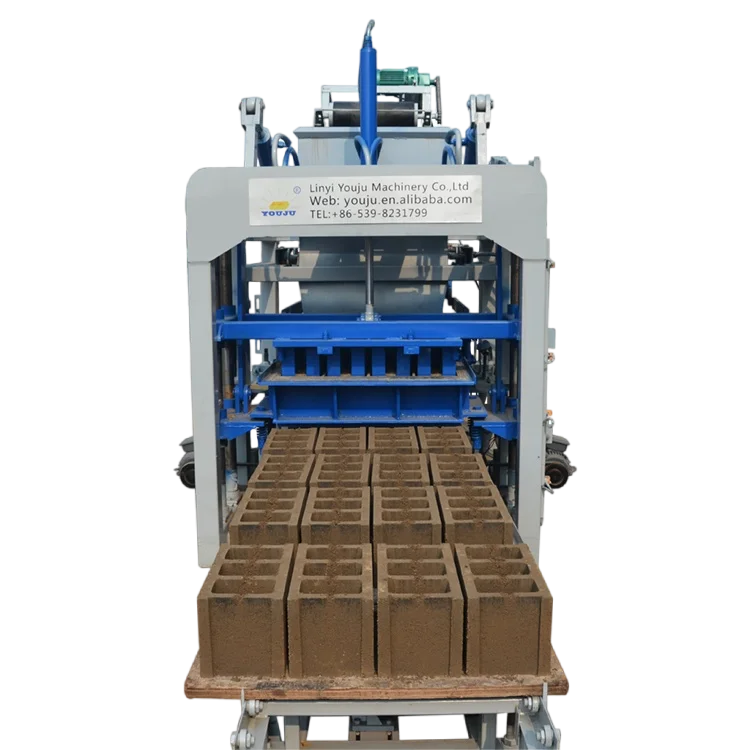
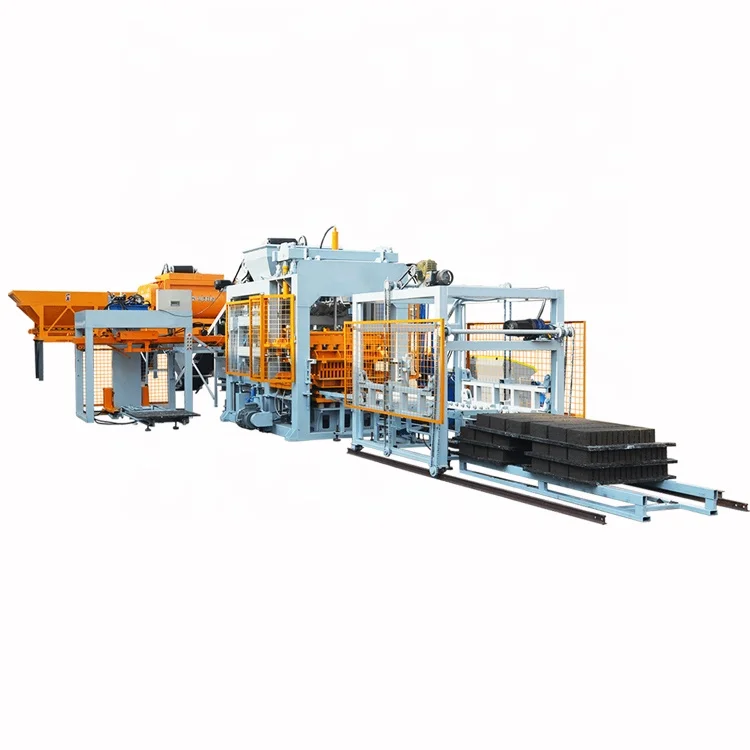 High quality block machine