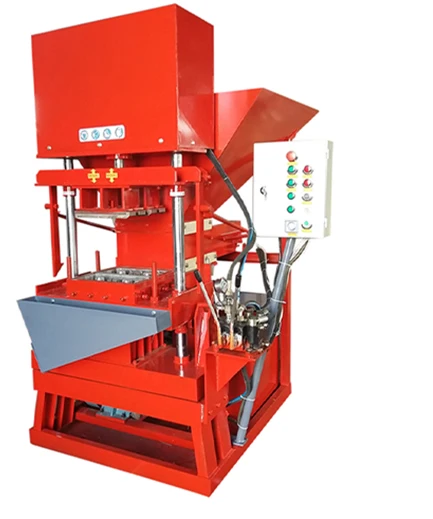
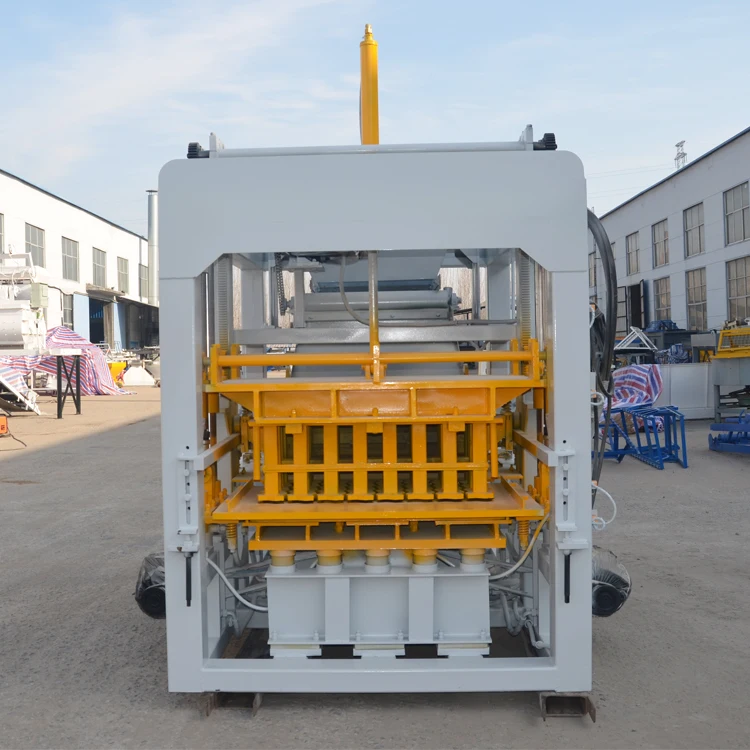
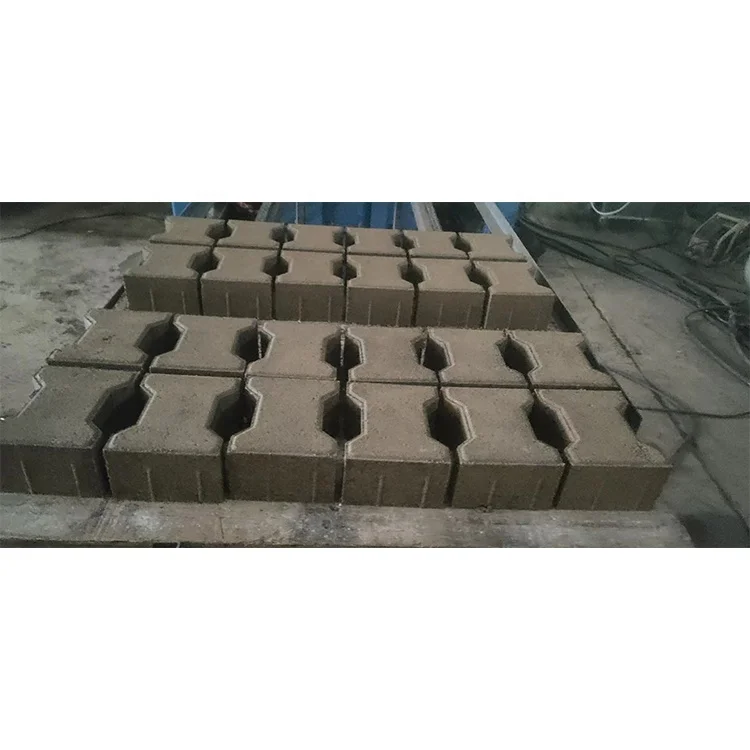
Integrated System Matching — the QTJ4-25 is specified against your actual block format, local aggregate, and site voltage before production begins, so machine, mould, pallet, and handling arrive as one aligned system.
Technical Specifications
| Parameter |
Value |
| Model |
QTJ4-25 |
| Product Type |
Automatic Concrete Block Making Machine |
| Rated Power |
16.58 kW |
| Voltage & Frequency |
Configured to buyer’s local supply (basis to be confirmed) |
| Control System |
PLC controlled fully automatic |
| Overall Dimensions (L×W×H) |
6400 × 1500 × 2700 mm |
| Net Weight |
5000 kg |
| Output Capacity |
4600 pcs / 8 hours (basis not stated in source — confirm block format and material) |
| Molding Cycle |
25 seconds |
| Pallet Size |
850 × 480 mm |
| Raw Material Compatibility |
Concrete, sand, cement, fly ash, crushed stone, lime, water |
| Vibration System |
Vibration motor with single large vibration box (no hydraulic pressure) |
| Automation Features |
Automatic pallet feeding, automatic material feeding and scraping, automatic block stacker |
| Motor Brand |
Siemens motor |
| Frame Construction |
Thick steel welded structure |
| Warranty |
One year, free parts supply during warranty period |
Application Suitability
| Application |
Material or Output |
| Hollow block production for load-bearing walls |
Crushed stone, cement, sand with fly ash or lime additive |
| Solid brick manufacturing for partition walls |
Sand-cement mix, fly ash blend, or crushed stone aggregate |
| Paver stone production for walkways and driveways |
Fine aggregate concrete with cement binder |
| Medium-capacity block factory start-up |
Daily volume suited to regional building supply demand |
What "4600 Pieces per Shift" Actually Depends On
Capacity only matters when the block format, mix design, and pallet cycle are all named alongside the number.
Many quotations list a daily output figure without specifying which block size that figure assumes. A hollow block and a thin paver stone occupy different mould cavities and require different vibration durations, so the same machine produces noticeably different quantities across formats. On the QTJ4-25, the molding cycle is set at 25 seconds, but real shift output depends on which mould is installed, how the local aggregate compacts under vibration, and whether pallet handling keeps pace with the press. Without stating the block format, the 4600 pcs/8h figure cannot be verified against your actual product mix. [NEED_CITE: block format assumptions in capacity quotations across the industry]

Where the QTJ4-25 Sits in the Full Machine Range
The QTJ4-25 automatic block machine manufacturer lineup positions this model in the mid-tier automatic category. It delivers PLC-controlled full automation with pallet feeding, material scraping, and block stacking built in, yet avoids the investment and maintenance burden of a hydraulic pressure system. For buyers comparing entry-level semi-automatic machines against high-capacity hydraulic lines, this model fills the gap where full automation is needed but production volume does not yet justify hydraulic pressing force.
Choosing the Right Automation Tier for Your Plant
Buyers setting up a first block plant often face a choice between semi-automatic and fully automatic configurations. The QTJ4-25 includes automatic pallet feeding and an automatic block stacker, which removes two of the most labor-intensive steps from the production cycle. Semi-automatic machines require manual pallet handling and hand stacking, meaning the operator count per shift is higher and consistency depends more on crew experience. For distributors evaluating their product range, this mid-tier automatic position offers buyers a machine that reduces manual labor without the capital outlay of a high-capacity hydraulic line. [NEED_CITE: automation tier selection criteria for block production plants]
Reading the Specification Sheet Against Real Production Conditions
The 16.58 kW rated power covers the vibration motor, material feeder, and pallet handling drives working simultaneously during peak load. The vibration system uses a single large vibration box driven by a vibration motor rather than hydraulic pressure, which simplifies maintenance but means compaction force depends entirely on vibration amplitude and frequency. The 850 × 480 mm pallet size defines the maximum mould footprint and must align with the buyer’s existing curing racks and forklift dimensions. The Siemens motor specification ensures that replacement drive components are serviceable in most export markets without special ordering.
What Happens When Voltage and Frequency Are Assumed
A machine built for 380V/50Hz will draw excessive current and trip protection circuits on a 440V/60Hz supply, and the reverse condition causes motors to run underpowered with reduced torque at the vibration box. The PLC may boot but display language defaults to the factory setting if not confirmed before assembly. On past shipments, unconfirmed voltage led to multi-week delays while transformers were sourced locally. Every QTJ4-25 order now requires written confirmation of supply voltage, frequency, and PLC display language before the electrical panel is wired. [NEED_CITE: voltage and frequency mismatch consequences in exported machinery]
Why Buyers Source This Model Here
Block machinery is a single focus, so the QTJ4-25 arrives with its mould, pallet, and handling equipment specified as one matched system rather than assembled from separate vendors. Configuration starts from your local aggregate and target block format instead of a catalogue default. Mould design covers the formats your market actually sells, and custom mould drawings are available for non-standard formats. Automation level is selectable, so a buyer can begin with the QTJ4-25 and move to a hydraulic line later as volume grows. Installation and commissioning support includes operator training at the site.
Documentation & Verification
- Line layout and capacity calculation stating the block format assumed for daily output
- Machine specification sheet confirming voltage, frequency, and PLC display language
- Mould drawing and format list showing all compatible block types with cycle time per format
- Pallet specification matched to buyer’s curing rack spacing and forklift capacity
- Factory test record on the buyer’s target block format before dispatch
- CE declaration and customs documentation support provided with shipment
Installation, Commissioning & Support
- 6400 × 1500 × 2700 mm footprint requires a level concrete pad with clearance for pallet feed on both sides
- 16.58 kW rated power needs a dedicated circuit matching confirmed voltage and frequency
- Machine ships partially assembled; vibration box and stacker are bolted on site
- First commissioning includes PLC parameter tuning to the buyer’s confirmed block format
- Operator training covers mould change procedure, vibration timing adjustment, and daily inspection points
- Wear parts list and mould maintenance schedule provided at handover
What We Need to Size Your Line Correctly
Before quoting, we need your target block format and dimensions, the daily output you plan to sell, your local raw material availability, and confirmed site voltage and frequency. If you already have curing racks or a forklift in place, share their specifications so the 850 × 480 mm pallet can be verified against your existing setup. State your preferred PLC display language and whether your site has any overhead clearance restrictions near the 2700 mm machine height.
Frequently Asked Questions
Q: How is the 4600 pcs/8h capacity verified and which block format does it assume?
A: That figure is quoted without a stated block format in the source data. Real output depends on which mould is installed, the mix design, and pallet cycle speed. We provide a capacity calculation document naming the specific block size, mix ratio, and cycle time assumed, so you can compare it directly against your production target.
Q: Where does the QTJ4-25 sit compared to semi-automatic and hydraulic models?
A: This model occupies the mid-tier automatic position. It includes full PLC control with automatic pallet feeding and stacking, but uses vibration-only compaction rather than hydraulic pressure. It suits medium-capacity plants that need automation without the investment and maintenance demands of a hydraulic press line.
Q: What voltage, frequency, and PLC language options are confirmed before production?
A: The machine is configured to your local supply, but voltage, frequency, and PLC display language must be confirmed in writing before the electrical panel is built. This prevents the common export problem where a machine arrives mismatched to the site grid and requires a transformer before it can run.
Q: What plant footprint and installation conditions does this machine require?
A: The overall dimensions are 6400 × 1500 × 2700 mm on a level concrete base. You need clearance for pallet feeding at one end and block stacker output at the other, plus overhead space for the full machine height. A dedicated electrical circuit matching the confirmed voltage and frequency is required before commissioning begins.
Q: Can a buyer start with this model and upgrade automation later?
A: The QTJ4-25 already includes automatic pallet feeding and stacking. Buyers who later need higher volume can move to a hydraulic-line configuration with faster cycle times and additional handling automation, keeping the same pallet size and mould format familiarity from this starting point.

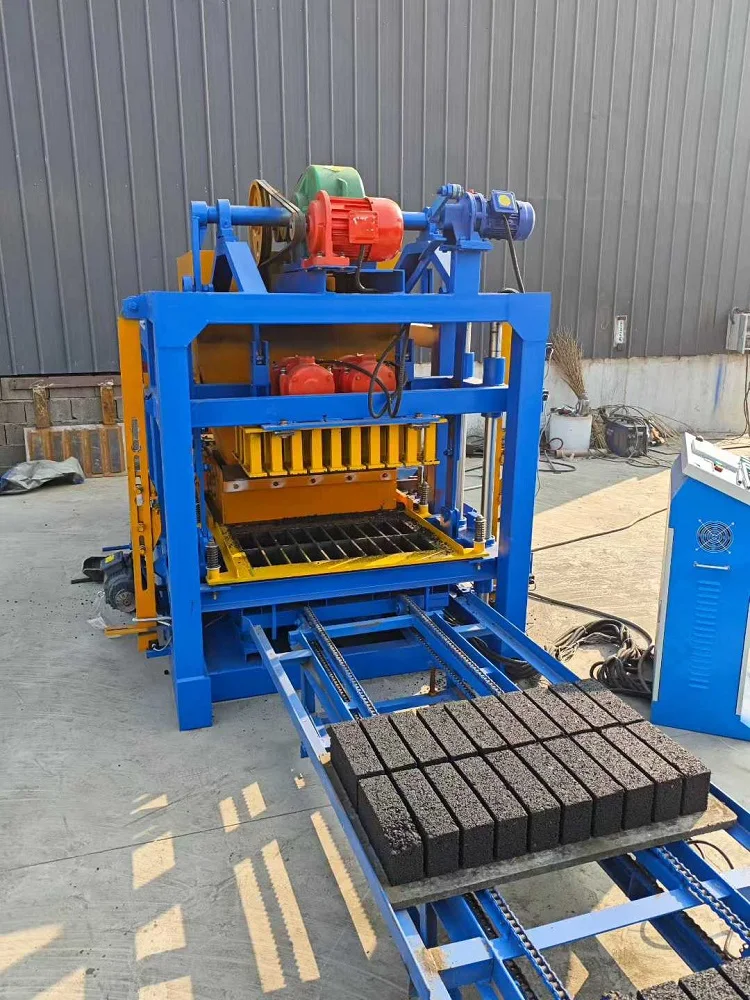
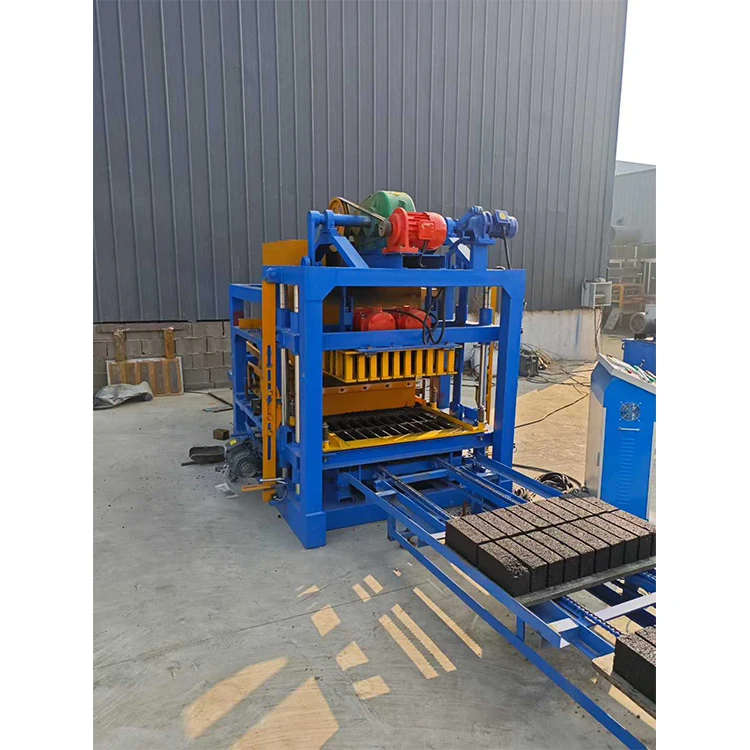 Automatic block machine