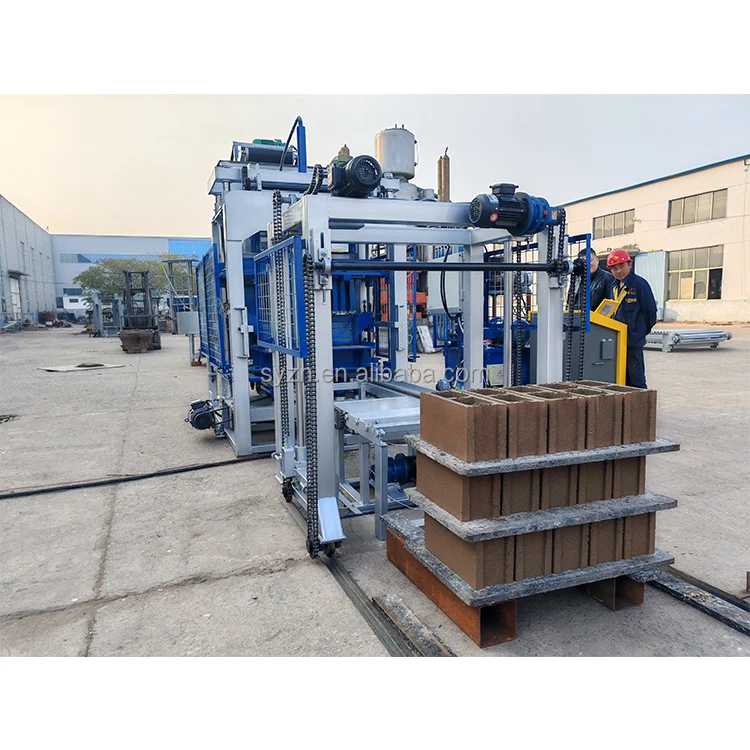
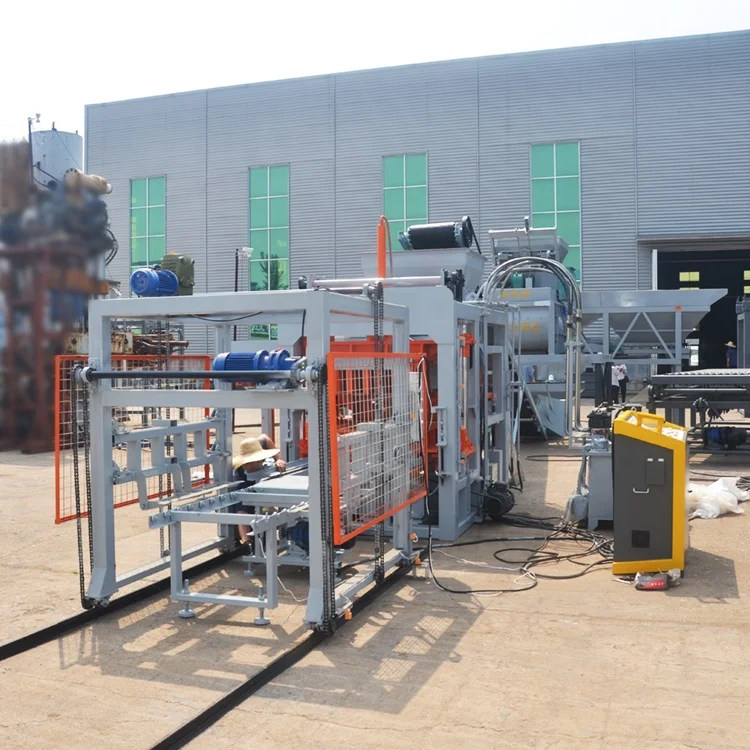
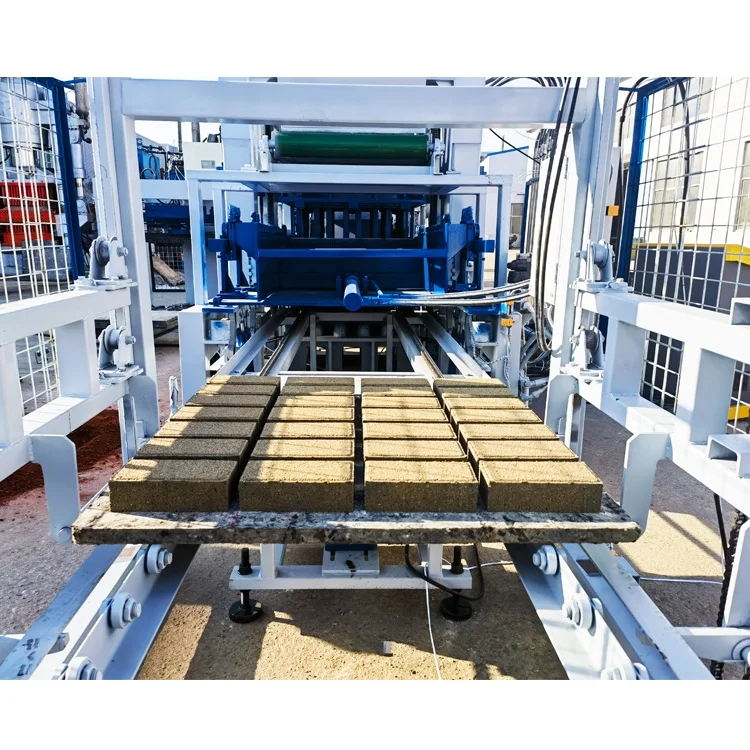
Configuration matched to actual site conditions — every QT4-24 line proposal includes a capacity table tied to your block format, mix design, and local aggregate, not a generic catalogue figure.
Technical Specifications
| Parameter |
Value |
| Model |
QT4-24 |
| Product Type |
Hydraulic Concrete Block Making Machine |
| Overall Dimensions (L×W×H) |
2060×1730×2580 mm |
| Molding Cycle |
24 s |
| Vibration Frequency |
4200 r/min |
| Vibration Force |
35.5 kN |
| Vibration Type |
Bed mould vertical vibration + upper mould compression vibration |
| Total Power |
14.25 kW |
| Hydraulic System |
Equipped (hydraulic station for high pressure and stable operation) |
| Mixer Model |
JQ350 |
| Pallet Size |
850×450×20 mm |
| Total Weight |
1800 kg |
| Automation Level |
Semi-automatic |
| Mould Formats |
Hollow block (8", 6", 5", 4"), solid brick, paver, curbstone via mould change |
| Raw Materials |
Crushed stone, sand, cement, dust, fly ash |
| Assembly State |
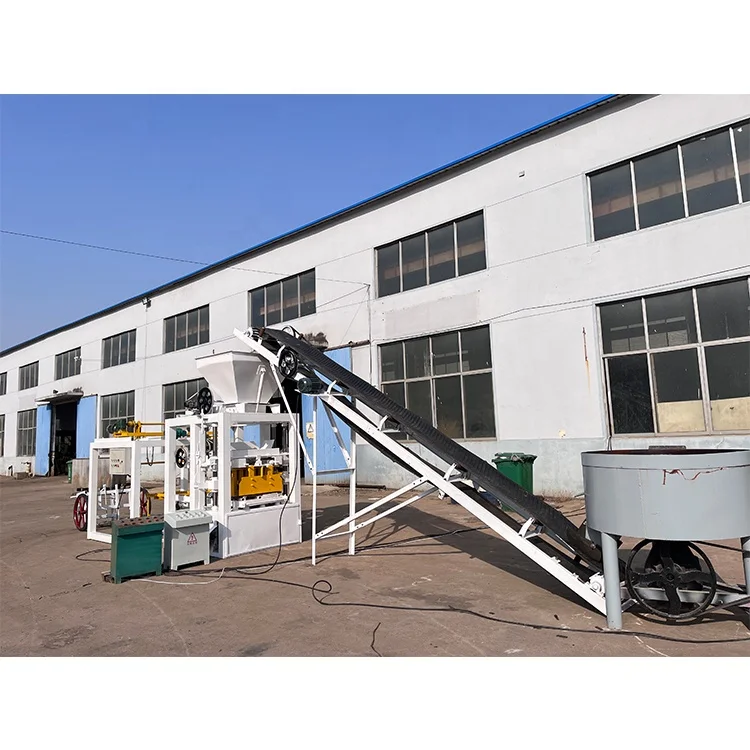
Main host machine, mixer, conveyor, pallets, trolley and tools |
Application Suitability
| Application |
Material or Output |
| Hollow block production for residential and commercial walls |
Crushed stone, sand, cement, fly ash — 4 pcs/mould (390×190×190 mm) or 5 pcs/mould (400×150×200 mm) |
| Solid brick manufacturing for load-bearing structures |
Sand and cement blends — 18 pcs/mould (240×115×53 mm) |
| Paving block production for walkways and yards |
Aggregate and cement mixes with colour pigment layer |
| On-site block production for construction contractors |
Locally sourced aggregate with portable mixer and conveyor setup |
| Overflow or secondary format line for existing plants |
Any compatible raw material matching the buyer’s current mix design |
Why the Block Format Matters Before You Compare Output
Every capacity figure on this page is tied to a specific block dimension — no number stands alone.
I have watched buyers sign contracts based on a headline hourly output, only to discover the figure assumed a solid brick while their market needed 8-inch hollow blocks. The daily volume dropped to a fraction of what they planned around. With the QT4-24, a block machine manufacturer should always state which format drives each output number so you can match it to your actual product mix. [NEED_CITE: common discrepancies between quoted and actual block output based on format assumptions]

Where the QT4-24 Fits in a Complete Machine Range
The QT4-24 occupies the semi-automatic entry tier of our block machine manufacturer range. It suits buyers who need reliable hollow block and solid brick output without the investment of a fully automatic stacking and cubing line. The 14.25 kW total power draw keeps electrical infrastructure requirements modest, which matters when you are setting up in a location with limited transformer capacity.
For a first-time block plant entrepreneur or a contractor producing on a building site, this tier removes the complexity of full automation while still delivering hydraulic pressure and dual vibration for consistent block density. When your daily volume grows, the same pallet size and mould interface allow a step up to higher-capacity machines without reconfiguring your entire curing yard.
How Semi-Automatic Operation Shapes Your Daily Workflow
In a semi-automatic configuration, the operator controls pallet feeding and block removal while the hydraulic station and vibration cycle run on a fixed 24-second timer. This arrangement keeps the machine cost lower and gives the operator direct oversight of each moulding cycle. [NEED_CITE: typical labour allocation in semi-automatic block production lines]
The trade-off is that throughput depends on how quickly your team moves pallets through the curing area. If your site already has a forklift and curing racks sized for the 850×450 mm pallet, the workflow stays smooth. If not, pallet handling becomes the constraint long before the press itself reaches its cycle limit.
Reading the Vibration and Pressure Numbers
The QT4-24 delivers 35.5 kN of vibration force at 4200 r/min through a dual system: vertical vibration under the bed mould and compression vibration from the upper mould. This combination compacts the mix from both directions, which directly affects block density and compressive strength. Higher vibration force without matching hydraulic pressure tends to push aggregate apart rather than lock it together — the hydraulic station on this model addresses that balance.
The 24-second moulding cycle is measured from press close to press open. For a 390×190×190 mm hollow block, that yields 4 pieces per cycle, or 480 pieces per hour of continuous press operation. For a 400×150×200 mm hollow block, the mould holds 5 pieces, giving 600 pieces per hour. The solid brick mould produces 18 pieces per cycle at the same 24-second interval. Each number assumes uninterrupted pallet supply and no downtime for mould changes or mixer refills.
The Cost of Skipping Pallet and Voltage Checks
Buyers who choose pallet size without checking their curing area end up stacking blocks by hand because their existing racks do not fit. The 850×450×20 mm pallet on the QT4-24 must align with your forklift tine spacing and curing shelf dimensions before the machine ships. [NEED_CITE: pallet handling mismatches causing manual stacking in block plants]
Voltage and frequency confirmation is equally easy to overlook. A machine wired for 380V/50Hz arriving at a 440V/60Hz site will not commission until the motor and control panel are reconfigured — a delay that can stretch weeks if replacement components are not on hand. Confirming these details at the quotation stage avoids idle machines sitting in containers.
Why Buyers Source This Tier Here
Block machinery is our single focus, so the QT4-24 is specified as part of a matched system — host machine, JQ350 mixer, conveyor, pallets, and trolley — rather than assembled from unrelated suppliers. Each component is sized to the 24-second cycle so the press is never waiting on upstream material or downstream pallet removal.
Configuration starts from your actual mix design and local aggregate, not a catalogue default. If your sand has high clay content, the vibration and pressure settings are adjusted in the proposal before the machine is built. Mould drawings are provided for every format your market sells, including custom designs if your local demand includes a non-standard block dimension.
Documentation & Verification
- Line layout showing QT4-24 placement with mixer, conveyor, and pallet flow path
- Capacity table listing output per block format with the 24-second cycle assumption
- Machine specification sheet confirming 14.25 kW total power and pallet dimensions
- Voltage, frequency, and control language confirmation recorded before production
- Factory test record on your specified mould format before dispatch
- Wear parts and mould availability list included at quotation stage
Installation, Commissioning & Support
- Foundation pad sized to 2060×1730 mm footprint with level tolerance for hydraulic station stability
- Dedicated electrical circuit rated for 14.25 kW total draw at confirmed voltage and frequency
- Main host, mixer, and conveyor shipped in standard dismantled state for container loading
- On-site commissioning includes first-cycle test on your specified block format and mix
- Operator training covers 24-second cycle timing, pallet handling rhythm, and mould change procedure
- Wear parts list with reorder codes for hydraulic seals and vibration components
What to Prepare Before Requesting a Quote
To match the QT4-24 to your project, share the block formats your market actually sells and the daily volume you need for each one. Tell us what aggregate and sand are available locally, including any known clay or moisture issues. Confirm your site voltage, frequency, and the display language your operators will read on the control panel.
Frequently Asked Questions
Q: How is output capacity calculated, and which block format does each figure assume?
A: Every output number on this page is tied to a specific block dimension and the 24-second moulding cycle. For example, 480 pieces per hour assumes a 390×190×190 mm hollow block at 4 pieces per mould. We provide a full capacity table per format in the proposal so you can compare against your actual product mix.
Q: Where does the QT4-24 sit in the full machine range?
A: It is a semi-automatic entry tier suited to first-time plants or contractors producing on-site. Buyers needing higher daily volume or automatic stacking and cubing can step up to larger tiers while keeping the same pallet interface and mould design philosophy across the range.
Q: What voltage and frequency configurations are available?
A: The QT4-24 can be configured for different voltage and frequency standards depending on the target market. Confirmation happens at the quotation stage and is recorded on the specification sheet before production begins, so the machine arrives ready for your site’s electrical supply.
Q: How long does a mould change take, and how many formats can one machine run?
A: The QT4-24 supports hollow blocks in multiple inch sizes, solid bricks, pavers, and curbstones through mould changes. Changeover involves swapping the mould box and adjusting the upper mould head. Exact time depends on operator familiarity and whether quick-release fasteners are specified in your configuration.
Q: What supporting equipment is needed to complete the line?
A: The standard assembly includes the main host machine, JQ350 mixer, conveyor, pallets, and trolley. Depending on your curing area layout and daily volume, you may also need additional pallets, a forklift matched to the 850×450 mm pallet size, and curing rack space calculated around your target output per format.

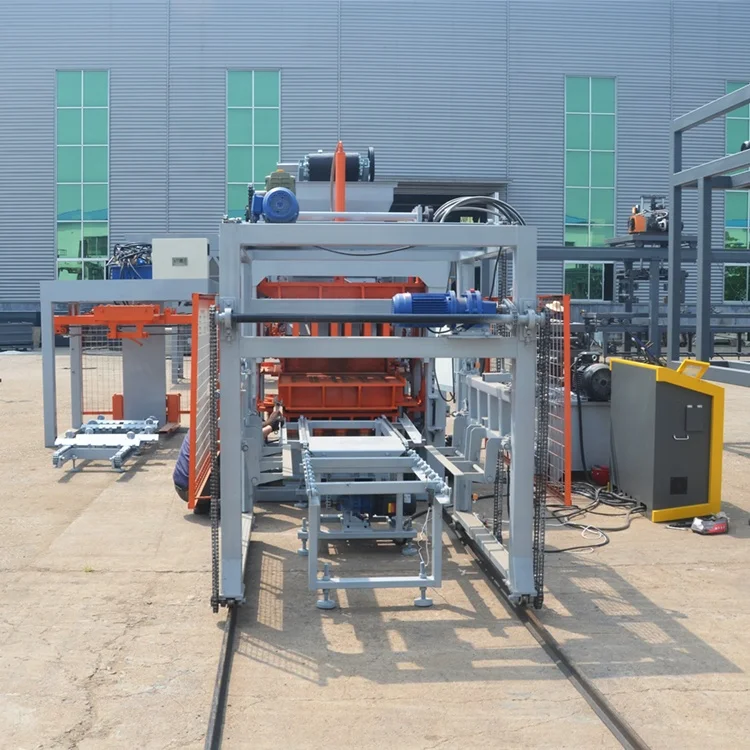 High quality block machine