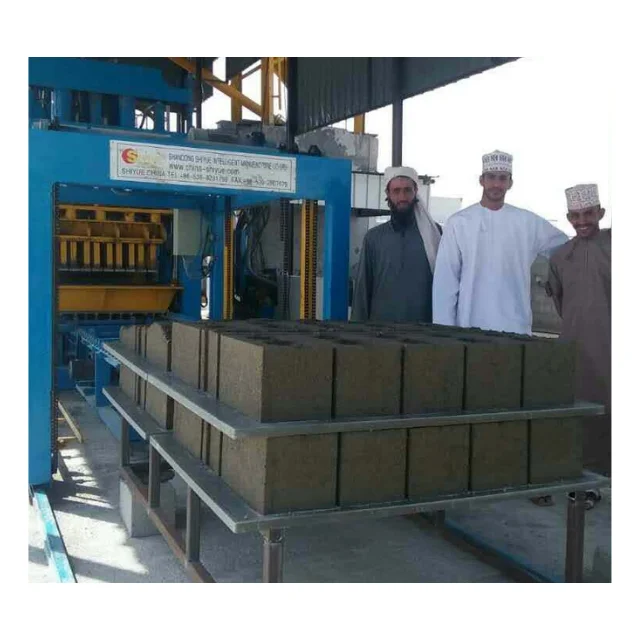
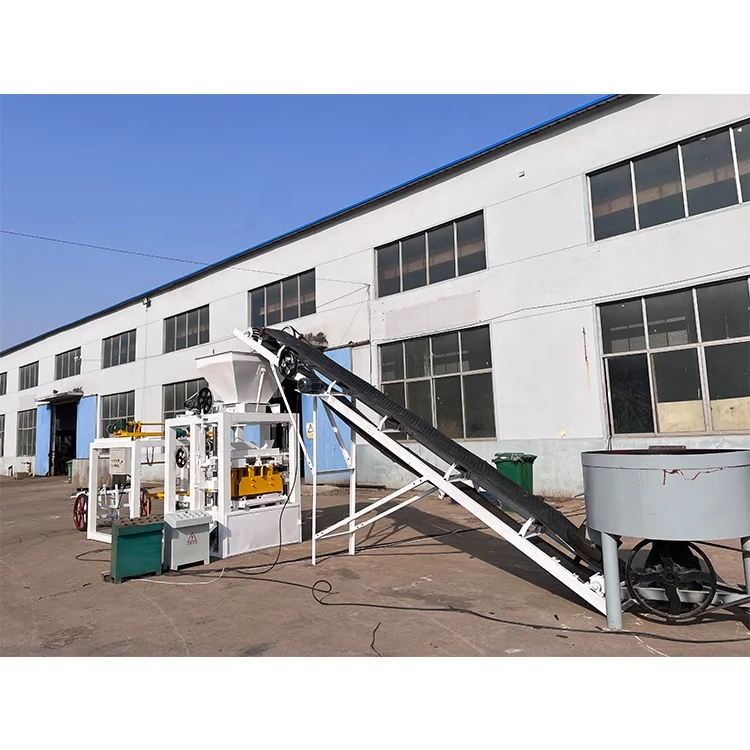
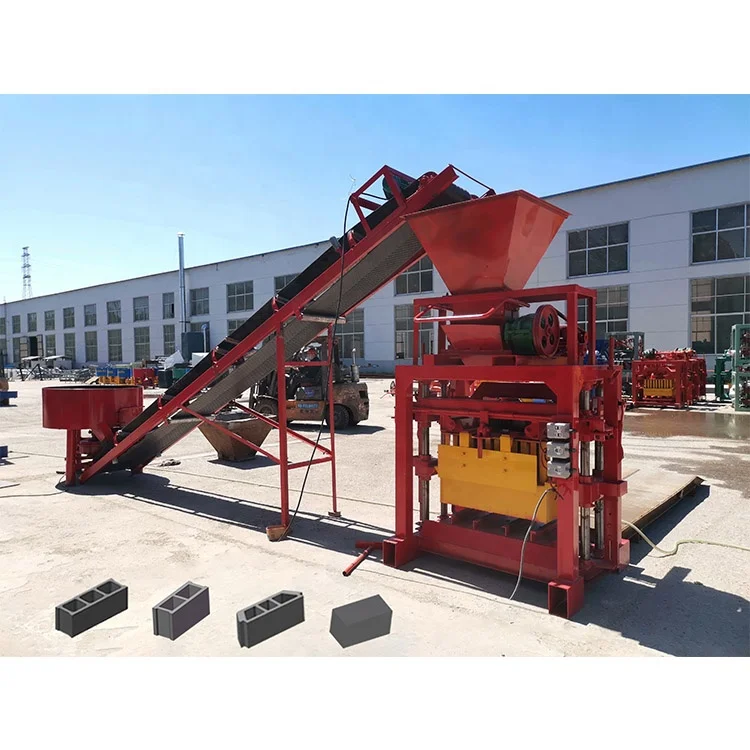
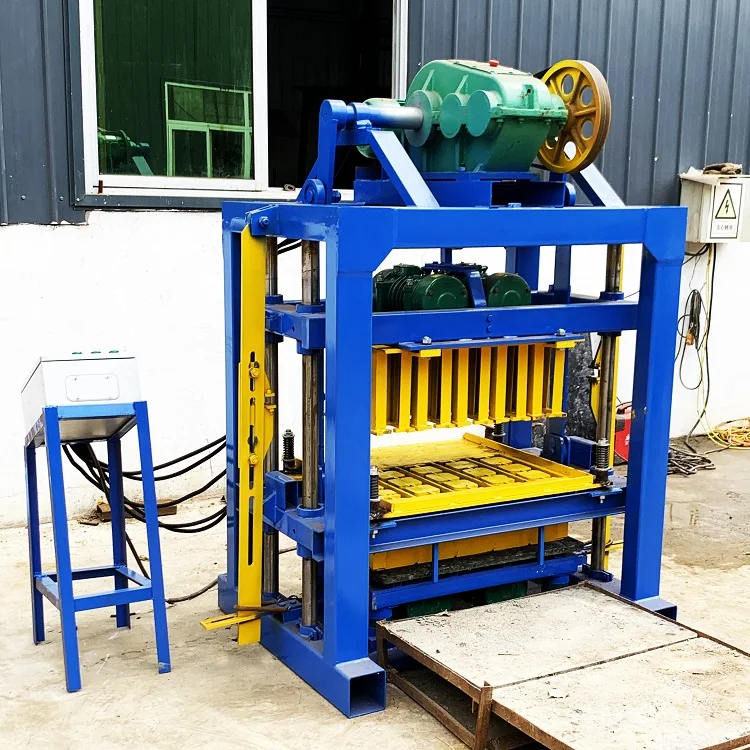
Integrated System Design — The QT4-15B is specified as one matched unit covering press, mould, pallet and handling, so cycle times and output figures stay consistent from the mixer through to stacking.
Technical Specifications
| Parameter |
Value |
| Model |
QT4-15B |
| Product Type |
Automatic Concrete Block Making Machine |
| Control System |
PLC computer control, fully automatic |
| Vibration Mode |
Multiaxis synchronizer vibration, vertically downward |
| Hydraulic System |
High thermal efficiency, low heat productivity |
| Mixer System |
Multiaxis forced mixer |
| Guide Bearing |
Long-period over-length guide bearing for upper mould and mould box alignment |
| Rack Construction |
High-strength steel with special welding technique, vibration shock resistant |
| Moulding Cycle |
15–20s (basis not stated in source — confirm block format, material, and thickness) |
| Output Capacity |
900–1200 pcs/h based on 400×200×200mm hollow block (4 pcs/mould); 7200–9600 pcs/8hr |
| Output Capacity |
1080–1440 pcs/h based on 400×150×200mm block (5 pcs/mould); 8640–11520 pcs/8hr |
| Output Capacity |
1440–1920 pcs/h based on 400×100×200mm block (8 pcs/mould); 11520–15360 pcs/8hr |
| Output Capacity |
2880–3840 pcs/h based on 200×100×60mm paving block (16 pcs/mould); 23040–30720 pcs/8hr |
| Output Capacity |
5930–6720 pcs/h based on 240×115×53mm standard brick (28 pcs/mould); 47400–53700 pcs/8hr |
| Automation Level |
Fully automatic |
| Pallet Size |
To be confirmed with supplier based on curing area and handling equipment |
| Mould Change Time |
To be confirmed with supplier |
| Rated Power |
To be confirmed with supplier |
| Voltage & Frequency |
To be confirmed with supplier before production |
| Overall Dimensions |
To be confirmed with supplier |
| Net Weight |
To be confirmed with supplier |
| Assembly State |
Production line configuration available with supporting equipment |
| Warranty |
1 year for the whole machine (excluding spare parts) |
Application Suitability
| Application |
Material or Output |
| Hollow block production |
Crushed stone, sand, cement, and fly ash aggregates for 400×200×200mm and 400×150×200mm formats |
| Paving block production |
Fine aggregate and pigment mixes for 200×100×60mm interlocking and solid pavers |
| Standard solid brick production |
Dense aggregate blends for 240×115×53mm bricks used in load-bearing walls |
| Multicellular brick production |
Lightweight and standard aggregate for partition and non-load-bearing formats |
| On-site contractor production |
Local quarry sand and cement for project-specific block formats at building sites |
What "Cycles per Hour" Actually Means for Your Output
Every capacity figure must name the block format, or it means nothing.
I have watched buyers sign off on a block machine quotation showing a single hourly number, only to discover on the first production day that the quoted rate assumed a small solid brick while their market needed hollow blocks at a fraction of that speed. The QT4-15B automatic concrete block making machine manufacturer range lists output separately for each format — from 4 hollow blocks per mould to 28 standard bricks per mould — so the throughput you plan against matches what the press actually delivers. [NEED_CITE: block format assumptions in capacity quotations]

Where the QT4-15B Sits in the Shiyue Range
This model occupies the mid-tier of the Shiyue stationary block machine lineup. It delivers fully automatic PLC-controlled operation with multiaxis synchronizer vibration, sitting above entry-level semi-automatic presses and below the high-capacity automatic lines designed for continuous three-shift plants. Buyers moving up from a manual egg-laying machine or replacing an aging semi-automatic press find the QT4-15B automatic concrete block making machine manufacturer specification covers the output band where most regional block plants operate.
Choosing the Right Tier Before the Quotation
The decision between this tier and the next one up depends on your daily output target, the number of block formats you sell, and whether you plan to add automatic stacking and cubing. A buyer running a single hollow block format at moderate volume will find this machine sufficient, while a plant producing six or more formats across paving blocks and kerbstones may need the higher-tier press with faster mould change and larger pallet area. Getting this choice right at the inquiry stage prevents a capacity ceiling that forces an early replacement. [NEED_CITE: output tier selection criteria for block plants]
Reading the Specs That Affect Daily Production
The multiaxis synchronizer vibration directs force vertically downward, which matters because lateral vibration scatter reduces density consistency across the pallet surface. The long-period over-length guide bearing keeps the upper mould aligned with the mould box throughout each stroke — when this alignment drifts, mould wear accelerates and block dimensions start varying beyond tolerance. The high-strength steel rack with special welding technique absorbs continuous vibration shock without fatigue cracking at the weld seams, a failure point I have seen on lighter frames within the first year of three-shift operation.
The Cost of Skipping Configuration Details
When a buyer accepts a standard quotation without confirming pallet size, the pallets may not fit the curing racks already built on site, forcing a rebuild of the entire curing area. When voltage and frequency are assumed rather than confirmed, the machine arrives and sits unpowered while transformers or panel rewiring are arranged — I have seen commissioning delayed by several weeks for this reason alone. When the PLC display language is not specified, operators work from unlabeled screens, increasing the chance of incorrect parameter changes during the first production runs. [NEED_CITE: commissioning delays from unconfirmed electrical specifications]
Why Source the QT4-15B from Shiyue
Block machinery is the sole product focus at Shiyue, meaning the press, mould, pallet, and handling equipment are specified as a matched system rather than sourced from separate vendors and bolted together. Each QT4-15B configuration is set against the buyer’s actual mix design and local aggregate, not pulled from a catalogue default. Mould design covers the formats your market sells, and custom mould drawings are available when standard options do not match. The automation level is selectable, so a buyer can start with semi-automatic pallet handling and move to full stacking later. Installation support includes on-site commissioning and operator training so the first production week is not spent troubleshooting.
Documentation & Verification
- Line layout and capacity calculation stating which block format each output figure assumes
- Machine specification sheet confirming voltage, frequency, and PLC display language before production
- Mould drawing and format list showing all available mould options and cycle times per format
- Factory test record and packing photographs provided before shipment
- Hydraulic and electrical schematic for on-site maintenance reference
Installation, Commissioning & Support
- Foundation plan matching QT4-15B overall dimensions and vibration load requirements
- Dedicated power circuit sized to the confirmed rated power and local voltage standard
- Machine dismantled for container loading with reassembly supervised on site
- PLC parameter set calibrated to the buyer’s mix design and target block format during first run
- Operator training covering mould change procedure, daily maintenance points, and fault codes
- Wear parts and mould replacement list with part numbers for reordering
What We Need Before Sending a Proposal
To size the QT4-15B correctly and avoid configuration mismatches after arrival, please share the block formats your market requires, your target daily output per format, and the raw materials available locally including aggregate type and moisture condition. Confirm the voltage and frequency at your site along with the preferred PLC display language. If you have existing curing racks, pallets, or forklifts on site, provide their dimensions so the pallet and handling specification fits what you already own.
Frequently Asked Questions
Q: How is the QT4-15B positioned within the Shiyue block machine range?
A: It sits in the mid-tier, offering fully automatic PLC operation with multiaxis synchronizer vibration. Buyers producing moderate daily volumes across a few block formats typically start here. Plants needing higher throughput, faster mould change, or larger pallet areas step up to the next tier in the range.
Q: What block formats can the QT4-15B produce?
A: Standard moulds cover 400×200×200mm hollow blocks, 400×150×200mm and 400×100×200mm solid blocks, 200×100×60mm paving blocks, and 240×115×53mm standard bricks. Custom moulds are available to buyer drawings, and output changes with each format as listed in the specifications table.
Q: What electrical and control details are confirmed before production?
A: Voltage, frequency, and PLC display language are confirmed with the buyer before the machine enters production. This prevents commissioning delays caused by mismatched power supply or operators unable to read the control interface on arrival.
Q: What plant footprint does the QT4-15B require?
A: The footprint depends on whether supporting equipment such as the mixer, pallet feeder, and stacking system are included. A line layout document is provided during the proposal stage showing the press, material feeding, and curing area dimensions so the buyer can verify fit before ordering.
Q: How does the automation level compare to semi-automatic models?
A: The QT4-15B runs a fully automatic PLC-controlled cycle including material feeding, vibration, and demoulding. Semi-automatic models require manual pallet handling and operator-initiated cycles, which increases labour requirement and reduces batch-to-batch consistency across a production shift.

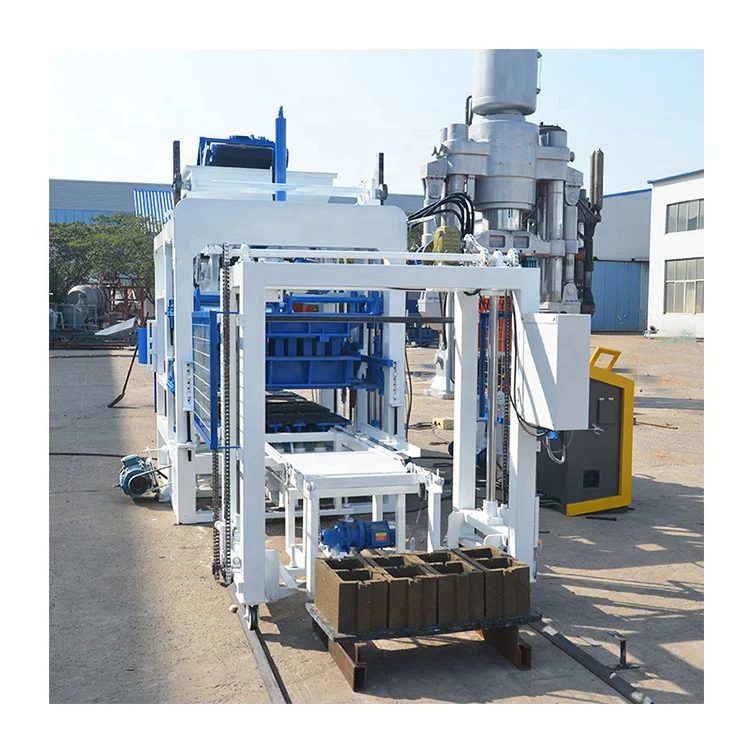
 Stationary block machine