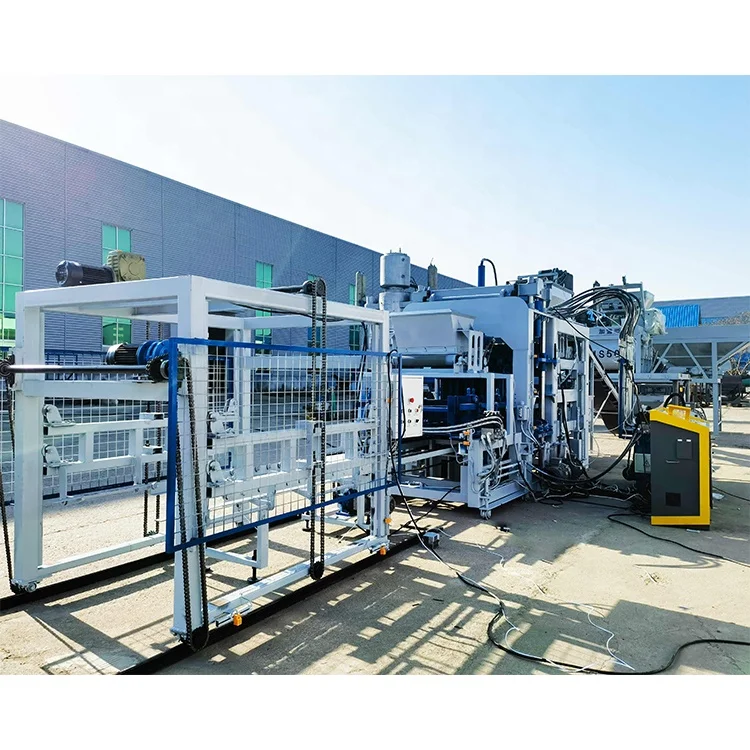
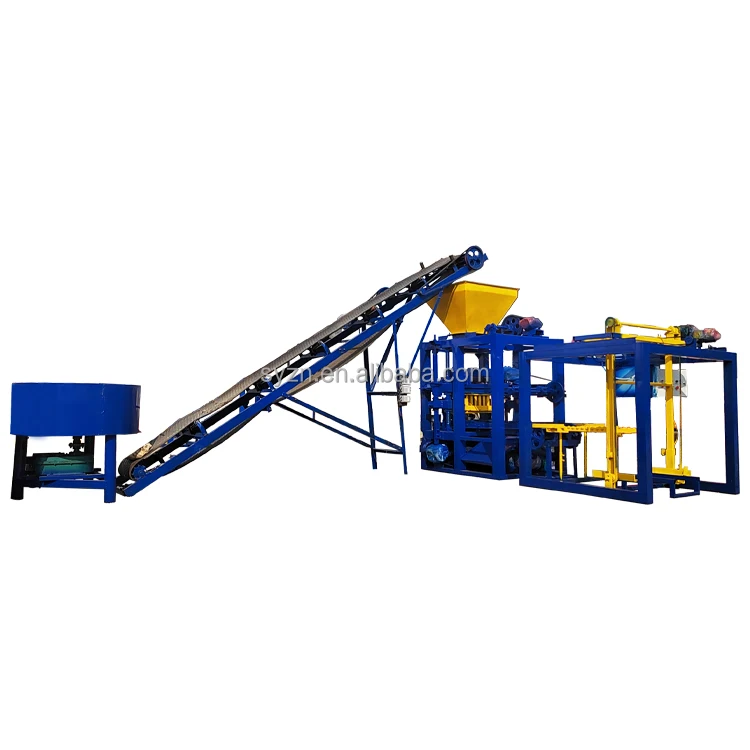
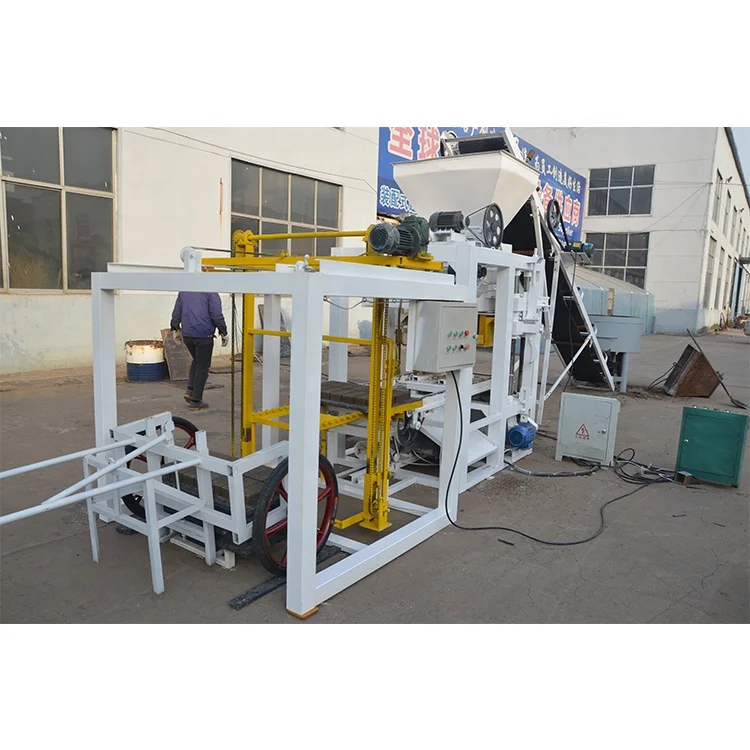
Matched System Focus — The QTJ4-40 block machine, moulds, and pallet handling are specified as one integrated setup rather than assembled from separate suppliers, keeping vibration force and pallet size aligned from the start.
Technical Specifications
| Parameter |
Value |
| Model |
QTJ4-40 |
| Product Type |
Hydraulic Concrete Block Making Machine |
| Vibration System |
Platform vibration, 2800 r/min |
| Pallet Size |
850 × 450 mm |
| Per Hour Output |
360 pcs (based on 400×200×200mm hollow block, 4 pcs/mould) |
| Per Hour Output |
500 pcs (based on 400×150×200mm hollow block, 5 pcs/mould) |
| Per Hour Output |
900 pcs (based on 225×112.5×60mm interlocking/paver block, 9 pcs/mould) |
| Daily Output |
2,880 pcs (based on 400×200×200mm hollow block, 8-hour shift) |
| Daily Output |
4,000 pcs (based on 400×150×200mm hollow block, 8-hour shift) |
| Daily Output |
7,200 pcs (based on 225×112.5×60mm paver, 8-hour shift) |
| Raw Material Ratio |
Cement 8-10%, Sand 30-40%, Stone 50-60% (approx. 1:4:5) |
| Top Die Mechanism |
Push and pull with automatic scraper |
| Machine Weight |
1 T |
| Overall Dimensions |
1350 × 1460 × 1800 mm |
| Factory Area Required |
200 m² |
| Worker Requirement |
1–3 people |
| Automation Level |
Semi-automatic (manual pallet handling) |
| Voltage & Frequency |
Configurable — confirm with manufacturer before order |
| Control System |
Confirm with manufacturer before order |
| Hydraulic Pressure |
Confirm with manufacturer before order |
| Mould Change Time |
Confirm with manufacturer before order |
| Certification |
CE availability to be confirmed |
Application Suitability
| Application |
Material or Output |
| Small plant hollow block production |
Concrete with cement, sand, and crushed stone |
| On-site construction block manufacturing |
Fly ash and sand-based mixes for hollow and solid blocks |
| Interlocking paver production |
Colored concrete for 225×112.5×60mm paver formats |
| Building material distributor in-house production |
Hollow, solid, and paver formats from one pallet size |
| First-time block plant setup |
Semi-automatic operation with 1–3 workers |
Why "Daily Capacity" Means Nothing Without the Block Format Attached
Every output figure here is tied to a specific block size and mould configuration — no generic daily totals.
A buyer once told me their previous supplier quoted a single daily capacity number. When the machine arrived and they switched from hollow blocks to pavers, the cycle time nearly doubled and output dropped below what they needed to fulfil existing orders. The QTJ4-40 block machine manufacturer you work with should always break capacity down per format before you commit. I have seen this mismatch cause project delays more than once [NEED_CITE: common causes of block machine output shortfalls in first-year operation].

Where the QTJ4-40 Sits in the Stationary Range
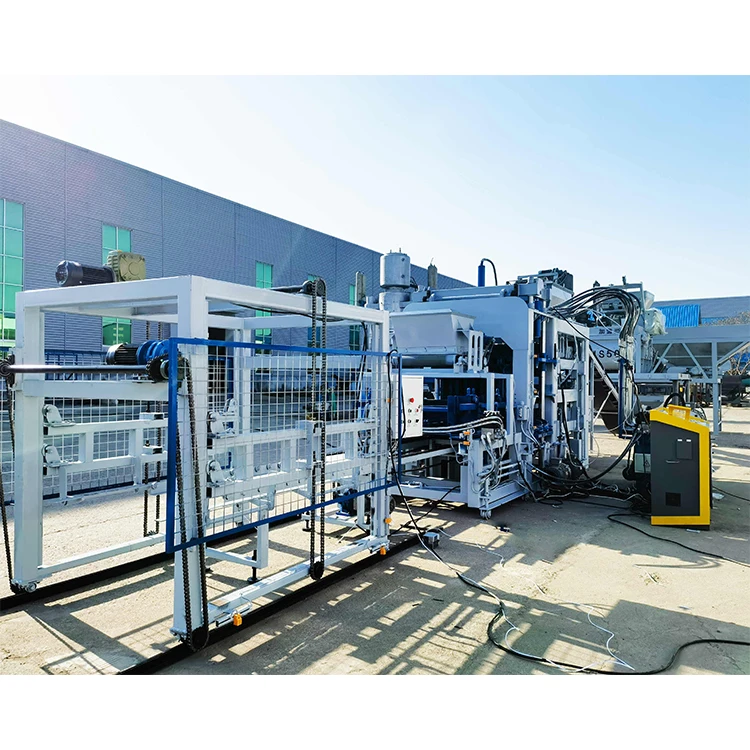
The Shiyue stationary block machine lineup spans mobile egg-laying units at the entry point, semi-automatic presses like the QTJ4-40 in the middle, and fully automatic lines with stacking and cubing at the top. This model occupies the first rung where a buyer has moved past mobile production but is not yet ready to invest in a fully automatic plant. It bridges the gap for entrepreneurs and small contractors who need consistent block output from a fixed position without the capital commitment of a high-capacity line.
Comparing the Semi-Automatic Tier to What Comes Next
Stepping up from the QTJ4-40 to a fully automatic stationary block machine means adding automatic pallet feeding, stacking, and cubing — reducing the workforce from two or three people down to one or two on the press itself. The semi-automatic tier still requires manual pallet handling after each cycle, which is manageable at this output level but becomes a bottleneck as daily volume grows. Buyers planning to expand within a few years should confirm whether the pallet size and curing rack layout they choose now will remain compatible when they upgrade later [NEED_CITE: planning block plant expansion without replacing downstream equipment].
Reading the Numbers That Actually Matter
The platform vibration at 2800 r/min works with the hydraulic pressure to compact the mix into the mould cavity. If your local aggregate is coarse crushed stone, the vibration force needs to be high enough to settle particles into corners — otherwise pavers come out with rough edges. The 850×450mm pallet size determines not just which moulds fit, but also which curing racks and forklifts work on your floor. A buyer who already has a curing yard sized for a different pallet dimension will spend more on new racks than on the moulds themselves. The raw material ratio of approximately 1:4:5 (cement to sand to stone) is a starting point; your local aggregate grading and fly ash availability will shift this, and the vibration settings must follow.
What Happens When Configuration Is Skipped
Ordering a block machine without confirming the buyer’s actual mix design and local aggregate leads to inconsistent block strength from batch to batch. I have watched operators adjust vibration time manually to compensate, slowing the cycle and cutting real daily output well below the quoted figure. When voltage and frequency are not confirmed before shipment, commissioning stalls until a transformer or converter arrives on site. Mould change time that was never discussed during the sales process can consume most of a shift, removing the format flexibility that justified the purchase in the first place [NEED_CITE: block machine commissioning delays caused by unconfirmed electrical specifications].
Why Source This QTJ4-40 Block Machine Manufacturer Through Shiyue
Block machinery is the single focus here, so the machine, mould, pallet, and handling equipment are specified as one matched system rather than sourced from separate vendors. Configuration is set against your actual mix design and local aggregate, not pulled from a catalogue default. Mould design covers the formats your market sells, with custom drawings available when standard options do not fit. The automation level is selectable — a buyer can start with this semi-automatic QTJ4-40 and plan an upgrade path within the same product family. Installation and commissioning support includes operator training so your team is running independently before the technician leaves.
Documentation & Verification
- Line layout and capacity calculation stating the block format assumed for each output tier
- Machine specification sheet confirming vibration frequency, pallet size, and overall dimensions
- Mould drawing and format list covering all three standard formats plus custom options
- Pallet specification matched to your curing area and forklift dimensions
- Factory test record on your target block format before dispatch
- Voltage and control language confirmation document before shipment
Installation, Commissioning & Support
- 200 m² factory area including curing space, sized to the 850×450mm pallet layout
- Voltage and frequency confirmed per your local grid before the 1 T machine ships
- Push-and-pull top die with automatic scraper calibrated on-site during first run
- Platform vibration tuned to your local aggregate and confirmed mix ratio
- Operator training covering mould change procedure and daily maintenance checks
- Wear parts list provided with first-order spares matching hydraulic and vibration components
What to Include in Your Inquiry
To size this QTJ4-40 stationary block machine for sale to your project, share your target block format with daily volume requirement, the raw materials available locally with any test mix results, and your site dimensions including curing yard layout. Confirm the local voltage and frequency along with the preferred control display language. If you already have forklifts or curing racks on site, provide their specifications so the pallet size can be checked for compatibility before the machine is built.
Frequently Asked Questions
Q: How does the QTJ4-40 semi-automatic tier compare to the next-step automatic machine in the Shiyue range?
A: The QTJ4-40 requires manual pallet handling with 1–3 workers, while the next-step automatic models add pallet feeding, stacking, and cubing to reduce labour. Daily output capacity also increases at the next tier. The QTJ4-40 suits buyers starting out or running moderate volumes where full automation is not yet justified by the investment.
Q: What block format is each capacity figure based on?
A: The 2,880 pcs/day figure is based on 400×200×200mm hollow blocks with 4 per mould over an 8-hour shift. The 4,000 pcs/day assumes 400×150×200mm hollow blocks at 5 per mould. The 7,200 pcs/day is for 225×112.5×60mm pavers at 9 per mould. Output changes with each format switch.
Q: What is the minimum factory area required for a QTJ4-40 setup?
A: The machine itself occupies a 1350×1460 mm footprint, but the total factory area including raw material storage, block curing space, and pallet return path is approximately 200 m². Curing area depends on the pallet size and how many days of stock you hold before shipping.
Q: Can a buyer start with the QTJ4-40 and upgrade later?
A: Yes, the Shiyue range includes higher automation tiers that share pallet sizes and mould configurations. Starting semi-automatic lets a buyer establish production and market presence before investing in automatic pallet handling, stacking, and cubing equipment when volume justifies it.
Q: Which pallet size does the QTJ4-40 use, and is it compatible with standard systems?
A: The QTJ4-40 uses an 850×450mm pallet. Compatibility with your existing curing racks and forklift should be confirmed before order, as pallet dimensions affect the entire downstream handling setup including rack spacing and transport from press to curing area.

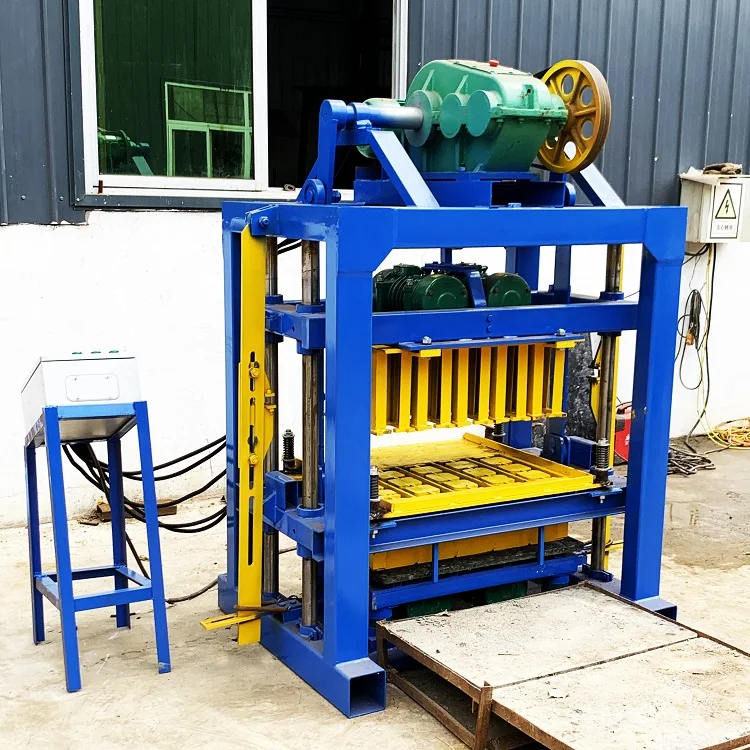
 Stationary block machine