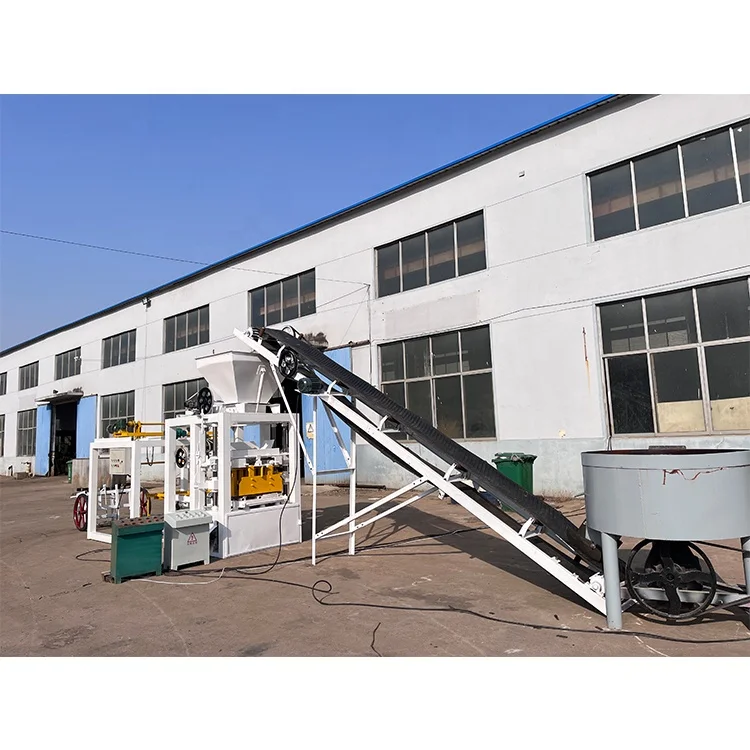
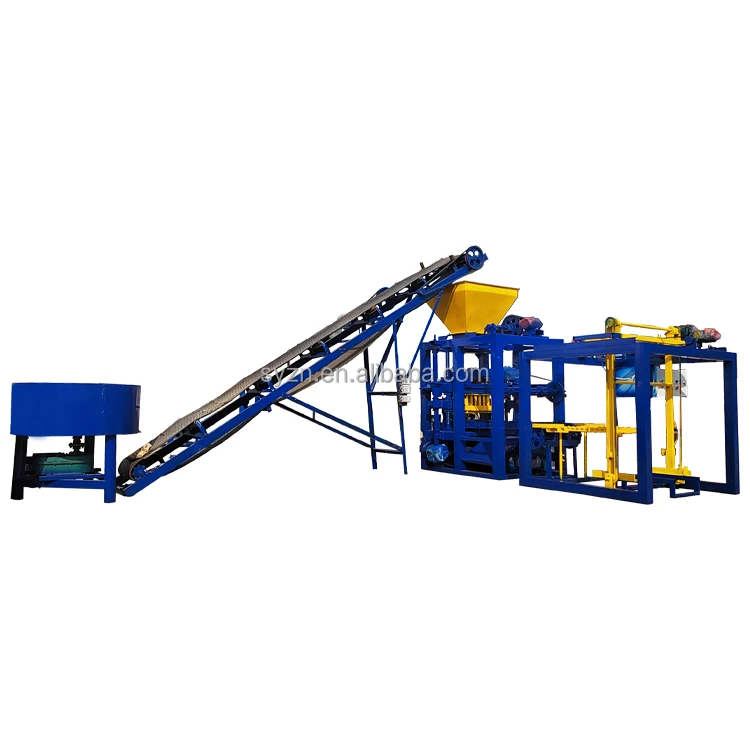
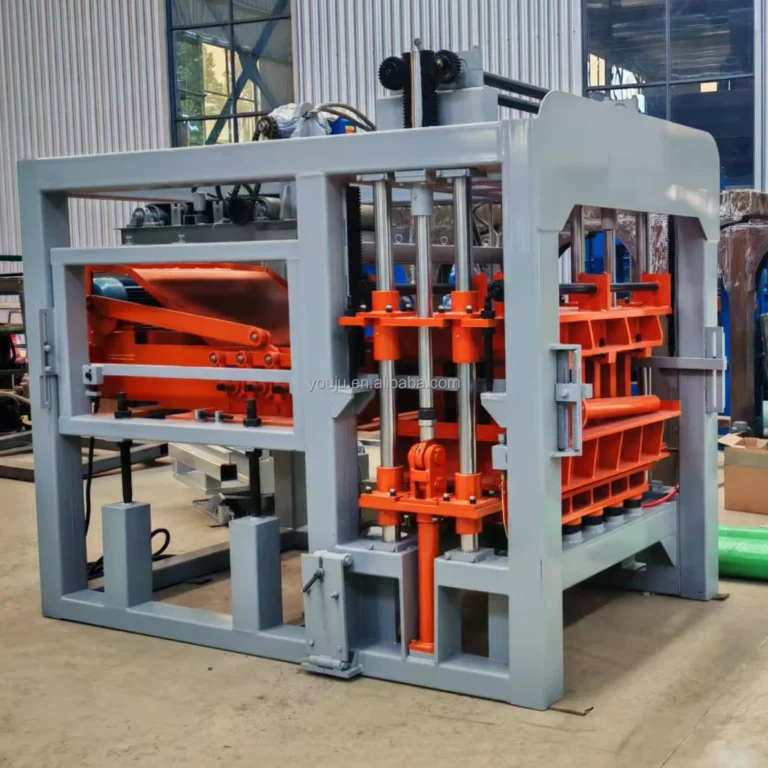
Mid-Range Positioning — the QT4-15 bridges entry-level semi-automatic presses and high-capacity lines, letting buyers match vibration force, pallet size and automation to their actual block format before committing to a full plant layout.
Technical Specifications
| Parameter |
Value |
| Model |
QT4-15 |
| Product Type |
Automatic Concrete Block Making Machine |
| Host Machine Power |
27.5 kW |
| Voltage |
380V (configurable to destination market) |
| Moulding Cycle |
15 s |
| Overall Dimensions (L×W×H) |
7100 × 1600 × 2610 mm |
| Net Weight |
5 T |
| Pallet Size |
1020 × 570 mm |
| Vibration Force |
40 kN |
| Mixer Model |
JS500 |
| General Water Consumption |
4 T / day |
| Workers Required |
3 – 4 |
| Workshop Area |
150 m² |
| Control System |
Computer controlled directional vibration (PLC language to confirm) |
| Automation Level |
Automatic |
| Motor Brand |
Siemens Motor |
| Mould Format |
Hollow block, multicellular bricks, paving bricks, standard bricks (basis not stated in source) |
| Output Capacity |
(basis not stated in source) |
Application Suitability
| Application |
Material or Output |
| Hollow block production for residential and commercial walls |
Crushed stone, sand, cement, fly ash |
| Paving brick manufacturing for walkways and driveways |
Coarse aggregate with fine sand blend |
| Standard solid brick output for load-bearing structures |
River sand or manufactured sand with cement |
| Multicellular brick runs for lightweight partition walls |
Lightweight aggregate or expanded clay mix |
What "15-Second Cycle" Actually Means for Your Daily Output
The moulding cycle only tells half the story — real throughput depends on the block format, pallet return time and whether stacking is manual or automatic.
Buyers often receive a single cycles-per-hour figure that assumes the smallest, fastest-running format on the catalogue. When the same QT4-15 Stationary Concrete Block Making Machine switches to a large hollow block, the vibration dwell lengthens and the pallet shuttle takes longer to clear the press. [NEED_CITE: capacity calculation methods for concrete block presses]. Daily output can therefore fall well short of the headline number if the quote does not state which block format the cycle time assumes. Asking the supplier to break output down per format is the quickest way to compare machines on equal ground.

Where the QT4-15 Sits on the Output Tier Map
The QT4-15 occupies the middle rung of the stationary block machine range, sitting above entry-level semi-automatic egg-laying models and below high-capacity automatic lines that run multiple pallets simultaneously. For a first-time plant owner who needs reliable daily volume without the capital outlay of a fully automated cubing system, this tier offers a balanced footprint. The 150 m² workshop requirement leaves room for the JS500 mixer, pallet racks and a modest curing zone, keeping the initial investment contained while still allowing an automation upgrade later.
Matching the Machine to Your Block Format Before You Buy
A Stationary Concrete Block Making Machine is only as flexible as its mould inventory and changeover procedure. The QT4-15 ships with moulds for hollow blocks, multicellular bricks, paving bricks and standard bricks, but the exact dimensions and cavity count must align with what your local market actually buys. [NEED_CITE: regional block format preferences by construction code]. If the quoted mould set covers formats that move slowly in your area, you end up paying for tooling that sits idle while ordering additional moulds separately, adding lead time and freight cost to the project.
Reading the Specs That Decide Block Strength
Vibration force and hydraulic pressure work together to compact the concrete mix inside the mould cavity. The QT4-15 delivers 40 kN of vibration force, which is sufficient for standard-density hollow blocks when paired with a well-graded aggregate blend. However, if your local sand is excessively fine or your cement content runs low, the same vibration setting may produce blocks that fail compressive strength tests. The computer controlled directional vibration system uses a frequency brake to cancel residual vibration energy once the cycle ends, preventing surface cracks on freshly formed blocks. Low-frequency feeding followed by high-frequency table-and-mould vibration liquefies the concrete mass in roughly two to three seconds, ensuring corners and thin webs fill completely before the press opens.
The Hidden Cost of Skipping Pallet and Voltage Checks
Pallet size sounds trivial until the machine arrives and the 1020 × 570 mm pallets do not fit the curing racks or forklift tines you already own. Replacing an entire pallet inventory or re-welding rack supports absorbs weeks of production time. Voltage mismatches cause even longer delays. I once watched a block press sit idle on a Central American site because the motor was wound for 380V/50Hz while the local grid ran 110V/60Hz; a transformer retrofit stalled commissioning for three weeks. [NEED_CITE: voltage and frequency standards by export market]. Confirming voltage, frequency and PLC display language before the machine leaves the factory costs a few days of paperwork but prevents a job site standing empty.
Why Source This QT4-15 Stationary Concrete Block Making Machine Here
Block machinery is the single focus of this production line, so the press, mould, pallet and handling equipment are specified as one matched system rather than assembled from unrelated suppliers. Configuration starts from your actual mix design and target block format, not a catalogue default, which means the vibration amplitude and dwell time are set to suit your aggregate. Mould design and supply cover the formats your market sells, including custom drawings when standard cavities do not match local dimensions. Automation level is selectable, so you can begin with manual pallet handling and add automatic stacking later without replacing the host machine. Factory testing runs the QT4-15 through full moulding cycles on the agreed pallet size before crating, catching alignment or wiring issues before they become on-site emergencies.
Documentation & Verification
- Line layout drawing showing QT4-15 footprint within your 150 m² workshop
- Capacity calculation sheet stating the exact block format behind each output figure
- Mould drawing pack listing cavity count, wall thickness and format dimensions
- Voltage, frequency and PLC language confirmation matched to destination grid
- Factory test record captured on your specified pallet size and mix
- CE declaration included where destination market requires it
Installation, Commissioning & Support
- Foundation plan sized to the 7100 × 1600 mm machine footprint and 5 T operating weight
- Dedicated 27.5 kW circuit with voltage confirmed before motor wiring begins
- Host machine delivered as a single assembly to minimise on-site reconnection
- First-run vibration tuning matched to your local aggregate density and moisture
- Operator training covering mould change procedure and PLC fault navigation
- Wear parts list identifying hydraulic seals, vibration springs and mould liners
Before You Request a Quote
Send the exact block formats your market moves fastest, the daily volume you need per format and the aggregate materials available within hauling distance of your site. Include your local voltage, frequency and the language you want on the PLC screen so the electrical panel and control interface are configured before dispatch. If you already have curing racks or a forklift, share the pallet dimensions those assets accept so the pallet spec is locked early.
Frequently Asked Questions
Q: Where does the QT4-15 sit compared to semi-automatic and higher-capacity models?
A: The QT4-15 is a mid-tier automatic press. It offers higher daily volume than a semi-automatic egg-laying machine while staying below the capital cost of a multi-pallet automatic line with full cubing. Buyers who expect to grow output later can start here and add stacking automation without changing the host press.
Q: What workshop area does the QT4-15 need, and does that include the mixer?
A: The quoted 150 m² covers the host machine, JS500 mixer and immediate pallet circulation area. Additional space is required for curing racks, raw material stockpiles and finished block storage. Confirming ceiling height is also important because the machine stands 2610 mm tall before any overhead hopper extension.
Q: How is capacity calculated, and which block format is used?
A: Capacity figures are based on the moulding cycle of 15 seconds multiplied by the number of blocks per mould, but the exact output depends on the block format selected. Ask for a capacity table that lists each mould — hollow, paving, standard — with its own pieces-per-hour value so you can plan against the format you actually sell.
Q: What voltage and PLC language options are confirmed before shipment?
A: Voltage and frequency are set to match the destination grid, and PLC display language is chosen during the pre-production confirmation stage. Providing your site voltage, phase and preferred language early avoids transformer retrofits or unreadable fault codes when the machine is first powered on.
Q: Can the QT4-15 be upgraded to full automatic stacking later?
A: Yes. The automation level is selectable, and the machine frame accommodates add-on pallet return conveyors and stacking stations. Starting with manual pallet handling keeps initial cost lower; when volume justifies it, automatic stacking and cubing modules can be installed without replacing the press or moulds.

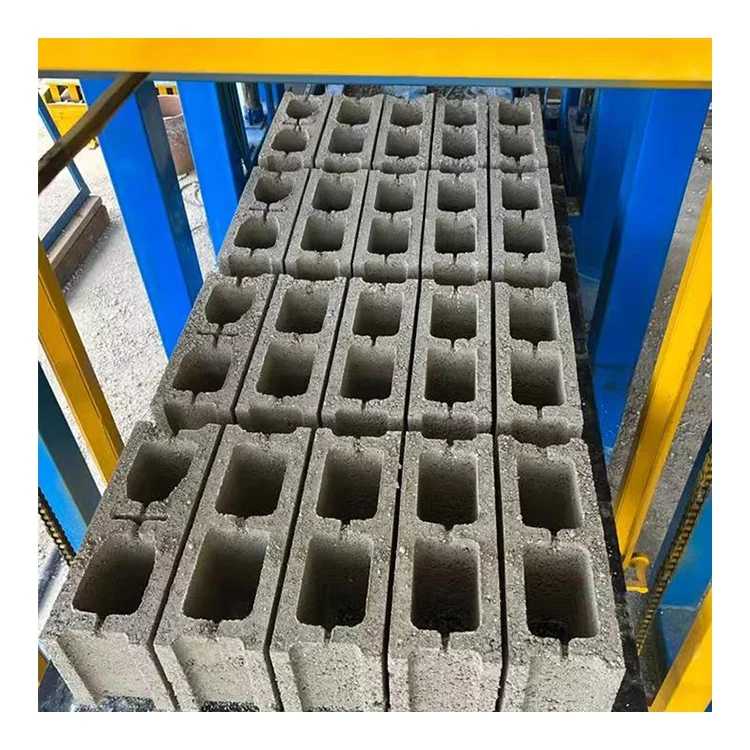
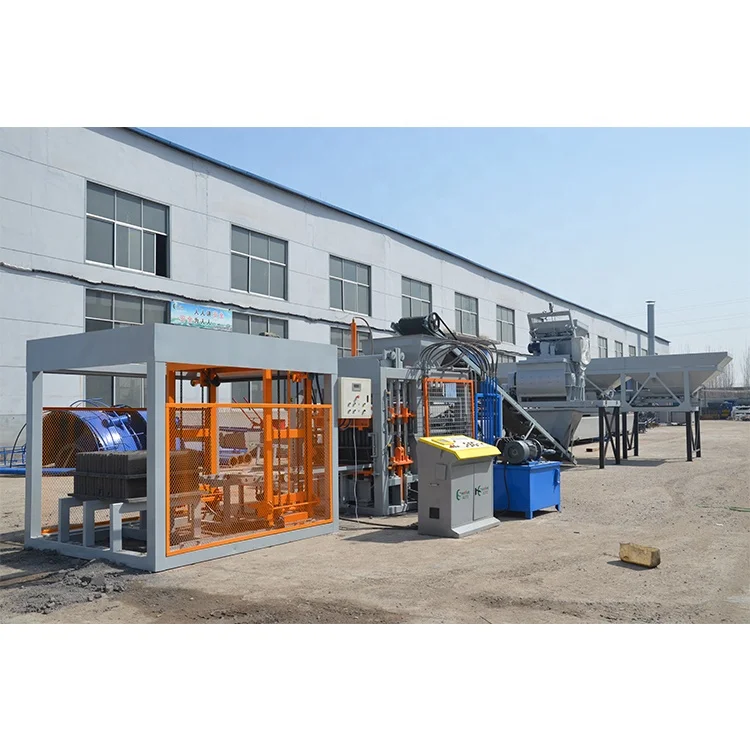 Stationary block machine