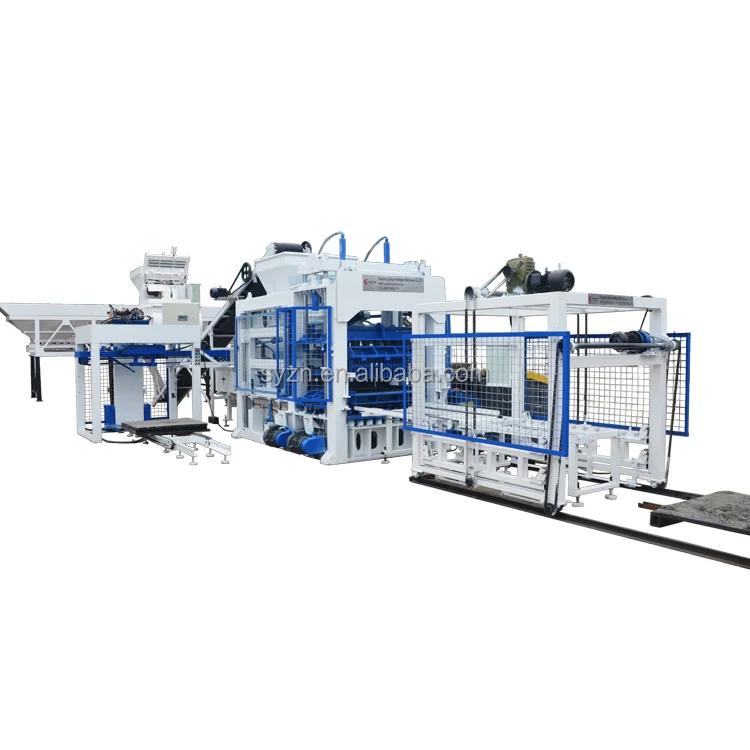
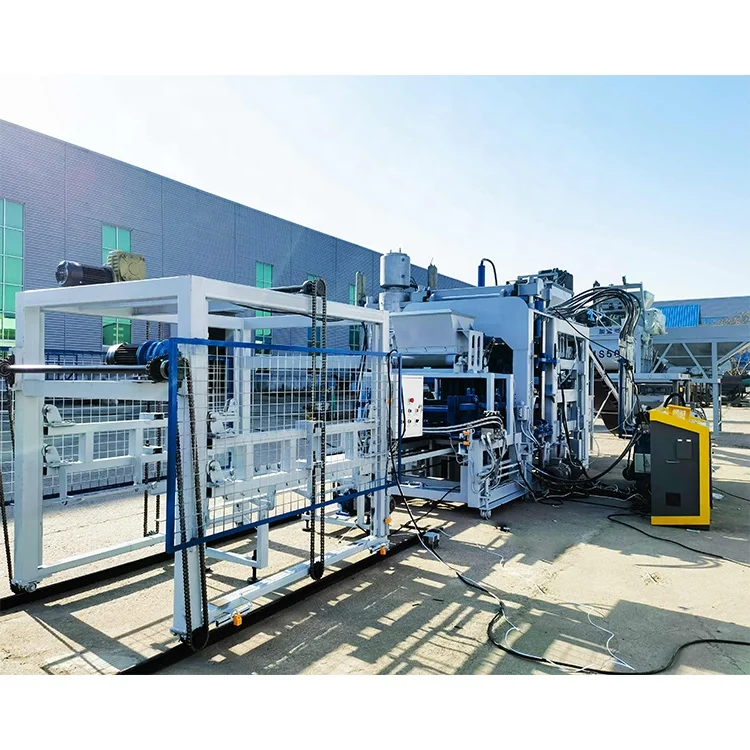
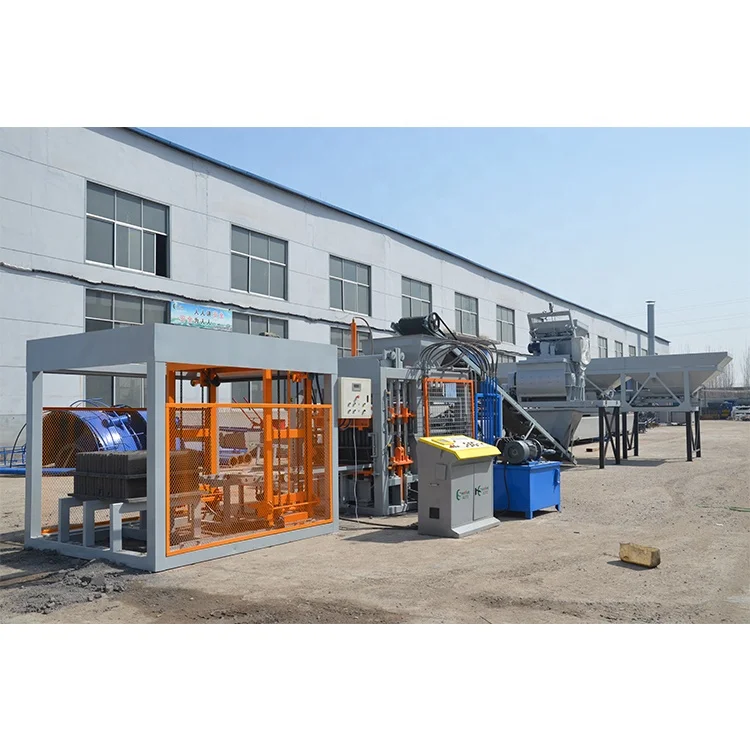
Technical Specifications
| Parameter |
Value |
| Model |
QT5-15 |
| Product Type |
Fully Automatic Concrete Block Making Machine |
| Overall Dimensions (L×W×H) |
7400×1950×2800mm |
| Rated Pressure |
21MPa |
| Main Vibration Form |
Platform Vibration |
| Vibration Frequency |
2800~4500 r/min |
| Pallet Size |
1100×550mm |
| Molding Cycle |
15-25s |
| Overall Power |
26.5KW |
| Demolding Method |
Hydraulic |
| Control System |
PLC |
| Output Capacity (Hollow brick 400×200×200mm) |
1800 pcs/h (based on 5 pcs/mold, 16-20s cycle) |
| Output Capacity (Hollow block 400×150×200mm) |
1300 pcs/h (based on 6 pcs/mold, 15-20s cycle) |
| Output Capacity (S paver 225×112.5×60mm) |
3700 pcs/h (based on 16 pcs/mold, 15-17s cycle) |
| Applied Products |
Concrete blocks, hollow/solid blocks, pavers, interlocking blocks, curbstone, colored pavers |
| Raw Material |
Crushed stone, sand, cement, dust, fly ash, gravel, slag, and other raw materials |
| Standards |
CE |
Application Suitability
| Application Scenario |
Material or Output Details |
| First-time Block Plant Setup |
Mid-range automatic production of hollow and solid blocks using local aggregate and cement |
| Housing Project Contractors |
Steady daily output of 400×200×200mm hollow blocks for residential wall construction |
| Building Material Distributors |
Adding paver and interlocking brick formats to an existing product catalog on one press |
| On-site Construction Production |
Producing standard concrete blocks and curbstones directly at development sites |
What "Pieces per Hour" Actually Means for Your Plant
Capacity is only meaningful when the block format is stated. A Fully Automatic Concrete Block Making Machine manufacturer must tell you which brick size the output number assumes, or the figure is useless for your production planning.
I have sat in site offices where the daily target was missed on day one because the quotation quoted cycles per hour without naming the format. The QT5-15 produces 1800 pieces per hour based on a 400×200×200mm hollow brick, and 3700 pieces per hour based on a 225×112.5×60mm S paver. Those are two very different products requiring different curing space and downstream handling. [NEED_CITE: capacity calculation standards for concrete block production]

Positioning the QT5-15 in the Shiyue Range
The QT5-15 sits in the mid-tier automatic range. It bridges the gap between small workshop models and high-capacity fully automatic lines. For a buyer surveying options for a first or replacement machine, this model offers a clear stepping stone: you get automatic operation without the footprint or investment of a top-tier plant.
Scaling Your Investment Over Time
Automation is selectable. A buyer can start the QT5-15 in a semi-automatic configuration with manual pallet handling and upgrade to automatic stacking and cubing later. This flexibility is critical when you are mapping out a complete block production setup and need the line to grow with your market demand. [NEED_CITE: automation upgrade paths in block making machinery]
Vibration, Pressure, and the Pallet Decision
The 21MPa rated pressure combined with platform vibration at 2800–4500 r/min determines the density and strength of your blocks. The vibration frequency is adjustable to match different mould formats, ensuring consistent compaction whether you are pressing hollow blocks or dense pavers.
The pallet size of 1100×550mm must be cross-checked against your existing curing racks and forklift capacity. A mismatch here means you are either rebuilding your curing area or handling pallets by hand, negating the automation you paid for. The 26.5KW overall power requirement also dictates the electrical infrastructure you need to prepare before the machine arrives.
The Cost of Ignoring the Voltage Question
Ordering a Fully Automatic Concrete Block Making Machine without confirming voltage, frequency, and PLC display language delays commissioning and frustrates operators. I learned this the hard way when a machine arrived with menus in a language the local team could not read.
Specs like the PLC control system are only useful if the HMI language matches your operators. Voltage and frequency must match your local grid, or you face transformer costs or motor burnout. [NEED_CITE: electrical standards for industrial machinery export]
Why Buyers Choose the Shiyue Range
We configure the QT5-15 against your actual mix design and local aggregate, not a catalogue default. This ensures the vibration and pressure settings produce blocks that meet your local strength standards.
The machine, mould, pallet, and handling equipment are specified as one matched system. You do not assemble the line from separate suppliers and hope the cycle times align. Mould design covers the formats your market actually sells, with custom drawings available for non-standard sizes.
Documentation & Verification
- Line layout and capacity calculation stating the exact block format assumed for each output figure
- Mould drawing and format list detailing included and optional block sizes
- Pallet specification sheet with material and thickness for curing area verification
- Voltage, frequency, and PLC display language confirmation in writing before production
- Factory test record on your specific block format before dispatch
- Hydraulic and electrical schematic for local maintenance teams
Installation, Commissioning & Support
- Foundation plan detailing load points for the 7400×1950×2800mm machine footprint
- Power connection guide specifying dedicated circuit requirements for the 26.5KW overall power
- On-site assembly supervision for the hydraulic demolding system and platform vibration unit
- PLC parameter setup and operator training on the HMI in your confirmed language
- Mould change procedure training to minimize downtime during format switches
- Wear parts list and reorder schedule for hydraulic seals and vibration components
What We Need to Quote Your Line
To provide an accurate proposal, we need your target block formats and the daily output you must achieve. Tell us the local aggregate and cement type available, and the curing space you can allocate.
Specify your site voltage and frequency, the PLC language your operators require, and whether your existing forklift and racks match the 1100×550mm pallet size.
Frequently Asked Questions
Q: How is the QT5-15’s hourly capacity calculated, and which block format does each number assume?
A: Capacity is calculated based on the molding cycle time and the number of cavities per mould. For the QT5-15, 1800 pieces per hour assumes a 400×200×200mm hollow brick with 5 cavities per mould and a 16-20 second cycle. We state the exact format for every output figure so your production plan is honest.
Q: Where does the QT5-15 sit in the Shiyue range compared to semi-automatic and higher-tier automatic models?
A: The QT5-15 is a mid-tier automatic machine. It offers more capacity and automation than small workshop models but requires a smaller footprint and investment than high-capacity lines. It is the bridge for buyers scaling up from semi-automatic or starting a first automatic plant.
Q: Can I start with the QT5-15 in a semi-automatic configuration and upgrade automation later?
A: Yes. The QT5-15 can be configured with manual pallet handling initially and upgraded to automatic pallet feeding, stacking, and cubing later. This allows you to match the automation level to your current budget and upgrade as your production volume grows.
Q: Which voltage and frequency options are available, and how is the PLC language set for my market?
A: Voltage and frequency are configurable to match your local grid, and this must be confirmed before production. The PLC display language is also set to your requirement, ensuring your operators can read the HMI menus from day one of commissioning.

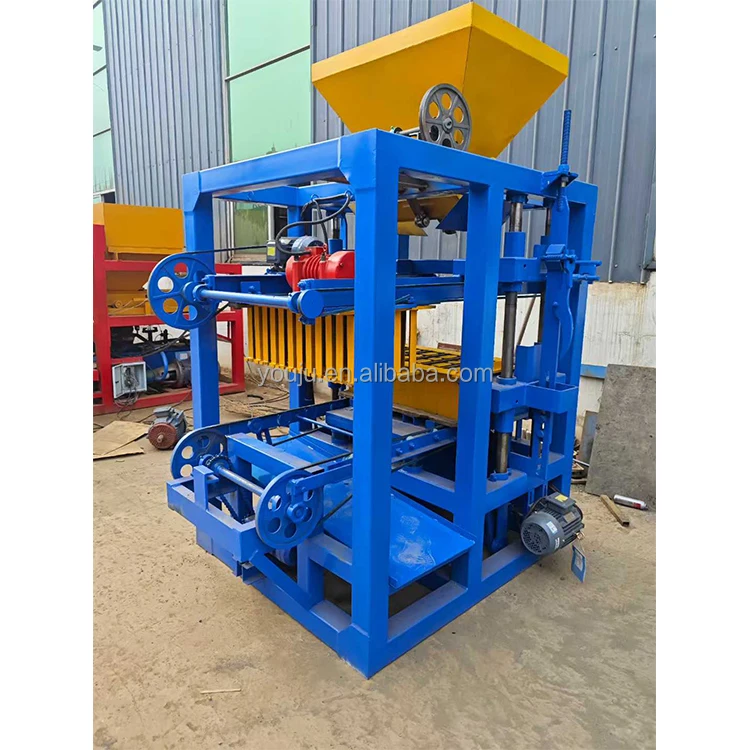
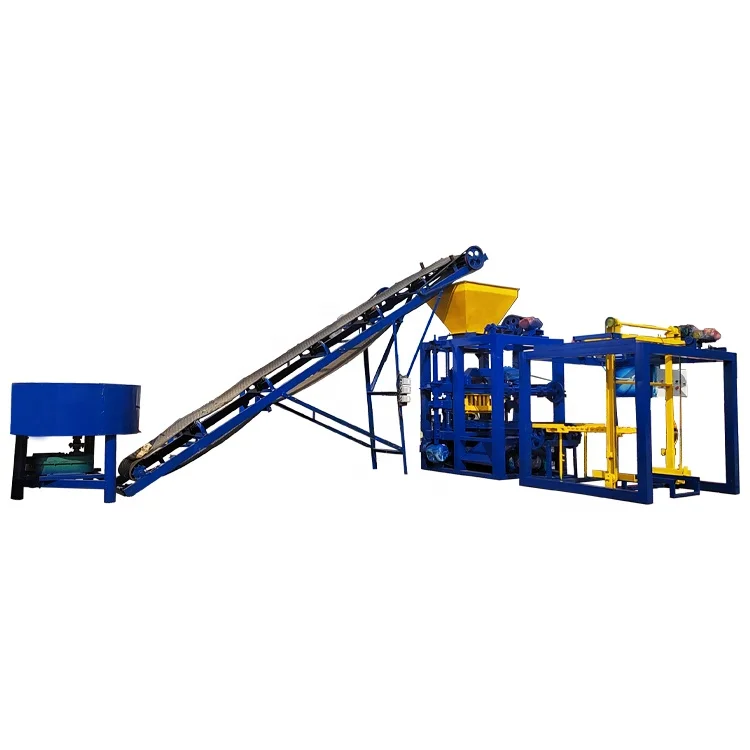 Stationary block machine