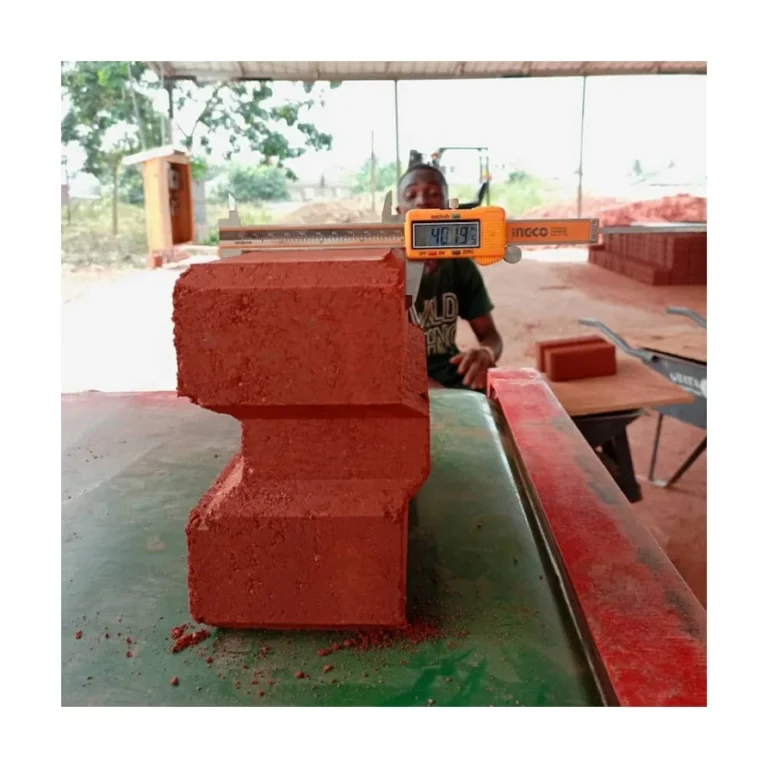
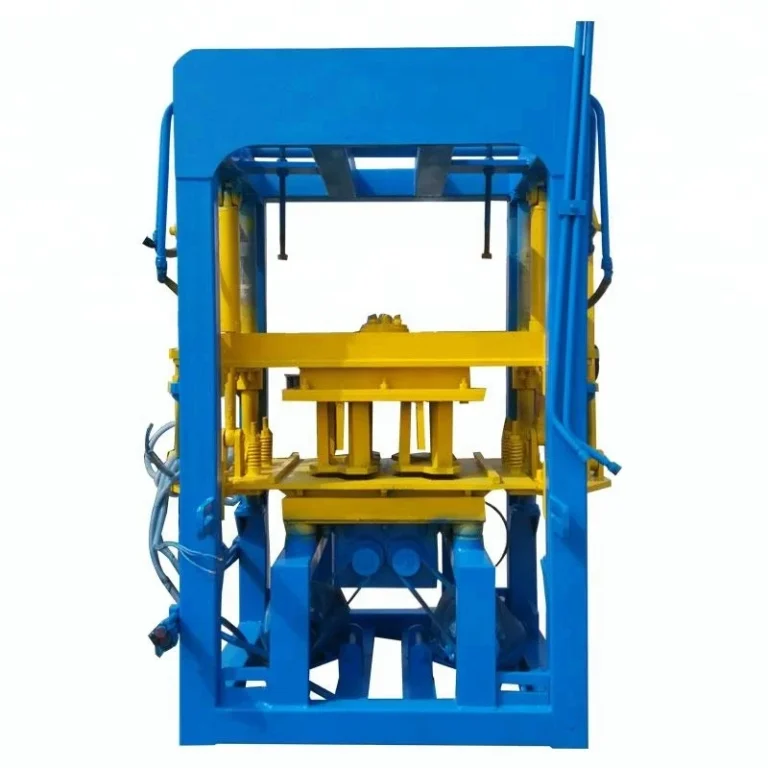
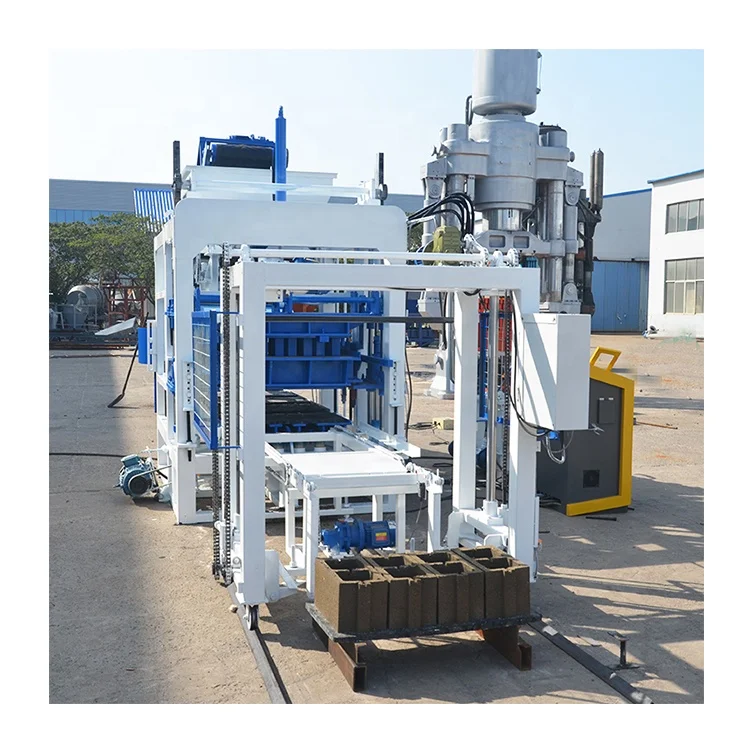
Matched system design — the ECO 2700 clay block making machine is specified as a complete press, mould and pallet package rather than a standalone unit, so cycle time and block density align with your local material from day one.
Technical Specifications
| Parameter |
Value |
| Model |
ECO 2700 |
| Product Type |
Clay Block Making Machine |
| Rated Power |
5.5 kW |
| Voltage & Frequency |
380V, 3-phase, 50Hz (customizable to local grid) |
| Hydraulic Pressure |
16 MPa |
| Shaping Cycle |
15–20 seconds |
| Overall Dimensions |
1000(L) × 1000(W) × 1800(H) mm |
| Net Weight |
1000 kg |
| Automation Level |
Semi-automatic / manual operation |
| Control System |
Manual operation (no PLC) |
| Mould Format |
Clay block (format dimensions to be confirmed) |
| Stacking Method |
Manual |
| Warranty |
1 year |
| Certification |
CE |
Application Suitability
| Application |
Material or Output |
| Small workshop clay block production |
Local clay soil blended with water |
| On-site block forming for construction projects |
Clay mix prepared at the building site |
| Entry-level product diversification for building material sellers |
Standard clay block formats for local housing markets |
| Low-investment block plant for first-time entrepreneurs |
Clay blocks with manual stacking and curing |
Why "15–20 Seconds per Cycle" Means Less Than You Think on a Real Shop Floor
Cycle time only matters when tied to a specific block format, and the ECO 2700 clay block making machine manufacturer literature rarely makes that link explicit.
Many small plant owners discover after installation that the quoted cycle assumes an ideal block size and a perfectly prepared mix. When you switch to a thicker wall block or a clay blend with higher moisture, each press stroke stretches beyond the nominal range, and daily output drops accordingly. The semi-automatic nature of this tier means an operator must also load material and remove the formed block by hand, adding seconds that never appear in brochure figures [NEED_CITE: typical variance between catalogue cycle time and real shop floor output in semi-automatic block presses]. Verifying capacity against your actual block format before ordering prevents the gap between expectation and payroll.

Where the ECO 2700 Sits in the Shiyue Block Machine Range
The Shiyue lineup spans mobile egg-laying units, semi-automatic presses like the ECO 2700, and fully automatic lines with pallet feeding and stacking. This model occupies the entry tier for buyers who want hydraulic pressing force without investing in a complete automated plant. The 16 MPa hydraulic system places it above purely manual or mechanical lever machines, giving formed blocks enough density to handle shortly after demoulding. For a first-time clay block producer, this tier offers a stepping stone: start with manual pallet handling now and upgrade to automatic feeding and stacking as volumes grow.
How Semi-Automatic Operation Shapes Your Daily Workflow
A semi-automatic clay block making machine removes the need for external power during the forming stroke itself, which matters in regions where grid supply is unreliable or where a small workshop runs on a generator. The operator controls material feeding and block removal, keeping electrical demand limited to the hydraulic pump motor. This keeps running costs predictable and means the machine can operate in locations without heavy industrial power infrastructure [NEED_CITE: power reliability challenges for small manufacturing enterprises in developing regions]. The trade-off is labour: plan for at least two operators per shift to maintain a steady production rhythm at this output tier.
Reading the Specs That Actually Govern Block Quality
Hydraulic pressure at 16 MPa determines how tightly the clay particles are compressed during each stroke, directly influencing the green strength of the block — its ability to hold shape before firing or curing. A lower pressure rating often produces blocks that crack when moved from the mould to the drying rack. The 15–20 second shaping cycle interacts with this pressure: a shorter cycle may not allow the hydraulic ram to reach full pressure on denser clay mixes, while a longer hold increases density but reduces throughput. The 5.5 kW motor must drive the hydraulic pump consistently through hundreds of cycles per shift, so matching motor rating to your local voltage stability is essential. Finally, the compact 1000 × 1000 × 1800 mm footprint means the machine fits into a small workshop, but you still need clearance around it for material staging and block removal paths.
The Cost of Overlooking Configuration Details Before Shipment
Buyers who confirm only the machine model and skip mould format, voltage and pallet specification often face weeks of delay after the container arrives. A 50Hz motor on a 60Hz grid runs faster than designed, overheating the hydraulic pump. A mould sized for a block format that local builders do not buy leaves the press sitting idle while the owner sources a replacement [NEED_CITE: common commissioning delays caused by voltage and frequency mismatch in exported machinery]. At the semi-automatic tier, these configuration gaps are especially painful because there is no PLC to adjust — every parameter is fixed at the factory. Spending time on specification alignment during the inquiry stage avoids these costly corrections on site.
Why Procurement Through This Range Makes Sense
The ECO 2700 is specified alongside its mould and pallet requirements as a matched system, not assembled from unrelated supplier catalogues. Configuration starts from your actual clay mix and target block format, so the hydraulic pressure and cycle time are set against real material behaviour. Mould formats are selected to match the blocks your local market actually purchases, with custom mould drawings available when standard options do not fit. The semi-automatic tier allows you to begin production at a manageable investment level and add automation modules as demand grows. Documentation — from machine specification sheets to hydraulic schematics — travels with the machine, so your maintenance team has the reference material it needs from the first shift.
Documentation & Verification
- Line layout showing ECO 2700 placement with clearance zones for material staging and block removal
- Machine specification sheet confirming hydraulic pressure and motor rating against your site power supply
- Mould drawing and format list matching the clay block dimensions your market requires
- Voltage and frequency confirmation record signed before production begins
- Factory test record on your specified clay block format before dispatch
- Operation and maintenance manual covering hydraulic system service intervals
Installation, Commissioning & Support
- 1000 × 1000 mm footprint requires a level concrete pad with anchor bolt provisions for stable pressing operation
- 5.5 kW motor demands a dedicated 3-phase circuit sized for the confirmed voltage and frequency
- Machine ships partially assembled; hydraulic connections and control wiring completed on site during commissioning
- First-run parameter setting covers hydraulic pressure calibration and cycle timing for your specific clay mix
- Operator training addresses material loading technique and safe block removal to maintain consistent output
- Wear parts list identifies hydraulic seals and mould liner items to stock from the first production month
What to Include in Your ECO 2700 Inquiry
Provide the exact clay block dimensions and wall thickness you intend to produce, along with a sample or description of your local clay material. Confirm your site voltage, frequency and available 3-phase supply capacity so the motor and wiring are configured before the machine leaves the factory. If you have an existing curing area or pallet inventory, share those dimensions so the mould and pallet specification align with your current handling setup.
Frequently Asked Questions
Q: How is the ECO 2700 output capacity calculated, and which block format does it assume?
A: The 15–20 second shaping cycle is measured under controlled conditions, but daily output depends on the block format, clay mix moisture, and operator speed during manual loading and removal. Request a capacity calculation that states the exact block size assumed so you can compare it against your production target realistically.
Q: Where does the ECO 2700 sit in the Shiyue range — semi-automatic vs. automatic vs. mobile?
A: The ECO 2700 is positioned at the entry semi-automatic tier, offering hydraulic pressing force without full automation. Mobile egg-laying machines sit below it for on-site use, while fully automatic lines with pallet feeding and stacking sit above it for higher-volume plants requiring reduced labour.
Q: Can the voltage and frequency be customized for my country’s grid before shipment?
A: Yes, the standard 380V 50Hz configuration can be adjusted to match your local 3-phase supply. Voltage and frequency must be confirmed during the inquiry stage so the motor and hydraulic pump are wound and calibrated correctly before the machine enters production.
Q: What mould formats are available for the ECO 2700, and can I order custom moulds?
A: Standard clay block moulds are available in common building dimensions, and custom moulds can be designed from your drawings when your market requires non-standard formats. Mould selection should be finalized alongside the machine order to ensure hydraulic pressure and cycle time suit the block geometry.

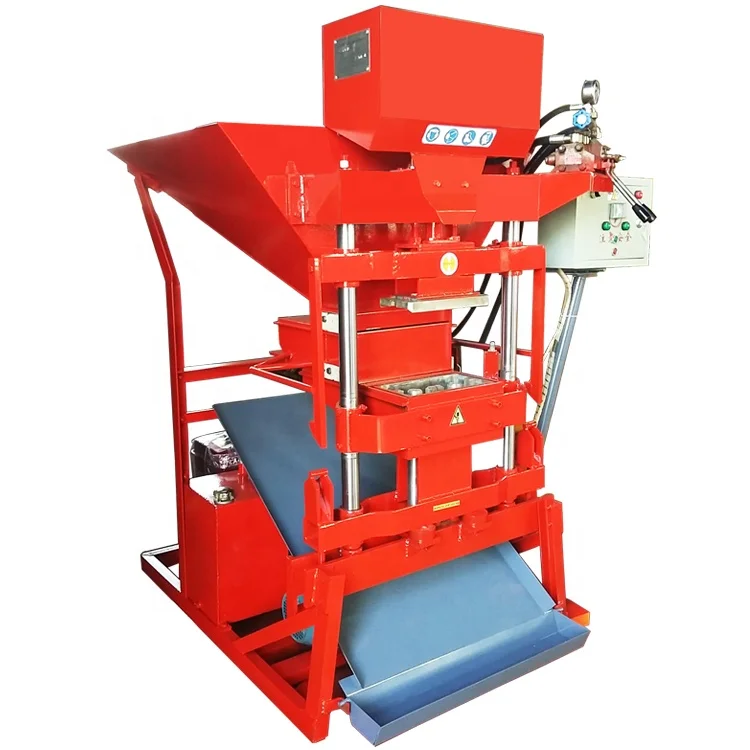
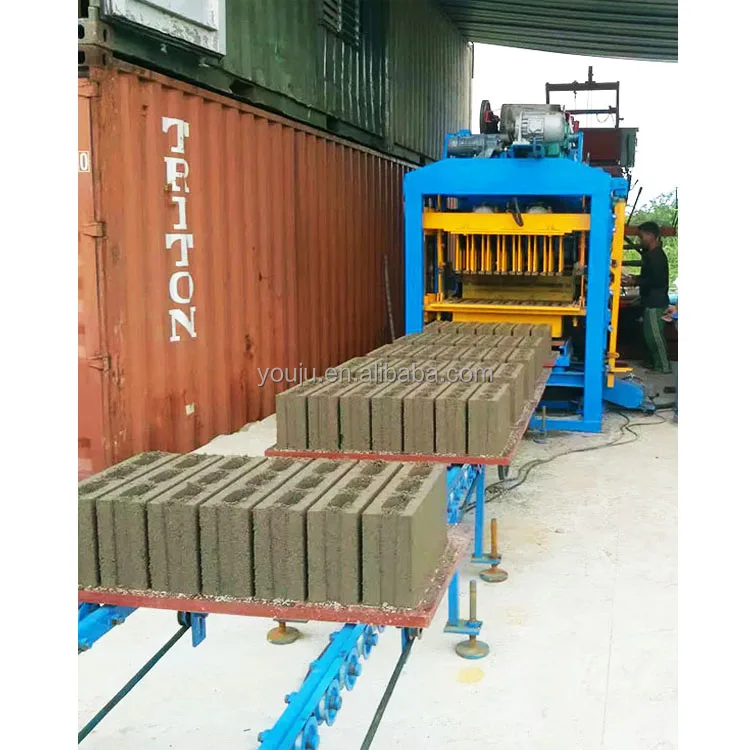 Semi automatic block