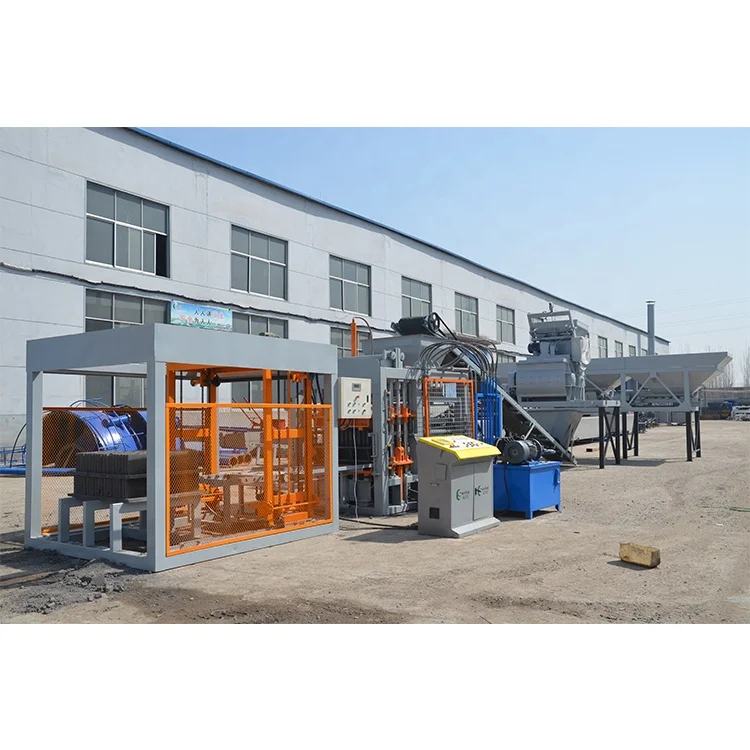
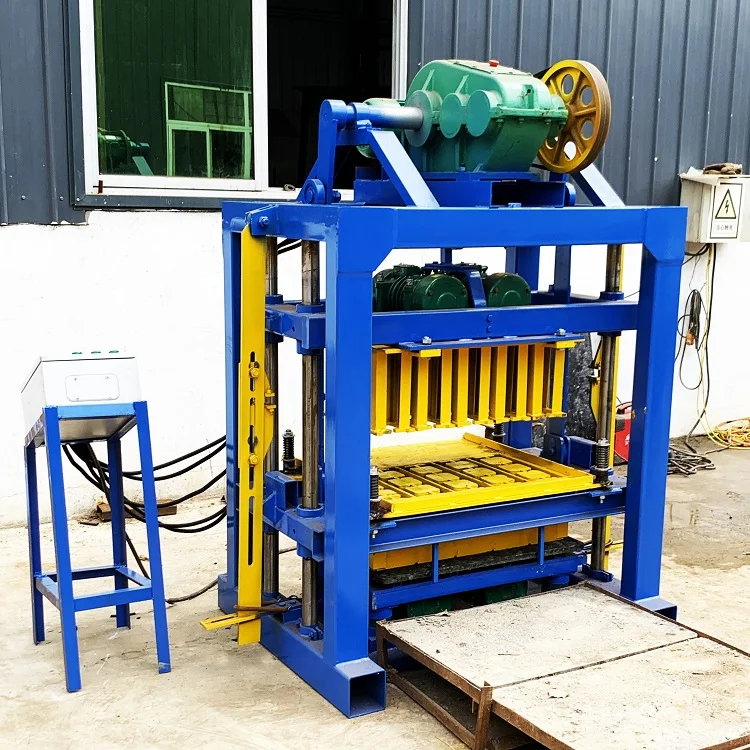
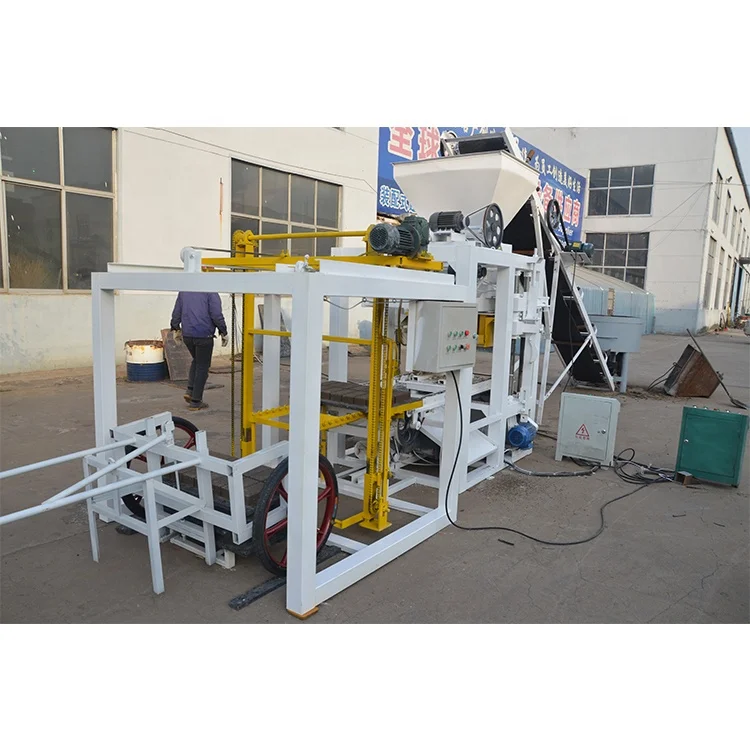
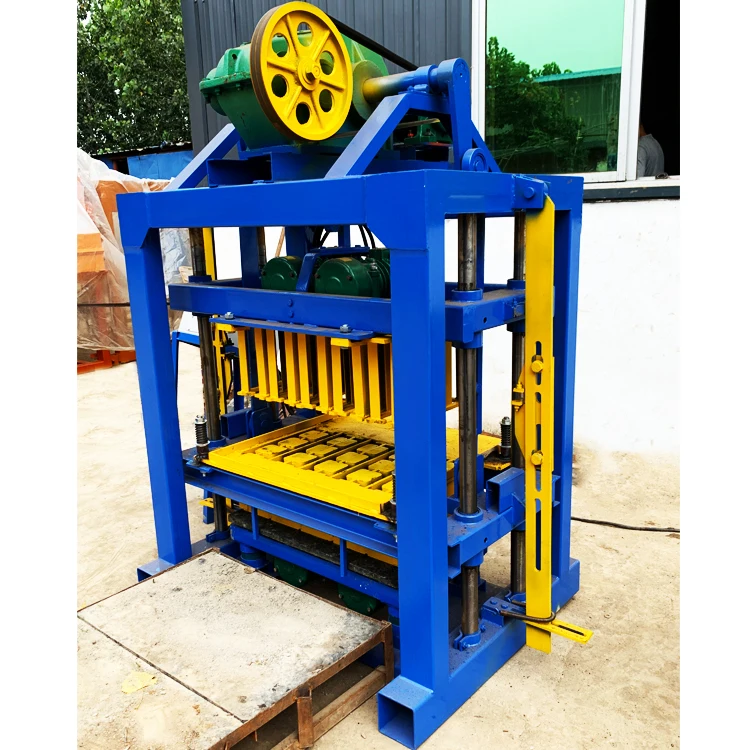
Configuration set against the buyer’s actual mix design — The QT15-15 stationary block machine parameters are adjusted to local aggregate properties rather than default catalogue settings, ensuring vibration force and hydraulic pressure match real material conditions.
Technical Specifications
| Parameter |
Value |
| Model |
QT15-15 |
| Product Type |
Stationary Concrete Block Making Machine |
| Overall Dimensions (L×W×H) |
9350×2520×2950 mm |
| Net Weight |
15 T |
| Rated Power |
45.7 kW |
| Voltage & Frequency |
380V or customized (frequency to be confirmed) |
| Hydraulic Pressure |
21 MPa |
| Pallet Size |
1350×850×40 mm |
| Control System |
PLC (brand and language options to be confirmed) |
| Automation Level |
Automatic |
| Vibration System |
Four external vibration motors |
| Feeding System |
European design material feeder cylinder with turning arm |
| Upper Mould Synchronization |
Dual-side synchronous gear |
| Vibration Damping |
Airbag system with adjustable air pressure |
| Certification |
ISO 9001:2008, CE |
| Output Capacity |
3600 pcs/h based on 400×200×200 mm hollow block (15 pcs/mould); 14000 pcs/h based on 240×115×53 mm solid brick (62 pcs/mould) |
| Daily Output |
28800 pcs/day based on 400×200×200 mm hollow block; 112000 pcs/day based on 240×115×53 mm solid brick |
Application Suitability
| Application |
Material or Output |
| Hollow block production for masonry walls |
Crushed stone, river sand, and cement mixes at 400×200×200 mm or 400×150×200 mm formats |
| Solid brick manufacturing |
Fine aggregate and cement blends producing 240×115×53 mm standard bricks |
| Interlocking paver production |
Pigmented concrete mixes for driveway and walkway pavers on the same pallet platform |
| Kerbstone and porous brick runs |
Coarse aggregate blends requiring extended vibration cycles and higher hydraulic pressure |
What "3600 Pieces per Hour" Actually Means on a Stationary Concrete Block Making Machine for Sale
Throughput claims only become real when tied to a specific block size, mould cavity count, and curing cycle.
Catalogue figures for stationary concrete block making machine for sale often state a single hourly number without revealing which block format it assumes. I once watched a Middle East project stall because the buyer planned daily logistics around a hollow block capacity figure, only to discover the quoted number applied to a smaller solid brick format. Mould cavity count changes everything — fifteen cavities for a 400×200×200 mm hollow block versus sixty-two for a standard brick means the press completes an entirely different number of finished units per cycle [NEED_CITE: block format and mould cavity impact on cycle throughput]. The QT15-15 capacity data here always names the exact block dimension and pieces per mould behind each figure.

How the Full Machine Range Breaks Down by Investment Tier
The QT15-15 occupies the high-capacity end of the stationary block machine lineup. Below it sit semi-automatic models that trade output volume for lower initial investment and smaller plant footprints — suitable for entrepreneurs setting up a first block plant or contractors producing on-site without a fixed factory. At the opposite end, mobile and egg-laying machines handle projects where blocks are cured directly on the ground without pallets. This stationary concrete block making machine for sale fits buyers who have already established a curing area, pallet handling workflow, and daily distribution logistics, and now need a press that keeps pace with those downstream operations.
Where the QT15-15 Fits in a Multi-Format Production Plant
A buyer running both hollow blocks for housing projects and interlocking pavers for municipal contracts needs a press that switches between formats without losing an entire shift to mould changes. The dual-side synchronous gear on the upper mould and the standardized 1350×850 mm pallet platform mean the QT15-15 can move from 400×200×200 mm hollow blocks to paver formats using the same pallet and handling infrastructure. This matters because pallet size mismatches between the press and existing curing racks create bottlenecks that no amount of press speed can fix [NEED_CITE: pallet handling compatibility in block production lines]. The full range approach ensures the press, mould, pallet, and handling equipment are specified as one matched system.
Reading the Numbers That Shape Daily Output
Hydraulic pressure at 21 MPa and four external vibration motors work together to determine block density and demoulding strength. If vibration force is too aggressive for a lightweight aggregate mix, the block surface tears; too gentle and the block slumps before curing. The airbag vibration damping system on the QT15-15 allows adjustable air pressure, letting the operator match vibration intensity to the specific aggregate and cement ratio in use. The European turning-arm feeder cylinder distributes material evenly across the mould cavity, which prevents density variations between the center and edges of a large pallet. Rated power at 45.7 kW reflects the combined draw of the hydraulic pump, vibration motors, and feeder system running simultaneously — buyers need to confirm their site transformer and dedicated circuit can handle this continuous load alongside other line equipment.
The Cost of Skipping the Mix Design Conversation
I flew to a job site once because the blocks kept cracking during demoulding. The machine had been factory-tested on standard river sand, but the buyer was using local volcanic ash with completely different moisture absorption and particle shape. Vibration frequency and hydraulic pressure were wrong for that material, and two weeks of on-site parameter adjustment were needed before production ran smoothly. When a stationary concrete block making machine for sale arrives configured for a mix the buyer cannot source locally, the result is either a costly material substitution or weeks of trial-and-error tuning [NEED_CITE: aggregate properties and block machine vibration matching]. Asking about the buyer’s actual raw material before finalizing machine configuration prevents this entirely.
Why Sourcing the Full System from One Equipment Supplier Matters
Block machinery as a single focus means the QT15-15 press, mould, pallet, and handling equipment are specified together rather than assembled from separate vendors who each optimize for their own component. Configuration is set against the buyer’s actual mix design and target block format instead of a catalogue default — the 21 MPa hydraulic pressure and airbag damping range are calibrated to the specific block densities the buyer’s market requires. Mould design covers the formats the buyer actually sells, including custom drawings when standard cavity layouts do not match local building codes. Automation level is selectable, so a buyer can start with the QT15-15 automatic press and add upstream batching or downstream stacking modules later without replacing the core machine. Installation and commissioning support includes operator training on mould change procedures and vibration parameter adjustment for different formats.
Documentation & Verification
- Line layout drawing showing the QT15-15 footprint with capacity calculations stated per block format
- Machine specification sheet confirming 380V or customized voltage, PLC language, and pallet dimensions
- Mould drawing and format list with cycle times for each target block type
- Factory test record using buyer-specified aggregate and cement ratio before dispatch
- CE declaration and ISO 9001:2008 compliance documents included with shipment
- Packing photographs and customs documentation support for container loading
Installation, Commissioning & Support
- Foundation pad must accommodate 9350×2520 mm footprint with level tolerance for the 15 T net weight
- Dedicated circuit required for 45.7 kW rated power draw, voltage and frequency confirmed before wiring
- Machine shipped in dismantled state with reassembly guided by hydraulic and electrical schematics
- First production run includes vibration pressure calibration to buyer’s local aggregate and mix ratio
- Operator training covers PLC interface, mould change procedure, and airbag damping pressure adjustment
- Wear parts and mould replacement list provided with recommended inspection intervals
What We Need Before Quoting
To match the QT15-15 configuration to your production requirements, we need to know the specific block formats your market sells, your target daily output per format, and the raw materials available locally including aggregate type and cement grade. Share your site voltage and frequency, the PLC display language your operators require, and whether your existing curing racks and forklifts are already sized for a 1350×850 mm pallet. If you are replacing an existing press, let us know the current mould formats and any handling equipment that must remain in the line.
Frequently Asked Questions
Q: How is daily output verified for each block format on the QT15-15?
A: Every output figure states the exact block dimension and mould cavity count behind it. For example, 28800 pieces per day assumes 400×200×200 mm hollow blocks at 15 pieces per mould, while 112000 pieces per day assumes 240×115×53 mm solid bricks at 62 pieces per mould. A line layout document with capacity calculations per format is provided before order confirmation.
Q: What voltage, frequency, and PLC language options are available?
A: The standard voltage is 380V, but customization is available to match the buyer’s local power grid. Frequency and PLC display language are confirmed during the sales process before production begins, ensuring the control interface reads in the operator’s working language and the motor ratings match the site transformer upon arrival.
Q: How is pallet size confirmed against existing curing and handling equipment?
A: The QT15-15 uses 1350×850×40 mm pallets. Before order confirmation, we verify this size against the buyer’s existing curing rack spacing, forklift fork dimensions, and stacking area layout. If the buyer’s facility requires a different pallet size, the machine platform and mould are adjusted accordingly to maintain handling compatibility.
Q: What does the mould change procedure involve and how long does it take?
A: The dual-side synchronous gear and standardized mould mounting allow format changes without extended downtime. The exact changeover time depends on the operator’s familiarity with the procedure, which is covered during on-site training. Mould drawings and a format list are provided so the buyer can plan production scheduling around planned format switches.
Q: Where does the QT15-15 sit compared to semi-automatic and smaller stationary models?
A: The QT15-15 is the high-capacity automatic press in the stationary range, designed for buyers who already have curing and handling infrastructure and need output volume to match. Semi-automatic and smaller stationary models serve lower investment levels and smaller plant footprints. The range allows buyers to start at one tier and upgrade the press later while keeping pallet and handling systems compatible.

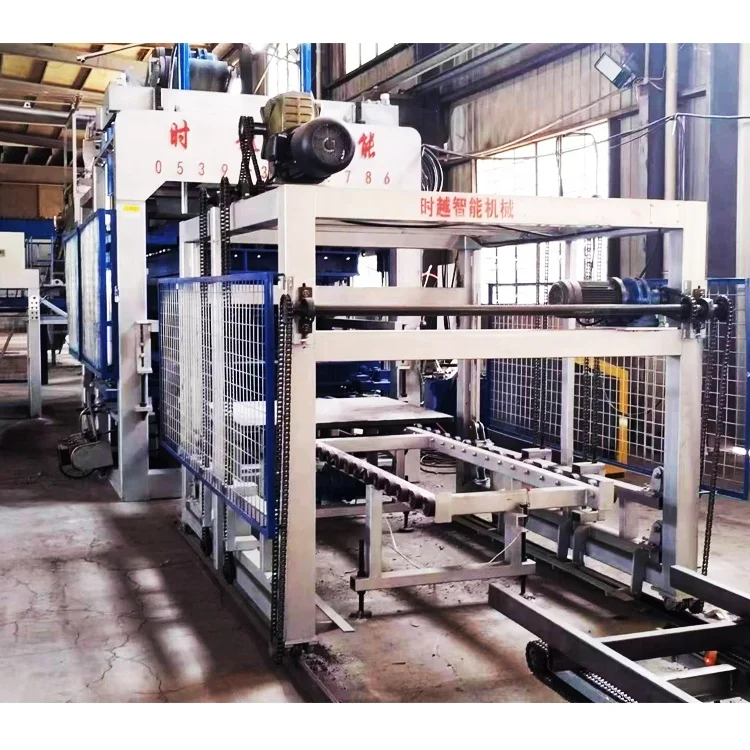
 Stationary block machine