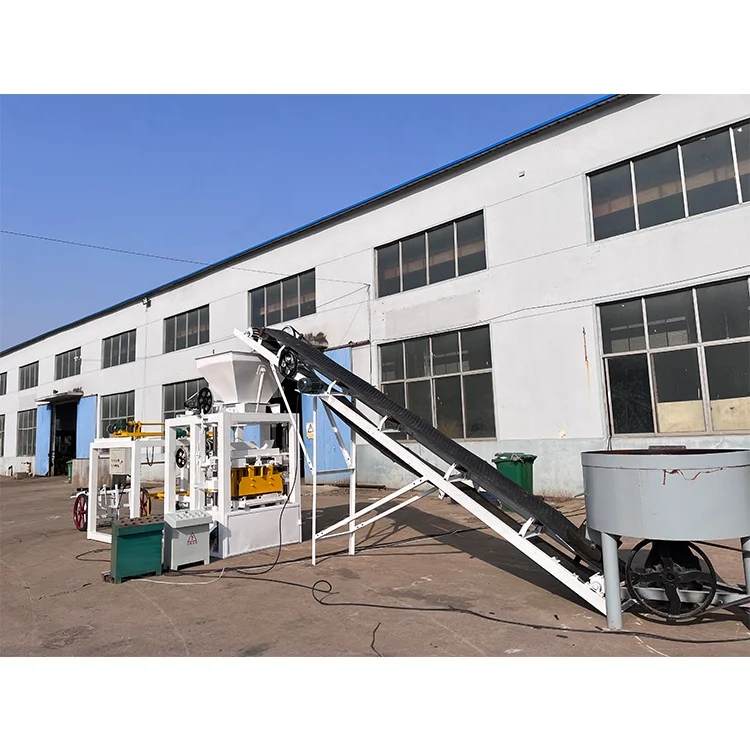
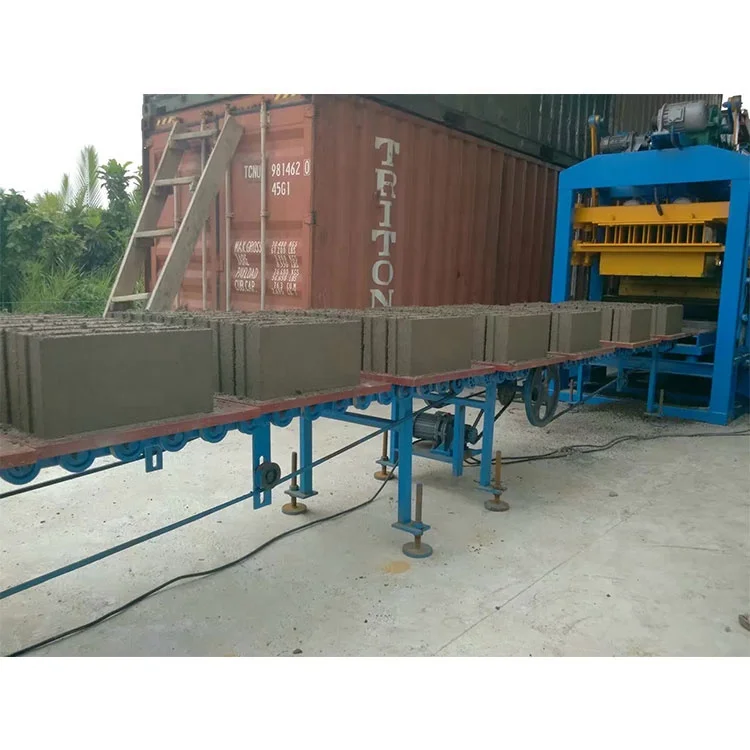
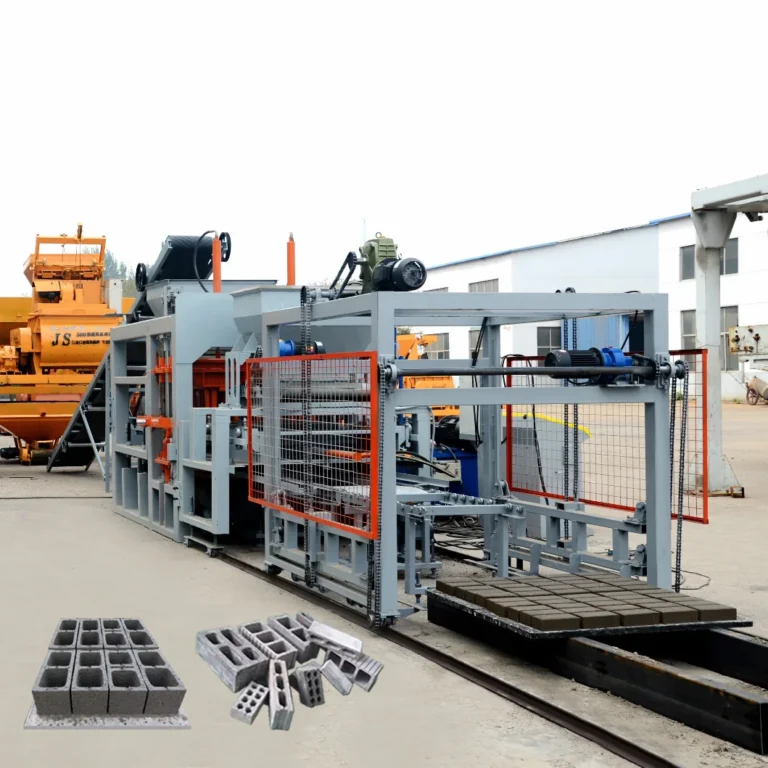
Matched System Scope — the QTJ4-40 block machine, pallets, and moulds are specified together so the entry-tier footprint stays realistic from day one.
Technical Specifications
| Parameter |
Value |
| Model |
QTJ4-40 |
| Product Type |
Small Scale Manual Brick Making Machine |
| Overall Dimensions (L×W×H) |
1350 × 1460 × 1800 mm |
| Net Weight |
1 T |
| Rated Power |
9.5 kW |
| Voltage & Frequency |
380V or configurable to local supply |
| Pallet Size |
850 × 450 × 40 mm |
| Mould Format Options |
400 × 200 × 200 mm (4 pcs/mould); 400 × 240 × 200 mm (3 pcs/mould) |
| Cycle Time |
40 s (basis to be confirmed per block format) |
| Vibration Frequency |
2800 r/min |
| Motor |
Siemens motor |
| Required Factory Area |
200 m² |
| Required Workers |
3–5 operators |
| Automation Level |
Manual or semi-automatic |
| Color Options |
Red or custom |
| Warranty |
1 year |
Application Suitability
| Application |
Material or Output |
| Small hollow block production |
Crushed stone, sand, cement blends |
| Solid brick manufacturing |
Fly ash, clay, or cement-based mixes |
| Interlocking brick runs |
Local aggregate with cement binder |
| On-site contractor block making |
Mixed aggregate sourced from project excavations |
| Workshop-scale paver trials |
Sand and fine aggregate combinations |
What "40 Seconds per Cycle" Actually Means for Your Daily Count
The cycle figure only holds for the standard hollow block format; every other shape shifts the real output.
I have watched buyers receive a small brick making machine for sale and plan their workforce around a theoretical hourly rate, only to discover that interlocking bricks need longer vibration and careful demoulding. The 40-second cycle applies to the 400×200×200 mm hollow block at four pieces per mould. Switch to a denser interlocking format and the QTJ4-40 block machine manufacturer must confirm revised timing before you commit to a production schedule [NEED_CITE: block format cycle time variation across manual press classes].

Where the QTJ4-40 Sits on the Range
The QTJ4-40 block machine manufacturer positions this press at the entry tier of the stationary lineup. It suits buyers who want to validate local block demand before investing in a higher-output automatic line. The 200 m² footprint and three-to-five operator requirement keep the initial plant scope manageable while leaving room to add pallet handling and stacking automation later.
Understanding the Semi-Automatic Tier
At this level, pallet feeding and block removal remain manual tasks, which keeps the capital outlay low but sets a ceiling on sustainable daily volume. A buyer who expects continuous three-shift operation will outgrow the semi-automatic tier quickly. The QTJ4-40 small brick making machine for sale serves as a proving ground: confirm which block formats your market actually orders, then scale the line around that data [NEED_CITE: typical plant upgrade paths from semi-automatic to automatic block lines].
Reading the Numbers That Matter
The 9.5 kW rated power and 2800 r/min vibration frequency work together to compact the mix inside the mould cavity. Insufficient vibration leaves hollow blocks with weak webs that crack during curing. The Siemens motor specification matters here because replacement availability in export markets is wider than with unbranded alternatives. Pallet size at 850×450×40 mm dictates how many blocks cure per square meter of yard space—order pallets that match your existing forklift tines and curing racks, not just the machine default. The 380V supply is standard for many industrial grids, but confirming your local voltage and frequency before dispatch prevents commissioning delays that idle a freshly arrived press.
The Cost of Skipping Configuration Checks
Buyers who confirm nothing beyond the machine model often discover that the moulds shipped do not match their market’s dominant block size, forcing a second mould order and weeks of downtime. Voltage mismatches have left machines sitting in containers while transformers are sourced locally. Pallet material chosen without considering a humid curing environment leads to warping within months, throwing the block dimensions off tolerance [NEED_CITE: common commissioning delays from unconfirmed electrical specifications].
Why Source This Tier Here
Block machinery is our single focus, so the QTJ4-40 is quoted with pallets, moulds, and handling specified as one system rather than assembled from separate suppliers. Configuration starts from your actual mix design and target format, not a catalogue default. Mould design covers the sizes your market sells, with custom drawings available when standard formats fall short. The automation level is selectable—you can begin fully manual and add semi-automatic pallet feeding as volume grows. Factory testing runs your specific mould format before dispatch so the test record reflects your production reality.
Documentation & Verification
- Machine specification sheet listing confirmed voltage, frequency, and control language
- Capacity calculation stating the exact block format and pieces per cycle assumed
- Mould drawing and format list covering included and optional mould sizes
- Factory test record produced on your selected block format before shipment
- Operation and maintenance manual with wear parts list and replacement intervals
Installation, Commissioning & Support
- 200 m² level concrete floor required before the 1 T machine is positioned
- Dedicated 380V circuit with confirmed frequency matching the Siemens motor plate
- Machine ships assembled; pallet rack and mixer arrive as separate station modules
- First-run commissioning includes vibration tuning matched to your local aggregate mix
- Operator training covers mould change procedure and 40-second cycle timing checks
- Wear parts list and hydraulic seal kit included for the first replacement cycle
What to Share When You Inquire
Send your target block format and the daily volume your market absorbs so the capacity calculation reflects actual demand. Confirm your site voltage, frequency, and preferred PLC display language to avoid electrical rework after arrival. If you already operate curing racks or forklifts, share their dimensions so pallet sizing aligns with existing handling equipment.
Frequently Asked Questions
Q: How is daily output calculated and which block format is the capacity based on?
A: The 40-second cycle figure applies to the 400×200×200 mm hollow block producing four pieces per mould. Daily output is derived from this cycle time multiplied by working hours minus pallet handling and mould change intervals. If you run interlocking or solid formats, the QTJ4-40 block machine manufacturer recalculates based on your chosen shape and compaction requirement.
Q: What voltage and frequency options are available for different target markets?
A: The standard configuration is 380V, but the small brick making machine for sale can be wired to match your local grid before dispatch. You must confirm voltage, phase, and frequency during the inquiry stage so the motor, control panel, and Siemens drive components are matched to your supply without needing a transformer on site.
Q: What is the plant footprint and installation condition requirement for the QTJ4-40?
A: The press itself occupies a compact area within a 200 m² total factory space that includes raw material storage, curing yard, and pallet handling zones. A level concrete floor and a dedicated electrical circuit matching the 9.5 kW rated power are required before the machine can be commissioned.
Q: Can I upgrade from this semi-automatic tier to a fully automatic line later?
A: Yes. The semi-automatic tier is designed so that pallet feeding, stacking, and cubing stations can be added as your volume grows. Starting with the QTJ4-40 lets you confirm which block formats sell in your market before committing capital to a higher-automation configuration.
Q: What mould formats are available and how long does mould change take?
A: Standard moulds cover 400×200×200 mm hollow blocks and 400×240×200 mm solid blocks. Custom moulds are built to buyer drawings for interlocking or paver shapes. Mould change time depends on bolt count and alignment pins; the manual specifies the procedure so your crew can complete it within a planned maintenance window rather than losing a full shift.

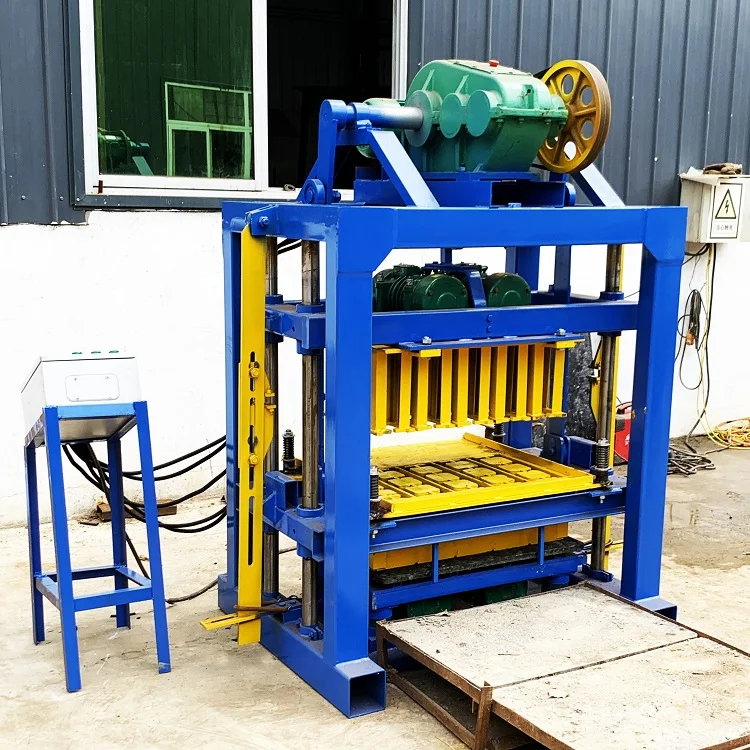
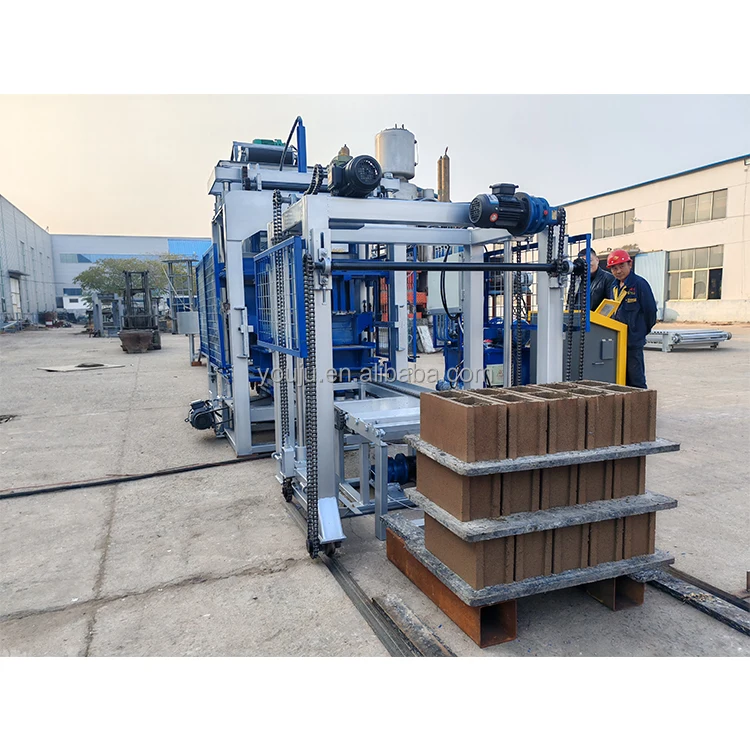 Stationary block machine