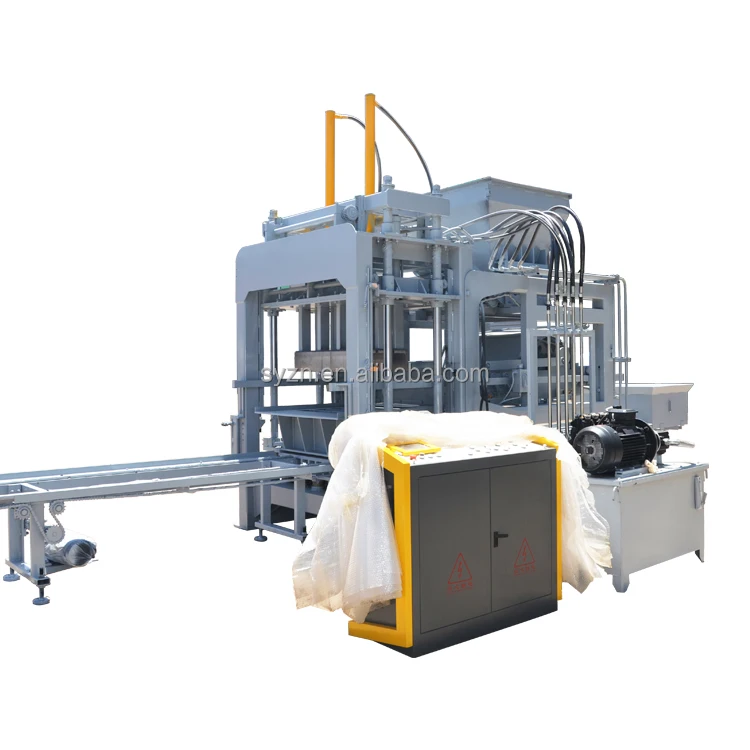
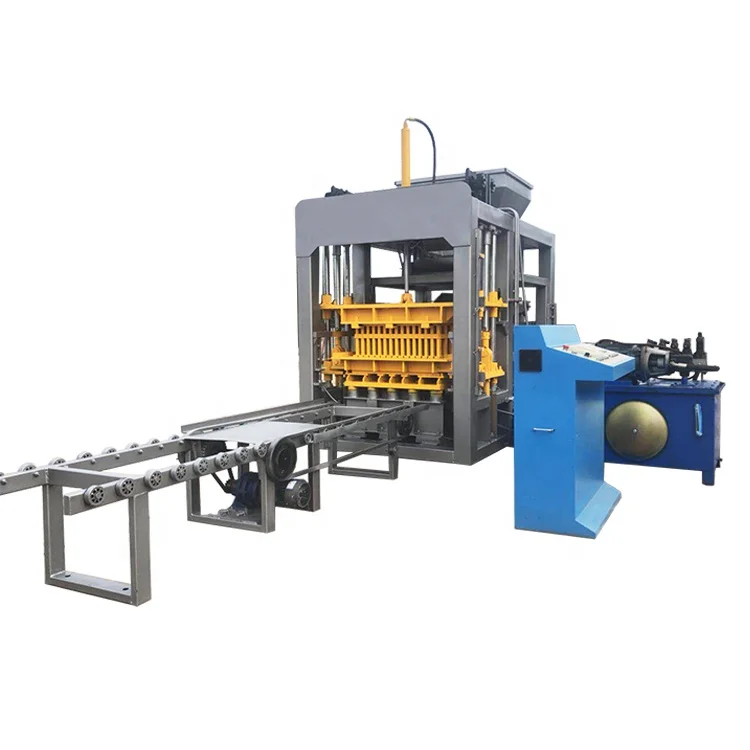
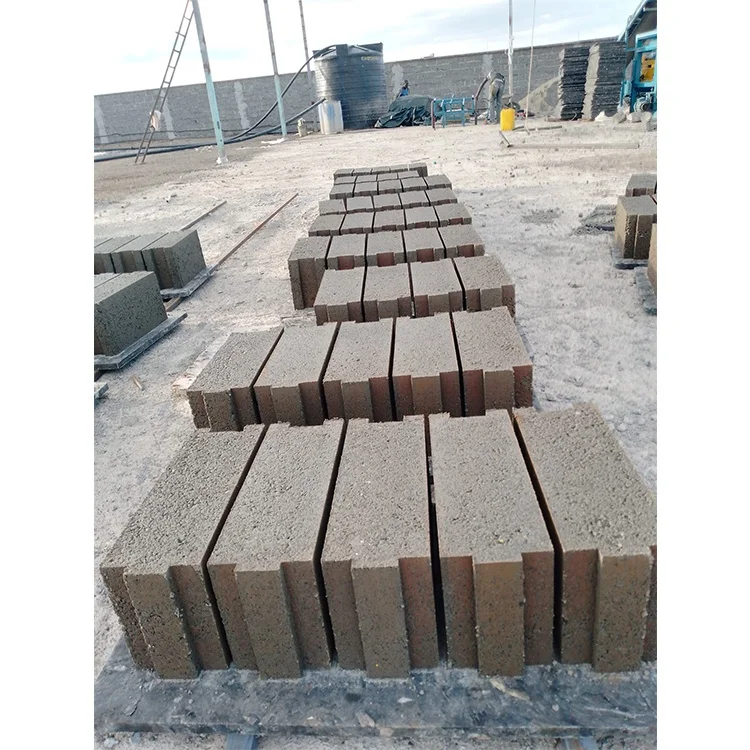
Matched System Specification — every pallet, mould and handling component is sized against the press cycle so nothing bottlenecks the line you actually build.
Technical Specifications
| Parameter |
Value |
| Model |
QT12-15 |
| Product Type |
Fully Automatic Stationary Block Making Machine |
| Rated Power |
44.58 kW |
| Voltage & Frequency |
Customized to local voltage (basis not stated in source) |
| Control System |
Computer with fault diagnosis system |
| Overall Dimensions (L×W×H) |
9350 × 2520 × 2950 mm |
| Net Weight |
11,000 kg |
| Hydraulic Pressure |
16–21 MPa |
| Vibration Form |
Platform vibration |
| Molding Cycle |
15–20 seconds |
| Pallet Size |
1300 × 900 mm |
| Output Capacity (Hollow Block) |
21,600 pcs/day (based on 400×200×200mm block, 12 pcs/mould, 20–25s cycle) |
| Output Capacity (Porous Block) |
72,000 pcs/day (based on 240×115×90mm block, 30 pcs/mould, 15–20s cycle) |
| Output Capacity (Standard Block) |
144,000 pcs/day (based on 240×115×53mm block, 60 pcs/mould, 15–20s cycle) |
| Applied Products |
Concrete blocks, hollow/solid blocks, pavers, interlocking blocks, curbstone, colored pavers |
| Raw Materials |
Crushed stone, sand, cement, dust, fly ash, gravel, slag |
| Assembly State |
Stationary |
| Standards |
CE, ISO |
| Warranty |
1 year (excluding wearing parts) |
Application Suitability
| Application |
Material or Output |
| High-volume hollow block production |
Crushed stone, sand, cement and fly ash mixes for 400×200×200mm structural blocks |
| Standard solid brick manufacturing |
Fine aggregate and cement blends for 240×115×53mm masonry units |
| Paving and interlocking block lines |
Pigmented concrete mixes for colored pavers and interlocking formats |
| Kerbstone and curb production |
Coarse aggregate concrete for heavy-duty roadside and drainage elements |
| Porous permeable block plants |
Open-graded aggregate and cement for 240×115×90mm water-permeable blocks |
What "21,600 Blocks Per Day" Actually Means on the Shop Floor
A capacity figure without its block format is marketing, not engineering.
I have watched buyers compare machines on a single headline number and end up disappointed when their daily tally falls well short. The reason is straightforward: the cycle time and mould cavity count change with every format. An automatic stationary block making machine manufacturer quoting 21,600 pieces per day is assuming 400×200×200mm hollow blocks at a 20–25 second cycle with 12 cavities. Switch to a smaller solid brick and that same press produces a completely different daily total. [NEED_CITE: block machine capacity calculation methods and format assumptions]. When you evaluate options, always ask for the capacity table broken down by the exact format your market buys.

Placing the QT12-15 Within the Stationary Machine Range
The QT12-15 sits at the upper tier of the stationary lineup, built for plants that need continuous high-volume runs across multiple formats. Buyers stepping up from semi-automatic or mid-tier stationary presses will find the pallet size, hydraulic pressure range and computer fault diagnosis system oriented toward full-line integration. This is the class of automatic stationary block making machine manufacturer buyers consider when daily hollow block demand exceeds what a smaller press can sustain over two shifts.
How the Full Line Connects Around the Press
A stationary press does not run in isolation. Raw material feeding, mixing, pallet circulation, stacking and curing rack handling must all keep pace with the 15–20 second molding cycle or the press sits idle waiting for the next pallet. When we lay out a QT12-15 line, the pallet return conveyor, automatic stacker and curing rack system are specified so their cycle times match the press output format by format. A mismatch at any station turns a rated capacity into a theoretical number [NEED_CITE: block production line synchronization and bottleneck analysis].
Reading the Specs That Shape Your Plant Layout
The 1300 × 900 mm pallet size is the single dimension that dictates your curing area footprint, forklift capacity and rack spacing. Every pallet in circulation must move from the press to the curing zone and back, so the rack system and handling equipment are designed around this rectangle. Hydraulic pressure at 16–21 MPa works with the platform vibration to compact the mix; coarser local aggregate generally needs higher pressure to achieve target block density. The 44.58 kW rated power covers the vibration motors, hydraulic pump and conveyor drives running simultaneously, which matters when you size your transformer and dedicated circuit. Molding cycles between 15 and 20 seconds vary by format — a dense interlocking paver takes longer to compact than a hollow block with larger voids.
The Cost of Specifying the Press Without the Line
Ordering a high-output press and treating pallets, stacking and curing as afterthoughts creates problems that show up in the first week of production. Hand-stacking output because the automatic stacker was not in the quotation means you need extra labor every shift just to keep the press fed. Pallets specified without checking your existing forklift capacity lead to damaged boards and jammed returns. Voltage and PLC display language left unconfirmed before production can delay commissioning by weeks once the crate arrives on site [NEED_CITE: industrial equipment commissioning delays from unconfirmed electrical specifications].
Why Buyers Source This Tier From Shandong
Block machinery is our single focus, so the QT12-15 is configured as a matched system — press, mould, pallet and handling — rather than assembled from unrelated suppliers. We set the hydraulic pressure and vibration frequency against your actual mix design and local aggregate, not a default catalogue setting. Mould design covers every format your market sells, and custom drawings are accepted for non-standard shapes. Automation level is selectable, meaning you can start with semi-automatic pallet handling and add full stacking and cubing later. Installation support includes operator training on the fault diagnosis system so your crew can read warning signals from day one.
Documentation & Verification
- Line layout drawing stating capacity per block format for your target output
- Machine specification sheet with voltage, frequency and PLC language confirmed before build
- Mould drawing and format list showing cycle time for each block type
- Pallet specification matched to your curing rack spacing and forklift rating
- Hydraulic and electrical schematic for local maintenance reference
- Factory test record on your specified mix and block format before dispatch
Installation, Commissioning & Support
- Foundation plan based on 9350 × 2520 mm footprint and 11,000 kg operating weight
- Dedicated power circuit sized for 44.58 kW total draw at your confirmed voltage and frequency
- On-site assembly of platform vibration unit, hydraulic station and pallet return conveyor
- First-run parameter tuning of hydraulic pressure and vibration frequency to your mix
- Operator training on the computer fault diagnosis system and warning signal responses
- Wear parts list covering hydraulic seals, vibration springs and mould liner plates
Before You Request a Quotation
To size a QT12-15 line accurately, we need the block formats your market actually sells and the daily volume target for each. Share your local raw materials — aggregate type, gradation and cement source — along with your site dimensions and existing curing infrastructure. Confirm your local voltage and frequency, the control language your operators read, and whether you need pallet handling and stacking included or already have that equipment in place.
Frequently Asked Questions
Q: How is the daily output verified, and which block format does each figure assume?
A: Each output number is tied to a specific block size, cavity count and cycle time. The 21,600 pieces per day figure assumes 400×200×200mm hollow blocks at 12 cavities and a 20–25 second cycle. Switch to a different format and the daily total changes. We provide a capacity table listing every format you plan to produce so you can match the machine to real demand.
Q: What supporting equipment does the QT12-15 need to run as a complete line?
A: The press requires raw material feeding, a mixer, pallet circulation, a stacker and curing rack handling to sustain rated output. We specify each station so its cycle time matches the press on your target format. If you already own some of this equipment, we confirm compatibility — especially pallet size and forklift rating — before finalizing the line layout.
Q: How are voltage, frequency and control language confirmed before shipment?
A: We collect your site electrical specifications and operator language preference during the inquiry stage, then print them on the machine specification sheet for your sign-off before production begins. The PLC display, wiring labels and motor nameplates all carry your confirmed values. This step prevents commissioning delays once the machine arrives.
Q: What plant footprint is required for a full QT12-15 line with pallet handling?
A: The press itself occupies 9350 × 2520 mm, but the complete line including mixer, pallet return, stacker and curing racks requires considerably more space. We provide a scaled line layout drawing showing every station and the pallet circulation path so you can verify fit against your building dimensions before ordering.
Q: Where does this model sit compared to smaller stationary and semi-automatic options?
A: The QT12-15 is the upper tier of the stationary range, aimed at plants running continuous two-shift production across multiple formats. Smaller stationary models suit lower daily volumes or single-format output, while semi-automatic machines reduce initial investment at the cost of manual pallet handling. We help you place your project on the range before narrowing to a quotation.

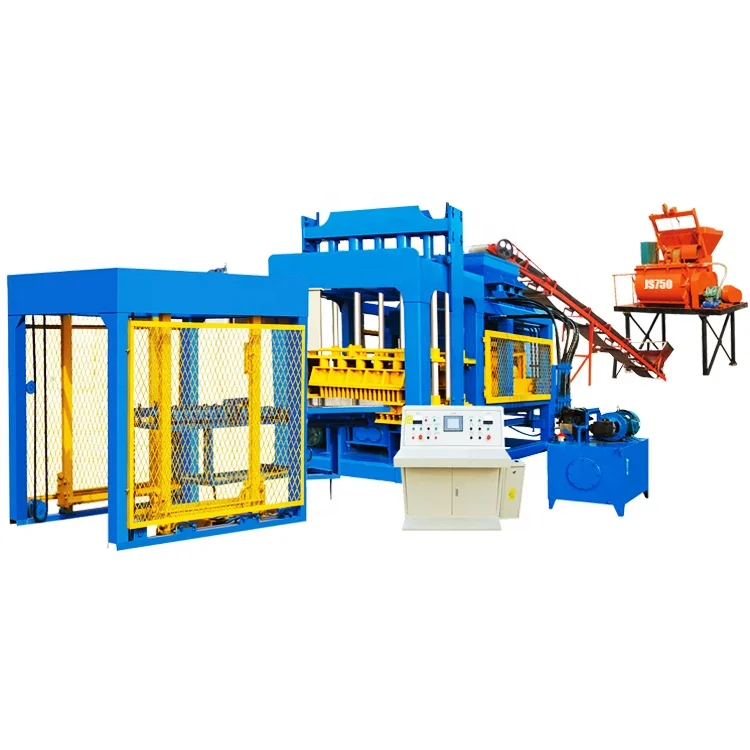
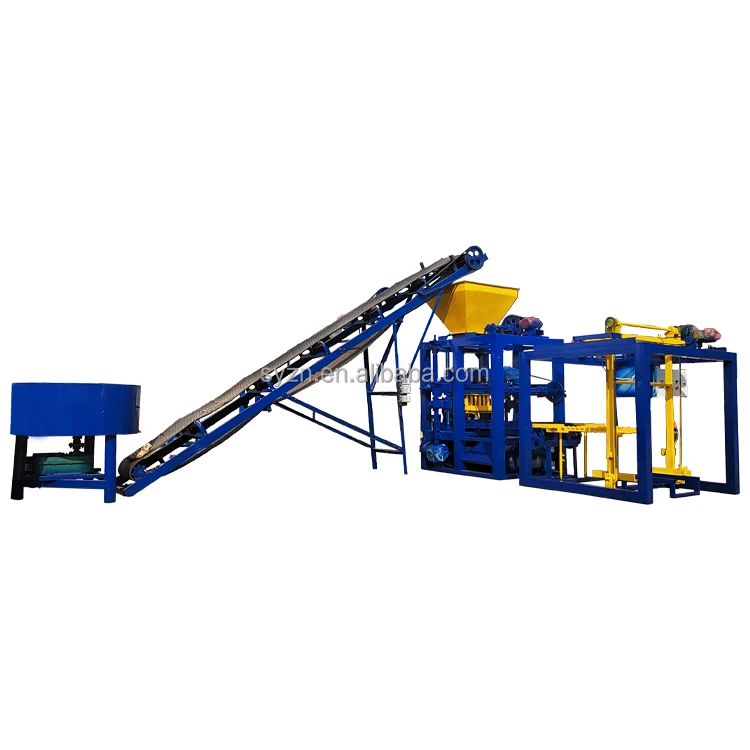 Stationary block machine