Matched System Sizing — every QT12-15 configuration is set against your actual mix design, target block format and local grid before production begins.
Technical Specifications
| Parameter |
Value |
| Model |
QT12-15 |
| Product Type |
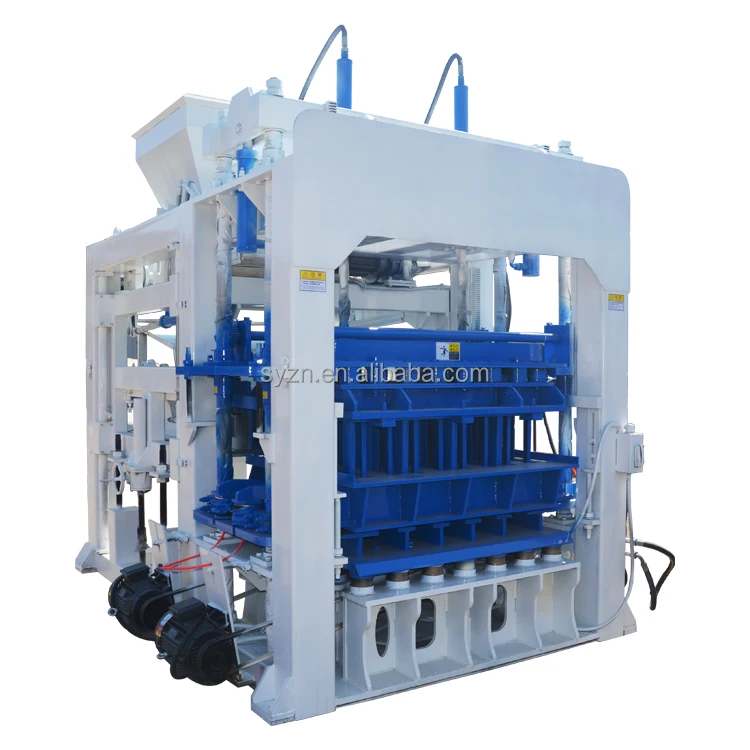
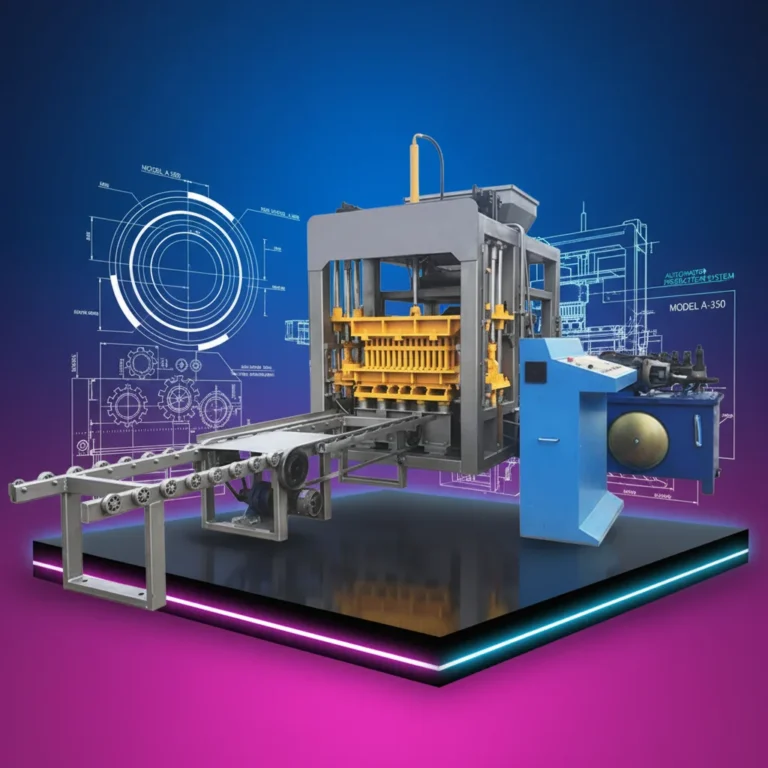
Stationary Automatic Concrete Block Making Machine |
| Control System |
PLC aptitude control with human-machine interface dialogue system |
| Vibration System |
Vertically synchronous vibration, frequency conversion and braking, double vibration sources |
| Hydraulic System |
Computer control flow pressure |
| Feeding System |
Semi-closed screen reticular rotational feeding unit (forced feeding) |
| Structure |
Super-strong steel structure with imported original parts |
| Automation Level |
Fully automatic with hydraulic loading unit |
| Output Capacity (400×200×200mm hollow block) |
2160-2880 pcs/hour; 17280-23040 pcs/8hr (12 pcs/mould, 15-20s cycle) |
| Output Capacity (400×150×200mm hollow block) |
2520-3360 pcs/hour; 20160-26880 pcs/8hr (14 pcs/mould, 15-20s cycle) |
| Output Capacity (240×115×53mm solid brick) |
9360-12480 pcs/hour; 74880-99840 pcs/8hr (52 pcs/mould, 15-20s cycle) |
| Output Capacity (200×100×60mm rectangular brick) |
5040-6300 pcs/hour; 40320-50400 pcs/8hr (35 pcs/mould, 20-25s cycle) |
| Output Capacity (225×112.5×60mm zigzag brick) |
3888-4860 pcs/hour; 31104-38880 pcs/8hr (27 pcs/mould, 20-25s cycle) |
| Mould Format |
Hollow block, solid brick, rectangular brick, zigzag brick |
| Cycle Time |
15-20s (hollow & solid blocks) / 20-25s (paving bricks) |
| Voltage & Frequency |
Basis not stated in source — confirm with buyer’s local grid |
| Pallet Size |
Basis not stated in source — confirm dimension and material |
| Hydraulic Pressure |
Basis not stated in source |
| Vibration Force |
Basis not stated in source |
| Overall Dimensions |
Basis not stated in source |
| Net Weight |
Basis not stated in source |
| Standards |
CE (specific certification to confirm) |
Application Suitability
| Application |
Material or Output |
| Large-scale hollow block production |
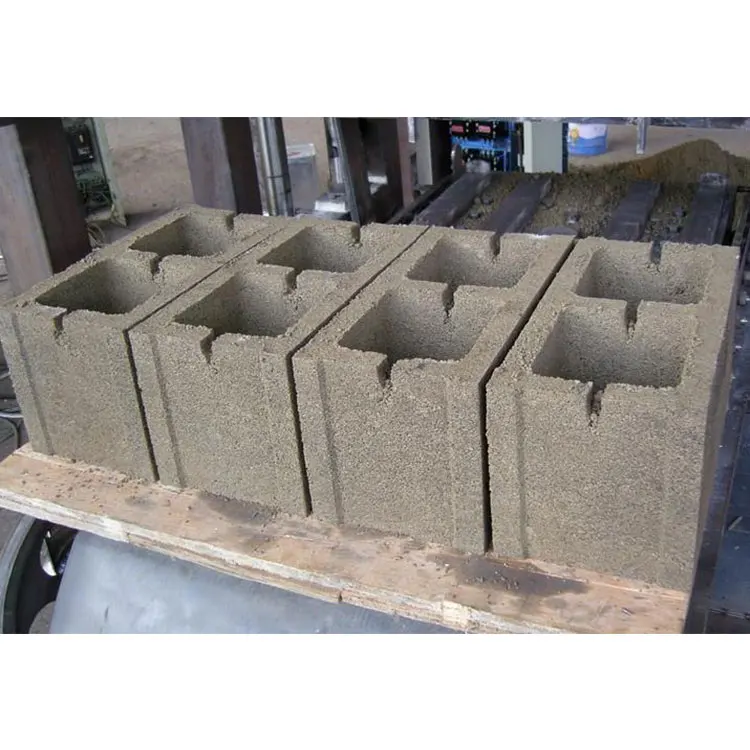
Crushed stone, sand, cement and fly ash mixes for building construction |
| Solid brick manufacturing |
Dense aggregate blends for load-bearing masonry and structural walls |
| Paving block and interlocking brick production |
Fine aggregate and pigment mixes for roads, walkways and landscaping |
| Hourdis and porous block production |
Lightweight aggregate blends for slab infill and thermal insulation |
Why "Pieces per Hour" Means Nothing Without the Format Attached
Every output figure we quote names the exact block format, cavity count and cycle time behind it.
Capacity numbers on block machinery are often presented as a single headline figure, typically based on the smallest, fastest-cycling product the press can produce. When that same machine switches to a large hollow block, the mould holds fewer cavities and the cycle stretches longer, so real daily volume drops substantially. I have sat in project meetings where a plant owner expected the brochure number all day, every day, and realised on the second shift that the target was built on a format they rarely sold. The QT12-15 automatic block machine manufacturer specification sheet breaks output per format so your investment decision rests on the product you actually ship [NEED_CITE: block machine capacity calculation standards by format].

Where the QT12-15 Sits in the Full Machine Range
The QT12-15 occupies the high-capacity tier of Shiyue’s stationary automatic block machine range, above the mid-output automatic presses and well clear of the semi-automatic and mobile models. It is intended for plants where daily volume justifies a dedicated fully automatic line with continuous pallet circulation rather than batch-by-batch operation. Buyers stepping up from a smaller automatic press will notice the larger mould area and the higher vibration energy available per cycle.
Matching the Press to Your Target Block Portfolio
A single QT12-15 press covers hollow blocks, solid bricks, rectangular pavers and zigzag interlocking bricks by swapping moulds, but the cycle time shifts between 15-20 seconds for standard blocks and 20-25 seconds for paving formats. This difference matters when you plan a production schedule around multiple products in one shift. We map your weekly format mix against these cycle times during the proposal stage so the line layout reflects what you actually manufacture, not a catalogue default [NEED_CITE: block plant production scheduling by format mix].
Reading the Engineering Behind the Output Numbers
The vertically synchronous vibration system uses double vibration sources with frequency conversion and braking, which compacts the concrete mix evenly across the full mould area rather than concentrating force at the centre. This matters for large hollow blocks where uneven density leads to wall thickness variation and breakage during handling. The computer-controlled hydraulic flow pressure adjusts to each format instead of applying a single fixed setting, so a dense solid brick receives higher pressure than a lighter hourdis block. The semi-closed screen reticular rotational feeding unit forces material into the mould box at a consistent rate, reducing weight variation from one cycle to the next. Together, these systems mean the QT12-15 automatic block machine manufacturer configuration can be tuned to your local aggregate gradation and cement content rather than forcing you into a standardised mix recipe.
What Happens When Voltage and Language Are Left Until Arrival
I once stood in a block plant in West Africa watching a commissioning engineer stare at a PLC screen displaying entirely in Chinese because the display language was never confirmed before the press left the factory. The first day was lost before we could even begin parameter setup. Voltage mismatches cause similar delays: a press wired for 380V/50Hz arriving at a site running 415V/60Hz will trip breakers or burn out motors within hours [NEED_CITE: voltage and frequency standards by export market]. These are not engineering failures — they are communication failures that happen when the quotation stage skips the details that seem small until the container is opened. With the QT12-15, we lock PLC display language, voltage and frequency in writing before production starts, because a machine that cannot be read or powered on arrival is not a machine at all.
What a Mismatched Line Layout Costs You After Installation
Choosing a pallet size without checking your existing curing racks and forklift dimensions means pallets will not stack in the curing area, forcing you to rearrange the entire yard or order new racking. Omitting automatic stacking from the quotation leaves finished blocks piled by hand at the end of the line, creating a bottleneck that cancels out the press capacity you paid for. A mould change procedure that takes most of a shift defeats the purpose of buying a multi-format machine, because operators will simply leave one mould in place and ignore the others. These are the hidden costs that appear after the machine is bolted down, when changes require engineering work rather than a configuration choice [NEED_CITE: block plant supporting equipment integration practices].
Why Buyers Source This Range Through Shiyue
Block machinery is our single focus, so the QT12-15 press, moulds, pallets and handling equipment are specified as one matched system rather than assembled from unrelated suppliers. We set every configuration against your actual mix design, local aggregate availability and target block format instead of quoting a catalogue default. Mould design covers the formats your market actually sells, with custom drawings available when standard cavities do not match your product range. The automation level is selectable, letting a buyer start with the base automatic cycle and add stacking or cubing modules as the plant grows. Installation support includes operator training so your team understands parameter adjustment, not just button-pressing.
Documentation & Verification
- Line layout drawing with capacity calculation stated per block format and cavity count
- Machine specification sheet with hydraulic pressure and vibration force matched to your mix
- Mould drawing and format list confirming cavity count and change procedure for each block type
- Voltage, frequency and PLC display language confirmation record signed before production
- Factory test record on your specified block format before dispatch
- Operation and maintenance manual with wear parts and mould replacement schedule
Installation, Commissioning & Support
- Foundation plan sized to the QT12-15 overall dimensions and vibration load distribution
- Dedicated power circuit matching confirmed voltage and frequency before the press arrives on site
- Machine dismantled into container-load sections with reassembly guide and bolt torque schedule
- First-run commissioning covering PLC parameter setup, cycle timing and hydraulic pressure calibration
- Operator training on mould change procedure, daily inspection points and fault code diagnosis
- Wear parts list identifying hydraulic seals, vibration springs and mould liner replacement intervals
What to Prepare Before Requesting a Quotation
Share your target block formats with dimensions, the daily volume you need per format, and the raw materials available locally including aggregate type and gradation. Confirm your site voltage, frequency and preferred PLC display language so the QT12-15 automatic block machine manufacturer quotation reflects your actual operating conditions. Let us know your existing curing area dimensions and forklift capacity so pallet size and stacking configuration fit what you already have on the ground.
Frequently Asked Questions
Q: How is the QT12-15 capacity verified, and which block format does each output figure assume?
A: Every output figure is tied to a specific block format, mould cavity count and cycle time range. For example, hollow block 400×200×200mm output is rated at 2160-2880 pieces per hour based on 12 cavities per mould and a 15-20 second cycle. We provide a capacity calculation sheet per format so you can verify daily targets against your actual product mix before committing.
Q: Where does the QT12-15 sit in the Shiyue range compared to semi-automatic and smaller automatic models?
A: The QT12-15 is positioned at the high-capacity end of the stationary automatic range, above mid-output automatic presses and all semi-automatic and mobile models. It suits plants where daily volume justifies continuous fully automatic operation with pallet circulation. Buyers moving up from a smaller press gain a larger mould area and higher vibration energy per cycle.
Q: What voltage, frequency and PLC language options are confirmed before the machine leaves the factory?
A: We confirm voltage, frequency and PLC display language in writing during the quotation stage, before production begins. This prevents commissioning delays caused by incompatible power supply or an unreadable control interface on arrival. The confirmation is documented and signed off as part of the production release process.
Q: How large a plant footprint does a QT12-15 line require, and what supporting equipment completes the setup?
A: The footprint depends on pallet size, curing rack configuration and whether automatic stacking is included. Supporting equipment typically covers raw material feeding, mixing, pallet circulation and curing rack handling. We provide a line layout drawing showing station positions and space requirements so you can plan the building or yard before the press ships.
Q: What automation level does the QT12-15 ship with, and can it be upgraded later?
A: The base configuration is fully automatic with PLC control and hydraulic loading. Additional automation such as automatic stacking and cubing can be added at the time of purchase or retrofitted later as production volume grows. The selectable automation approach lets you match investment to your current output needs without replacing the press.

 Automatic block machine