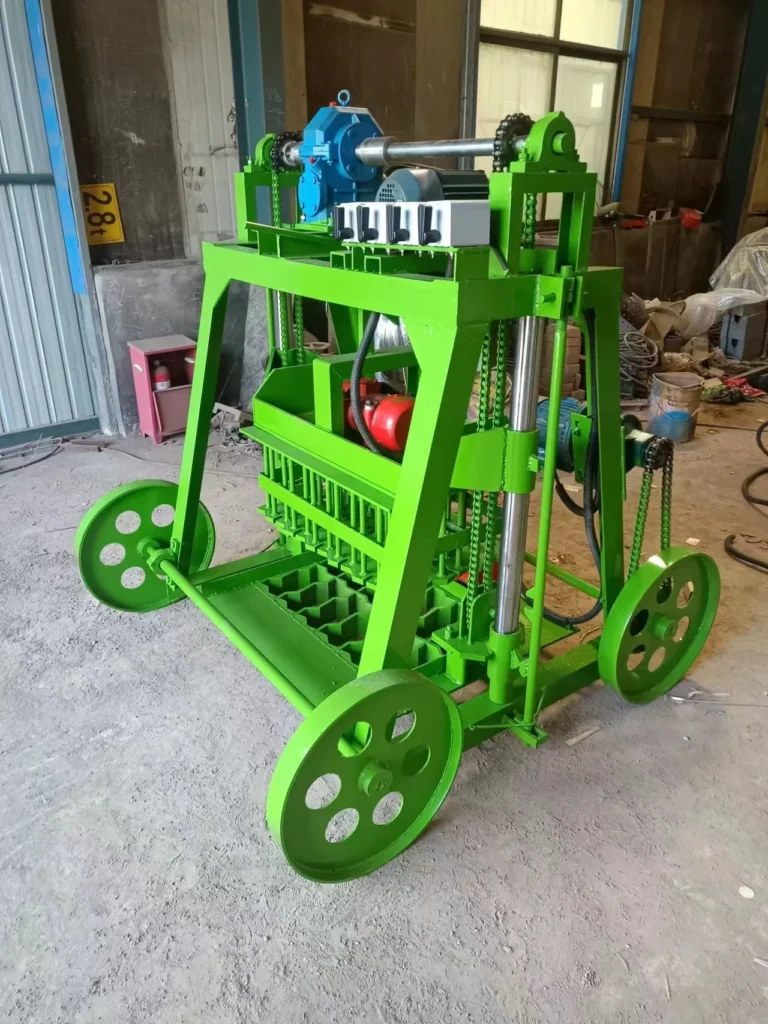
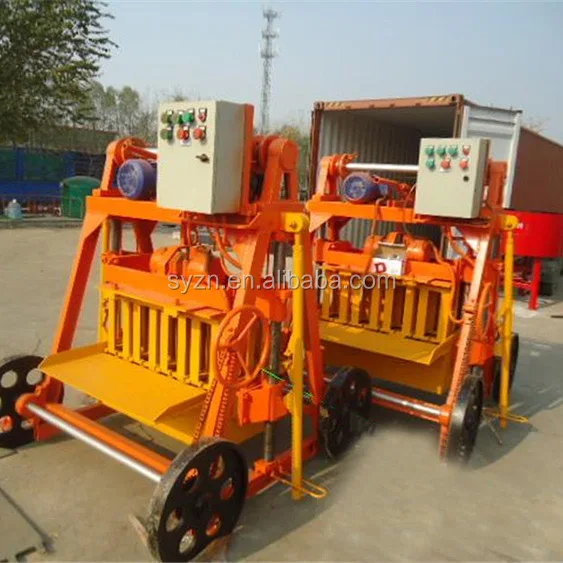
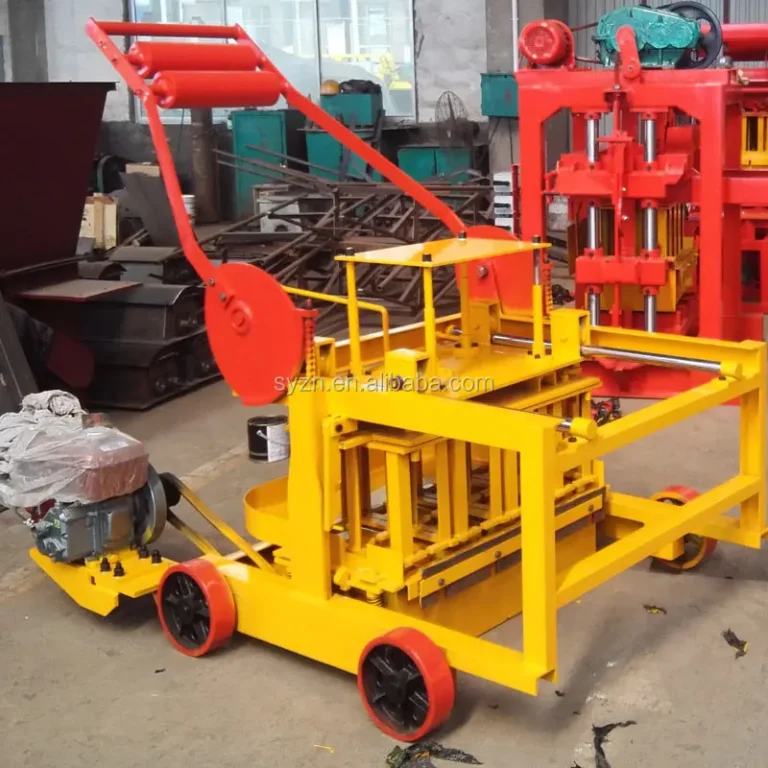
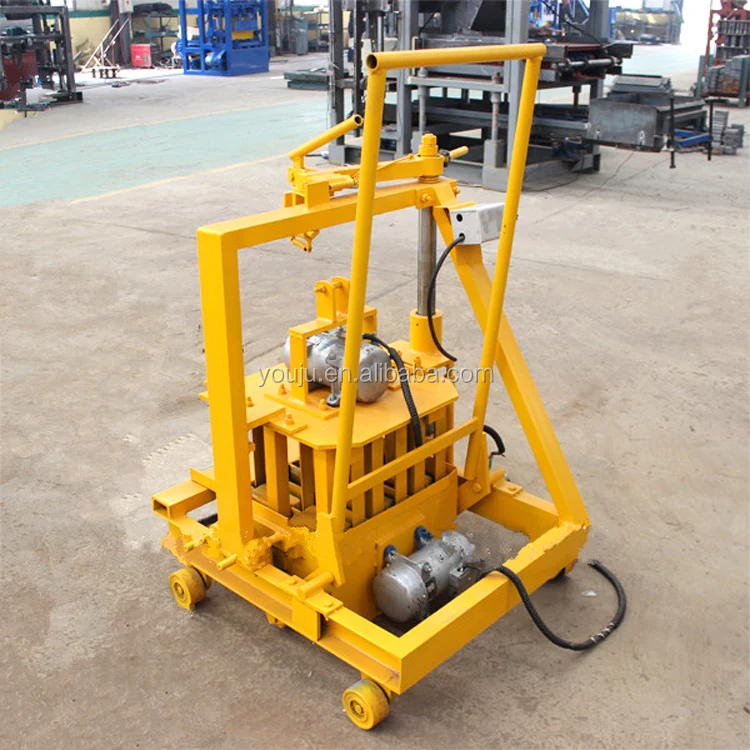
Single-focus machinery engineering — the QMR4-45 mobile diesel block machine is configured as part of a matched system with mixer, trolley, and mould options rather than supplied as a standalone press, helping buyers compare it directly against semi-automatic and automatic tiers before committing to a plant footprint.
Technical Specifications
| Parameter |
Value |
| Model |
QMR4-45 |
| Product Type |
Mobile Diesel Engine Block Making Machine |
| Molding Cycle |
45s (basis not stated in source — confirm block format and material) |
| Power Source |
Diesel |
| Rated Power |
8hp |
| Molding Form |
Vibration and Pressure |
| Vibration Force |
60KN |
| Total Weight |
800kg |
| Overall Dimensions (L×W×H) |
2420×1320×1650mm |
| Pallet Requirement |
No pallet required |
| Supported Block Formats |
Paver brick, hollow block, concrete block, solid brick, fly ash brick |
| Automation Level |
Manual / mobile egg-laying operation |
| Assembly State |
Fully assembled, mobile on wheels |
| Basic Equipment Included |
JZC350 Diesel Concrete Mixer or JQ350 Diesel Concrete Mixer (Electric Generating Unit); Trolley |
| Voltage & Frequency |
To be confirmed with supplier |
| Control System |
Not stated in source |
Application Suitability
| Application |
Material or Output |
| On-site hollow block production for housing projects |
Crushed stone, sand, cement, water |
| Paver brick manufacturing at remote construction yards |
Fine aggregate, cement, pigment additives |
| Solid brick runs for small contractor operations |
River sand, quarry dust, cement |
| Fly ash brick production near thermal power plants |
Fly ash, lime, gypsum, sand |
| First block plant for entrepreneurs testing local demand |
Locally available aggregate and cement |
What Buyers Miss When Comparing Mobile Tiers Against Fixed Lines
The gap between a mobile egg-laying machine and a fixed automatic line is not just output volume — it is the entire infrastructure and labour model around the press.
When I first started visiting job sites in East Africa, contractors would point to a QMR4-45 mobile block machine and ask why their daily tally never matched the numbers they had seen quoted for larger semi-automatic plants. The answer was rarely about the machine itself. It was about cycle assumptions, mix consistency, and whether anyone had matched the vibration force to the local sand gradation. Buyers comparing a mobile block machine manufacturer catalogue often skip past these details because they are focused on price and footprint, only to discover that the real cost sits in wasted cement, cracked blocks, and idle labour. [NEED_CITE: effect of local aggregate gradation on block compressive strength]

Where the QMR4-45 Sits Across the SHIYUE Range
The SHIYUE lineup spans mobile egg-laying machines, semi-automatic static presses, and fully automatic lines with pallet return and cubing. The QMR4-45 occupies the entry tier: no pallets, no fixed foundation, diesel-powered for sites where grid supply is unreliable. A buyer who needs to produce a single block format at moderate volume on a construction site will find this mobile block machine fits where a larger line would be underutilised. The next step up — a semi-automatic static press — requires pallets, a curing area, and a dedicated three-phase power supply, which changes the investment profile entirely.
Choosing Between Diesel Mobility and Electric Static Production
Diesel power at 8hp keeps the QMR4-45 independent of local electrical infrastructure, which matters on rural housing projects and remote road works where generators are the only option. The trade-off is that diesel engines demand more hands-on maintenance and produce less consistent RPM than an electric motor, which directly affects vibration force stability. If a buyer plans to move the machine between multiple sites over several months, the mobile block machine configuration with its trolley and fully assembled frame saves repeated dismantling. If production will stay in one yard for years, a static electric press becomes more economical on fuel and maintenance. [NEED_CITE: diesel versus electric power considerations for small-scale block production]
Reading the Specs That Actually Matter on Site
The 60KN vibration force, combined with the mechanical pressure from the mould box, determines how densely the concrete mix is compacted before curing begins. A higher vibration force generally produces a denser block, but only if the mix moisture and aggregate grading allow the vibration to propagate through the material — overly dry or overly wet mixes absorb the energy differently. The 45-second moulding cycle applies to a specific block format and thickness that must be confirmed before quoting daily output, because a thicker hollow block requires longer vibration to consolidate fully. The 800kg total weight and wheeled frame mean two or three workers can reposition the machine across a slab, but the floor surface must be level and cured concrete — fresh screed will crack under repeated vibration. Mould change is a manual process on this tier, so buyers planning to rotate between hollow blocks and pavers should plan for the downtime each swap involves.
The Hidden Cost of Skipping the Configuration Conversation
I have seen contractors arrive at a job site with a mobile machine that was ordered based on a single cycle-time figure, only to discover that their local river sand carried high clay content that the standard mix ratio could not compensate for. The blocks crumbled at the edges after curing, and the crew blamed the machine. The real failure happened before shipment — nobody asked for a sample of the local aggregate, and nobody adjusted the vibration duration to match. With a no-pallet egg-laying machine, the floor itself becomes the curing surface, so any dust, oil, or unevenness transfers directly to the block base. [NEED_CITE: common causes of block surface defects in egg-laying production]
Why Buyers Source This Tier Through SHIYUE
Block machinery is our single focus, which means the QMR4-45 is never shipped as an isolated press — the diesel mixer, trolley, and mould options are specified as one matched set. Configuration starts from the buyer’s actual mix design and local aggregate rather than a default catalogue recipe. Mould design covers the formats the buyer’s local market actually purchases, with custom drawings available where standard formats do not match. The automation path is open: a buyer who starts with this mobile machine can move to a semi-automatic static line later, keeping the same mix knowledge and operator skills. Installation guidance includes site preparation and operator training so the first production run is not a learning exercise on paid concrete.
Documentation & Verification
- Line layout and capacity calculation stating which block format the 45s cycle assumes
- Machine specification sheet confirming diesel engine rating and vibration force
- Mould drawing and format list showing included and separately ordered moulds
- Factory test record demonstrating a full production run before dispatch
- Packing photographs and customs documentation for container loading
Installation, Commissioning & Support
- Level cured concrete floor required to support 800kg machine weight and vibration loads
- Diesel mixer positioned within reachable distance of the QMR4-45 hopper for manual feeding
- Machine arrives fully assembled on wheels — no foundation bolts or structural steel needed
- First-run vibration tuning matched to buyer’s confirmed mix sample and aggregate grading
- Mould change procedure and spare wear parts list provided during operator training session
- Daily greasing points and engine maintenance schedule documented in operation manual
What to Prepare Before Requesting a Quote
Send a sample of your local sand or aggregate along with the block formats your market demands, the daily output you need to sustain, and the site conditions where the machine will operate — including whether grid electricity is available or diesel is the only option. Confirming these points early ensures the mobile block machine manufacturer can match the mixer, mould set, and vibration settings to your actual production environment rather than shipping a default configuration that underperforms on arrival.
Frequently Asked Questions
Q: Where does the QMR4-45 mobile tier sit compared to SHIYUE semi-automatic and automatic machines in output and investment?
A: The QMR4-45 is the entry tier — no pallets, no fixed foundation, diesel-powered, suited for on-site or small-yard production. Semi-automatic lines add pallets, a static press, and curing racks for higher volume. Automatic lines add pallet return, stacking, and cubing for continuous high-capacity output. Each step up increases investment and infrastructure requirements.
Q: What block format is the 45-second cycle time based on, and how does output change with different formats?
A: The 45-second cycle must be confirmed against a specific block format and thickness, because a standard hollow block and a thick interlocking paver consolidate differently under vibration. Daily output varies accordingly — a smaller solid brick moulds faster per cycle but produces fewer cubic metres of wall material. Always request the capacity calculation stated per format.
Q: What plant footprint and site conditions does this mobile machine require versus a fixed automatic line?
A: The QMR4-45 needs a level cured concrete slab large enough for the machine path and block curing area — no fixed foundation or structural steel. A fixed automatic line requires a dedicated building with pallet storage, curing racks, and three-phase power. The mobile option suits temporary or multi-site projects where permanent infrastructure is not justified.
Q: Can I start with the QMR4-45 mobile machine and upgrade to a semi-automatic or automatic system later?
A: Yes. The mix design knowledge, block format selection, and operator skills developed on the QMR4-45 carry over to a semi-automatic static line. The main additions are pallets, a curing area, and electrical infrastructure. SHIYUE configures the upgrade path so that mould investments and production experience are not wasted.
Q: What voltage, frequency, and control language options are available if I later move to an electric-powered model?
A: Voltage and frequency must be confirmed to match your local grid supply, and PLC display language is selected before production. These details are confirmed during the quotation stage so the machine arrives ready for commissioning without electrical adapters or translation delays on site.

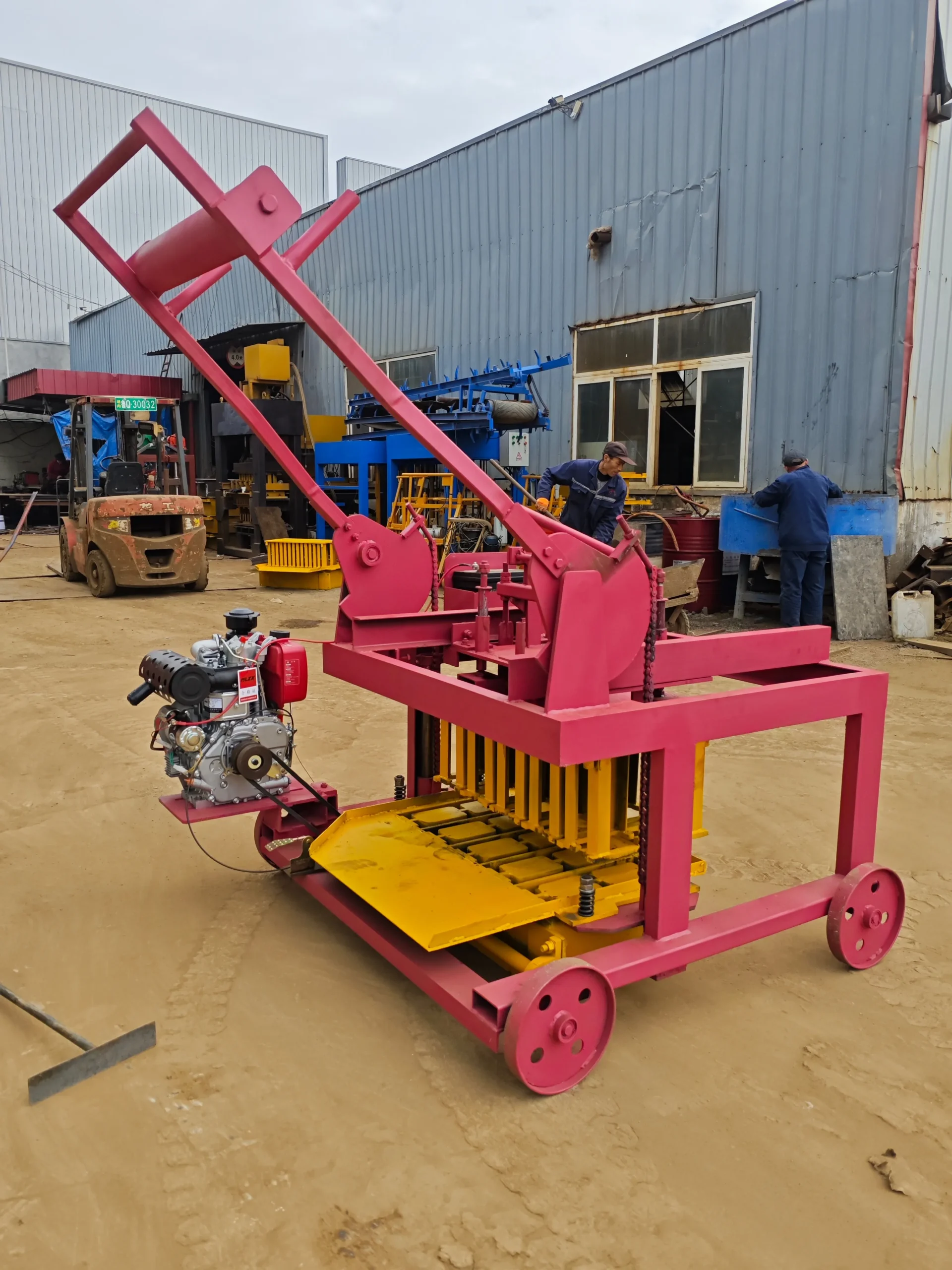
 Mobile block machine