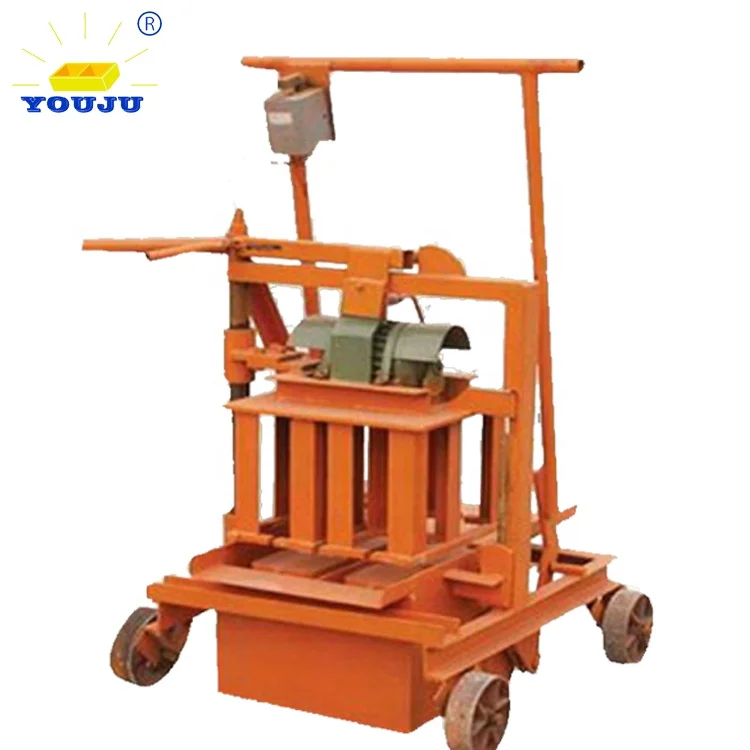
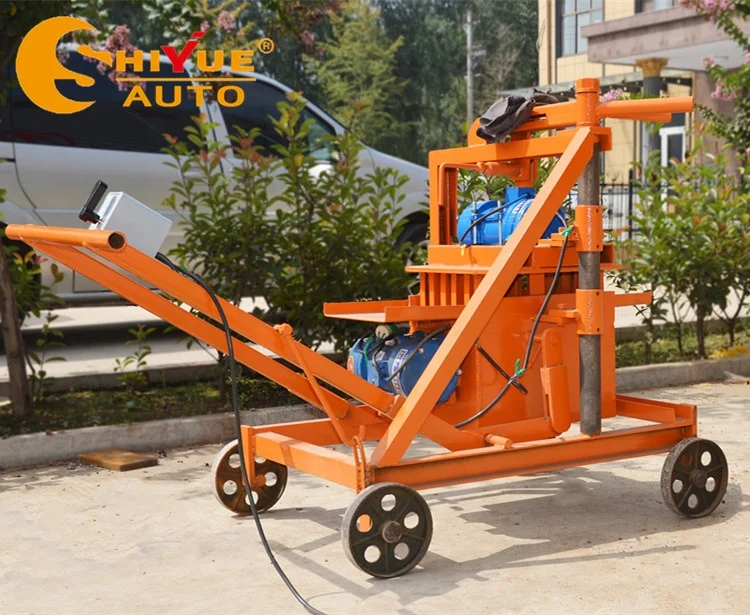
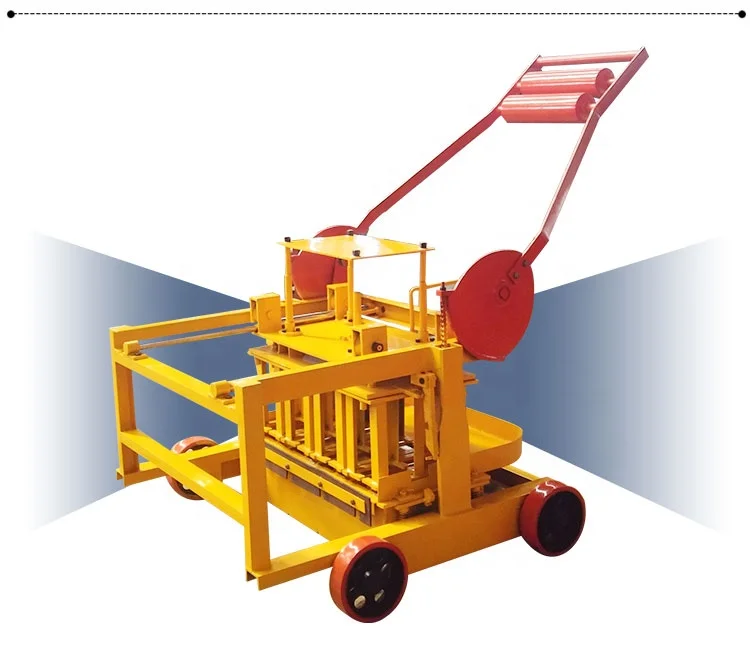
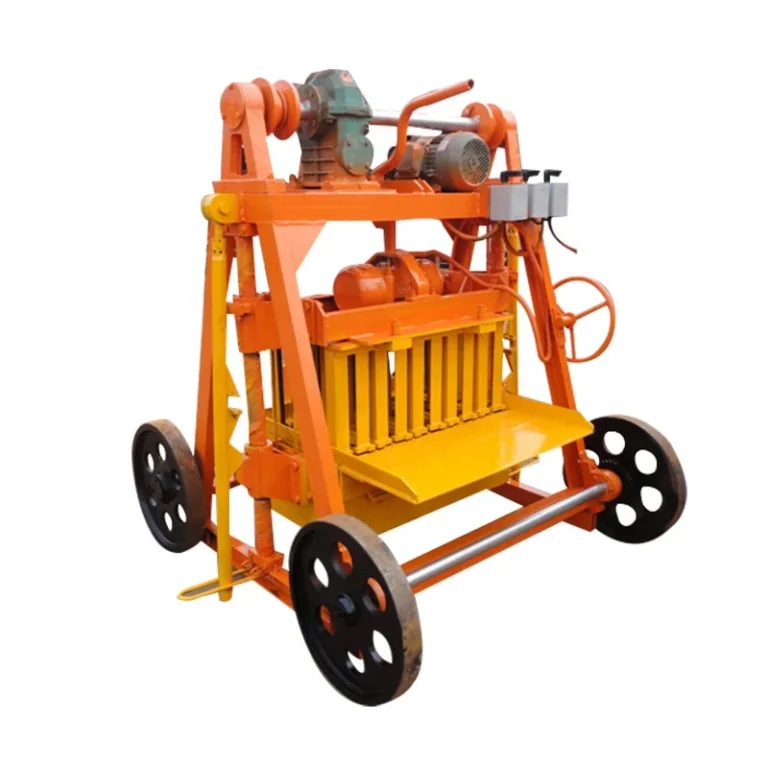
Single-focus block machinery manufacturer — our QMY4-30 mobile egg-laying block making machine arrives fully assembled with mould and pallet system matched to your actual block format, not pulled from a generic catalogue.
Technical Specifications
| Parameter |
Value |
| Model |
QMY4-30 |
| Product Type |
Mobile Egg-Laying Block Making Machine |
| Machine Type |
Mobile hydraulic brick machine (egg-laying, no pallets required) |
| Hydraulic System |
Mold box excitation with hydraulic transmission |
| Output Capacity |
Large output (basis not stated in source — confirm block format and material) |
| Automation Level |
Manual operation |
| Pallet Requirement |
None (palletless egg-laying design) |
| Mould Technology |
Heat treatment and carburization |
| Construction Material |
High quality steel |
| Operating Environment |
Mountainous, hilly, mining, desert, and coastal areas |
| Assembly State |
Fully assembled mobile unit |
| Standards |
ISO9001:2000, CE |
Application Suitability
| Application |
Material or Output |
| On-site hollow block production |
Crushed stone, sand, cement, and water mix |
| Remote housing project block supply |
Locally sourced aggregate with cement binder |
| Solid block manufacturing for contractors |
Concrete mix without pallet infrastructure |
| First block plant for entrepreneurs |
Low-investment egg-laying operation on prepared ground |
| Mining and desert site construction |
Block production without fixed plant or curing racks |
Why the Voltage Question Must Come Before the Quotation
A mobile block machine manufacturer that skips the voltage check is selling you a problem.
I flew to a job site last year because the QMY4-30 we shipped could not start. The client’s local grid ran at a different voltage and frequency than what we had on file. The motor hummed, tripped the breaker, and sat silent for two weeks while we sourced a replacement overseas. Electrical mismatches remain one of the most common commissioning delays for exported concrete equipment [NEED_CITE: voltage and frequency standards by export market]. Confirming supply voltage, phase configuration, and frequency before production locks out that failure mode entirely.

Eliminating Pallet Investment From Day One
The QMY4-30 lays blocks directly onto the ground and moves forward on its own wheels, so there is no pallet purchase, no pallet return loop, and no pallet storage area to plan. For an entrepreneur setting up a first block plant, this removes an entire material cost line from the startup budget. A mobile block machine manufacturer should make this trade-off transparent: palletless operation reduces initial outlay but requires a smooth, level curing surface large enough to hold a full day’s output.
Where Terrain Dictates the Machine Choice
Fixed plant block machines need a concrete foundation, a three-phase supply, and a forklift-friendly yard. The QMY4-30 operates on compacted soil in hilly, mountainous, desert, and coastal environments where none of that infrastructure exists yet. Development contractors producing blocks for their own housing projects can position the machine next to the build zone, cutting transport distance to near zero [NEED_CITE: on-site block production logistics in remote development projects]. The hydraulic mold box excitation delivers consistent vibration regardless of ground stiffness, maintaining block density across variable terrain.
How Hydraulic Pressure and Vibration Shape Block Quality
Block density on an egg-laying machine is the product of two forces working together: hydraulic pressure compacts the mix while vibration settles fine particles into voids. The QMY4-30 uses mold box excitation rather than table vibration, concentrating energy directly into the mould cavity where the concrete sits. This matters because ground-laid blocks have no pallet underneath to transfer table vibration efficiently. Carburized and heat-treated mould surfaces resist the abrasive wear from crushed stone aggregate, preserving dimensional accuracy over extended production runs. Without this treatment, mould walls thin unevenly and blocks drift out of tolerance within the first few months of service.
The Hidden Cost of Skipping Configuration Verification
When a buyer receives a machine configured for a mix design that local aggregate cannot replicate, the result is weak blocks and wasted cement. A common pattern is specifying a fine sand ratio that the region simply does not produce, forcing the contractor to import material at multiples of the local cost [NEED_CITE: aggregate sourcing constraints in developing construction markets]. Equally problematic is receiving a control panel labelled in a language the operators cannot read, slowing the learning curve and increasing the chance of incorrect cycle settings. Both issues are preventable with a structured pre-order confirmation process that covers mix design, aggregate grading, and operator language.
Why Buyers Source This Machine From Linyi
Block machinery is the only product line we build, so every QMY4-30 leaves the factory as a matched system — machine, mould, and ground-laying accessories specified together rather than assembled from separate suppliers. Mould formats are selected against the block types the buyer’s market actually sells, and custom mould drawings are accepted when standard formats do not fit. Voltage, frequency, and control language are confirmed in writing before the machine enters production. Factory testing runs the exact mould the buyer ordered, and the test record ships with the documentation package. Installation support and operator training are included, because a mobile egg-laying machine still needs correct first-cycle settings to produce sellable blocks.
Documentation & Verification
- Capacity calculation sheet stating the block format and mix assumed
- Machine specification with mould drawing and format list
- Voltage, frequency, and control language confirmation record
- Factory test record on buyer’s selected mould before dispatch
- Hydraulic and electrical schematic for on-site troubleshooting
Installation, Commissioning & Support
- Arrives fully assembled — requires only a level, compacted ground surface to begin operation
- Power connection must match confirmed voltage and frequency before first start
- Mould heat-treated and carburized — inspect wear surfaces after initial production run
- Hydraulic fluid type and fill level verified during on-site commissioning visit
- Operator training covers cycle timing, mix consistency, and mould change procedure
- Wear parts and replacement mould list provided with shipment documentation
What We Need to Quote Accurately
To configure a QMY4-30 for your site, share the block format and dimensions you plan to produce, your local aggregate type and grading, and the daily output target for that specific format. Confirm the available power supply voltage, phase, and frequency at the project location, along with the preferred language for the control panel. If you have an existing curing area or material handling setup, describe its dimensions so the palletless layout can be planned around it.
Frequently Asked Questions
Q: Which block format does the quoted output assume?
A: Output capacity for the QMY4-30 varies by block size and wall thickness. We provide a written capacity calculation that names the exact format, mix, and cycle time used. Without this, a quoted number is meaningless for planning daily production targets and labour scheduling.
Q: How is the machine configured for my local aggregate?
A: We request a sample description or lab sieve analysis of your locally available sand and crushed stone. Hydraulic pressure and vibration duration are then adjusted to match that grading. This prevents the situation where the machine arrives tuned for a mix you cannot source on-site.
Q: What ground preparation is needed for egg-laying operation?
A: The QMY4-30 requires a flat, compacted surface free of standing water. No concrete foundation or fixed rails are needed. The curing area must be large enough to hold a full day’s production with spacing for air circulation around each block.
Q: What installation support do you provide?
A: A technician visits the site to verify power supply match, run the first production cycle, and train operators on mould change and daily maintenance. This visit is included with the machine and covers the specific block format you ordered.
Q: Are moulds and wear parts available for reorder?
A: Replacement moulds and hydraulic wear parts are manufactured in the same Linyi facility that built the machine. We supply a wear parts list with the initial shipment so buyers can plan reorder timing before production is interrupted by worn components.

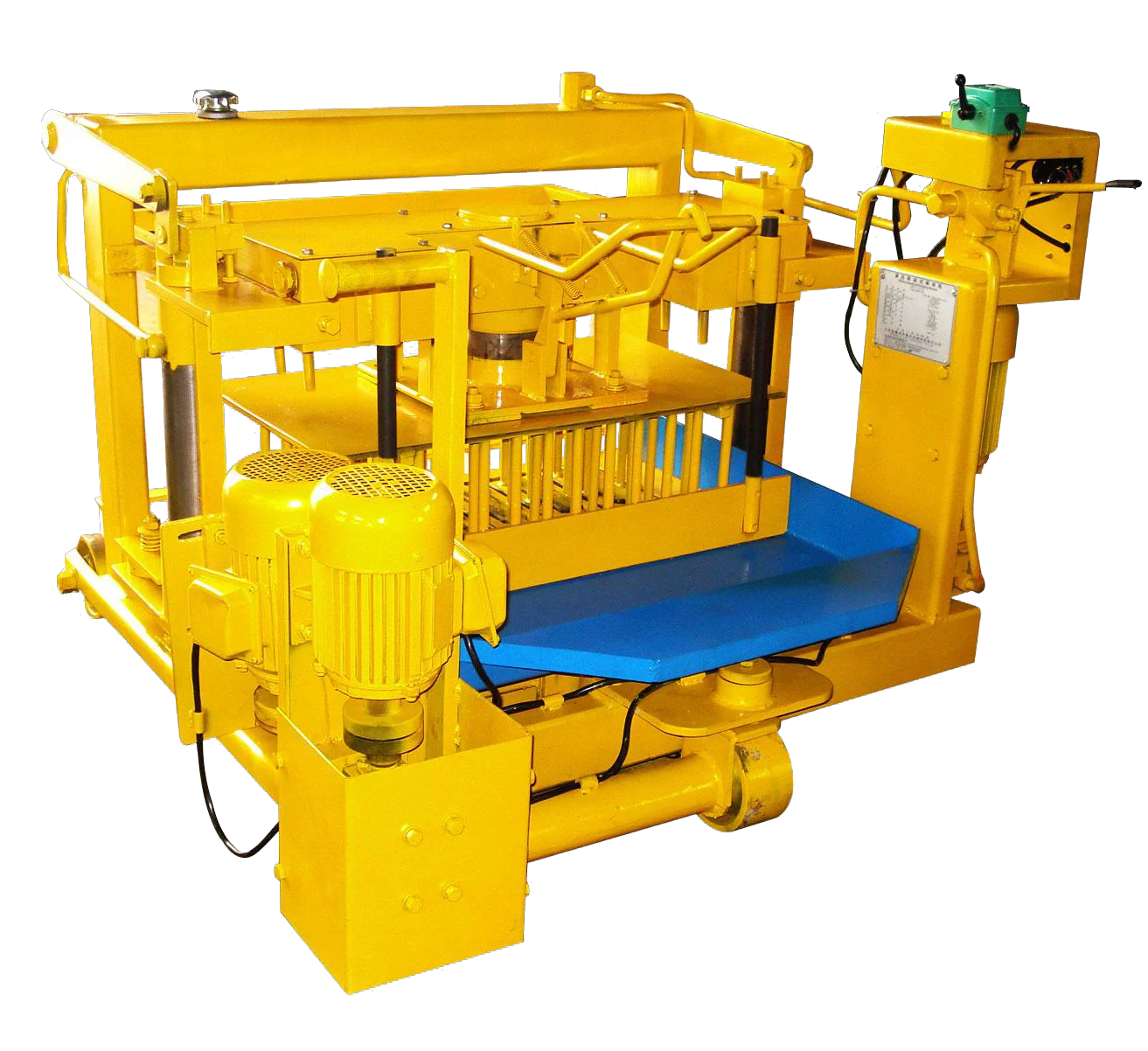
 Mobile block machine