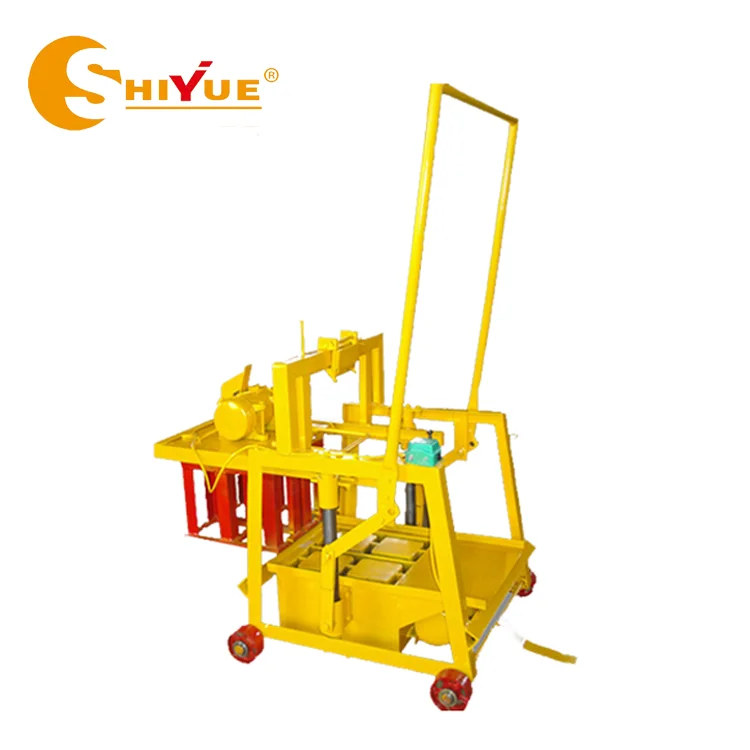
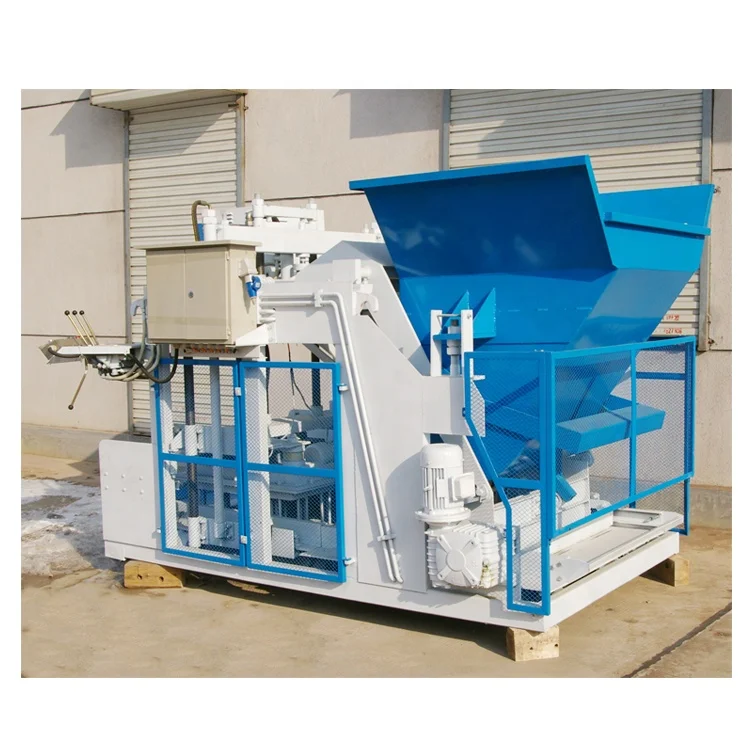
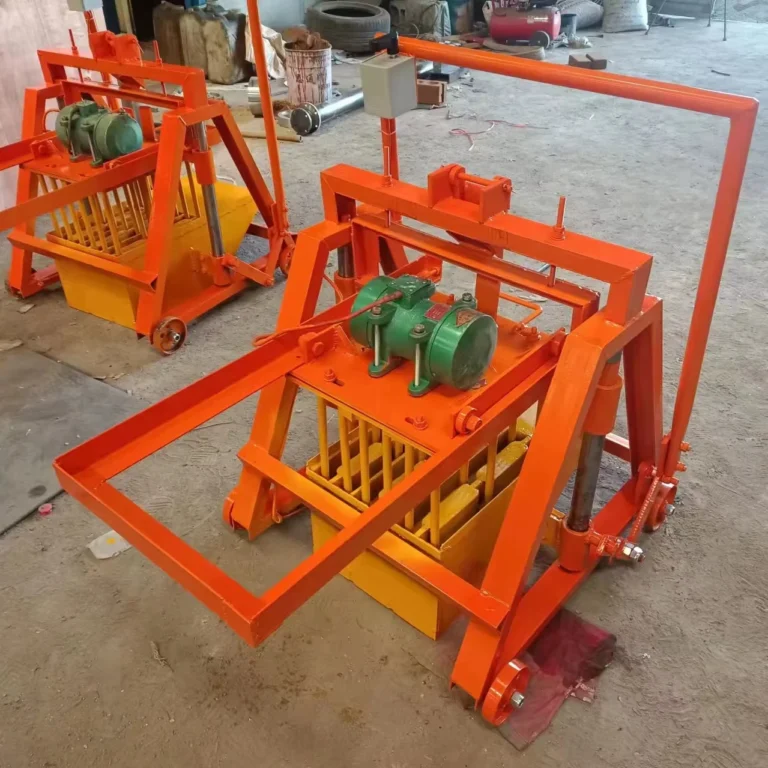
Single Focus on Block Machinery — the QMJ4-45 mobile block machine is specified as a complete egg-laying system with matched mould, power source, and output calculation, not assembled from unrelated components.
Technical Specifications
| Parameter |
Value |
| Model |
QMJ4-45 |
| Product Type |
Mobile Egg-Laying Block Making Machine |
| Molding Capacity |
4 pcs/mold for 400×200×200 mm hollow block (basis: hollow block format) |
| Vibration Frequency |
2400 r/m |
| Productivity |
3000 pcs/day for 400×200×200 mm; 3500 pcs/day for 400×150×200 mm; 4500 pcs/day for 400×120×200 mm (based on 8-hour shift, hollow block) |
| Hydraulic Method |
Mold vibration |
| Demold Method |
Manual |
| Turning Method |
Manual |
| Total Power |
6 kW |
| Power Source |
Diesel/Petrol engine |
| Molding Cycle |
40–45 s |
| Automation Level |
Manual / egg-laying (mobile, no pallet required) |
| Pallet Size |
N/A (egg-laying type, blocks laid directly on ground) |
| Mould Format Options |
400×200×200 mm (4 pcs/mould); 400×150×200 mm (5 pcs/mould); 400×120×200 mm (6 pcs/mould) |
| Overall Dimensions |
(basis to be confirmed) |
| Net Weight |
(basis to be confirmed) |
| Warranty |
One year for the whole machine |
| Certification |
CE |
Application Suitability
| Application |
Material or Output |
| On-site hollow block production for garden walls and small construction |
Crushed stone, sand, cement, and local aggregate blends |
| Remote or off-grid block production |
Diesel-engine operation where grid electricity is unavailable |
| Low-investment block production for entrepreneurs |
Hollow blocks in three standard formats without pallet infrastructure |
| Housing project block supply on-site |
Multi-cellular bricks, paving bricks, and standard bricks via mould change |
What "4000 Blocks a Day" Actually Means on the Ground
Capacity numbers without a block format attached are meaningless to your production plan.
Many mobile block machine quotations quote a single daily figure that assumes the smallest, fastest-running format. When you put the mould for 400×200×200 mm hollow blocks on the same machine, the cycle is slower and the pieces per mould are fewer, so real output drops noticeably. The QMJ4-45 mobile block machine manufacturer approach here is to state productivity per format — 3000 pieces per day for the 200 mm wall block, up to 4500 for the 120 mm partition block — all based on an 8-hour shift. That way you can match the number to the block your market actually buys, not a catalogue best-case. [NEED_CITE: common discrepancies between quoted and actual block machine output]
Where This Tier Sits in the Shiyue Range
The QMJ4-45 occupies the entry tier of the Shiyue machine line. It is a diesel-engine-powered, egg-laying mobile unit that lays blocks directly on prepared ground. There is no pallet system, no batching plant, and no automatic stacking — the operator wheels the machine forward after each cycle. For a buyer surveying options, this is the starting point: lowest capital outlay, smallest footprint, and the simplest path from bare ground to finished blocks. When your daily volume requirement grows beyond what a single operator can handle in one shift, stepping up to a semi-automatic stationary model with pallet circulation becomes the logical next move.
Why Engine Power Matters Beyond the Spec Sheet
Grid electricity on construction sites in West Africa, parts of Southeast Asia, and rural Latin America is unreliable or absent entirely. The QMJ4-45 runs on a diesel or petrol engine, removing electrical infrastructure from the critical path. This means you can start producing within a day of the machine arriving on-site rather than waiting weeks for a transformer and dedicated line to be installed. The trade-off is that engine speed must be manually matched to the vibration frequency, and fuel cost replaces electricity cost in your operating calculation. [NEED_CITE: off-grid construction power availability in developing markets]
Vibration, Mould Design, and Block Density

At 2400 r/m vibration frequency, the QMJ4-45 delivers what the industry calls twice-vibration compaction — an improvement over older single-vibration mobile machines that left the upper portion of the block less dense. The vibration is transmitted through the mould itself rather than through a table or pallet, which is the defining characteristic of an egg-laying design. For hollow blocks, adequate density in the web and shell walls determines both the compressive strength and the block’s ability to survive handling during the curing period. The 40–45 second cycle time allows the operator to feed the next batch of mix while the current mould completes its vibration and demold sequence. Three hollow block formats are available: 400×200×200 mm (4 pieces per mould), 400×150×200 mm (5 pieces per mould), and 400×120×200 mm (6 pieces per mould). The manual demold and manual turning mean there is no hydraulic system to maintain — a deliberate simplicity that reduces the skill level required for daily operation.
Mould Change and Format Flexibility on a Mobile Platform
Swapping moulds on an egg-laying machine is a manual process involving bolt removal and re-alignment, not a quick-release system. This means the QMJ4-45 is best suited for buyers who will run one or two formats for extended periods rather than switching daily between hollow, solid, and paving formats. When a format change is needed, plan for it at the start of a shift rather than mid-production. The mould options cover the hollow block sizes most commonly demanded in residential and light commercial construction. [NEED_CITE: mould change time expectations for mobile egg-laying block machines]
What Happens When Ground Preparation Is Skipped
An egg-laying machine deposits wet, freshly vibrated blocks directly onto the ground. If that ground is uneven, soft, or poorly compacted, the blocks will settle unevenly during curing and develop cracks or dimensional variation. This is not a machine fault — it is a site preparation failure. Buyers who skip the step of clearing, leveling, and compacting the production area find that a significant portion of their daily output is rejected. The cost of proper ground preparation is minimal compared to the loss of a week’s production to cracked blocks. [NEED_CITE: ground preparation standards for egg-laying block production]
What You Get by Sourcing the Complete System Here
Block machinery is the single focus at Shiyue, which means the QMJ4-45 is not a standalone press paired with mismatched moulds from a different supplier. The mould is designed to work with the vibration frequency and cycle time of this specific machine. Configuration is set against your actual mix design and local aggregate, not a catalogue default — an important distinction because red soil, volcanic ash, and crushed limestone all behave differently under vibration. Mould design covers the formats your local market sells, and custom drawings are available when your market demands a non-standard size. The automation level is selectable across the range, so you can start with the QMJ4-45 and step up to a semi-automatic model as demand grows without changing your block format strategy. Installation support and operator training are included to ensure the machine runs correctly from day one.
Documentation & Verification
- Line layout and capacity calculation stating the block format assumed for output figures
- Mould drawing and format list confirming included and optional block sizes
- Operation and maintenance manual with wear parts and mould replacement list
- Factory test record on your specified aggregate mix before dispatch
- CE declaration documentation where applicable to your import market
- Packing photographs and customs documentation support for shipment
Installation, Commissioning & Support
- Site must be cleared, leveled, and compacted over the planned production and curing area
- Diesel or petrol engine requires fuel supply and routine engine maintenance separate from the machine
- Machine arrives assembled; operator training covers vibration settings for your specific mix
- Mould alignment checked during commissioning to ensure dimensional accuracy of first production run
- Wear parts list provided with recommended replacement intervals for mould liners and vibration components
- One-year warranty covers the complete machine with ongoing mould and parts supply available
What We Need to Move Forward
To match the right configuration to your project, we need to know which hollow block format your market demands and the daily volume your project timeline requires. A sample of your local aggregate — sand, crushed stone, or whatever filler is available on-site — allows us to test vibration settings before the machine ships. If you plan to run formats beyond hollow block, tell us which ones so we can confirm mould availability and cycle time for each.
Frequently Asked Questions
Q: How is daily capacity calculated, and what block format does it assume?
A: The stated productivity figures are based on an 8-hour shift running hollow blocks only. The 400×200×200 mm format yields approximately 3000 pieces per day, while the 400×120×200 mm format reaches around 4500 pieces per day. Cycle time per mould is 40–45 seconds. We always state the format behind the number so your production plan matches reality.
Q: Where does the QMJ4-45 sit in the Shiyue range, and when should a buyer step up?
A: This model is the entry tier — a manual, engine-powered, egg-laying unit for low-investment or remote-site production. When your daily volume consistently exceeds what one operator can produce in a shift, or when you need pallet-based curing and automatic stacking, stepping to a semi-automatic stationary model is the logical progression.
Q: What site conditions and ground preparation does an egg-laying machine require?
A: The production area must be cleared, leveled, and compacted so blocks do not settle unevenly during curing. The ground must support the machine’s weight and remain stable when wet mix is deposited. Adequate space is also needed for blocks to cure in place before being moved to a storage area.
Q: Can moulds be changed on-site, and what formats are available?
A: Mould changes are done manually with bolt removal and re-alignment, best planned at the start of a shift. Available hollow block formats include 400×200×200 mm, 400×150×200 mm, and 400×120×200 mm. Custom mould drawings are possible if your market requires a size outside these three options.
Q: What does the one-year warranty cover, and how are replacement parts supplied?
A: The warranty covers the complete machine for one year from commissioning. A wear parts and mould list is provided so you can plan consumable replacements in advance. Replacement moulds and vibration components are available directly, and we support ongoing supply beyond the warranty period.

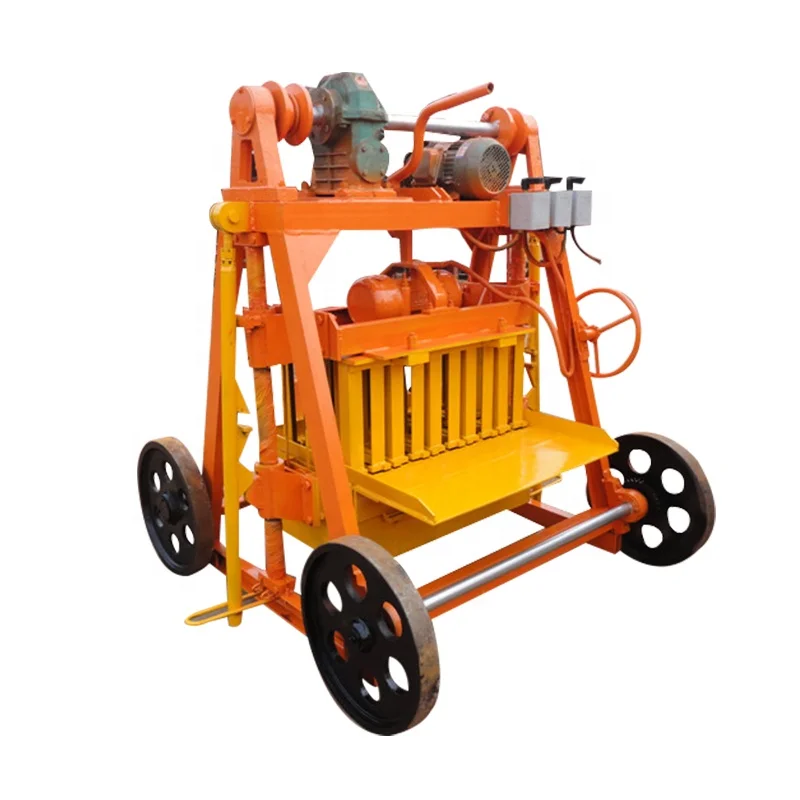
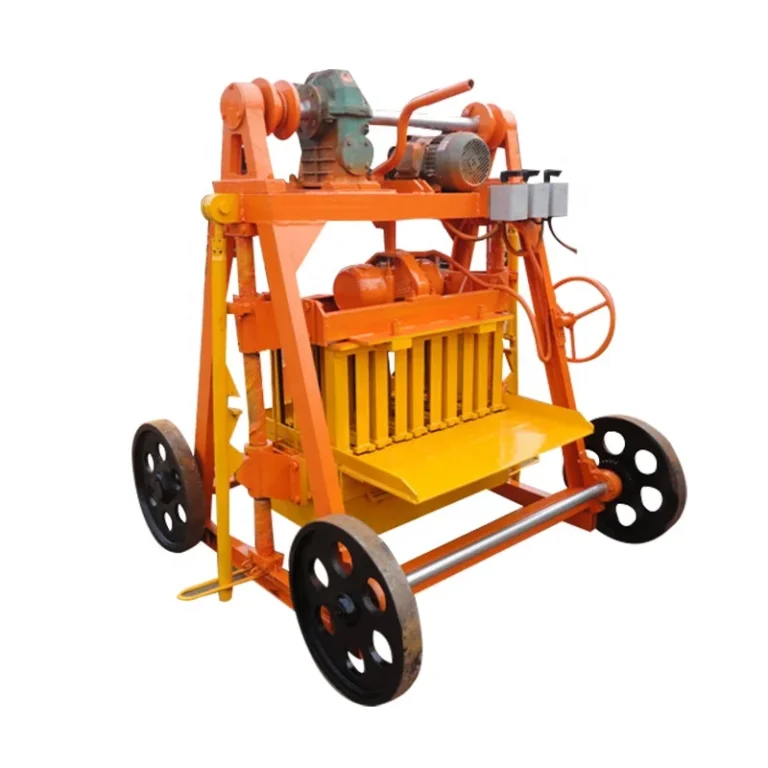 Mobile block machine