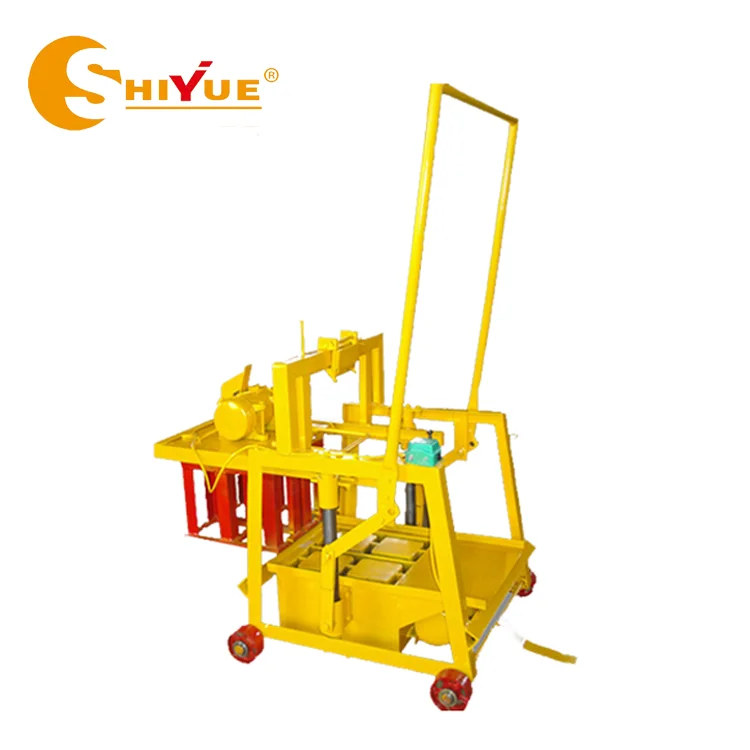
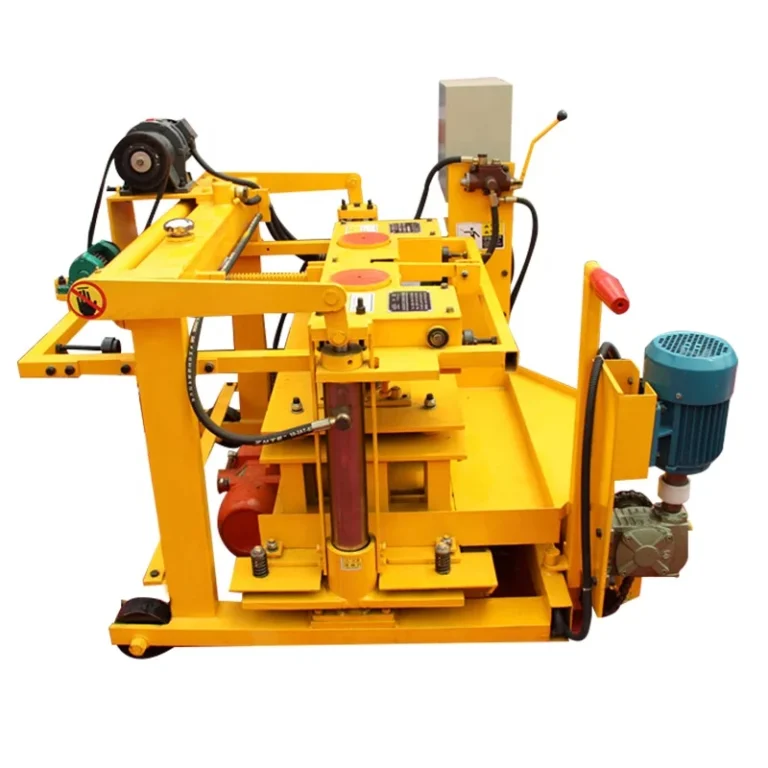
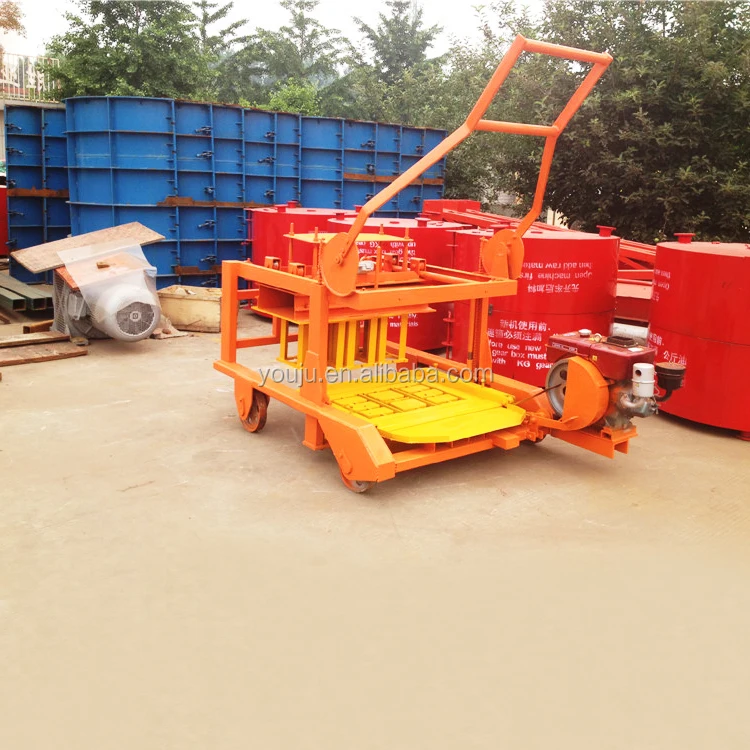
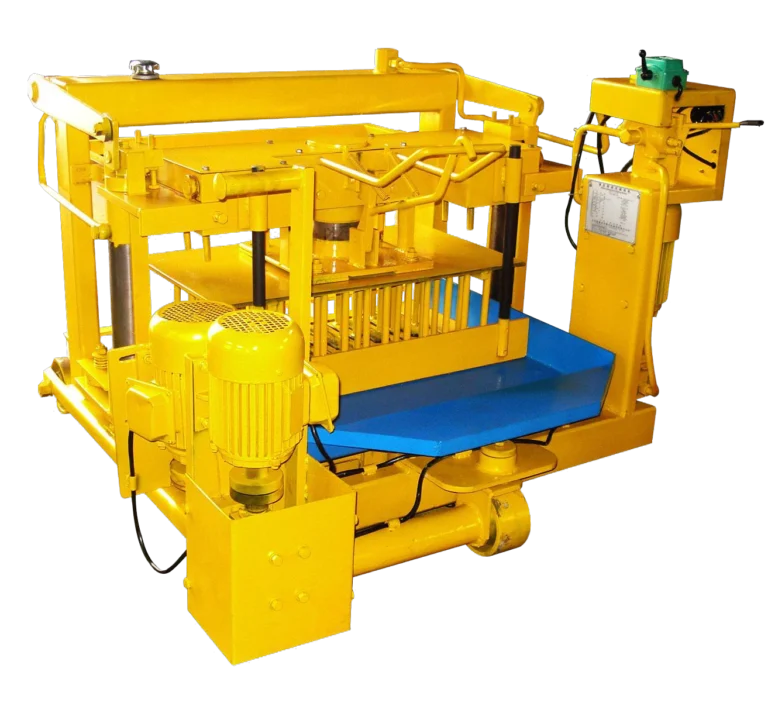
Matched System Design — the QMY4-30 mobile block machine, its moulds and ground-curing workflow are specified together so your first production run matches the capacity calculation you signed off on.
Technical Specifications
| Parameter |
Value |
| Model |
QMY4-30 |
| Product Type |
Mobile Concrete Block Making Machine |
| Rated Power |
5 kW |
| Molding Cycle Time |
30 seconds |
| Overall Dimensions (L×W×H) |
1200 × 1200 × 1100 mm |
| Net Weight |
950 kg |
| Raw Materials |
Cement, sand, crushed stones, slag |
| Mould Format Options |
Hollow block, solid brick (interchangeable) |
| Output Capacity |
480 pcs/hour (based on 400×200×200 mm hollow block, 4 pcs/mould) |
| Output Capacity |
600 pcs/hour (based on 400×150×200 mm hollow block, 5 pcs/mould) |
| Output Capacity |
840 pcs/hour (based on 400×100×200 mm hollow block, 7 pcs/mould) |
| Shift Output (8 h) |
3,840 pcs (based on 400×200×200 mm hollow block) |
| Shift Output (8 h) |
4,800 pcs (based on 400×150×200 mm hollow block) |
| Shift Output (8 h) |
6,720 pcs (based on 400×100×200 mm hollow block) |
| Automation Level |
Manual, mobile egg-laying type |
| Pallet Requirement |
Not applicable — produces directly on ground |
| Voltage & Frequency |
To be confirmed with buyer before production |
| Control System |
To be confirmed with buyer before production |
| Hydraulic Pressure |
To be confirmed with buyer before production |
| Vibration Force |
To be confirmed with buyer before production |
| Warranty |
One-year guarantee |
Application Suitability
| Application |
Material or Output |
| On-site hollow block production for building contractors |
Cement, sand, crushed stone mixed at project site |
| Small-scale solid brick manufacturing |
Cement, sand, slag blends |
| First block plant setup by entrepreneurs |
Low-capital mobile egg-laying operation on open ground |
| Remote construction projects without fixed batching plants |
Locally sourced aggregate with portable cement supply |
Why "Pieces per Hour" Means Nothing Without the Block Size
A capacity number without a format assumption is a guess, not a specification.
I have seen quotations where a mobile block making machine for sale is listed at a single hourly figure, and when the buyer arrives on site with a different mould installed, the real output drops by a third or more. The problem is never the machine itself; it is the mismatch between the quoted cycle and the format the buyer actually sells. With the QMY4-30, every output figure on this page is tied to a specific block dimension and mould cavity count. [NEED_CITE: common capacity misrepresentation in block machinery quotations] If your market primarily moves 400×200×200 mm hollow blocks, the realistic ceiling is 3,840 pieces in an eight-hour shift — not a generic number borrowed from a smaller format.

Where the QMY4-30 Fits in the Full Machine Range
The QMY4-30 occupies the entry tier of our mobile block machine lineup. It is designed for buyers who do not yet need — or cannot yet justify — a fixed plant with pallet conveyors and automatic stackers. The machine lays blocks directly on the ground and moves forward under manual guidance, which keeps the investment and site preparation to a minimum. When your daily demand grows beyond what a single mobile unit can sustain, the next step is a semi-automatic stationary press with pallet circulation, and the QMY4-30 is built to let you reach that point without scrapping your initial equipment. A mobile block making machine for sale at this tier gives you a production foothold while you validate local demand.
Understanding the Output Tiers Before You Commit
Each of the three output tiers on the specification table corresponds to a different mould cavity count. The 400×200×200 mm hollow block uses a four-cavity mould and yields 480 pieces per hour, while the 100 mm partition block uses seven cavities and reaches 840 pieces in the same 30-second cycle window. The practical implication is straightforward: if your revenue comes mainly from load-bearing 200 mm blocks, plan your shift schedule around the 3,840-piece figure, not the headline 840. [NEED_CITE: relationship between mould cavity count and achievable daily output] Buyers who skip this step frequently order extra moulds they cannot run profitably at the cycle time the machine delivers.
Reading the Specs That Actually Matter on Site
The 5 kW rated power is low enough to run from a portable diesel generator, which matters on remote construction sites where grid connections are unavailable or unstable. The 30-second molding cycle is fixed across all interchangeable moulds, so your output planning reduces to a simple multiplication of cavity count by available working hours. The 1,200 × 1,200 mm footprint and 950 kg weight mean the machine can be repositioned with a small forklift or even a block clamp as the production area shifts across a large project site. Ground-level egg-laying operation eliminates pallet costs entirely, but it also demands a flat, compacted surface — uneven ground translates directly into cracked or uneven blocks that fail compressive strength tests.
The Cost of Skipping the Raw Material Conversation
One of the most frequent failures I have witnessed with mobile egg-laying machines is not mechanical but material. A buyer sends a purchase order, the machine ships with factory-default vibration and pressure settings calibrated for standard silica sand, and then the first production run uses a local volcanic aggregate that absorbs water differently and resists compaction. The blocks come out under-density and crumble at the edges. The fix is never a quick adjustment — it means re-matching the vibration force, hydraulic pressure and cycle dwell to a mix design built around the aggregate the buyer can actually source. [NEED_CITE: impact of local aggregate variation on block compressive strength] Skipping the sample-testing step before shipment is the single most expensive decision a first-time buyer makes.
What You Get Beyond the Press Itself
Every QMY4-30 leaves the factory with moulds matched to the block formats your market moves, not a catalogue default. The capacity calculation you receive states the format assumed, so there is no ambiguity between quoted and actual output. Voltage, frequency and control language are confirmed in writing before production begins, preventing the commissioning stand-stills I have seen when a 440 V machine arrives at a 380 V site. Moulds, hydraulic seals and vibration components are listed in a wear-parts schedule so your first replacement order is already identified before you need it. The machine, its interchangeable moulds and the ground-curing workflow are specified as a single system, which is how we prevent the gaps that separate-supplier purchases always create.
Documentation & Verification
- Machine specification sheet confirming rated power, dimensions and net weight against your site conditions
- Capacity calculation worksheet stating the exact block format and mould cavity count for each output figure
- Mould drawing and format list showing every interchangeable mould included with your order
- Voltage, frequency and control language confirmation document signed before production begins
- Factory test record captured on the block format you will produce, not a generic test block
- Wear parts and mould inventory list with part numbers for your first reorder
Installation, Commissioning & Support
- Ground must be flat and compacted across the full egg-laying travel path to maintain block dimensional accuracy
- A dedicated 5 kW circuit or equivalent generator capacity is required before the QMY4-30 is energized on site
- Machine ships partially assembled; final vibration unit and mould frame attachment completed on arrival
- First production run supervised by our technician to confirm cycle time and block density match the agreed format
- Operator training covers mould change procedure, mix consistency checks and daily vibration mount inspection
- Wear parts reorder list provided at commissioning so hydraulic seals and mould liners are available before first replacement is due
What We Need From You to Size This Correctly
To make sure the QMY4-30 is the right tier for your operation and that the moulds match your market, share the block formats you sell today along with your target daily volume for each. Tell us what raw materials are available locally — especially the aggregate type — and send a sample if you can. Confirm your site voltage and frequency, the language your operators need on the control interface, and whether you plan to run the machine on grid power or a generator. This information lets us lock the configuration before production starts rather than troubleshooting it after the container arrives.
Frequently Asked Questions
Q: Where does the QMY4-30 sit in the full machine range, and when should I move to a higher tier?
A: The QMY4-30 is the entry point of our mobile range, intended for on-site production without fixed plant infrastructure. When your daily demand consistently exceeds what a single mobile unit can deliver in an eight-hour shift, or when your product mix requires rapid format changes, stepping to a semi-automatic stationary press with pallet circulation becomes the practical next move. The QMY4-30 can remain in service as a satellite unit for smaller jobs.
Q: What block formats can this machine produce, and how is output stated for each?
A: The QMY4-30 accepts interchangeable moulds for hollow blocks and solid bricks. Output is stated per format: 480 pieces per hour for 400×200×200 mm hollow blocks (4 cavities), 600 for 400×150×200 mm (5 cavities), and 840 for 400×100×200 mm (7 cavities). Each figure assumes a 30-second molding cycle. Confirm your primary selling format so the capacity calculation reflects your real production.
Q: What site conditions are needed for mobile egg-laying operation?
A: You need a flat, compacted ground surface across the area where blocks will be laid and cured. The QMY4-30 draws 5 kW, so either a stable grid connection or a generator of adequate capacity is required. Allow sufficient open space for the machine to travel and for blocks to cure undisturbed. Uneven or soft ground causes dimensional variation and edge cracking in the finished product.
Q: How do I confirm voltage, frequency and control language before the machine ships?
A: We request written confirmation of your site voltage, frequency and preferred operator language before production begins. These parameters are recorded on a configuration document that both parties sign. Confirming them at the inquiry stage avoids the common delay where a machine arrives with the wrong electrical specification or an unreadable control display, which can add weeks to commissioning.
Q: What happens if my output needs grow beyond what the QMY4-30 can deliver?
A: The upgrade path moves to a semi-automatic stationary press with pallet feeding and automatic stacking. The QMY4-30 can continue running as a secondary unit for smaller production batches or remote site work. Because the mould format knowledge and mix design work you completed for the QMY4-30 carry forward, the transition to a higher tier does not require starting your product development from scratch.

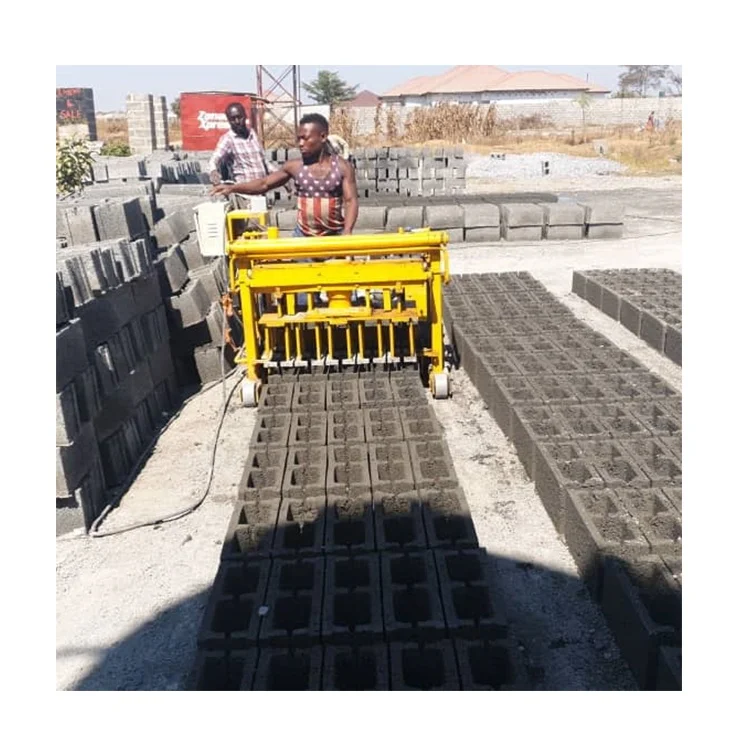
 Mobile block machine