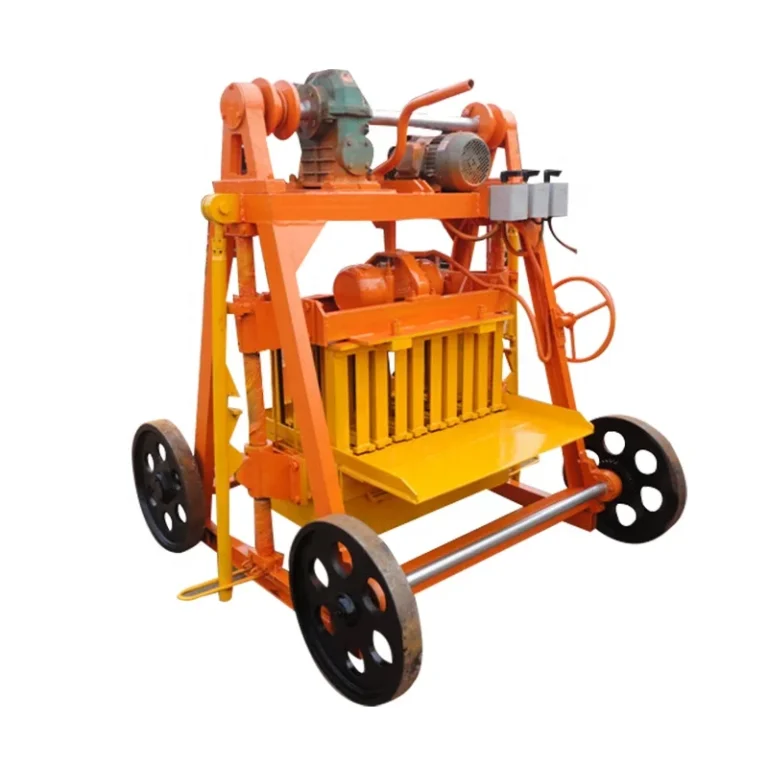
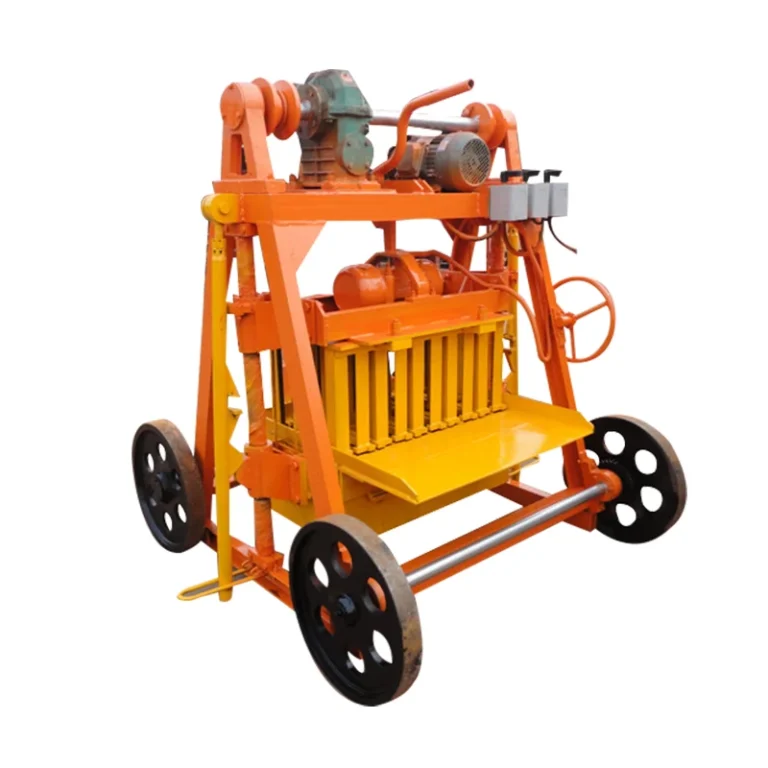
Matched Configuration — every QMJ2-45 unit ships with its capacity calculation stated per hollow brick format and mould count, so the daily output figure you plan against reflects the block size you will actually produce.
Technical Specifications
| Parameter |
Value |
| Model |
QMJ2-45 |
| Product Type |
Mobile Concrete Block Making Machine |
| Machine Type |
Manual mobile egg-laying block machine |
| Mould Format |
Hollow brick, multiple sizes via mould change |
| Cycle Time |
25-30s (basis not stated in source — confirm block format and material) |
| Output Capacity |
160 pcs/h based on 400×200×200mm hollow brick, 2 pcs/mould |
| Output Capacity |
240 pcs/h based on 400×150×200mm hollow brick, 3 pcs/mould |
| Output Capacity |
320 pcs/h based on 400×100×200mm hollow brick, 4 pcs/mould |
| Daily Output (8hr) |
1,280 pcs based on 400×200×200mm hollow brick |
| Daily Output (8hr) |
2,560 pcs based on 400×100×200mm hollow brick |
| Pallet Requirement |
None — egg-laying design, blocks cured directly on ground |
| Labor Requirement |
1 to 3 workers |
| Mobility |
Free-moving on-site, small footprint |
| Automation Level |
Manual |
| Mould Change |
Supported, multiple hollow brick formats |
| Rated Power |
Not stated in source |
| Voltage & Frequency |
Not stated in source |
| Control System |
Not stated in source |
| Overall Dimensions |
Not stated in source |
| Net Weight |
Not stated in source |
| Vibration Force |
Not stated in source |
| Hydraulic Pressure |
Not stated in source |
| Certification |
Not stated in source |
Application Suitability
| Application |
Material or Output |
| Small-scale on-site hollow block production |
Crushed stone, river sand, cement mix without a fixed plant |
| Contractor on-site production at housing projects |
Hollow bricks in multiple wall thickness formats |
| First block plant with limited capital |
Low-volume hollow block startup using local aggregate |
| Remote or off-grid building projects |
Hollow brick supply where transporting finished blocks is impractical |
What "320 Pieces per Hour" Actually Means on a mobile block making machine for sale
Output capacity only matters when you know which block format it was measured against.
A catalogue figure of 320 pieces per hour sounds solid until you realize it assumes the smallest hollow brick size — 400×100×200mm at four pieces per mould. Switch to the 400×200×200mm block that most housing projects actually specify and the same machine delivers 160 pieces per hour. I have watched contractors order a mobile block making machine for sale based on the headline number, only to find their real daily output halved on the first week because their market demands the larger format. That mismatch is not a machine defect — it is a quoting problem. The QMJ2-45 capacity figures above are each tied to a specific brick dimension and mould cavity count, so you can plan your site schedule against the format you will actually sell [NEED_CITE: block format demand by regional construction market].

Where the QMJ2-45 Sits in the Mobile Range
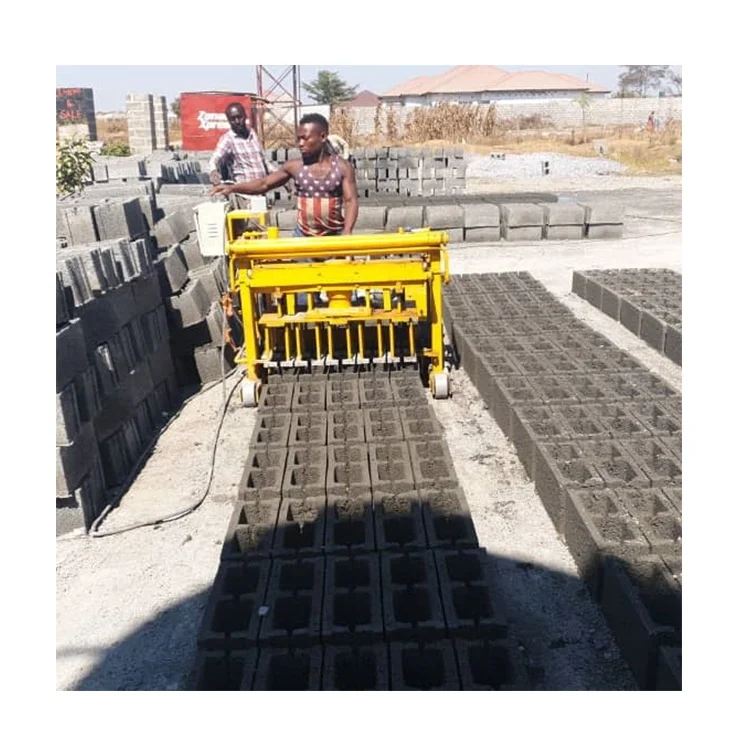
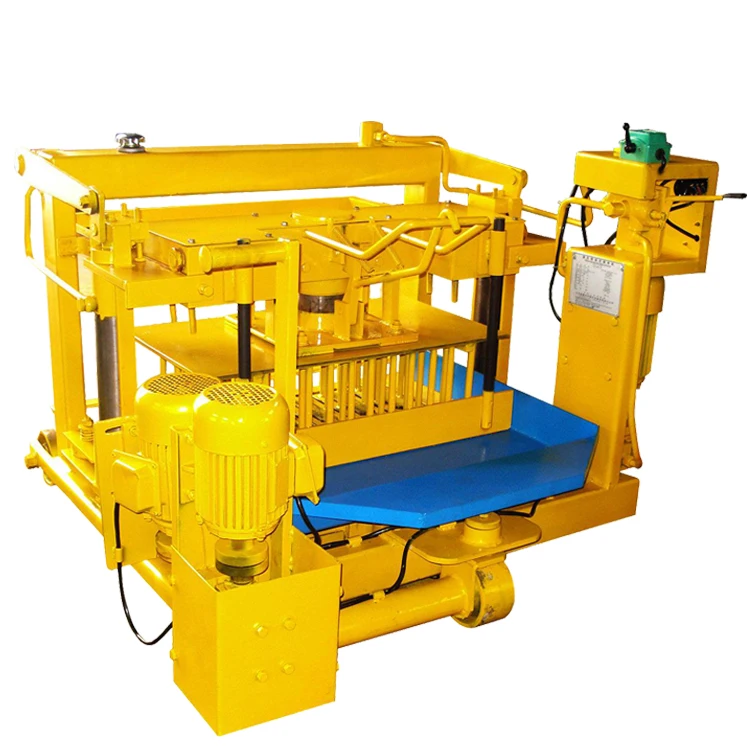
This machine occupies the entry tier of the mobile block machine lineup. It is a manual egg-laying unit, meaning it moves forward on its own wheels and lays each block directly onto the ground surface — no pallets, no pallet return system, no curing rack logistics. For a contractor who needs hollow bricks on a remote housing site and has a flat, compacted ground area available, this eliminates the two biggest cost items that a stationary plant demands: pallet inventory and a covered curing yard. When your project ends, the machine rolls onto a trailer and moves to the next site.
Pallet-Free Operation and What It Demands From Your Site
Laying blocks directly on the ground removes pallet cost entirely, but it shifts the quality burden to your site preparation. The ground surface must be level and compacted — soft soil or uneven gravel will tilt freshly pressed hollow bricks before the cement sets, causing wall-thickness variation. Curing happens in place, so you need enough flat area to leave each day’s output undisturbed for the initial set period before moving stock. On tight urban lots where ground space is limited, this constraint can cap daily output regardless of machine speed [NEED_CITE: on-site block curing space requirements for egg-laying machines]. A buyer who cannot guarantee a prepared ground surface should look at pallet-based semi-automatic tiers instead.
Reading the Cycle Time and Output Figures
The 25-to-30-second cycle time listed for the QMJ2-45 governs how fast one mould completes a press, but the throughput that matters to your project schedule depends on the format loaded. At four cavities per mould the 400×100×200mm hollow brick yields 320 pieces per hour, while the two-cavity 400×200×200mm mould cuts that to 160 pieces per hour. Daily output across an eight-hour shift ranges from 1,280 pieces for the largest format to 2,560 pieces for the smallest. These figures assume continuous operation with no downtime for mix preparation, mould changes, or ground clearing — realities that any site manager should factor into shift planning. Rated power, voltage, and vibration force are not published in the source documentation and must be confirmed before matching this machine to your site electrical supply and mix design.
The Hidden Cost of Ordering on Headline Capacity
When a buyer selects a mobile block making machine for sale based on the highest output number in a catalogue, the format behind that number is almost always the smallest, lightest brick the machine can press. On site, the contractor’s market typically demands 200mm wall-thickness hollow blocks for structural work — the format that yields the lowest hourly count. The machine is not underperforming; the expectation was simply set against the wrong row in the table. This leads to rushed shifts, overtime labor, and pressure to cut curing time, which then causes cracking and rejected blocks [NEED_CITE: common causes of hollow block rejection in on-site production]. Asking for the capacity calculation per format before placing an order prevents this entire chain of problems.
Why Source This Machine Through a Single-Focus Block Machinery Supplier
Block machinery is the only product line here — the QMJ2-45 is specified alongside its moulds, pallet requirements (none, in this case), and supporting handling as one matched set, not assembled from separate catalogue pages. Configuration is set against your actual local aggregate and target block format rather than a default setting. Mould design covers the hollow brick sizes your market sells, and custom mould drawings are available if your project specifies a non-standard dimension. The automation level is selectable across the range, so starting with this manual tier does not close the door on upgrading to a semi-automatic line later. Installation support includes on-site commissioning and operator training so the crew understands mould change procedure and daily maintenance from day one.
Documentation & Verification
- Capacity calculation sheet stating output per hollow brick format and mould cavity count
- Mould drawing and format list for every hollow brick size the QMJ2-45 can produce
- Machine specification document with power, dimensions, and weight for logistics
- Operation and maintenance manual covering mould change and daily servicing
- Packing photographs before container loading for condition verification
Installation, Commissioning & Support
- Ground surface must be level and compacted to accept blocks laid directly by the QMJ2-45
- Site electrical supply must match the machine’s voltage and frequency — confirm before dispatch
- Machine arrives in a dismantled state suitable for container loading and on-site reassembly
- Commissioning includes first-run parameter setting and hollow brick format verification
- Operator training covers mould change procedure and manual press operation
- Wear parts list and mould inventory supplied for first replacement cycle planning
Before You Request a Quote
Tell us which hollow brick format your local market sells most — 400×200×200mm, 400×150×200mm, 400×100×200mm, or a custom dimension — and what daily output your project schedule demands. Share your site’s available ground area for block curing and the local aggregate type you plan to use in the mix. If your site has an electrical supply, provide the voltage and frequency so the machine can be configured before it ships.
Frequently Asked Questions
Q: How is the QMJ2-45 output capacity calculated and which block format does each figure assume?
A: Each capacity figure is tied to a specific hollow brick size and mould cavity count. The 320 pieces per hour figure assumes 400×100×200mm bricks at four per mould, while 160 pieces per hour assumes 400×200×200mm at two per mould. A capacity calculation document is provided with every quotation so the output you plan against matches your target format.
Q: What hollow brick formats can the QMJ2-45 produce and are custom moulds available?
A: Standard moulds cover 400×200×200mm, 400×150×200mm, and 400×100×200mm hollow bricks. Custom mould design to buyer drawings is available for non-standard dimensions. A full mould drawing and format list is supplied before production so every size your market requires is confirmed.
Q: When should a buyer consider stepping up from the QMJ2-45 to a semi-automatic tier?
A: When your daily volume requirement exceeds what a single manual shift can deliver, or when you need consistent block density across high volumes without relying on operator technique. Semi-automatic tiers add pallet handling, fixed pressing stations, and batching control — the right move when a project commits to sustained output over months rather than short on-site runs.
Q: What site conditions does the QMJ2-45 require for ground surface and curing area?
A: The egg-laying design needs a level, compacted ground surface where blocks can be laid directly and left undisturbed during the initial cure. Available flat area limits how many blocks you can produce per day regardless of machine cycle speed, so measure your usable ground space before setting output targets.
Q: What is the typical lead time from order to dispatch for the QMJ2-45?
A: Lead time depends on mould configuration and stock availability at the time of order. Standard mould formats typically ship within a typical multi-week lead window. Confirming your required brick formats and site voltage during the inquiry stage shortens the pre-production configuration period.

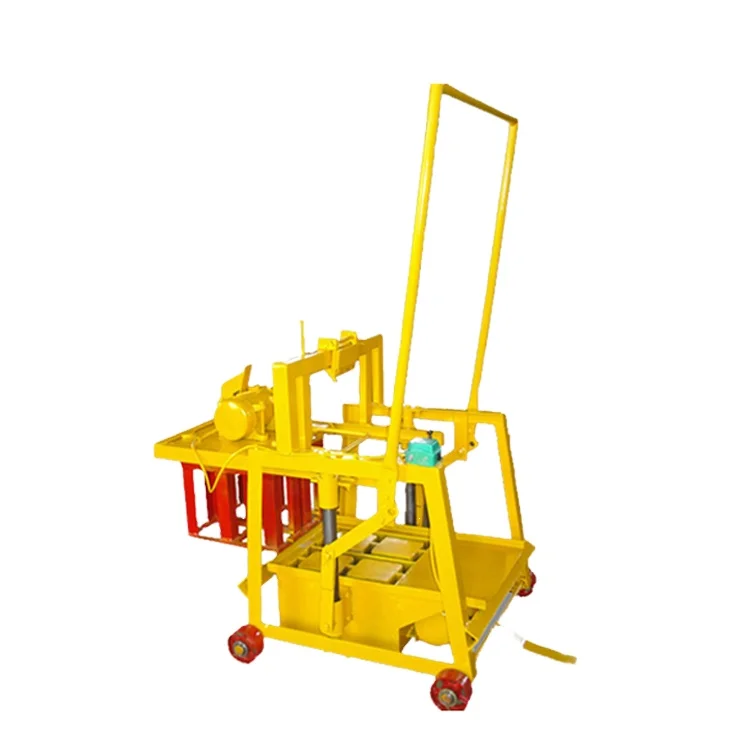
 Mobile block machine