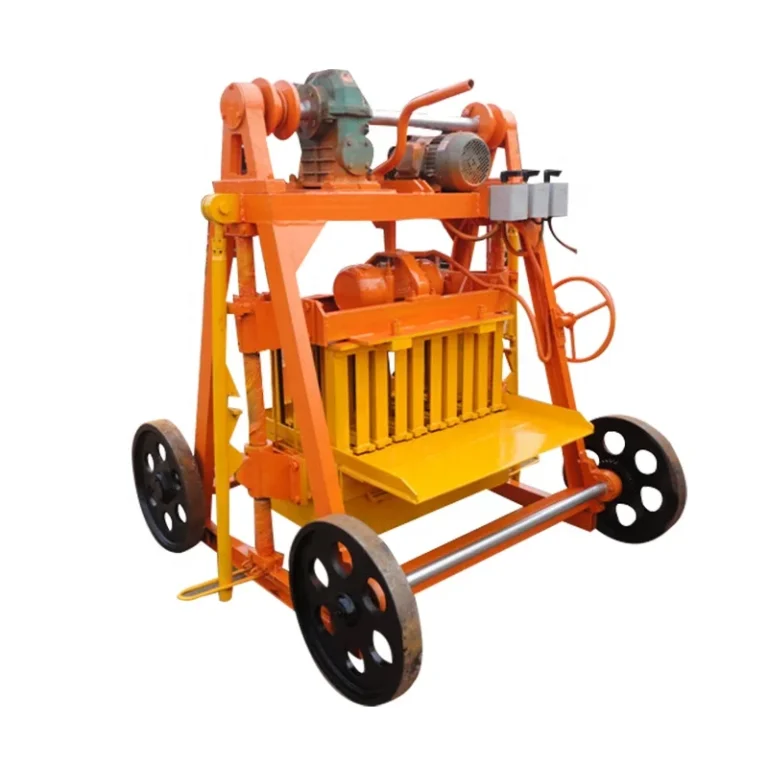
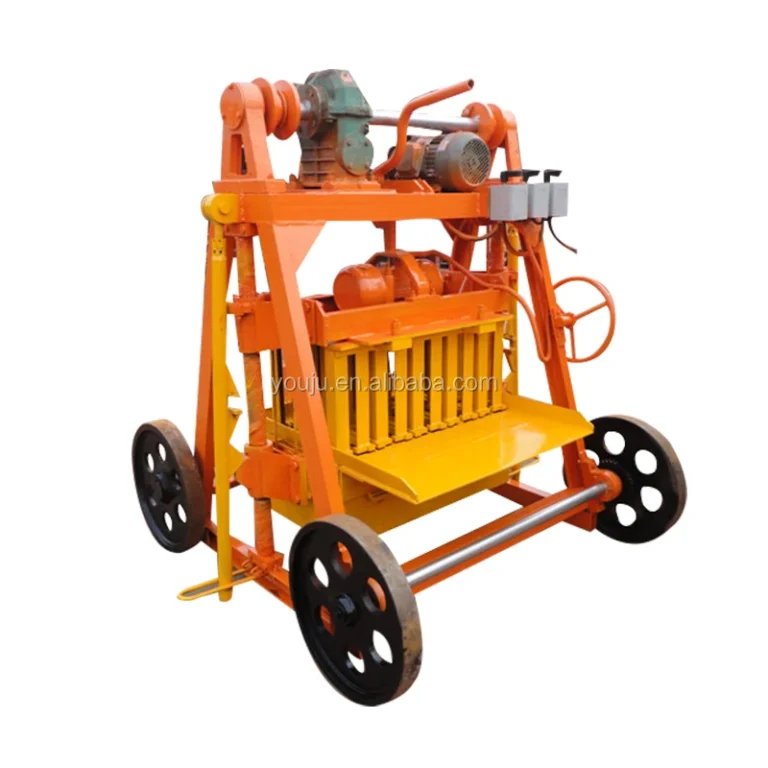
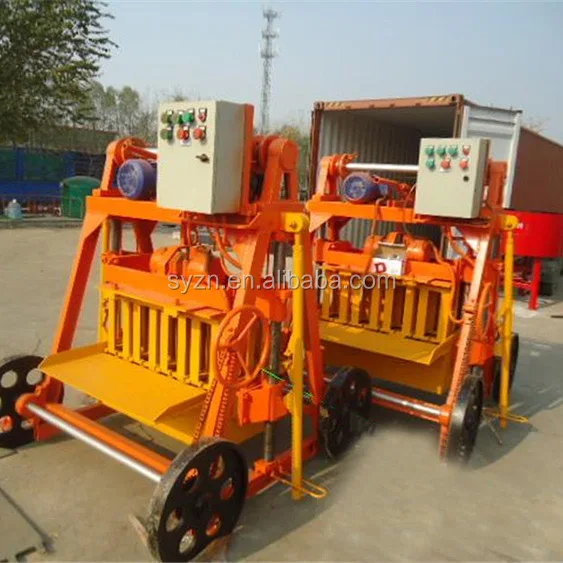
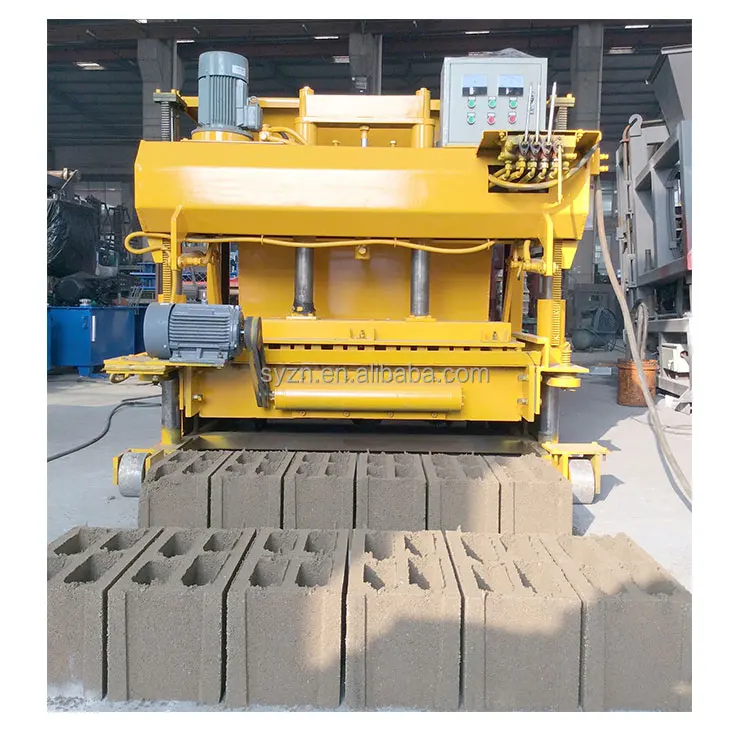
Block Machinery as a Single Focus — The QMY4-30 mobile block machine is specified as a matched system with its mould and power requirements rather than assembled from separate suppliers.
Technical Specifications
| Parameter |
Value |
| Model |
QMY4-30 |
| Product Type |
Mobile Concrete Block Making Machine |
| Rated Power |
5 kW |
| Overall Dimensions (L×W×H) |
1200 × 1200 × 1100 mm |
| Net Weight |
950 kg |
| Cycle Time |
30 seconds |
| Output (400×200×200mm hollow block) |
480 pcs/hour, 3840 pcs/8 hours |
| Output (400×150×200mm hollow block) |
600 pcs/hour, 4800 pcs/8 hours |
| Output (400×100×200mm hollow block) |
840 pcs/hour, 6720 pcs/8 hours |
| Mould Format |
Hollow block, solid brick (changeable) |
| Raw Materials |
Cement, sand, crushed stones, slag |
| Automation Level |
Manual / mobile egg-laying type |
| Assembly State |
Fully assembled, mobile unit |
| Voltage & Frequency |
Configurable to buyer site requirement (basis to be confirmed) |
| Pallet Size |
Not applicable (lays directly on ground) |
| Warranty |
One year guarantee |
Application Suitability
| Application |
Material or Output |
| On-site production for housing projects |
Hollow blocks from cement, sand, and crushed stone |
| Small-scale contractor block making |
Solid bricks and hollow blocks without a fixed plant |
| First block business startup |
Low-investment mobile production on prepared ground |
| Development project local manufacturing |
Multiple block formats from a single mobile unit |
Why "Cycles Per Hour" Misses the Real Output Picture
Capacity only matters when tied to the exact block format you intend to produce.
A mobile block machine for sale often gets advertised with a single headline number—cycles per hour—without specifying which block size that figure assumes. When a buyer receives the machine and runs a different format, the actual daily volume can fall far short of what was expected. The cycle time stretches, the mould fills differently, and the output per shift tells a different story than the brochure suggested [NEED_CITE: block machine output claims and format assumptions in machinery listings].
From my time on the assembly floor and later in technical sales, I have seen buyers commit to a mobile unit based on a number that only applied to the smallest block in the catalogue. Once they switched to the format their market actually demanded, production dropped noticeably. That is why the QMY4-30 output figures on this page are each tied to a specific block dimension.

Positioning the QMY4-30 Within the Full Machine Range
Before narrowing down a purchase, a buyer needs to understand where a machine sits across the complete lineup. The QMY4-30 occupies the entry-level mobile tier—designed for buyers who do not yet have a fixed production plant or who need to produce directly at a construction site. It delivers block output without requiring a concrete floor, pallet system, or curing racks, keeping the initial investment contained.
Compared to semi-automatic stationary models further up the range, this mobile block machine for sale trades automation for portability. There is no automatic pallet feeding or stacking; the operator moves the unit manually across the production area. For buyers surveying options for a first or replacement machine, this tier offers a practical starting point with the option to move into higher-capacity stationary equipment later.
How Site Conditions Shape the Output You Actually Get
The rated cycle time of 30 seconds assumes a mix design that releases cleanly from the mould and a ground surface level enough for the machine to travel smoothly. In practice, local aggregate characteristics—particularly moisture content in sand—can extend that cycle as the operator adjusts feed consistency. When the raw material does not match the configuration the machine was set up for, each cycle takes longer and block quality becomes inconsistent [NEED_CITE: effect of local aggregate moisture on concrete block cycle times].
This is why our process requires a raw material sample and mix proportion from the buyer before finalizing the configuration. A week spent on trial block validation prevents the situation where a machine arrives on site and cannot run at its stated pace with the materials available locally.
Reading the Numbers That Matter
The 5 kW rated power determines what electrical supply the site must provide; this is modest enough for standard construction site generators but must still be confirmed against local voltage and frequency before the machine ships. The 1200 × 1200 mm footprint defines the minimum working corridor the machine needs to move through—narrower than any stationary line, which is the whole point of mobile egg-laying production.
Hydraulic pressure and vibration force work together to determine block density and strength. On this model, the pressure is applied within a compact frame, so the force must be matched carefully to the mix design. An overly wet mix will produce weak blocks regardless of pressure; an overly dry mix may not compact fully within the 30-second cycle. The mould changeability between hollow block and solid brick means the same unit can serve different product lines, but each change requires the operator to physically swap the mould and adjust settings.
When the Wrong Configuration Reaches Your Site
The most common consequence of skipping pre-shipment configuration checks on a mobile block machine for sale is arriving with a unit set up for a material the buyer cannot source locally. The machine runs, but cycle times stretch, blocks crack during curing, and daily output never reaches the quoted figure. Buyers end up paying to reformulate their mix or, worse, abandoning the machine after a few frustrating weeks [NEED_CITE: common causes of block machine underperformance after installation].
Voltage and frequency mismatches create a different problem—the machine cannot be powered at all until a transformer or converter is sourced. This delays commissioning by weeks and sometimes damages the motor if attempted without correction. These are not rare edge cases; they account for a meaningful share of post-delivery support requests across the industry.
Why Buyers Source This Machine Through Our Range
Every QMY4-30 leaves with a machine specification sheet that confirms hydraulic pressure, vibration force, and electrical ratings—no assumed defaults. The capacity calculation states the output per block format, not a single headline number that only applies to one size.
The mould drawing and format list covers every block size the buyer intends to produce, with the option to add custom mould designs later. Voltage and control language are confirmed before production begins, not discovered after the crate is opened. The machine, mould, and power system are specified as one matched configuration against the buyer’s actual local aggregate and target format.
Documentation & Verification
- Capacity calculation sheet stating output per block format with cycle time assumptions
- Machine specification sheet confirming hydraulic pressure, vibration force, and electrical ratings
- Mould drawing and format list for every block size included in the order
- Voltage, frequency, and control language confirmation record before dispatch
- Factory test record on buyer’s specified block format and mix proportion
Installation, Commissioning & Support
- Requires level, compacted ground surface across the full production corridor for smooth travel
- 5 kW power supply must match confirmed voltage and frequency with a dedicated circuit
- Arrives fully assembled as a single mobile unit—no on-site structural assembly required
- First-run commissioning includes cycle time verification on the buyer’s confirmed block format
- Operator training covers mould change procedure, mix consistency adjustment, and daily maintenance
- Wear parts list and mould catalogue provided for first replacement planning
What to Include With Your Inquiry
To match the right configuration from the mobile block machine range, share the block formats your market demands, your target daily output, and the local raw materials you plan to use. Include a sample or lab report of your aggregate if available. Specify your site voltage, frequency, and any existing power infrastructure so the electrical system is built to match before the machine enters production.
Frequently Asked Questions
Q: How is the output capacity of the QMY4-30 verified against my block format?
A: Each output figure is calculated for a specific block dimension—400×200×200mm, 400×150×200mm, or 400×100×200mm—based on a 30-second cycle. We confirm which format matches your market before quoting, so the daily output figure you receive reflects the block you will actually produce, not a best-case scenario.
Q: Where does the QMY4-30 fit compared to semi-automatic and automatic models?
A: It sits at the entry-level mobile tier of the full range. Unlike stationary semi-automatic machines, it requires no fixed plant, pallets, or curing racks. Buyers typically start here when site conditions or investment level do not yet justify a stationary line, with the option to move up the range later.
Q: What voltage and frequency options are available for the QMY4-30?
A: The electrical system is configured to match your site supply before production. You confirm your local voltage and frequency during the inquiry stage, and the motor and control wiring are built accordingly. This avoids the need for transformers or converters after arrival.
Q: Can I add different mould formats to the QMY4-30 after purchase?
A: Yes. The machine accepts interchangeable moulds for hollow blocks and solid bricks. Custom mould designs can be produced to buyer drawings. We supply the mould drawing and format list with every order so you know exactly which sizes are supported.
Q: What installation support comes with a mobile egg-laying machine?
A: The QMY4-30 ships fully assembled. Commissioning support includes verifying cycle time on your block format and training operators on mould changes and mix adjustment. A wear parts list is provided so you can plan your first replacement order before production begins.

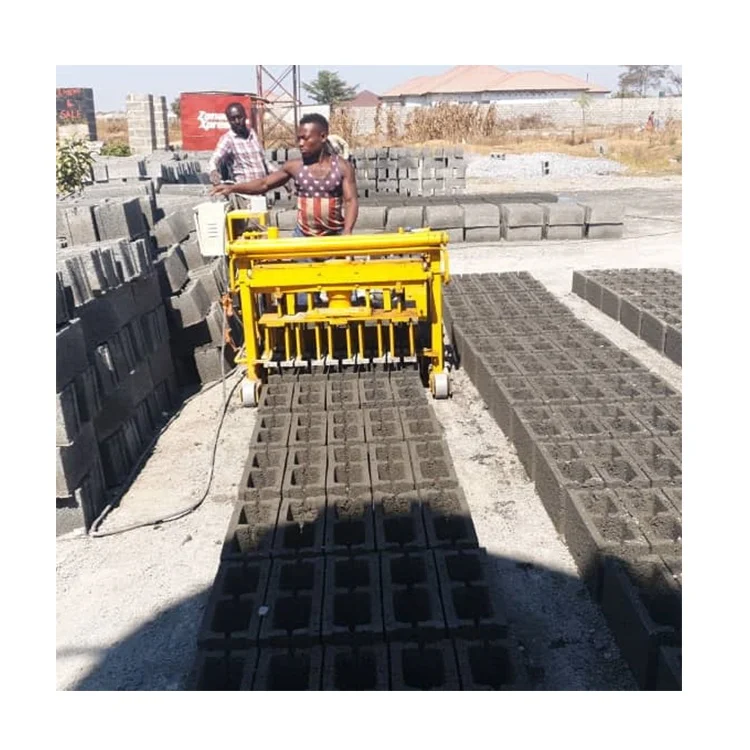
 Mobile block machine