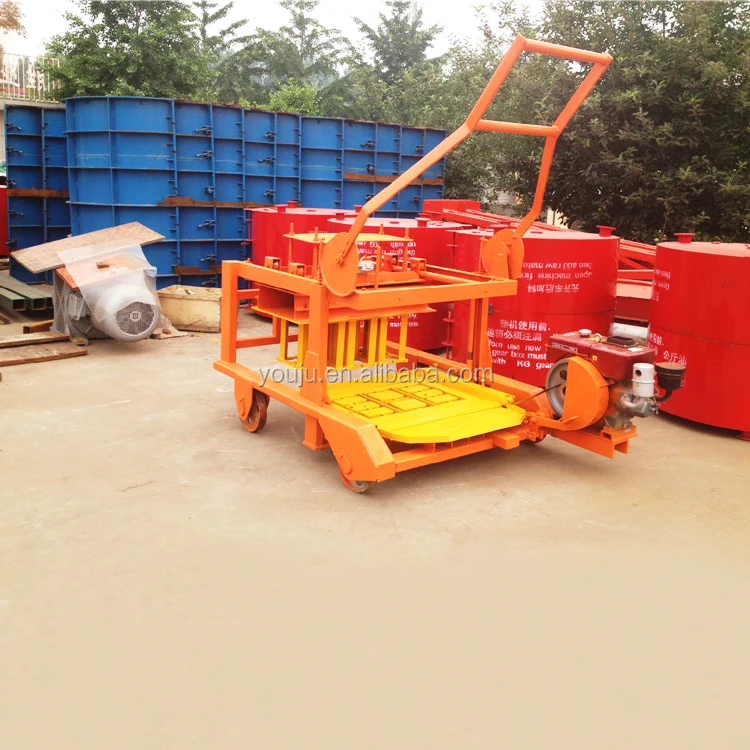
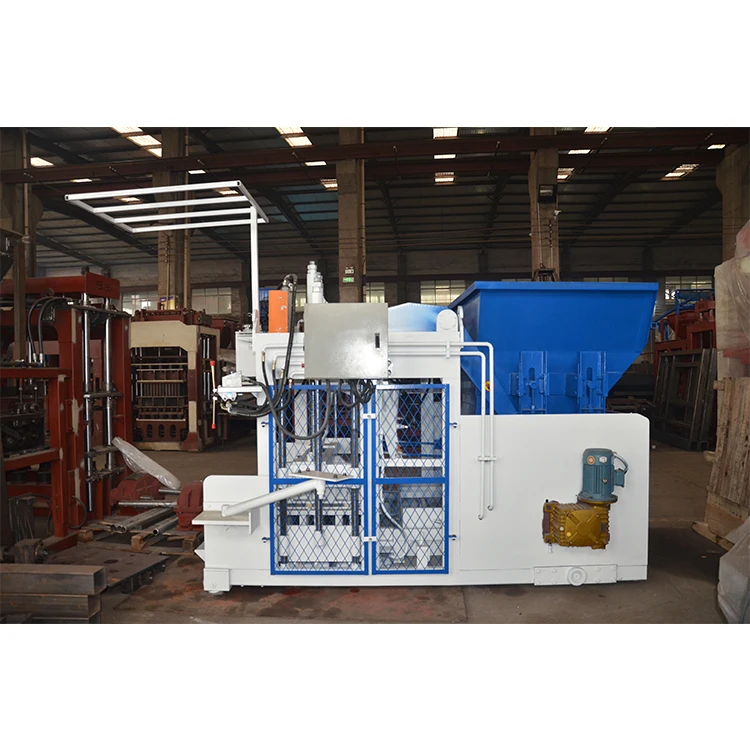
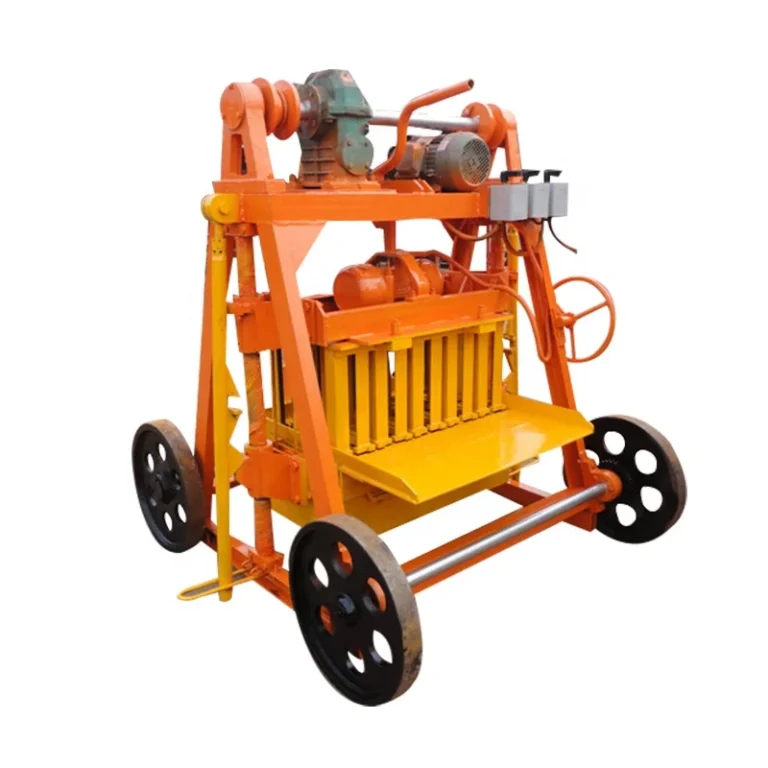
Configuration Matched to Your Mix — we set vibration force and cycle time against your actual aggregate and block format, not a default catalogue table.
Technical Specifications
| Parameter |
Value |
| Model |
QMY4-30 |
| Product Type |
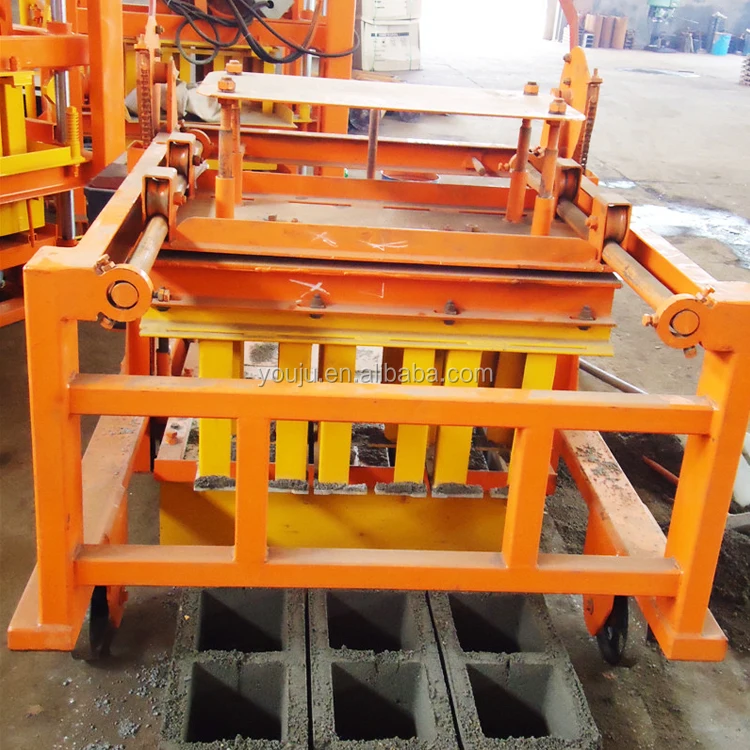
Mobile Block Making Machine |
| Overall Dimensions (L×W×H) |
1300 × 1500 × 1000 mm |
| Net Weight |
950 – 1000 kg |
| Vibration Method |
Mold Vibration |
| Exciting Force |
28.6 KN |
| Excitation Frequency |
4500 r/min |
| Total Installed Power |
5.95 kW |
| Output Capacity |
Rated at 3000 pcs/day (basis not stated in source — confirm block format, material, and thickness before ordering) |
| Assembly State |
Egg-laying / Mobile (no pallet required) |
| Control System |
Manual operation |
| Voltage & Frequency |
380V ±10% (verify destination standard before shipment) |
| Compatible Mould Formats |
Hollow block, solid brick, curb stone, paving block |
| Pallet Requirement |
None — blocks cured directly on ground |
Application Suitability
| Application |
Material or Output |
| Remote housing project block supply |
Hollow concrete blocks from river sand, gravel, and cement |
| Small contractor on-site production |
Solid bricks from local crushed stone and cement mix |
| Entry-level paver manufacturing |
Interlocking paving blocks using fly ash or cinder blends |
| Kerb and curb stone casting |
Dense concrete mixes with coarse aggregate for road edging |
| First-time entrepreneur block yard |
Low-capital startup using industrial waste residue and cement |
What "3,000 Pieces a Day" Actually Means for a Mobile Block Machine
A single daily output figure is useless unless it names the exact block format, wall thickness, and mix design used to calculate it.
I once stood on a site in the Gulf where a contractor had purchased a mobile unit based purely on a headline capacity number. The quotation said nothing about which block size the figure assumed. When they ran 400×200×200 mm hollow blocks — the format their market actually demanded — real output fell well below the quoted daily total. The project schedule slipped, and the site manager had to source supplementary blocks from a commercial plant at premium cost [NEED_CITE: block format assumptions in capacity quotations]. With the QMY4-30, any Mobile Block Machine manufacturer quoting a daily figure must state the format, mix, and curing assumptions behind it, so the buyer can cross-check against their real product mix.

Where the QMY4-30 Sits in the Full Machine Range
The QMY4-30 occupies the entry tier of the Shiyue mobile block machine range. It is designed for buyers who need to produce blocks directly on the ground at a project site without investing in pallets, pallet-handling equipment, or a fixed curing infrastructure. If your operation involves moving between job sites or starting a block yard with minimal capital, this is the tier that keeps initial investment low while still covering multiple block formats through mould changes.
When to Stay Mobile and When to Step Up
A mobile egg-laying machine makes sense when your production volume stays within small-to-medium daily requirements and your site has sufficient flat, cured ground for blocks to set in place. Once daily demand grows and you need consistent stacking, automated pallet feeding, or controlled curing racks, the logical next step is a semi-automatic stationary line with pallet circulation. The QMY4-30 gives you room to validate your market before committing to that larger footprint [NEED_CITE: typical upgrade path from mobile to semi-automatic block production].
Reading the Specs That Matter on Site
The 28.6 KN exciting force delivered through mold vibration directly determines how densely the concrete mix is compacted into each block. Higher compaction yields stronger blocks, but the force must be matched to the aggregate size and cement content in your specific mix — desert fine sand behaves very differently from crushed gravel, and vibration parameters need adjustment accordingly. The 4500 r/min excitation frequency works in tandem with that force; together they set the compaction rhythm. The 5.95 kW total power draw is modest enough for a standard three-phase site supply, but you must confirm your local voltage and frequency match the 380V ±10% rating before the machine ships. Manual operation keeps the control system simple, meaning fewer electrical components to troubleshoot in remote locations where skilled technicians are scarce.
The Cost of Skipping the Aggregate Conversation
I flew to a Middle East project site after a buyer reported that blocks from a mobile unit were failing strength tests. The machine was configured for standard graded aggregate, but the local supply was predominantly desert fine sand. Nobody had discussed the raw material during the ordering process. The vibration parameters were wrong for that sand profile, and the blocks crumbled under site acceptance inspection. Two weeks of on-site parameter adjustment eventually brought the output into compliance, but the delay cost the contractor far more than a material conversation up front would have [NEED_CITE: impact of local aggregate on block compressive strength]. Always confirm your sand source, stone grading, and cement type before any mobile machine leaves the factory.
Why Source This Mobile Block Machine from Shiyue
Block machinery is our single focus — the QMY4-30 machine, its moulds, and any supporting ground-curing guidance are specified as one matched package rather than assembled from unrelated suppliers. We configure vibration and cycle settings against your declared mix design and local aggregate, not a generic default. Mould design covers the formats your market actually sells, and custom mould drawings are available when standard formats do not match your specification. The automation level is selectable across our range, so you can start with manual mobile production today and move to a semi-automatic line later without changing suppliers. Installation guidance and operator training are included so your crew understands mould change procedure and daily maintenance from the first shift.
Documentation & Verification
- Machine specification sheet listing confirmed block format basis for daily output
- Mould drawing and format list showing every compatible block profile
- Voltage and frequency confirmation document matched to your destination grid
- Factory test record run on a mix profile as close to yours as available
- Operation and maintenance manual with illustrated mould change steps
- CE declaration documentation where applicable to your import market
Installation, Commissioning & Support
- Requires a flat, compacted ground surface at site for egg-laying block production
- Confirm three-phase 380V ±10% supply with dedicated circuit before unit arrival
- Machine ships as a single compact assembly under 1000 kg for straightforward offloading
- First-run commissioning includes vibration parameter adjustment to your local aggregate
- Operator training covers manual mould change, daily lubrication points, and safety checks
- Wear parts list and mould inventory provided with recommended replacement intervals
What We Need to Quote Accurately
Send us the block formats your market sells, including dimensions and wall thickness, along with your target daily output per format. Tell us what sand, stone, and cement you can source locally, and share any existing site conditions such as ground type and available curing space. Confirm your local voltage, frequency, and any language preference for documentation so that commissioning proceeds without delay on arrival.
Frequently Asked Questions
Q: How is daily output calculated, and which block format does the 3,000 pcs/day figure assume?
A: That headline figure requires confirmation of the specific block format, mix design, and curing assumptions used to derive it. A 400×200×200 mm hollow block yields far fewer pieces per cycle than a small paving brick. We provide a capacity breakdown per format so you can plan against the product you actually sell, not a generic number.
Q: What block formats can the QMY4-30 produce, and how long does a mould change take?
A: The machine covers hollow block, solid brick, curb stone, and paving block through mould swaps. On a manual mobile unit, a trained operator should complete a mould change within minutes. We supply the mould change procedure and required tools so format flexibility is genuine, not theoretical.
Q: What voltage and frequency configurations are available for my destination market?
A: The standard rating is 380V ±10%, but destination grid standards vary widely across export markets. We confirm voltage, frequency, and plug configuration before production begins so the machine connects directly to your supply on arrival without transformer delays or rewiring [NEED_CITE: voltage and frequency standards by export market].
Q: Where does the QMY4-30 sit in the Shiyue range — when should I step up to a semi-automatic line?
A: The QMY4-30 is the entry-tier mobile option for on-site, pallet-free production. When your daily volume grows beyond what ground-curing logistics can support, or you need automated stacking and pallet circulation, stepping to a semi-automatic stationary line becomes the practical move. We help you identify that crossover point.
Q: What raw materials has this machine been tested with, and can it handle my local aggregate?
A: The QMY4-30 is compatible with concrete, fly ash, cinder, coal gangue, river sand, gravel, and cement. However, vibration parameters must be matched to your specific aggregate grading and sand type. We ask for your material details before configuration so the machine arrives set for your actual supply, not a laboratory default.

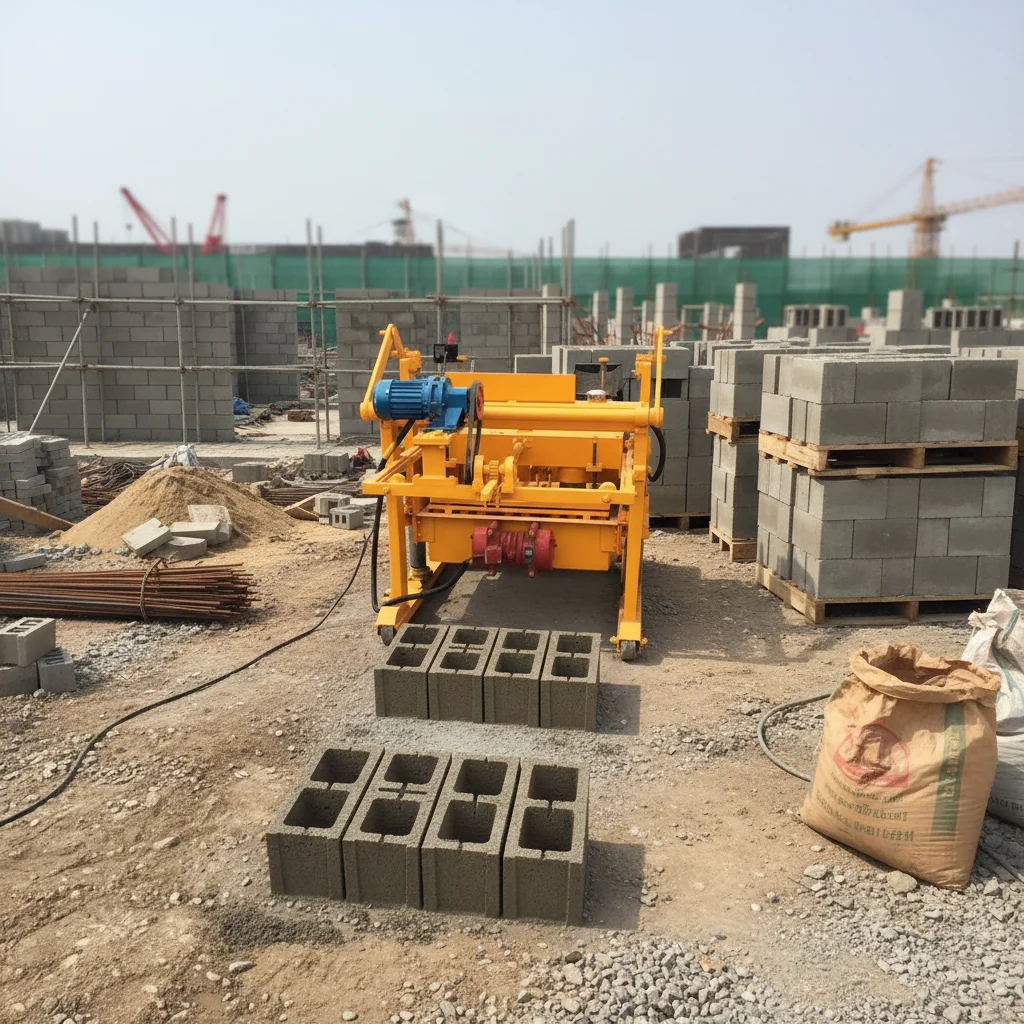
 Mobile block machine