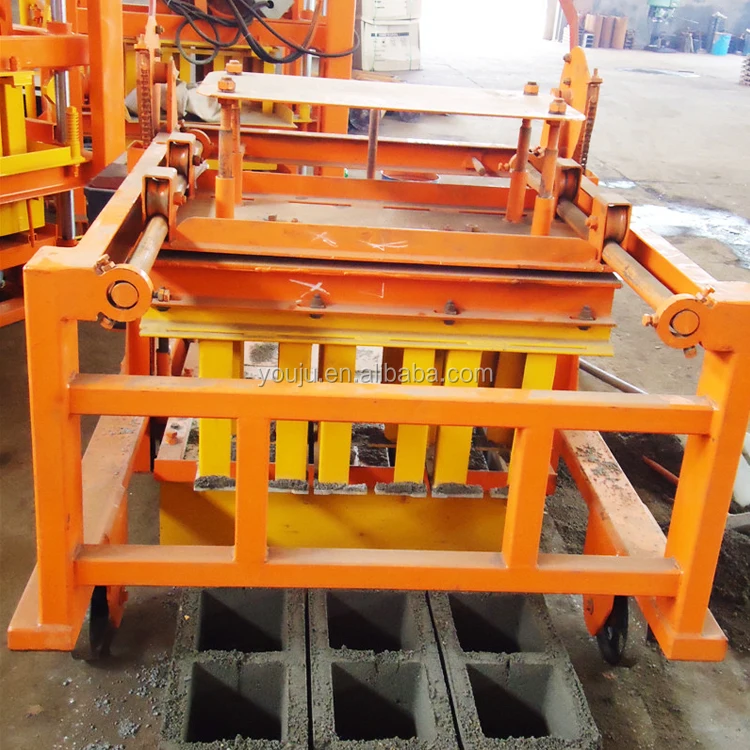
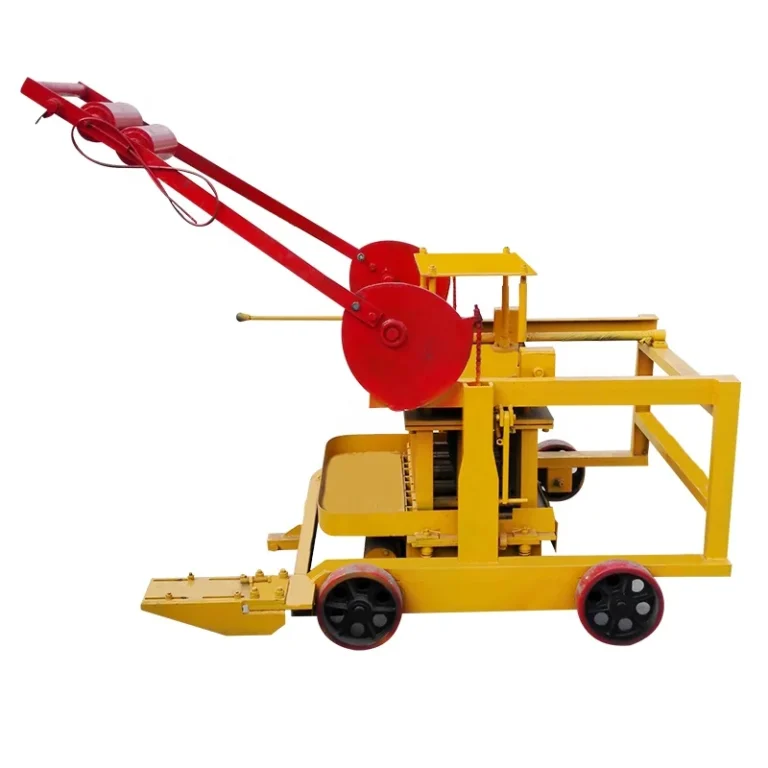
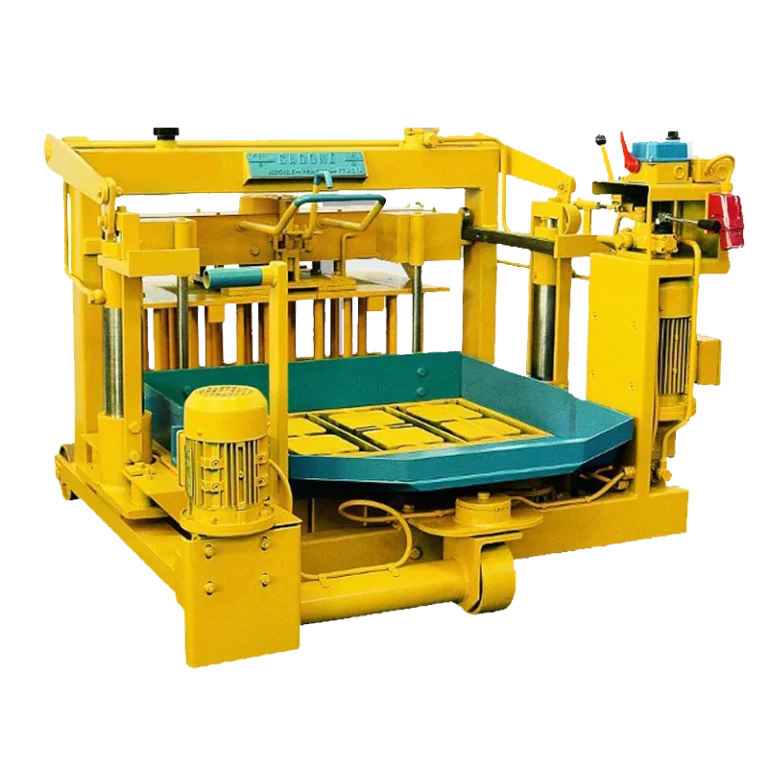
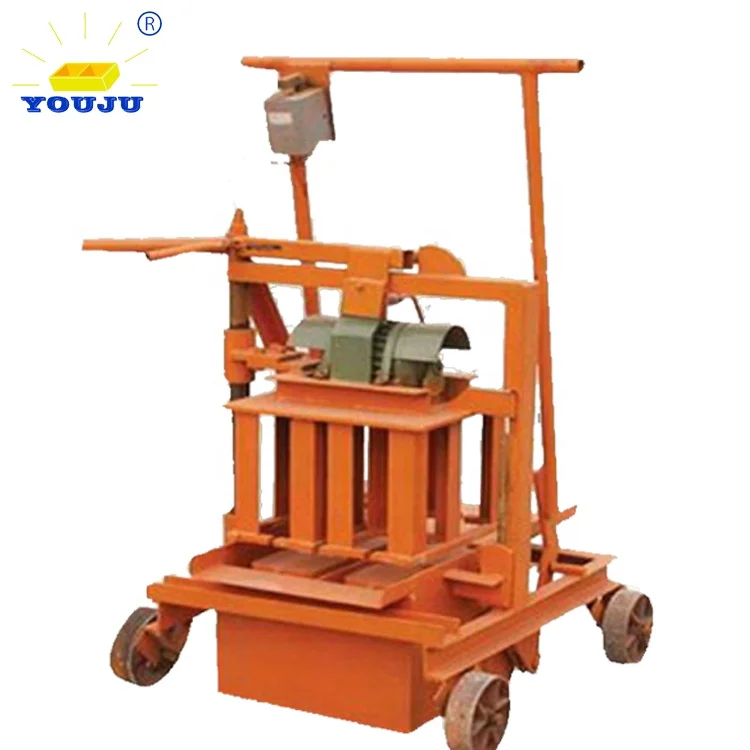
System-Matched Configuration — We configure the QMY18-15 mobile egglaying block machine against your actual mix design, local aggregate and target format rather than shipping a catalogue default.
Technical Specifications
| Parameter |
Value |
| Model |
QMY18-15 |
| Product Type |
Mobile Hydraulic Egglaying Block Making Machine |
| Machine Type |
Mobile / egglaying (no pallet required) |
| Hydraulic System |
Yes (upgraded from QMY12-15 generation) |
| Pallet Requirement |
None |
| Stacking Method |
Egglaying (blocks laid directly on ground) |
| Automation Level |
Manual operation with hydraulic assist |
| Output Capacity |
(basis to be confirmed with target block format and thickness) |
| Cycle Time |
(basis to be confirmed) |
| Vibration Force |
(basis to be confirmed) |
| Hydraulic Pressure |
(basis to be confirmed) |
| Mould Format |
(basis to be confirmed — depends on buyer’s local market block types) |
| Voltage & Frequency |
Configurable (to be confirmed with buyer) |
| Control System |
(basis to be confirmed) |
Application Suitability
| Application |
Material or Output |
| On-site block production for building contractors |
Crushed stone, sand, cement and water mixed on the job site |
| First block plant for entrepreneurs |
Local aggregate and cement with minimal fixed infrastructure |
| Housing and development project supply |
Hollow blocks, solid blocks and pavers laid directly on prepared ground |
| Remote or temporary production locations |
Any standard concrete mix where pallet transport and curing racks are impractical |
What "Blocks per Hour" Leaves Out When Sizing a Mobile Egglaying Block Machine
Cycle counts only matter when tied to the exact block format and wall thickness you intend to sell.
I spent a week on a site in the Middle East watching a contractor try to run a mobile machine at a quoted speed, only to find the hollow blocks were cracking during curing because the vibration force was never matched to the high-clay sand they were using locally. The machine ran fine — the output just was not saleable [NEED_CITE: local aggregate clay content and block compressive strength]. A mobile egglaying block machine manufacturer that quotes cycles without naming the assumed format is giving you a number you cannot take to the bank. The QMY18-15 sits at the entry tier of our range, and we calculate its daily output against the specific hollow, solid or paving format your market actually buys.

Where the QMY18-15 Sits in the Full Block Machine Range
Before you narrow down to a single quote, it helps to understand the tiers. The QMY18-15 is a mobile egglaying block machine — it produces directly on the ground without pallets, which strips away the curing-rack and pallet-handling infrastructure a fixed plant requires. This makes it the lowest-investment entry point in the Shiyue range. Buyers who outgrow this tier typically move to a semi-automatic stationary line with pallets, and eventually to a fully automatic line with stacking and cubing. Knowing where you start helps you plan where you go next.
Pallet-Free Production and What It Removes From Your Budget
The egglaying design means blocks are formed and left to cure on a prepared concrete floor. There is no pallet feeding system, no pallet return conveyor and no curing rack to build. For a contractor producing on a job site or an entrepreneur launching a first block venture, this removes a significant slice of the initial capital outlay. The trade-off is that production speed and format flexibility are lower than a stationary press, and you need a flat, level curing area large enough to hold a day’s output. The QMY18-15 compensates with hydraulic pressure that was not present on the earlier QMY12-15, giving the formed blocks better green strength so they hold shape immediately after the mould lifts [NEED_CITE: hydraulic pressure effect on green block strength in egglaying machines].
Reading the Specs That Actually Govern Block Quality
Three parameters decide whether the blocks you produce will pass a compressive strength test. First, hydraulic pressure and vibration force must work together — pressure alone compacts the mix, but vibration is what settles fine particles into voids, and if your local sand is high in clay the vibration frequency needs adjustment. Second, cycle time is not a single number; a 100 mm solid block cycles faster than a 200 mm hollow block because the mould fills and compacts differently. Third, the mould itself determines dimensional tolerance; a poorly machined mould produces blocks with uneven walls that fail load tests even when the mix is correct. On the QMY18-15, the hydraulic system is an upgrade over the previous generation, but the vibration force and cycle time must still be confirmed against the exact block format and mix you plan to run.
The Hidden Cost of Skipping the Mix-Design Conversation
I have watched a brand-new machine sit idle for weeks because the supplier configured it for a washed river sand that the buyer could not source within 200 kilometres of the site. The buyer then spent more on hauling suitable aggregate than the machine itself had cost. When a mobile egglaying block machine manufacturer does not ask for your local material sample before building, you inherit a configuration that was designed for someone else’s quarry [NEED_CITE: aggregate grading and its influence on concrete block mix design]. The result is either weak blocks that get rejected by inspectors or a costly reformulation of your entire supply chain.
Why Source This Tier From Shiyue
Block machinery is our single focus, so the QMY18-15 is specified as part of a matched system — machine, mould and ground preparation requirements are addressed together. We configure against your actual mix design and local aggregate, not a default setting. Mould design covers the formats your market sells, including custom drawings if your region uses a non-standard block dimension. The automation level is selectable, meaning a buyer who starts with the QMY18-15 can later step to a semi-automatic line without scrapping what they have learned about their own production. Factory testing uses your target block format before the machine is crated, so the test record reflects your product, not a generic demonstration block.
Documentation & Verification
- Line layout showing curing area footprint matched to your daily output and block format
- Machine specification sheet with confirmed voltage, frequency and control language
- Mould drawing and format list reflecting the block types your local market demands
- Factory test record produced on your specified mix and block dimensions before dispatch
- Packing photographs showing dismantling state and container loading arrangement
Installation, Commissioning & Support
- Ground must be a level concrete slab large enough to hold one full day of egglaid output
- Power supply confirmed to your local voltage and frequency before the hydraulic motor is wired
- Machine arrives partially dismantled; reassembly on site covers hydraulic lines and mould mounting
- First production run supervised to set vibration duration and hydraulic pressure for your aggregate
- Operator training covers mould change procedure, daily greasing points and hydraulic fluid checks
- Wear parts list identifies mould liner plates and vibration motor bearings for your first reorder
What We Need From You to Size This Machine Correctly
To give you a meaningful capacity figure, we need the exact block formats your market sells — dimensions, wall thickness and whether hollow or solid. Tell us about your local aggregate: source, grading and clay content if known. Share your site voltage and frequency so the hydraulic motor and control panel are built for your grid. If you already have a forklift or a concrete mixer on site, let us know so we can match the machine footprint and feed height to your existing equipment.
Frequently Asked Questions
Q: How is daily output calculated and which block format is assumed?
A: We calculate output by multiplying the cycle time for your specific block format by the number of working hours, then applying a realistic mould-fill and handling allowance. The capacity figure we quote always names the block dimensions and type it is based on, so you can compare it directly against your sales target.
Q: Where does a mobile egglaying machine sit compared to semi-automatic and automatic tiers?
A: It is the lowest-investment entry point. You gain on-site production without pallets or curing racks, but with lower speed and fewer formats than a stationary press. When your volume grows, you can move to a semi-automatic line that adds pallet handling and then to a fully automatic line with stacking.
Q: What voltage, frequency and control language options are available for my market?
A: The hydraulic motor and control panel are built to the voltage and frequency you confirm before production — typically spanning common industrial supplies. Control labels and any PLC display language are set to your preference so operators can read instructions on day one.
Q: What site conditions are needed to run an egglaying machine without pallets?
A: You need a flat, level concrete floor large enough to hold a full day’s output while blocks cure. The surface must be clean and free of standing water. Access for a mixer and raw material stockpile should be within a short distance of the machine’s operating position.

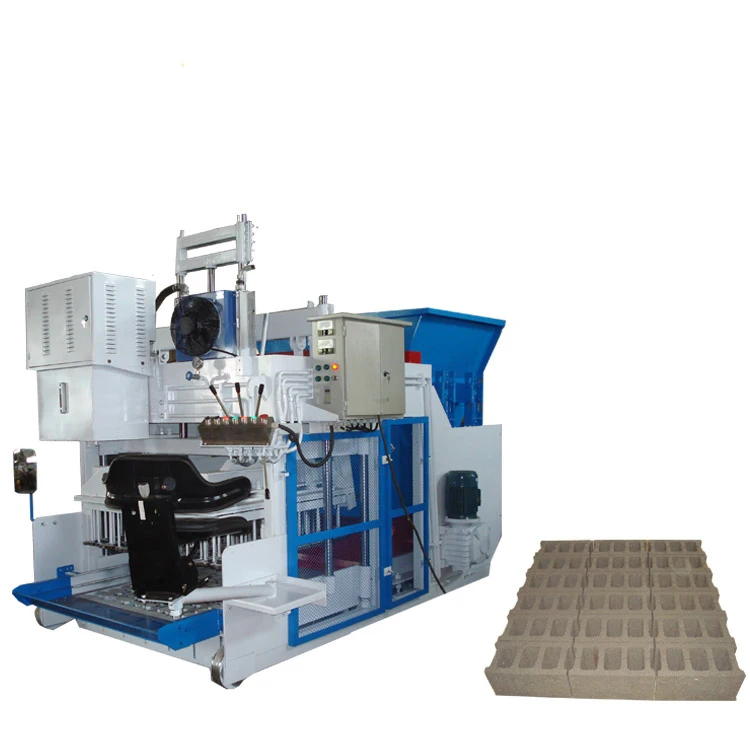
 Mobile block machine