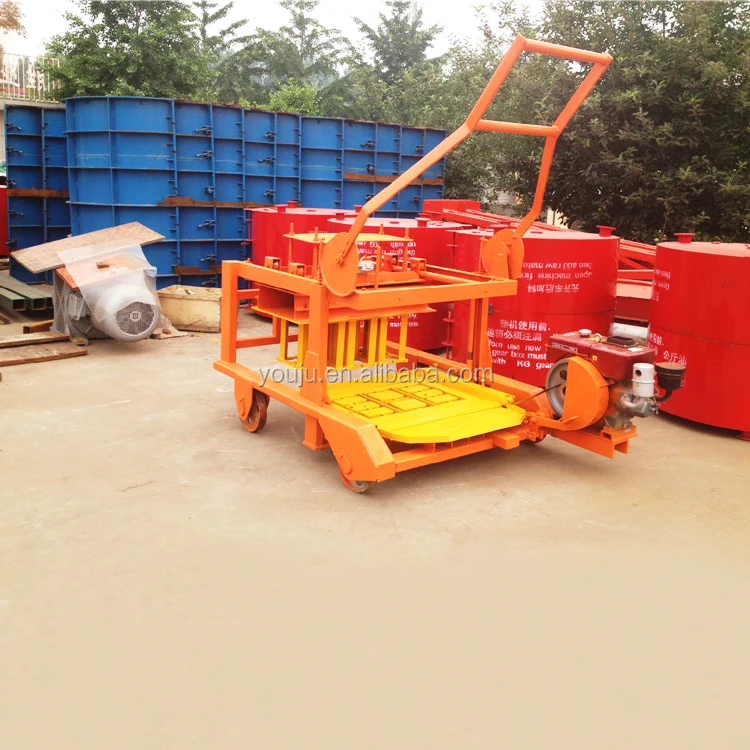
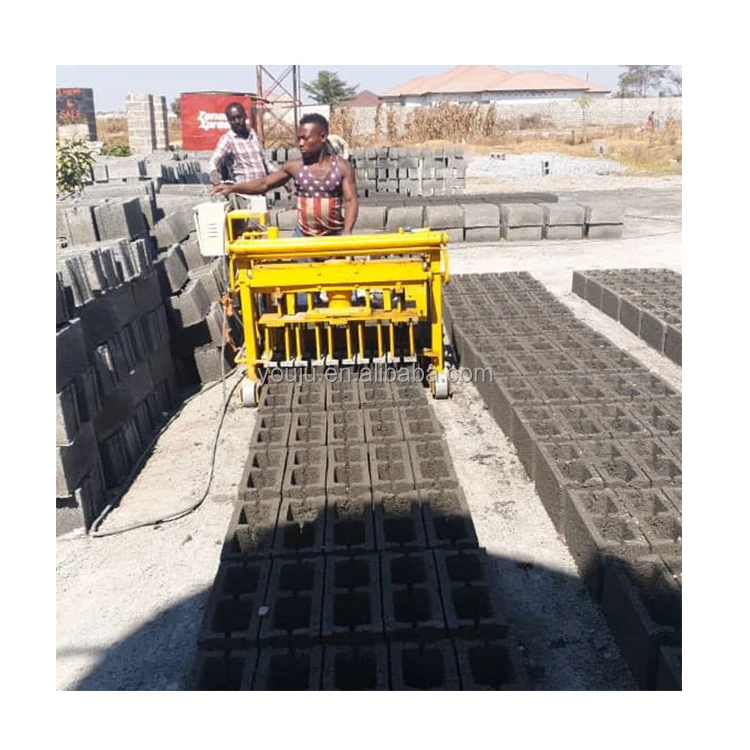
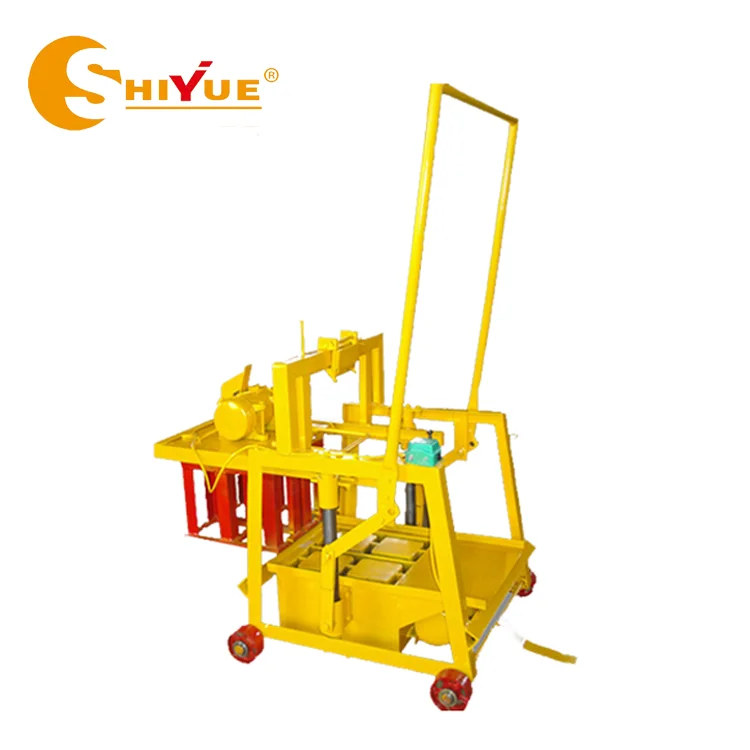
Matched system specification — the QMY18-15 mobile block making machine is configured as a complete ground-casting solution, not a standalone press with unresolved pallet and curing gaps.
Technical Specifications
| Parameter |
Value |
| Model |
QMY18-15 |
| Product Type |
Mobile Cement Block Making Machine |
| Rated Power |
24 kW |
| Voltage & Frequency |
Customized to buyer’s local industrial supply |
| Control System |
PLC assist |
| Working Method |
Hydraulic pressure station |
| Output Capacity |
Approx. 34,000 pcs/shift (based on 400×200×200mm hollow block) |
| Block Format Range |
Hollow, solid, and custom formats to buyer requirement |
| Pallet Requirement |
None — blocks formed directly on the ground |
| Automation Level |
Semi-automatic with PLC |
| Stacking Method |
Manual |
| PLC Language |
Configurable to buyer’s local language (basis to be confirmed) |
Application Suitability
| Application |
Material or Output |
| On-site housing project production |
Hollow blocks from locally sourced cement and crushed aggregate |
| First block plant for entrepreneurs |
Solid blocks from river sand and cement with minimal infrastructure |
| Remote construction sites |
Interlocking or custom blocks where pallet logistics are unavailable |
| Distributor satellite production |
Pavers and kerbstones near regional markets to cut transport cost |
Why Quoted Output Rarely Survives the First Week on Site
Real capacity depends on the exact block format, mix design, and ground conditions — not a single brochure number.
Capacity figures printed in catalogs are almost always based on a standard hollow block, and the moment a contractor switches to a smaller solid block or a paver, the cycle time and curing footprint change entirely. I have seen mobile block making machine manufacturer shipments arrive on site, run a trial with local sand carrying high clay content, and produce half the quoted shift output because the vibration force was not matched to that specific mix. The ground flatness and curing space available also dictate how fast the machine can advance before the previous row of green blocks is at risk. [NEED_CITE: aggregate grading and clay content impact on concrete block compressive strength]

Where the QMY18-15 Fits in the Full Machine Range
The QMY18-15 occupies the mobile entry tier, designed for buyers who need block production without committing to a fixed plant, pallet inventory, or curing racks. It sits below semi-automatic stationary lines in daily volume but eliminates the infrastructure those lines demand, making it a practical starting point for contractors working across multiple project sites.
Ground Casting Versus Pallet-Based Operation
Operating without pallets means the machine moves forward on its own wheels, depositing each block directly onto a prepared concrete floor or compacted ground. This removes the entire loop of pallet feeding, block-on-pallet handling, and rack curing that a stationary line requires. The trade-off is that the ground surface must be level and the curing area must be large enough to hold a full shift of output spread across the floor. [NEED_CITE: ground flatness tolerance for mobile egg-laying block machines]
Hydraulic Pressure and Vibration Force in a Mobile Frame
The hydraulic pressure station provides the compaction force that a purely manual egg-laying machine lacks, giving the QMY18-15 a density advantage in hollow block walls. Vibration force, once confirmed against the buyer’s aggregate size, determines whether the concrete consolidates fully around the mould core or leaves honeycomb voids. Together, these two parameters decide block strength and the consistency of that strength from the first block of the morning to the last. The PLC assist keeps cycle timing steady across operators, so density does not drift when personnel rotate through a shift.
When a Mobile Machine Is Specified for a Stationary Line’s Job
Choosing a mobile unit for a buyer who actually needs continuous high-volume output leads to a second machine purchase within the first year. The floor space required for ground curing grows with every additional block format, and manual stacking becomes a labour bottleneck that no amount of operator training resolves. Mould change on a mobile frame also takes longer than on a stationary press with quick-clamp systems, reducing the format flexibility the buyer expected. [NEED_CITE: labour hours required for manual block stacking at varying output levels]
Why Source This Mobile Block Making Machine Manufacturer Range Here
Block machinery is our single focus, so the QMY18-15 is never sold as a standalone press — the mould, ground preparation guidance, and curing area calculation arrive as one matched package. Configuration starts from the buyer’s actual mix design and local aggregate, not a catalogue default, preventing the strength shortfalls that appear during first-week trials. Mould design and supply cover the formats the buyer’s market actually sells, with custom drawings produced in-house when a standard mould does not match. Automation level is selectable, allowing a buyer to begin with the mobile tier and move to a stationary line later without changing block format or supplier. Voltage, frequency, and PLC display language are confirmed in writing before production begins, so commissioning is not delayed by an electrical mismatch at the site.
Documentation & Verification
- Capacity calculation sheet stating 400×200×200mm hollow block as the reference format
- Mould drawing and format list showing included and custom mould options
- Voltage and PLC display language confirmation signed before production
- Factory test record with photographs of blocks produced during pre-shipment run
- Packing photographs and customs documentation for container loading
Installation, Commissioning & Support
- Level concrete floor or compacted ground required across the full casting and curing area
- Dedicated 24 kW power circuit with voltage and frequency matched to confirmed local supply
- Machine arrives assembled with wheels and hydraulic station — no heavy crane lift needed
- First-day commissioning includes mix trial with buyer’s local aggregate to verify block density
- Operator training covers PLC menu navigation, mould change procedure, and daily hydraulic checks
- Wear parts list and mould maintenance schedule provided at handover for local sourcing planning
What to Prepare Before Requesting a Quotation
Provide the exact block formats you plan to sell, including dimensions and daily volume per format, so the capacity calculation reflects your actual production plan rather than a generic figure. Share your local aggregate type, cement grade, and any existing ground or curing space constraints so the machine configuration and mould selection match site reality. Confirm your industrial voltage, frequency, and preferred PLC display language to lock in the electrical specification before the order enters production.
Frequently Asked Questions
Q: How is the 34,000 pcs/shift figure calculated, and what does it become for my block size?
A: That figure is based on a 400×200×200mm hollow block cycle. Smaller solid blocks or pavers have different cycle times and mould configurations, so actual output per shift will differ. A capacity calculation sheet stating your specific block format is provided before order confirmation so daily planning is realistic.
Q: What voltage and PLC language options are available?
A: Voltage and frequency are configured to your local industrial supply, and the PLC display language is confirmed before production. Both are documented in the electrical specification sheet so the machine matches your site’s power infrastructure and operator language on arrival.
Q: What ground preparation does the QMY18-15 require?
A: A level concrete floor or well-compacted ground is needed across the casting path and curing area. The curing space must hold a full shift of blocks spread on the ground. Site dimensions and flatness tolerance are confirmed during the layout proposal stage.
Q: Where does this machine sit on the upgrade path to a stationary line?
A: The QMY18-15 is the mobile entry tier. Buyers who outgrow ground-casting volume can move to a semi-automatic stationary line with pallet handling and stacking, keeping the same block formats and mould supplier. The transition is planned at the initial quotation stage so the upgrade path is clear.

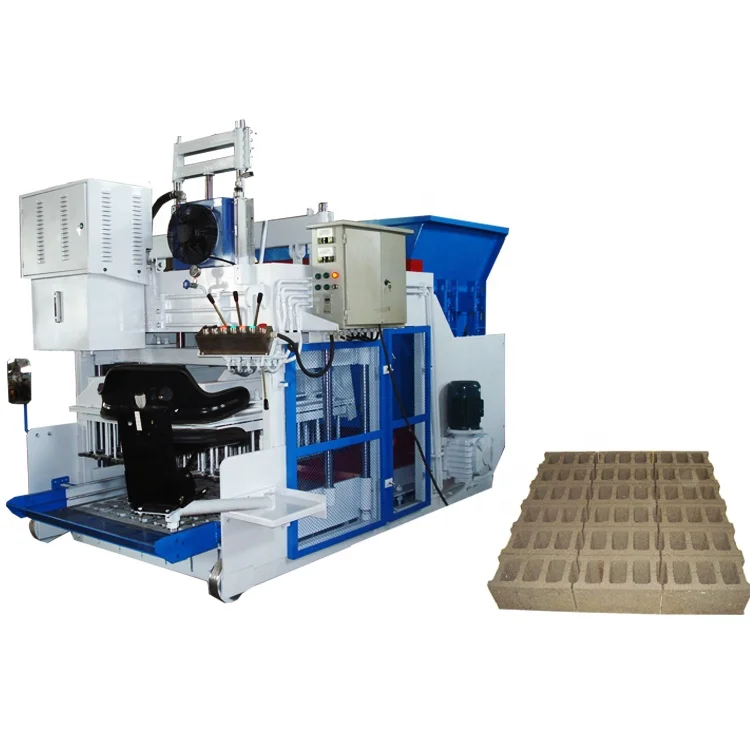
 Mobile block machine