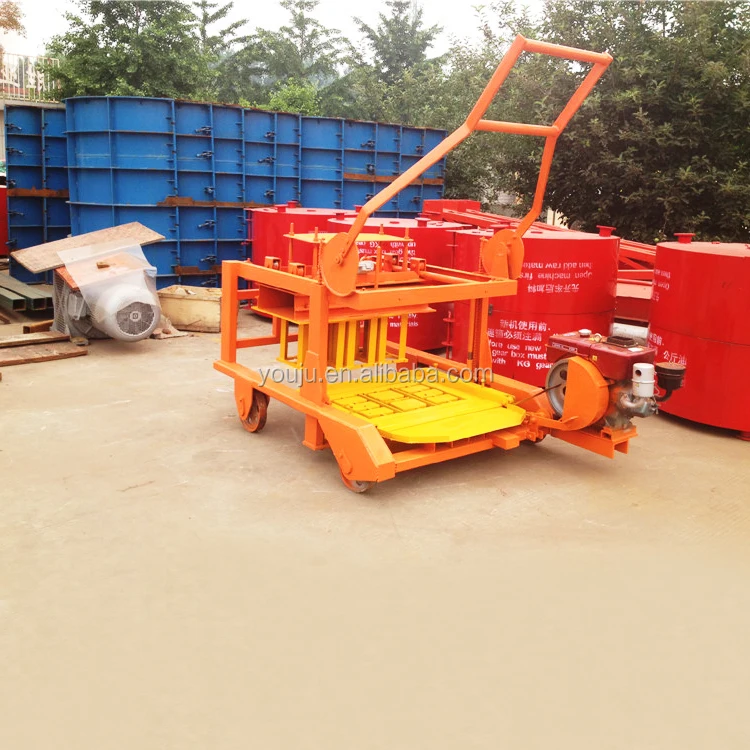
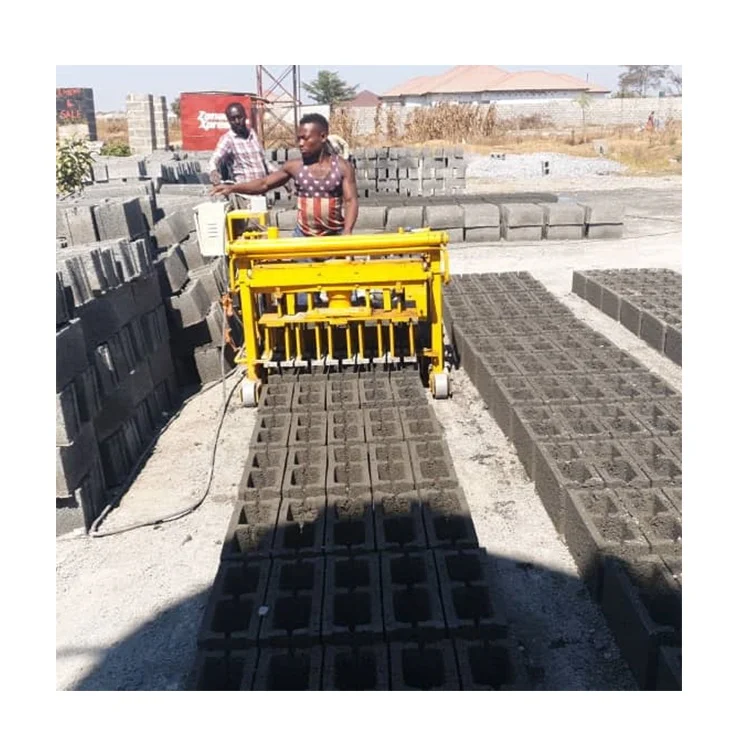
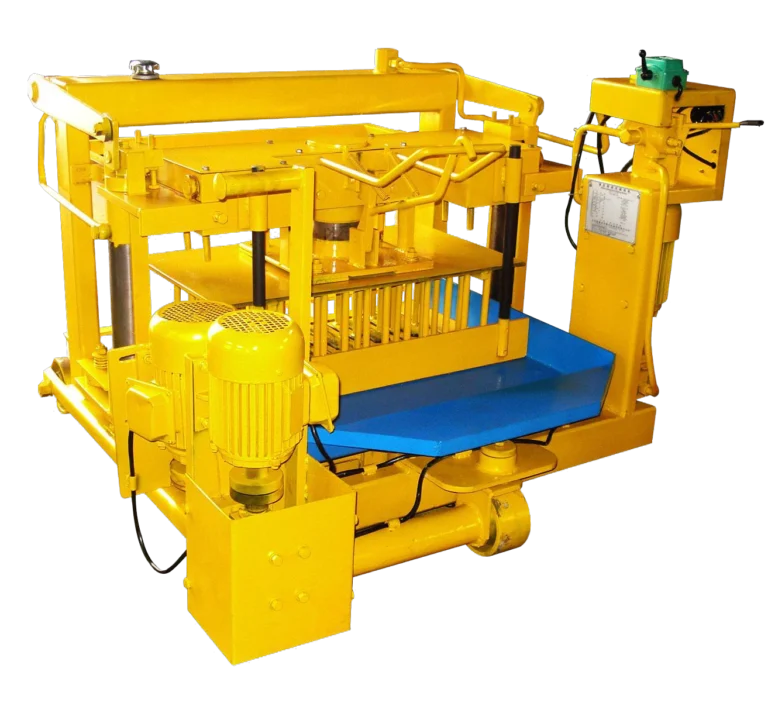
Matched system delivery — machine, mould and ground-contact parameters set against your local aggregate before the QMY12-15 leaves our Linyi workshop.
Technical Specifications
| Parameter |
Value |
| Model |
QMY12-15 |
| Product Type |
Egg Laying Concrete Block Making Machine |
| Overall Dimensions (L×W×H) |
3250×2100×2300 mm |
| Rated Power |
16 kW |
| Net Weight |
4500–4600 kg |
| Pressure Type |
Hydraulic |
| Vibration System |
Twice-vibration of molding core |
| Motor |
Siemens |
| Pallet Requirement |
No pallet required (egg-laying / mobile type) |
| Workers Required |
2–3 operators |
| Cycle Time |
10–15 s (basis to be confirmed by block format) |
| Output Capacity |
(basis to be confirmed — depends on block size, material and curing) |
| Assembly State |
Fully assembled mobile unit |
| Standards |
ISO 9001:2008, SGS, CE |
Application Suitability
| Application |
Material or Output |
| On-site hollow block production |
Crushed stone, river sand and cement mixes on open building plots |
| Solid load-bearing block runs |
Coarse aggregate blends with higher cement ratios for structural walls |
| Cement brick production for housing developments |
Fine sand and cement mortars laid directly onto compacted ground |
| Remote project sites without a fixed batching plant |
Local aggregate sourced near the construction perimeter |
Why "Pieces per Hour" Means Nothing Without a Block Format
A cycle time of 10–15 seconds only tells you how fast the press closes — not how many finished units you stack by the end of the shift. I have stood on laterite plots in West Africa watching crews count moulds instead of blocks, then realise the quoted hourly figure assumed a format their market never buys. The QMY12-15 egg laying block machine for sale on this page is rated by the mould actually fitted, and the daily output shifts the moment you swap to a different cavity layout. Buyers who sign off on a headline number without pinning down the assumed block dimensions regularly find their real production falls well short of what the proforma invoice implied [NEED_CITE: capacity quotation practices in block machinery trade].

Where the QMY12-15 Sits in the Mobile Range
This model occupies the upper-output tier of our egg-laying lineup, positioned above the smaller walk-behind units that suit first-time entrepreneurs testing a single local format. The hydraulic circuit and Siemens motor give it the compaction force needed when buyers move from lightweight cement bricks into load-bearing hollow blocks that must survive a drop test on site. Footprint stays close to three by two metres, so a contractor can run the machine inside a fenced compound without surrendering half the plot to a curing yard.
How Twice-Vibration Changes What the Block Feels Like
Earlier egg-laying models relied on a single vibration source under the mould box, which left the bottom face denser than the top and produced a visible gradient when the block was split open. The twice-vibration molding core fitted to the QMY12-15 egg laying concrete block making machine sends a second pulse through the core bars, compacting the mix from two axes before the hydraulic head finishes the stroke. On-site crews in humid coastal regions report a more consistent break strength across the batch, provided the aggregate grading stays within the agreed envelope [NEED_CITE: vibration frequency matching to aggregate grading in concrete block production].
Matching Pressure, Vibration and Local Aggregate
Hydraulic pressure and vibration amplitude are not independent dials; over-pressurising a fine-sand mix simply pushes the cement paste out of the cavity, while under-vibrating a coarse crushed-stone blend leaves voids that fail the water absorption test. The QMY12-15 allows the operator to tune both variables from the control panel, but the starting point should be a sample of your actual sand and stone sent to the workshop before build. In my own trips across West Africa, machines that arrived with settings calibrated only for Chinese river sand needed two full days of on-site tweaking before the blocks passed a thumb-break check. Wiring the 16 kW motor and the hydraulic pump to your site voltage and frequency is the second half of that matching job, and it has to be confirmed before the machine leaves the factory floor.
The Hidden Cost of Skipping a Ground Survey
Egg-laying machines deposit wet blocks straight onto the earth, which means a soft or uneven subgrade turns a straight wall line into a wavy one and cracks the green blocks as the machine rolls forward. Contractors who skip a simple compaction pass with a plate compactor end up spending more time re-laying broken units than they would have spent preparing the strip. Ground moisture is the other silent variable; a plot that looks firm in the morning can soften by midday in monsoon climates, and the hydraulic pressure that produced perfect blocks before lunch will crush the mix into a pancake by mid-afternoon [NEED_CITE: subgrade preparation standards for mobile block production].
Why Buyers Source This Tier from Our Workshop
Block machinery is the only product line we build, so the QMY12-15 leaves the Linyi floor with its mould, hydraulic pack and control panel treated as one matched set rather than assembled from catalogue sub-contractors. Configuration starts with the block format your market actually sells, not the default cavity in the brochure, and custom mould drawings are produced in-house when your dimension falls outside the standard list. The automation level is selectable, meaning a buyer can run the machine manually on day one and add pallet-free stacking aids later without swapping the press. Factory test records travel with the crate, showing cycle time and block weight for your agreed format, and CE documentation is prepared in parallel so customs clearance does not stall the container at the port of entry.
Documentation & Verification
- Line layout showing the QMY12-15 footprint against your plot dimensions and curing strip length
- Capacity calculation sheet naming the exact block format used for each output figure
- Factory test record covering cycle time, block weight and break strength on your sent aggregate sample
- Voltage, frequency and control-panel language confirmation signed before dispatch
- Hydraulic and electrical schematics matched to the Siemens motor and pump set installed
- CE declaration and ISO 9001:2008 certificate pack prepared for your destination customs authority
Installation, Commissioning & Support
- Compacted and level ground strip prepared by the buyer, checked with a string line before the QMY12-15 rolls onto site
- Dedicated 16 kW circuit with the correct voltage and frequency confirmed against the nameplate before first start-up
- Fully assembled mobile unit arrives on a flat-rack, requiring only hydraulic hose and power cable connection
- Vibration frequency and hydraulic pressure tuned to your aggregate sample during the on-site commissioning visit
- Operator training covers mould change procedure, daily greasing points and end-of-shift cleaning of the core bars
- Wear parts list and first-replacement mould schedule handed over before the commissioning engineer leaves site
What to Send Before You Request a Quote
Share the exact block dimensions your local market trades in, along with a photograph of the aggregate you intend to source near the project site. Tell us the plot dimensions and whether the ground is laterite, sand or compacted fill, and confirm the site voltage and phase so the motor winding can be matched before assembly. If you are producing for a specific housing tender, send the compressive strength requirement from the bill of quantities so the hydraulic pressure and vibration settings can be pre-calculated in the workshop.
Frequently Asked Questions
Q: How is the QMY12-15 output capacity calculated, and which block format is the figure based on?
A: Output is calculated by multiplying the number of cavities per mould by the achievable cycles in a working hour, then scaling to an agreed shift length. The headline figure only holds for the specific block format named in the quotation, and it shifts the moment you swap to a different cavity layout or alter the mix design. We state the assumed format on the capacity sheet so you can cross-check against your own market.
Q: What voltage and frequency options are available for my target market?
A: The Siemens motor and hydraulic pump can be wound for the standard industrial voltages used across Africa and South Asia, including both 50 Hz and 60 Hz supplies. You must confirm the exact voltage, phase and frequency before the machine enters assembly, because rewinding after the stator is dipped adds weeks to the schedule. The control panel display language is locked in at the same stage.
Q: Where does the QMY12-15 sit in the full egg laying machine range, and when should I choose a smaller tier?
A: This model sits at the higher-output end of our mobile, pallet-free lineup, chosen when a contractor needs structural hollow blocks rather than lightweight cement bricks. A smaller tier makes sense when the project only requires a single brick format, the ground is too soft for a heavier machine, or the daily volume target stays well below what the QMY12-15 can deliver.
Q: What are the site and ground conditions required for egg laying block production without pallets?
A: The ground must be compacted, level and firm enough to support wet blocks without settling under the machine’s rolling weight. A simple plate-compactor pass along the production strip is normally sufficient. Standing water, loose topsoil or freshly back-filled trenches will cause the blocks to tilt or crack before they can be moved to the curing area.
Q: How long is the dispatch lead time, and how is the machine packed for container shipment?
A: The QMY12-15 ships as a fully assembled mobile unit, typically on a flat-rack or open-top container because the overall height exceeds standard cube limits. Lead time depends on mould configuration and motor winding, and is confirmed at quotation stage. Dismantling is kept to hydraulic hoses and power cables so re-commissioning on site stays within a single shift.

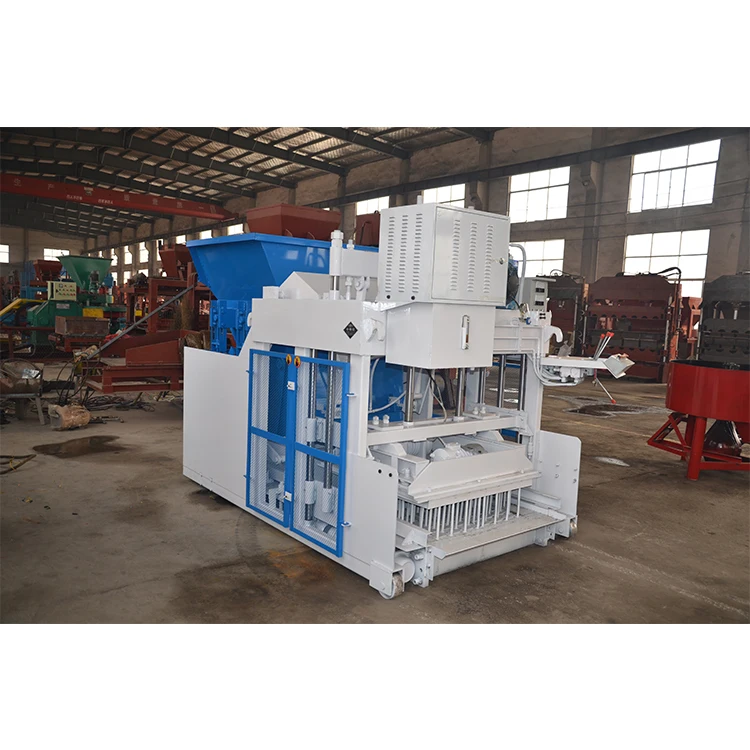
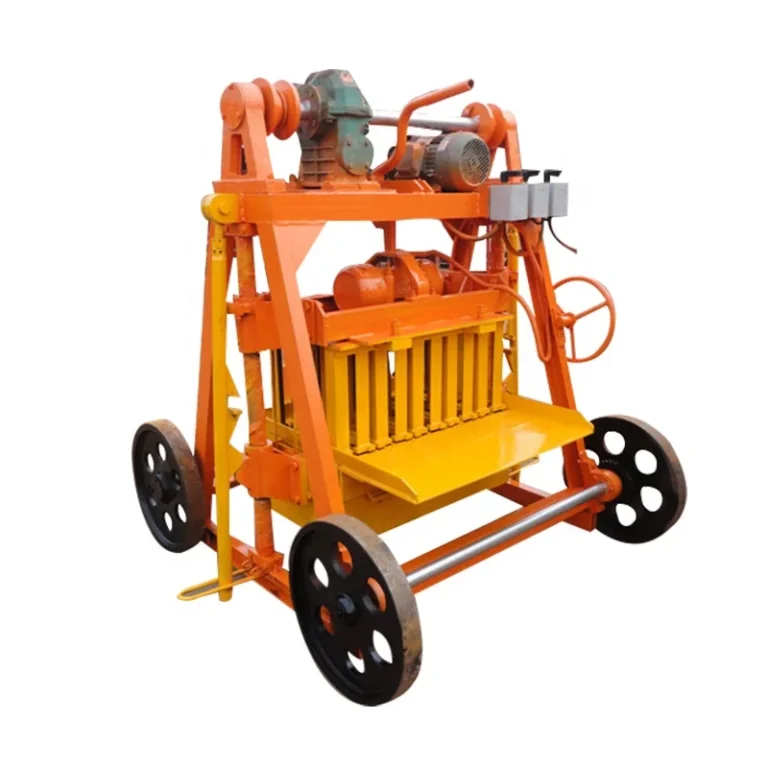 Mobile block machine