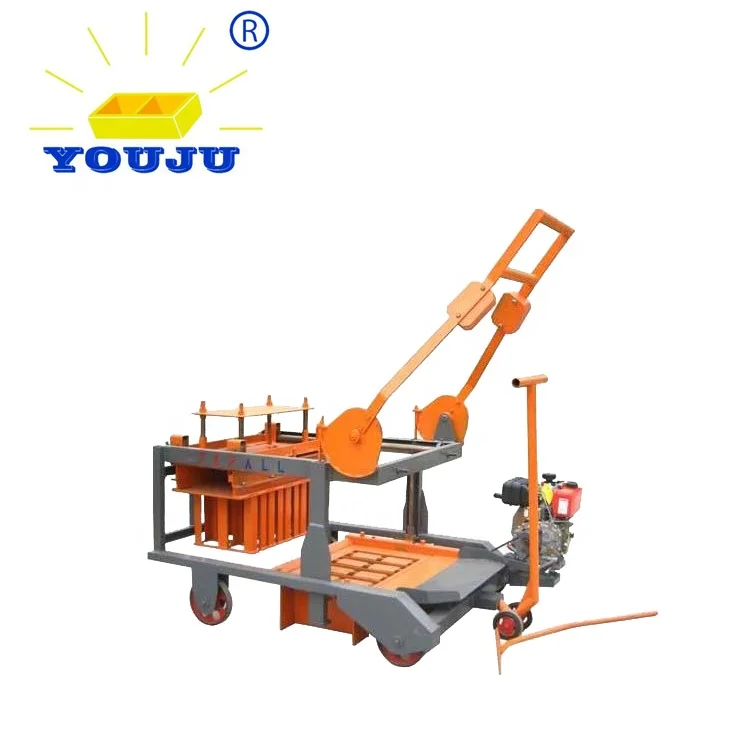
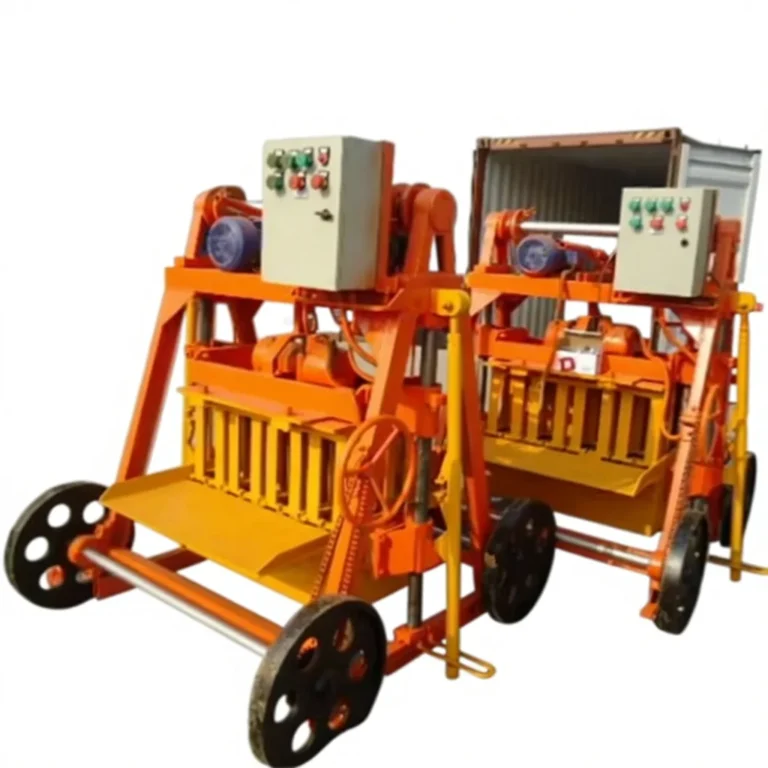
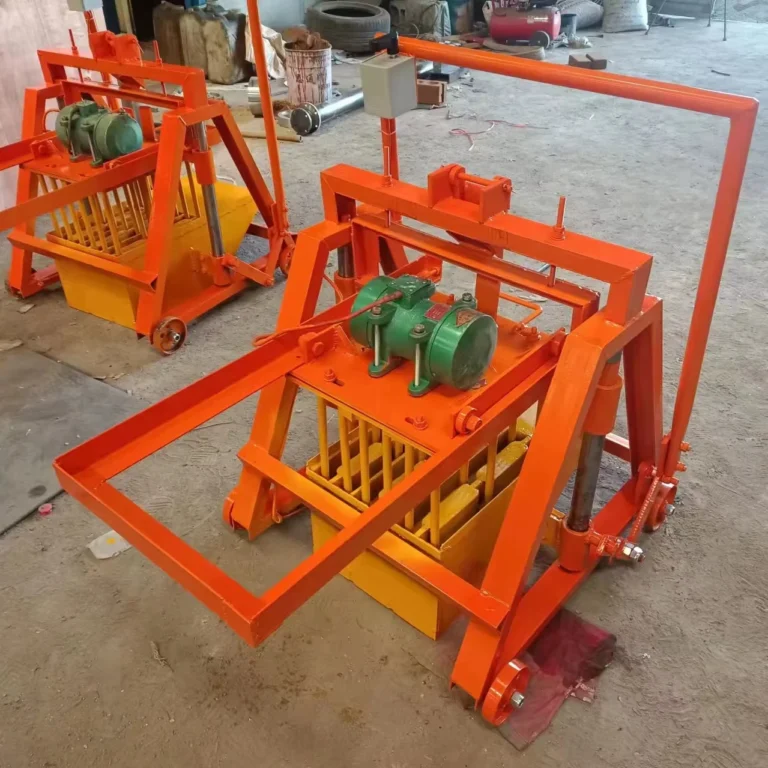
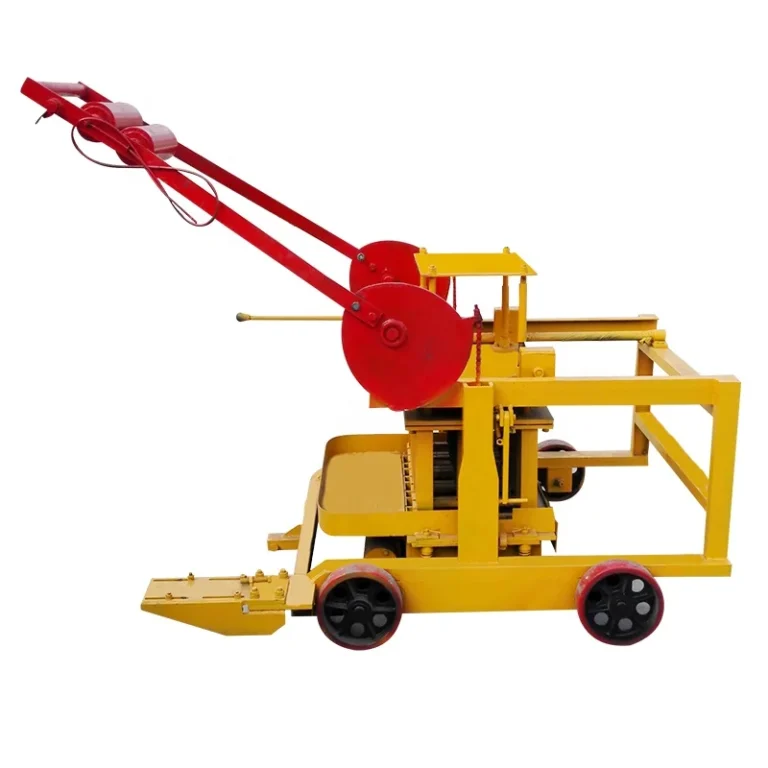
Matched system design — the QMY4-30 mobile block machine ships with mould, power, and compaction tuned to your actual aggregate, not a catalogue default that assumes ideal sand.
Technical Specifications
| Parameter |
Value |
| Model |
QMY4-30 |
| Product Type |
Mobile Concrete Block Making Machine |
| Rated Power |
5 kW |
| Voltage & Frequency |
Configurable to buyer market (basis to be confirmed) |
| Control System |
Manual operation |
| Overall Dimensions |
1200 × 1200 × 1100 mm |
| Net Weight |
950 kg |
| Mould Format |
Changeable for hollow block and solid brick |
| Cycle Time |
30 seconds |
| Output (400×200×200 mm hollow block) |
4 pcs/mould, 480 pcs/h, 3840 pcs/8h |
| Output (400×150×200 mm hollow block) |
5 pcs/mould, 600 pcs/h, 4800 pcs/8h |
| Output (400×100×200 mm hollow block) |
7 pcs/mould, 840 pcs/h, 6720 pcs/8h |
| Raw Materials |
Cement, sand, crushed stones, slag |
| Automation Level |
Manual / mobile egg-laying type |
| Pallet Requirement |
Not required (egg-laying on ground) |
| Assembly State |
Single-unit mobile machine |
Application Suitability
| Application |
Material or Output |
| On-site hollow block production at housing projects |
400×200×200 mm blocks from cement and crushed stone |
| Solid brick manufacturing for small block plants |
Standard solid brick from sand and cement mix |
| Remote construction site block supply |
Hollow and solid formats from locally available aggregate |
| First block plant startup with limited capital |
Entry-tier volume across multiple block sizes |
Why the Block Format Question Must Come Before the Cycle Count
Capacity figures only mean something when the block size is named beside them.
I once watched a contractor in West Africa plan an entire housing phase around a mobile block machine quoted at a single hourly number. The machine ran fine, but the 400×200×200 mm hollow blocks he actually needed took a full 30-second cycle, while the quoted figure assumed a smaller format. His daily output fell well short of what the schedule demanded, and the crew stood idle waiting for blocks that were not coming fast enough [NEED_CITE: capacity calculation standards for mobile block machines]. A mobile block making machine for sale listing that omits the format assumption is not a specification — it is a guess. The QMY4-30 output here is stated per hollow block dimension: 480 pieces per hour at 400×200×200 mm, 600 at 400×150×200 mm, and 840 at 400×100×200 mm. Those numbers let you plan a real shift.

Where the QMY4-30 Sits in the Full Machine Range
The QMY4-30 occupies the entry tier of the mobile block machine lineup. It is a self-contained egg-laying unit that produces blocks directly on the ground without pallets, curing racks, or a fixed plant footprint. For a buyer surveying options, this machine represents the lowest infrastructure threshold: you need a flat concrete floor, a power supply matching the rated 5 kW draw, and raw materials staged nearby. The single-unit design means there is no conveyor to align, no batching station to wire, and no pallet return loop to maintain.
When a Buyer Should Stay Mobile or Step Up
A contractor producing blocks at a remote housing site benefits from the egg-laying approach because the machine moves to where the blocks are needed. There is no transport cost for finished product. But once daily demand passes what a single mobile unit can deliver on a 30-second cycle, the logical step is a semi-automatic stationary line with pallet handling and stacking. The mobile tier answers the question of whether your project volume justifies fixed infrastructure at all [NEED_CITE: mobile versus stationary block production planning].
Reading the Specifications That Actually Matter
The 30-second cycle time is the rhythm the entire operation lives by. Every task — feeding the hopper, moving the machine forward, cleaning the ground surface — must fit inside or around that window. At 5 kW rated power, the QMY4-30 draws from a standard three-phase supply common at most construction sites, but voltage and frequency must match local grid conditions before the motor is wound. The 1200 × 1200 × 1100 mm footprint is compact enough to operate inside a partially built structure, yet the 950 kg weight provides the mass needed for vibration compaction without the machine walking across the floor during a cycle.
The changeable mould system is what gives this mobile block making machine for sale its range. One frame accepts moulds for hollow blocks in three widths and solid brick formats. The operator swaps the mould by hand, and the time that takes directly determines how practical it is to run multiple formats in a single shift. If your market sells two block sizes and a brick, the mould change speed decides whether you run all three or dedicate a machine to each.
What Happens When the Ground Condition Is Ignored
The egg-laying design eliminates pallets entirely, which cuts consumable cost and removes a whole handling system from the site. But it places the ground surface in the role that pallets normally fill. Uneven or soft ground produces blocks with inconsistent base dimensions and compromised compressive strength. I have seen operators spend more time re-laying and scraping ground than producing blocks because the surface preparation was treated as optional [NEED_CITE: ground preparation requirements for egg-laying block machines]. A concrete slab or well-compacted hardcore is not a luxury — it is part of the machine.
Why Sourcing the Machine From Here Changes the Setup
The QMY4-30 is configured against the buyer’s actual mix design and local aggregate, not shipped with a default setting that assumes washed river sand. Mould formats are selected based on what the buyer’s market actually purchases, and custom mould drawings are available when standard formats do not match local building codes. Voltage and control specifications are confirmed before production starts, so the machine does not sit in a container yard waiting for a transformer. The single-focus approach means the machine, mould, and compaction method are specified together rather than assembled from unrelated sources.
Documentation & Verification
- Machine specification sheet stating output per block format, not a single blanket figure
- Mould drawing and format list showing every cavity dimension before production starts
- Voltage and frequency confirmation recorded against your local supply standard
- Factory test record run on your target block size before the machine is crated
- Operation and maintenance manual covering mould change procedure and cycle sequence
- Wear parts list with lead times for first replacement order
Installation, Commissioning & Support
- 5 kW power draw requires a dedicated circuit matching confirmed voltage and frequency
- Single-unit 950 kg assembly arrives complete — no sub-frame or conveyor to align on site
- Flat concrete floor or compacted hardcore required for consistent egg-laying operation
- First-cycle commissioning includes mould fit check and vibration timing adjustment
- Operator training covers mould swap sequence and ground surface maintenance routine
- Wear parts and replacement mould availability confirmed before initial shipment
What We Need From You to Size This Correctly
Tell us the hollow block and brick formats your market actually sells, along with the daily volume you need to hit on each. Share a sample of your local sand and aggregate so we can run a test cycle and confirm the mix produces the block strength you require. Confirm your site voltage and frequency so the motor and wiring are built to match before the machine leaves the factory.
Frequently Asked Questions
Q: How is the output capacity calculated and which block format does each figure assume?
A: Each output figure is tied to a specific hollow block dimension and a 30-second cycle. At 400×200×200 mm, the machine produces 4 blocks per mould for 480 pieces per hour. At 400×150×200 mm, it produces 5 per mould for 600 per hour. At 400×100×200 mm, it produces 7 per mould for 840 per hour. No single blanket number is used.
Q: What voltage and frequency options are available for the target market?
A: The motor and wiring are configured after we confirm your local supply. Standard options cover common industrial voltages and frequencies across export markets. We record the confirmed specification before production begins so the machine arrives ready to connect without a step-down transformer or rewiring delay.
Q: How long does a mould change take and which formats can one machine produce?
A: The QMY4-30 accepts changeable moulds for hollow blocks in multiple widths and solid brick formats on one frame. The swap is done by hand without tools beyond basic fasteners. Running multiple formats in one shift is practical when changeover time is short enough to preserve the production rhythm.
Q: What site preparation and ground conditions are required for mobile egg-laying operation?
A: A flat, hard surface is essential. A poured concrete slab or well-compacted hardcore works. Soft or uneven ground causes blocks to settle unevenly during the 30-second cycle, producing inconsistent dimensions and weak bases. Ground preparation is part of the production system, not an optional extra.
Q: Where does the QMY4-30 sit in the full machine range and when should a buyer step up?
A: The QMY4-30 is the entry tier — a mobile egg-laying unit for on-site production without fixed infrastructure. When daily demand consistently exceeds what a single mobile unit delivers, or when pallet-based stacking and curing become necessary for output scale, the logical step is a semi-automatic or automatic stationary line.

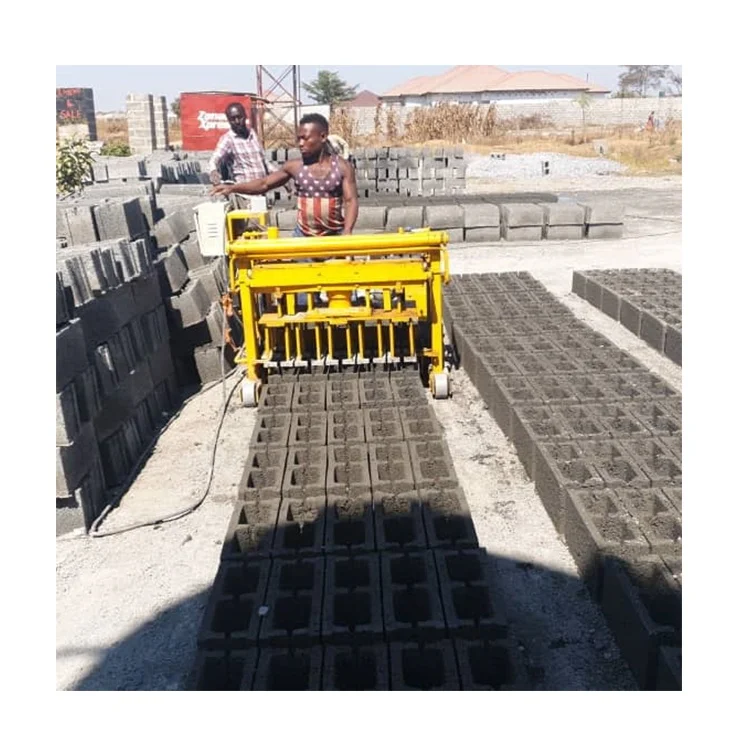
 Mobile block machine