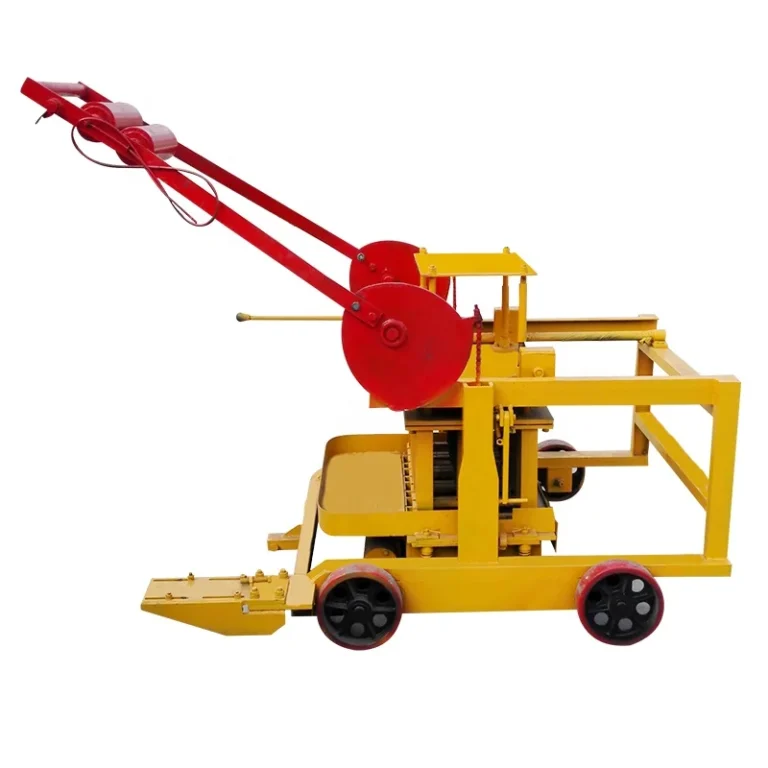
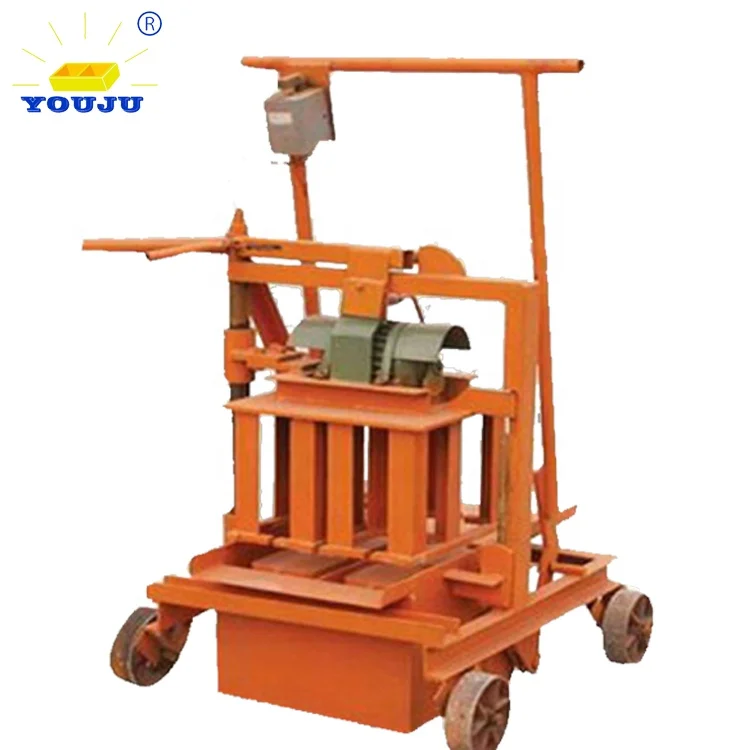
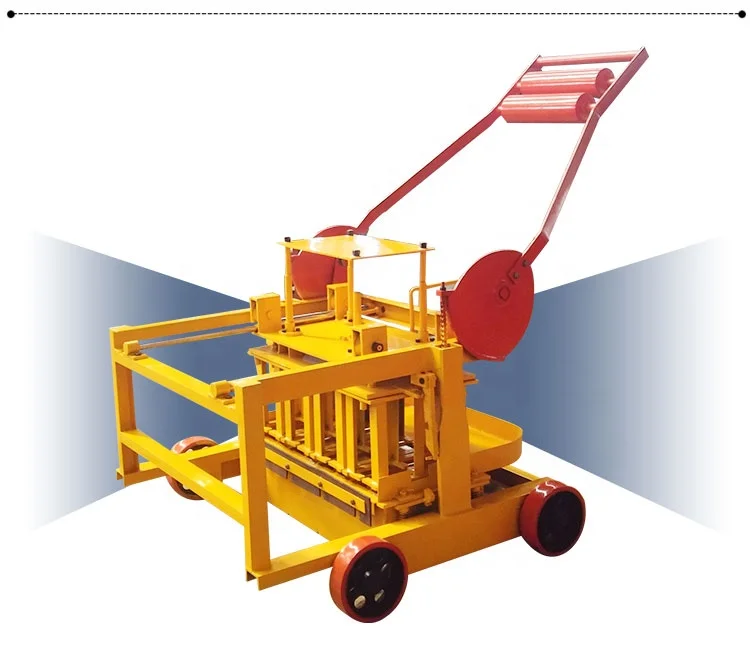
Single-focus block machinery system — every component from the QMY12-15 press through its moulds and pallet handling is specified as one matched unit rather than assembled from separate sources.
Technical Specifications
| Parameter |
Value |
| Model |
QMY12-15 |
| Product Type |
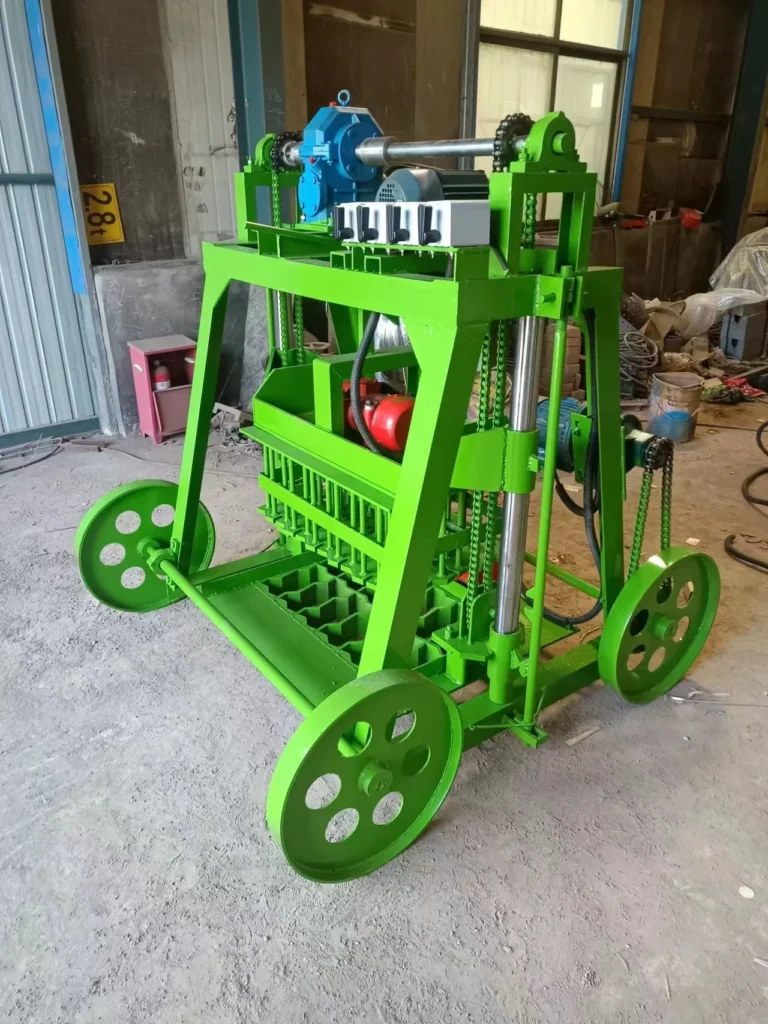
Automatic Mobile Hollow Block Making Machine |
| Automation Level |
Automatic |
| Block Format Compatibility |
9 / 8 / 6 / 4 inch hollow blocks |
| Pressure Type |
Hydraulic Pressure |
| Drive |
Engine Gear |
| Production Line Type |
Cement Brick Production Line |
| Mould Format |
Hollow block moulds for 9 / 8 / 6 / 4 inch formats |
| Output Capacity |
basis not stated in source — confirm block format, material and thickness |
| Cycle Time |
basis not stated in source — confirm block format, material and thickness |
| Hydraulic Pressure (MPa) |
source value not provided — verify against manufacturer catalog |
| Vibration Force (kN) |
source value not provided — verify against manufacturer catalog |
| Pallet Size |
source value not provided — verify against manufacturer catalog |
| Control System |
source value not provided — verify against manufacturer catalog |
| Voltage & Frequency |
source value not provided — verify against manufacturer catalog |
Application Suitability
| Application |
Material or Output |
| On-site hollow block production for building contractors |
Cement, sand, crushed stone and local aggregate blends |
| Housing and development project block supply |
9, 8, 6 and 4 inch hollow cement blocks |
| First block plant for entrepreneurs evaluating mobile versus stationary lines |
Cement brick production without a fixed facility |
| Remote construction site block manufacturing |
Engine-driven operation independent of grid power |
Why "Cycles per Hour" Tells You Almost Nothing
The QMY12-15 mobile block machine manufacturer quote you received probably lists a cycle count — but against which block format?
I once watched a Middle East contractor plan an*umed 4-inch hollow blocks, while their actual order book was 80 percent 9-inch hollow. The machine ran fine; the daily output simply never matched the spreadsheet. That mismatch is the most common reason buyers feel misled after commissioning. When you evaluate a QMY12-15 mobile block machine manufacturer, ask for a capacity table that lists cycles and pieces per hour separately for each of the four inch formats you intend to produce [NEED_CITE: block format impact on cycle time and daily output]. Without that breakdown, any output number is an assumption, not a commitment.

Placing the QMY12-15 Inside the Mobile and Automatic Range
Buyers surveying options often struggle to locate where a given machine sits between a small egg-layer and a fully automatic stationary line. The QMY12-15 occupies the higher-output tier of the mobile category: it is fully automatic, hydraulic-pressed, and engine-gear driven, yet it still moves between sites without a fixed foundation. That positions it above semi-automatic mobile machines in output consistency while remaining below stationary automatic lines in absolute throughput and automation scope. For a contractor who needs hollow blocks at multiple project locations over the year, this QMY12-15 mobile block machine manufacturer tier offers a balance between relocation flexibility and production repeatability.
On-Site Production Without a Fixed Plant Footprint
The engine gear drive eliminates dependency on grid-connected motors and fixed conveyor layouts. The machine travels to where the blocks are needed — a housing development, a remote infrastructure site, or a contractor’s yard — and begins producing after ground leveling and material staging. Because the QMY12-15 is automatic rather than manual or egg-laying, the operator workload per shift is reduced compared to lower-tier mobile machines, and block density remains more consistent across a production run [NEED_CITE: automation level impact on block density consistency]. This matters for contractors whose blocks must pass compressive strength testing before wall approval.
Reading the Specs That Actually Shape Your Output
Hydraulic pressure and vibration force work together to compact the cement-aggregate mix into a dense, uniform block. If pressure is high but vibration is weak, the block surface may look solid while internal voids remain; reverse the imbalance and you get surface cracking. The QMY12-15 uses a hydraulic pressure system paired with vibration to address both dimensions of compaction across all four hollow block formats. Mould change time is the next practical concern — switching from 9-inch to 4-inch hollow should take a defined number of minutes with the correct tools on site, not consume half a shift. Pallet size must match the curing area dimensions and the forklift capacity already available at the buyer’s site; ordering a machine whose pallets do not fit existing racks creates a secondary equipment problem on day one. Control system language and voltage configuration must be confirmed before the machine leaves the factory, because re-wiring or reprogramming on arrival delays commissioning and frustrates the installation team.
What Happens When Configuration Is Skipped
Ordering a mobile block machine on catalogue specs alone — without confirming local aggregate properties, target block strength, or curing conditions — leads to predictable failures. Blocks may crumble after curing because the vibration force was calibrated for clean graded sand while the buyer’s local material carries high clay content. Pallets specified without regard to the curing yard layout force manual restacking. Voltage mismatches discovered at the port of arrival add weeks of electrician work before the first block is pressed [NEED_CITE: voltage and frequency standards by export market]. These are not machine defects; they are specification gaps that any experienced QMY12-15 mobile block machine manufacturer should close before production begins.
Why Buyers Source This Machine Here
Block machinery is the sole product focus, so the QMY12-15 press, its moulds, pallets and handling equipment are configured as a single system rather than pieced together from unrelated suppliers. Machine settings are matched to the buyer’s actual mix design and local aggregate, not left at catalogue defaults. Mould design covers the specific hollow block formats the buyer’s market demands, with custom drawings available when standard formats do not match local building codes. Automation level is selectable, allowing a buyer to begin with a configuration that fits current labour availability and upgrade later. Installation support includes on-site commissioning and operator training so the crew can run the machine independently from the first week.
Documentation & Verification
- Line layout showing capacity per hollow block format assumed
- Machine spec sheet with hydraulic pressure and vibration force confirmed against your aggregate
- Mould drawing and format list for 9 / 8 / 6 / 4 inch hollow blocks
- Voltage, frequency and control language confirmation before shipment
- Factory test record on your specified block format before dispatch
- Operation and maintenance manual with wear parts and mould list
Installation, Commissioning & Support
- Level ground preparation with adequate space for QMY12-15 manoeuvring and material staging
- Engine gear drive inspected and lubricated before first production run
- Hydraulic pressure and vibration force tuned to your local aggregate sample on site
- Mould change procedure demonstrated for all four hollow block formats during training
- Control system language and display verified against operator preference at commissioning
- Wear parts and replacement mould list provided for ongoing maintenance planning
What to Share Before Requesting a Quote
Send your target block formats with daily output expectations per format, a sample or analysis of your local aggregate and cement type, and the voltage and frequency standard at your site. Include your available curing area dimensions and any forklift or pallet rack specifications already in use. If you have existing mix designs or block strength requirements from your project engineer, attach those as well so the machine and mould configuration can be matched from the start.
Frequently Asked Questions
Q: How is the QMY12-15 capacity verified and what block format is assumed?
A: Capacity must be stated per block format because cycle time and pieces per cycle differ between 9-inch and 4-inch hollow blocks. We provide a capacity table showing output for each format based on your confirmed mix design and material sample, not a single figure that assumes one size.
Q: Where does the QMY12-15 sit compared to semi-automatic and fully automatic stationary lines?
A: It occupies the higher-output tier of the mobile range — fully automatic with hydraulic pressing and engine drive, yet relocatable between sites. Stationary automatic lines offer greater throughput and automation but require a fixed plant. The QMY12-15 suits contractors who need production at multiple locations.
Q: What voltage, frequency and control language options are available?
A: Voltage and frequency are configured to match your site’s electrical supply, and the control system display language is confirmed before shipment. These details must be finalized during the quotation stage to avoid commissioning delays on arrival.
Q: What site conditions does the QMY12-15 require for mobile operation?
A: The machine needs level, compacted ground with space for raw material staging, block curing, and manoeuvring. Engine gear drive removes the need for grid power connection. Your curing area dimensions and existing forklift capacity should be shared so pallet specifications align with your site.
Q: Which mould formats are included and how long does a change take?
A: The QMY12-15 ships with hollow block moulds for 9, 8, 6 and 4 inch formats. Mould change procedure and time are demonstrated during on-site commissioning so your team can switch formats within a defined window during a normal shift.

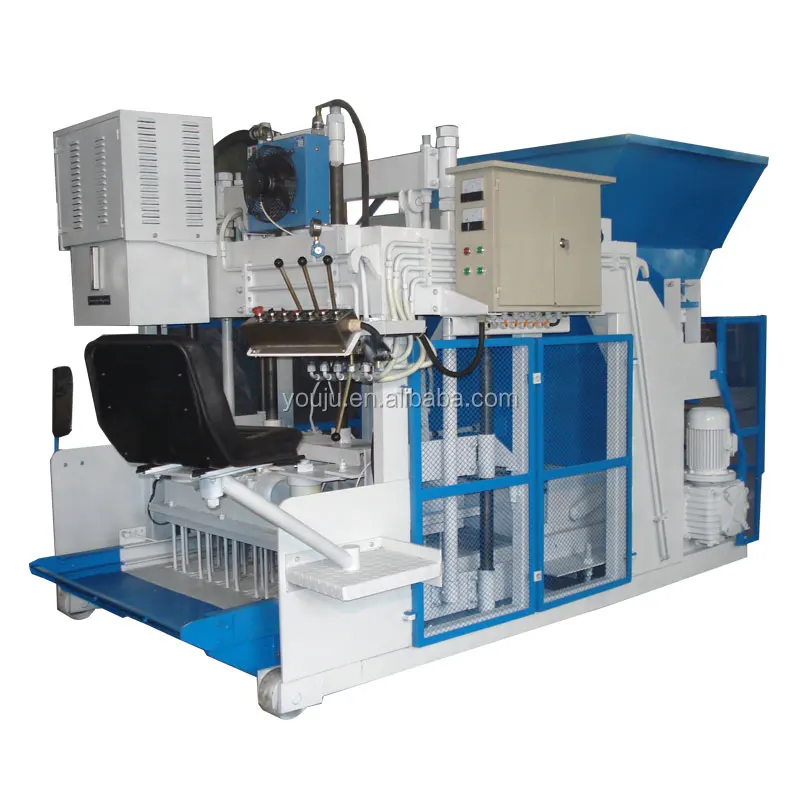
 Mobile block machine