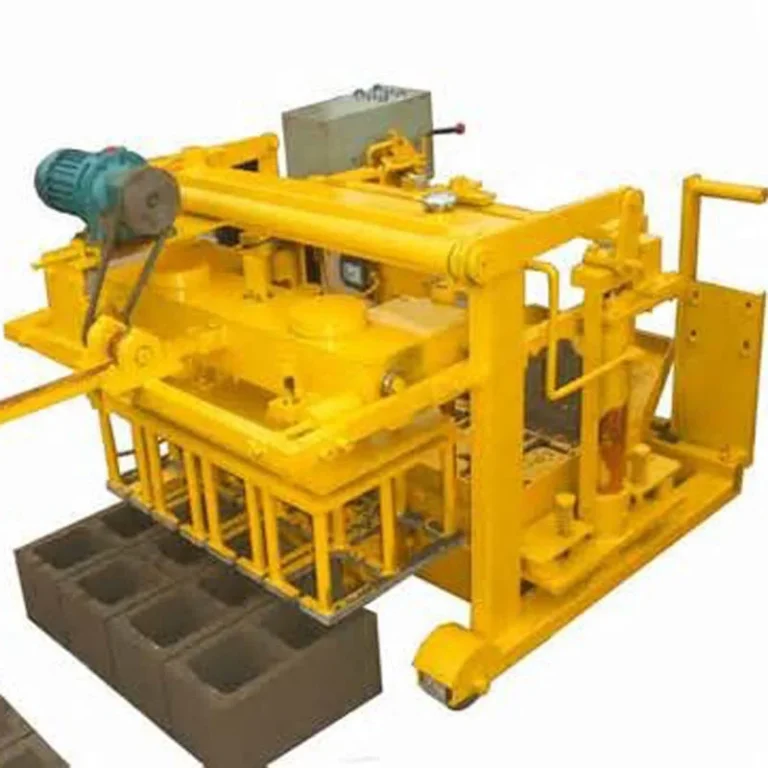
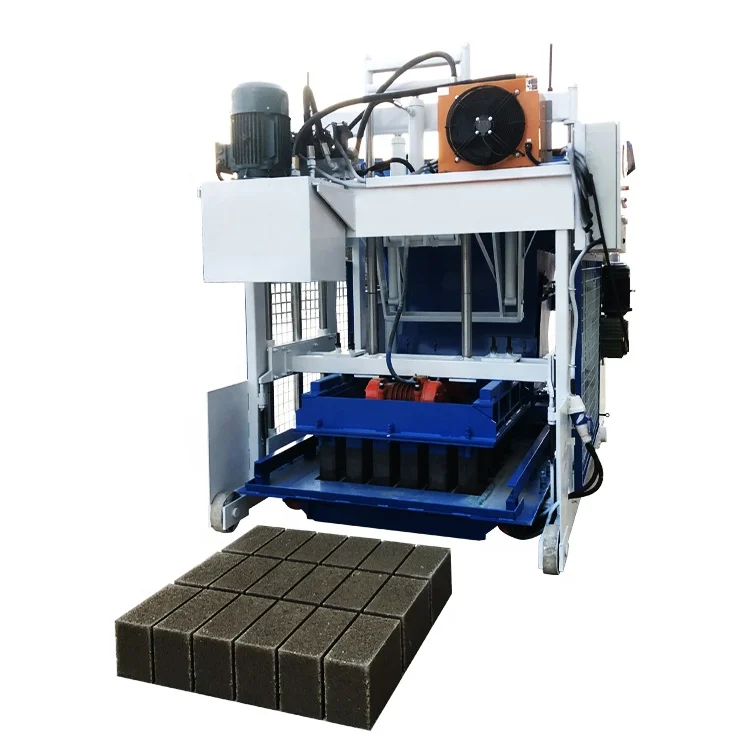
Mould and Line Matched — QMY10-15 mobile block machine configured against your actual block format and site conditions, not a catalogue default.
Technical Specifications
| Parameter |
Value |
| Model |
QMY10-15 |
| Product Type |
Mobile Concrete Block Making Machine |
| Molding Capacity |
10 pcs/mold |
| Molding Cycle |
10s-15s |
| Total Power |
16 kW |
| Output Capacity |
11000 pcs/day (basis not stated in source — confirm block format) |
| Vibration System |
Dual vibration motor configuration |
| Hydraulic System |
Controls upper and lower demoulding, equipped with heat dissipator |
| Mobility |
Electric walking, hydraulic steering |
| Pallet Requirement |
No pallets needed (egg-laying type) |
| Automation Level |
Semi-automatic with hydraulic demoulding |
| Basic Configuration |
QMY10-15 Host Machine, JS7500 Concrete Mixer, Dump Truck |
| Optional Equipment |
PL1200 Batching Machine, Cement Silo, Screw Conveyor, Loader |
Application Suitability
| Application |
Material or Output |
| On-site construction block production |
Hollow and solid blocks from crushed stone, sand, and cement |
| Project-location manufacturing for contractors |
Interlocking and paving blocks using local aggregate |
| First block plant setup for entrepreneurs |
Standard masonry units without fixed plant infrastructure |
| Remote site building material supply |
Various concrete formats matching local construction demand |
Why "11000 Pieces a Day" Means Nothing Without the Block Format
Daily output claims must state which block size they assume, or they are not output claims at all.
When a mobile block machine manufacturer quotes a daily figure without naming the format, buyers arrive at their project site expecting one production rate and experience another. A 400×200×200mm hollow block takes more material, longer vibration, and different hydraulic pressure than a small solid paver. The cycle time shifts. The daily total shifts with it. I have watched contractors plan their entire pour schedule around a capacity number that applied to a block they were not even producing. [NEED_CITE: block format impact on cycle time and daily output]

Where the QMY10-15 Sits in the Range
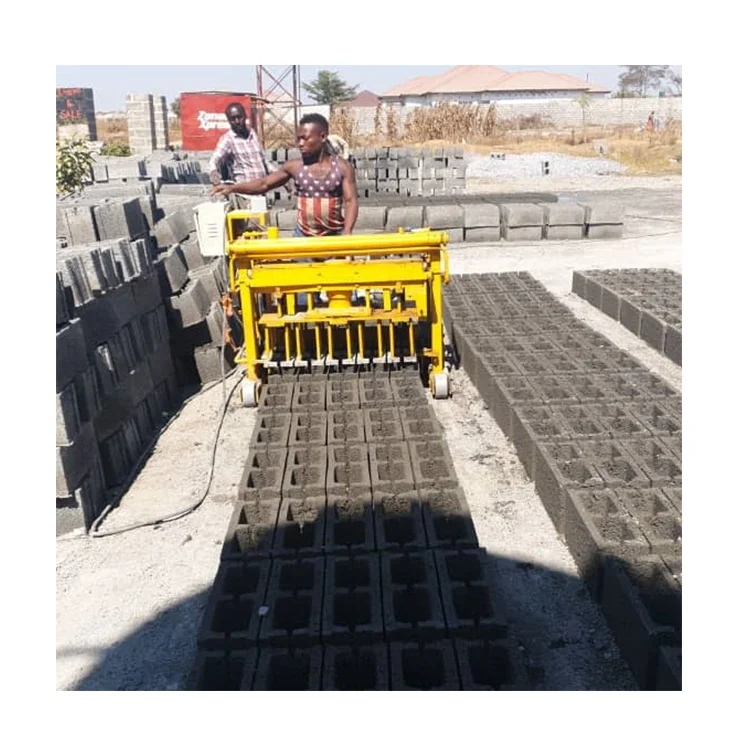
The QMY10-15 occupies the mobile block machine tier designed for contractors who move between project sites rather than operating from a fixed plant. The egg-laying system eliminates the need for production pallets entirely, which removes an entire layer of material handling logistics from your site operations. You position the machine, it lays the block directly on the ground, and it walks forward electrically to the next position.
This tier suits buyers whose production volume does not justify a stationary automatic line but who need more consistency and speed than a manual egg-layer provides. The hydraulic demoulding and dual vibration motors place it above entry-level mobile units in terms of block density and cycle repeatability.
Mobility and Site Logistics
The electric walking system with hydraulic steering means a single operator can reposition the QMY10-15 mobile block machine across a curing yard or construction site without external towing equipment. This matters on uneven ground where a forklift cannot easily follow the production line. The dump truck included in the basic configuration handles fresh concrete delivery from the JS7500 mixer directly to the machine hopper, keeping the production loop self-contained.
For buyers working across multiple sites within a region, the entire basic setup loads onto a flatbed and moves as one unit. No foundation work, no fixed conveyor lines to dismantle. [NEED_CITE: site preparation requirements for mobile egg-laying block machines]
Reading the Specs That Actually Matter
The 16 kW total power rating splits across the dual vibration motors and the hydraulic pump. Vibration force and hydraulic pressure together determine whether your block leaves the mold with consistent density or crumbles at the edges. If your local aggregate has high clay content, the vibration parameters need adjustment — a setting that works for clean river sand will produce weak blocks from laterite or washed crusher dust.
The heat dissipator on the hydraulic circuit prevents oil overheating during continuous production in high ambient temperatures, which is common across tropical and subtropical project sites. Without adequate oil cooling, hydraulic response slows and demoulding becomes inconsistent partway through a shift. The 10s-15s molding cycle range reflects different block formats: a thin paver cycles faster than a tall hollow block because the material column is shorter and requires less compaction time.
What Happens When Configuration Is Skipped
Buyers who order a mobile block machine based on price and quoted output alone frequently discover after arrival that the machine was configured for a raw material mix they cannot source locally. The hopper feed rate, vibration duration, and hydraulic pressure were all set for the manufacturer’s test conditions. Retuning these parameters on site takes time and test batches that consume material and delay production schedules. [NEED_CITE: importance of raw material testing before block machine configuration]
Voltage and frequency mismatches cause a different category of delay. A machine wired for 380V/50Hz arriving in a 440V/60Hz market will either fail to start or burn out motors within the first week. Confirming electrical specifications before production begins prevents weeks of downtime waiting for replacement components.
Why Source This Machine From Shiyue
The QMY10-15 arrives configured against your stated block format, local aggregate sample, and site electrical supply — not shipped as a catalogue standard unit. Capacity calculations in the quotation state which block format the daily output assumes, so you can plan your project timeline against a verified number.
Mould design covers the formats your local market actually purchases, including custom drawings when standard moulds do not match regional building codes. The machine, mixer, and handling equipment are specified as one system from a single source, eliminating the integration gaps that occur when a buyer assembles a line from separate suppliers. The semi-automatic automation level allows buyers to start with lower capital outlay and add batching and storage equipment as production volume grows.
Documentation & Verification
- Line layout and capacity calculation stating the specific block format assumed for output figures
- Machine specification sheet confirming voltage, frequency, and PLC display language for your market
- Mould drawing and format list showing dimensional tolerances for each block type ordered
- Factory test record produced using your target material mix before dispatch authorization
- Operation and maintenance manual with hydraulic and electrical schematics in your preferred language
- Wear parts and mould replacement list with part numbers for reordering
Installation, Commissioning & Support
- Flat ground with adequate drainage required; the 16 kW power draw needs a dedicated circuit separate from site lighting
- Voltage and frequency confirmed before production to match your local supply and prevent motor damage
- Basic configuration arrives as host machine, JS7500 mixer, and dump truck; optional batching and silo ship separately
- On-site commissioning includes vibration and hydraulic pressure tuning against your actual aggregate source
- Operator training covers mould change procedure, daily maintenance checks, and hydraulic oil cooling system monitoring
- Wear parts list provided at delivery with part numbers for vibration motor components and hydraulic seals
Before You Request a Quotation
Send the specific block formats your market requires, including dimensions and any local strength standards. Provide your available raw materials — sand type, aggregate grading, and cement source — so the vibration and hydraulic parameters can be matched before production. Confirm your site voltage and frequency, the language you need on the control interface, and whether the optional PL1200 batching machine and cement silo fit your production plan.
Frequently Asked Questions
Q: How do I verify what the 11000 pcs/day output capacity is actually based on?
A: Request the capacity calculation sheet that names the specific block format, material mix, and shift hours used to derive that figure. Output varies significantly between a small solid block and a large hollow block due to differences in mold fill time and compaction requirements. We provide per-format capacity data before you commit.
Q: What voltage and frequency configurations are available for different export markets?
A: The QMY10-15 mobile block machine is configurable for standard industrial voltages including 380V, 415V, and 440V at either 50Hz or 60Hz. Confirm your site supply before production begins so motors and the hydraulic pump are wound correctly. Control panel labels and documentation match your confirmed language.
Q: Which block formats can the QMY10-15 produce by changing the mould?
A: Standard moulds cover hollow blocks, solid blocks, and paving blocks in various dimensions. Custom moulds can be manufactured to buyer drawings for interlocking or specialized formats. Mould change involves removing the existing mold box and securing the replacement, with hydraulic demoulding adapting to the new mold depth.
Q: How does the egg-laying system work without production pallets?
A: The QMY10-15 deposits freshly molded blocks directly onto the ground surface as it moves forward. This eliminates the purchase, storage, and return logistics of production pallets. The ground must be level and firm enough to support wet blocks without settling during the initial cure period.
Q: What supporting equipment is essential versus optional for a complete setup?
A: The basic configuration includes the host machine, JS7500 mixer, and dump truck, which is sufficient to begin production. The PL1200 batching machine, cement silo, and screw conveyor are optional additions that improve material proportioning consistency and reduce manual handling as your daily volume increases.

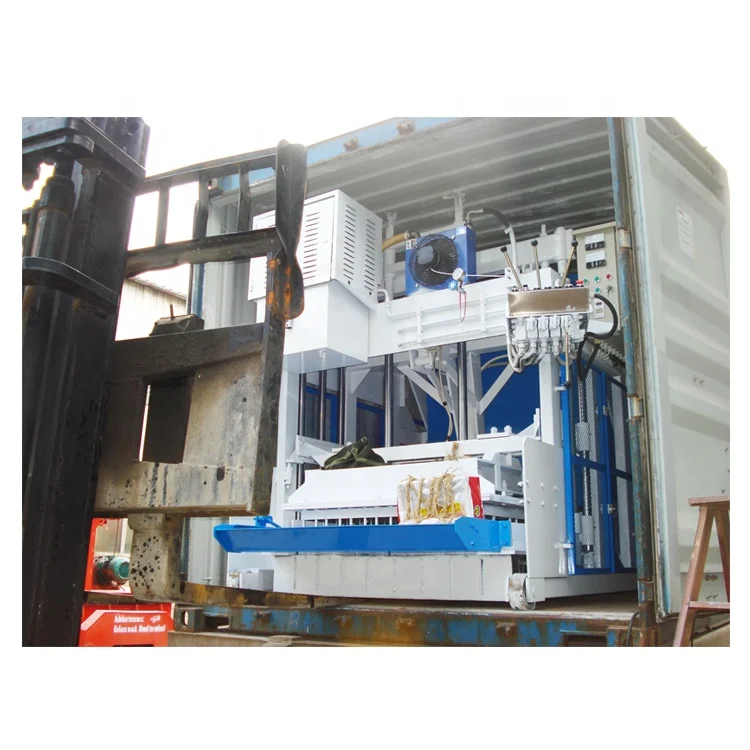
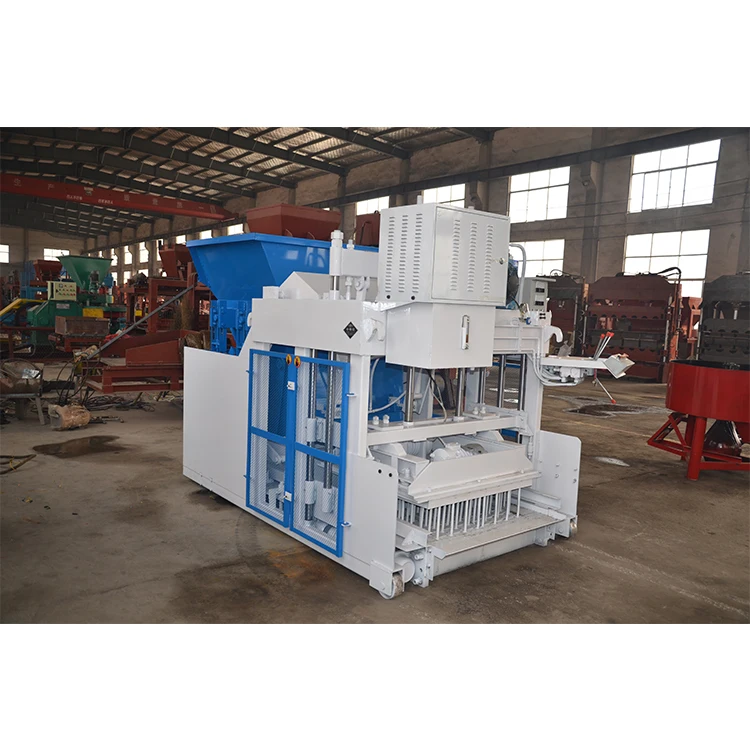 Mobile block machine