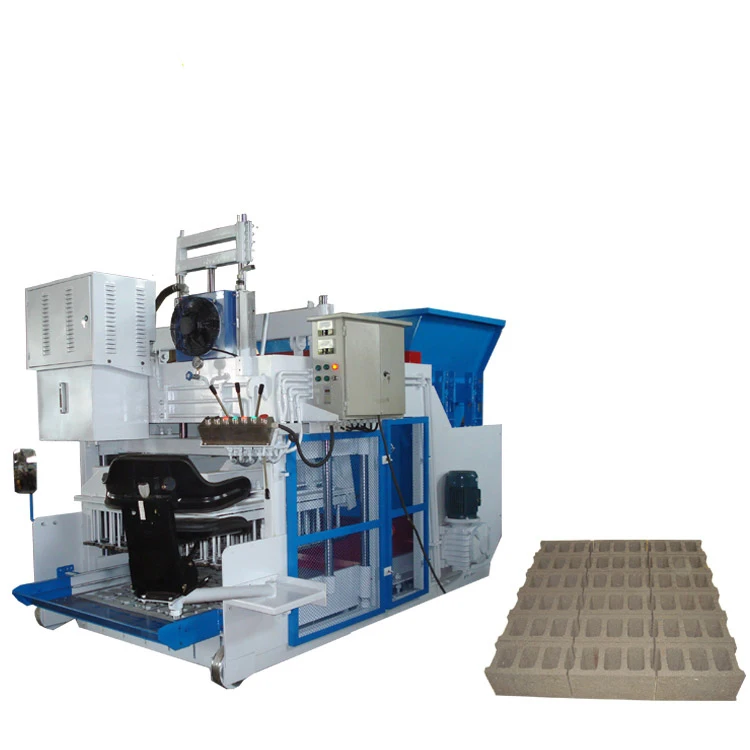
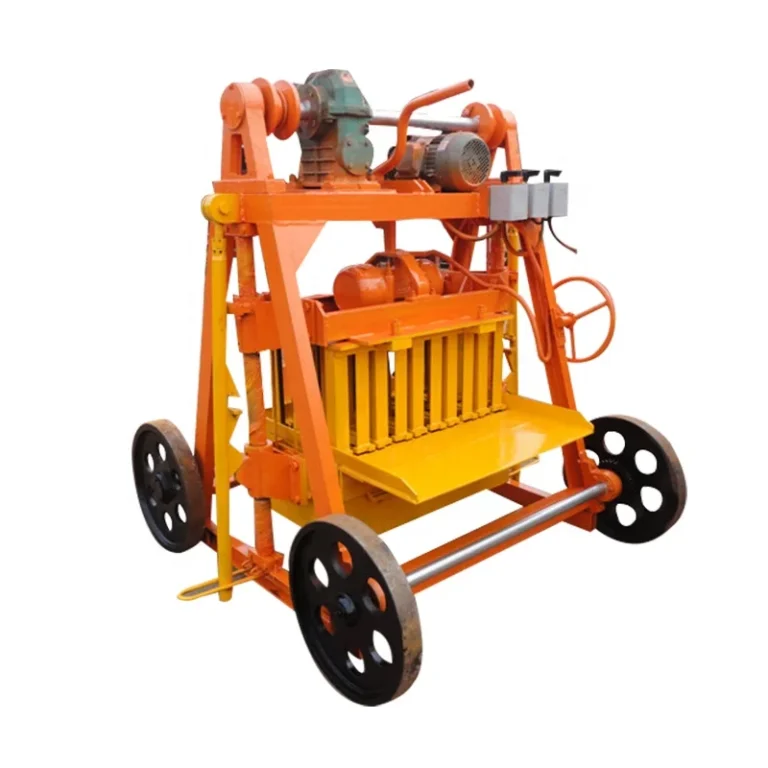
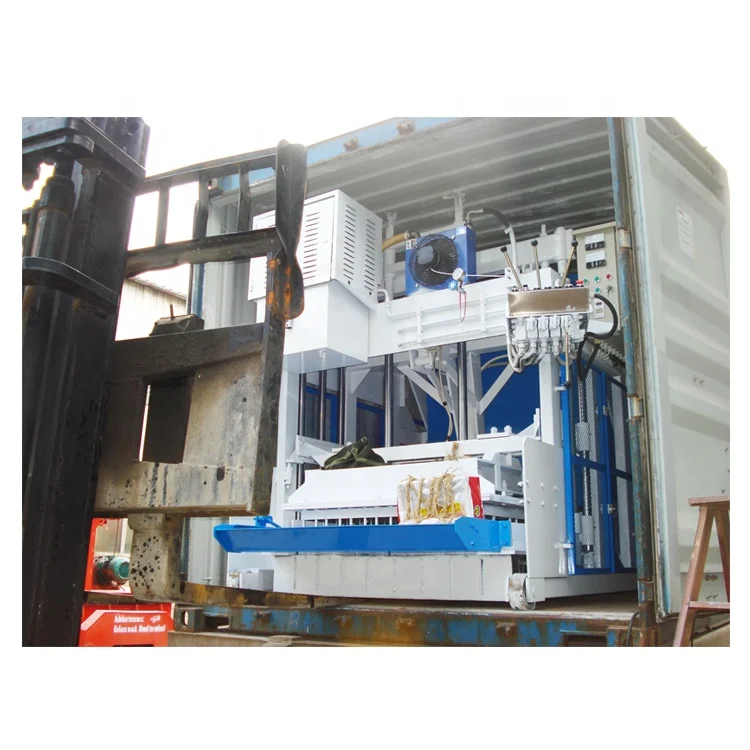
Single-Focus Block Machinery — machine, mould and power source are configured as one matched system around your local mix and site conditions, not assembled from unrelated catalogues.
Technical Specifications
| Parameter |
Value |
| Model |
QMR4-45 |
| Product Type |
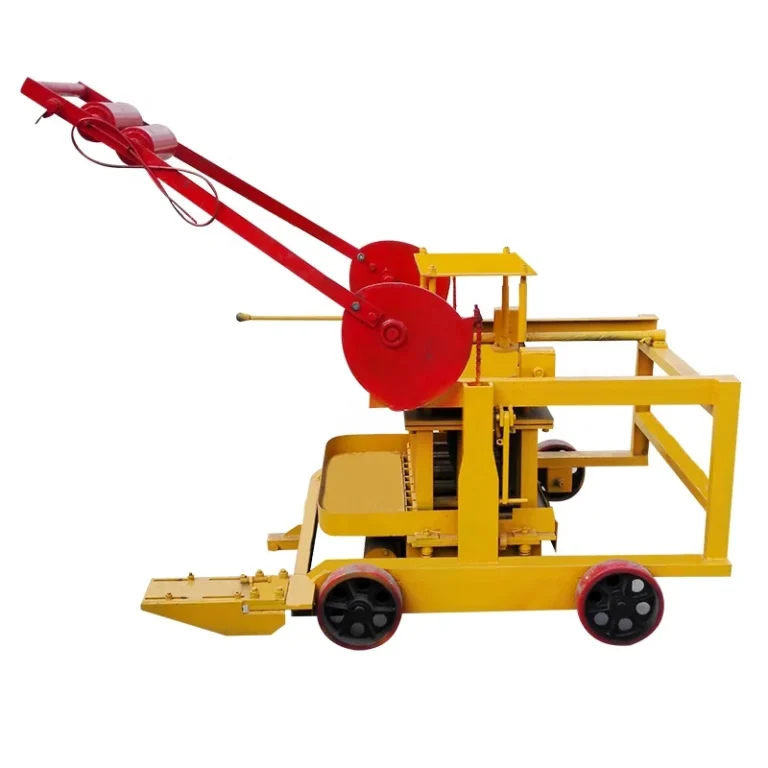
Mobile Egg Laying Block Making Machine |
| Overall Dimensions (L×W×H) |
2420 × 1320 × 1650 mm |
| Net Weight |
810 kg |
| Rated Power |
6 kW |
| Diesel Engine Option |
6 kW or 6–8 HP |
| Voltage & Frequency |
220V / 380V or configured to local supply |
| Moulding Cycle |
40–45 s |
| Pallet Requirement |
None (egg laying type) |
| Output Capacity |
3000 pcs/day for 400×200×200 mm hollow block; 3500 pcs/day for 400×150×200 mm; 4500 pcs/day for 400×120×200 mm (basis to be confirmed for actual mix and site) |
| Standard Mould Formats |
400×200×200 mm (4 pcs/mould), 400×150×200 mm (5 pcs/mould), 400×120×200 mm (6 pcs/mould) |
| Automation Level |
Manual / small-scale mobile |
| Power Source |
Electric motor or diesel engine |
| Assembly State |
Fully assembled, mobile on wheels |
| Warranty |
One year guarantee for the whole machine |
| Certification |
CE |
Application Suitability
| Application |
Material or Output |
| On-site hollow block production for housing projects |
Crushed stone, sand, cement and water mix laid directly on concrete floor |
| Small workshop solid block runs |
Local river sand or manufactured sand with cement binder |
| Remote infrastructure sites with unreliable grid |
Diesel-powered multicellular brick and paving brick output |
| First-time entrepreneur block plant |
Hollow and solid formats with minimal capital and no fixed curing racks |
What "3000 Blocks a Day" Actually Means on Your Site
Daily output only holds when the block format, mix design and floor conditions all match the figures stated in the capacity table.
I have watched contractors order a mobile egg laying block making machine manufacturer quote based on a headline number, then discover on arrival that their local sand carries high clay content and the moulding cycle stretches well beyond the stated 40–45 seconds. The machine still runs, but the daily count drops. That gap between brochure capacity and site reality is where projects lose margin [NEED_CITE: impact of aggregate quality on block cycle time and density]. Confirming your exact block format, local material source and floor flatness before production begins is the only way the output figures in the table above remain meaningful.

Where the QMR4-45 Fits in the Full Range
The QMR4-45 occupies the entry tier of the mobile egg-laying line. It serves contractors who need hollow block output on a project site without investing in pallets, curing racks or a batching plant. For buyers surveying options before committing to a semi-automatic or fully automatic tier, this model defines the lower boundary of investment and footprint. When your daily volume or format list outgrows what a single mobile unit delivers, the next step up introduces pallet-based machines with higher vibration force and automated stacking.
Diesel or Electric — Matching Power to Your Site Reality
Many project sites in rural or developing regions do not guarantee stable three-phase power throughout the working day. The QMR4-45 is available with either a 6 kW electric motor or a 6–8 HP diesel engine, allowing you to select the source that matches what is actually available on your ground. Diesel operation keeps vibration force and block density consistent even when grid voltage fluctuates or drops out entirely [NEED_CITE: voltage instability effects on hydraulic block press performance]. The choice must be confirmed in writing before the machine enters production, because swapping power sources after assembly requires mechanical changes that delay commissioning.
Reading the Specs That Matter on a Mobile Machine
The 2420 × 1320 mm footprint and 810 kg net weight mean the QMR4-45 moves along the production floor on its own wheels — no forklift, no overhead crane. Moulding cycle sits at 40–45 seconds, and that figure assumes a well-graded mix with consistent moisture; heavier or stickier material will extend the cycle. The egg-laying design removes pallet cost entirely: blocks are deposited directly onto a prepared concrete surface, which must be level and smooth enough to prevent base cracking. Three mould formats ship standard — 400×200×200, 400×150×200 and 400×120×200 mm — each producing a different piece count per mould, so daily output shifts depending on which format your market orders most.
The Hidden Cost of Skipping the Floor Survey
An egg-laying machine lays every block on the ground it rolls across. If the concrete floor is uneven, blocks crack at the base or lean before the mix sets, and the operator spends time correcting rather than producing. I have seen sites where a week was lost grinding high spots and patching low areas after the machine had already arrived. A simple level check across the planned production lane, done before the machine ships, removes that cost entirely [NEED_CITE: floor flatness tolerance for egg laying block machines].
Why Source This Machine Here
Block machinery is our single focus, so the QMR4-45 is specified together with its mould, power source and any optional equipment as one matched package rather than assembled from separate suppliers. Configuration is set against your actual mix design, local aggregate and target block format — not pulled from a default catalogue page. Mould design and supply cover the formats your market actually sells, with custom drawings available when standard sizes do not match. Automation level is selectable, so a buyer starting with the QMR4-45 can move to a pallet-based semi-automatic line later without replacing the entire operation. Installation and commissioning support includes operator training at your site.
Documentation & Verification
- Line layout showing production lane length and floor area for the QMR4-45 footprint
- Capacity calculation stating which block format each daily output figure assumes
- Mould drawing and format list covering all three standard sizes and custom options
- Voltage, frequency and power source confirmation sheet signed before production
- Operation and maintenance manual with wear parts list for the QMR4-45
- Factory test record on your specified block format before dispatch
Installation, Commissioning & Support
- Concrete floor must be level within tolerance across the full production lane for egg-laying operation
- Electrical supply or diesel fuel station positioned within reach of the 2420 mm machine length
- Machine arrives fully assembled on wheels — no on-site welding or structural work required
- First-day commissioning includes cycle timing verification against your local mix material
- Operator training covers mould change procedure across all three hollow block formats
- Wear parts and mould maintenance schedule provided for the first year of operation
Before You Send an Inquiry
Share the exact block format your market buys most, the daily volume you need, and whether your site runs on grid power or diesel. Include a sample or description of your local sand and aggregate so we can confirm the mix will work with the QMR4-45 cycle. If your production area has height or length restrictions, note those so the 2420 × 1320 × 1650 mm envelope is checked against your floor plan before quotation.
Frequently Asked Questions
Q: How is daily output calculated and which block format does each figure assume?
A: The 3000-piece figure assumes 400×200×200 mm hollow blocks, 3500 pieces assumes 400×150×200 mm, and 4500 pieces assumes 400×120×200 mm — all at the stated 40–45 second cycle. Your actual mix, aggregate grading and floor condition can shift the cycle time, so these figures serve as the starting reference, not a guarantee.
Q: Can I switch between diesel and electric power after delivery?
A: The machine is built with one power source configured at the factory. While a field conversion is mechanically possible, it requires component changes that interrupt production. Confirming diesel or electric at the order stage avoids that downtime and ensures vibration pressure is calibrated correctly for the chosen source.
Q: What floor preparation does an egg-laying machine need?
A: The production surface must be a smooth, level concrete slab free of major cracks and debris. A tolerance check across the planned lane length prevents blocks from cracking or tilting during the moulding cycle. We provide flatness guidance before the machine ships so your site team can prepare in advance.
Q: Which other models should I consider if my volume outgrows the QMR4-45?
A: If daily demand exceeds what a single mobile unit sustains, a pallet-based semi-automatic machine delivers higher throughput and wider format options. The full range spans from this entry-tier mobile unit through high-capacity automatic lines, and the selection depends on your target output and available plant footprint.
Q: What mould formats are available, and can I order a custom mould later?
A: Three hollow block moulds ship standard: 400×200×200, 400×150×200 and 400×120×200 mm. Custom moulds can be designed to your drawings at order or added later as your market demands new formats. Each custom mould is matched to the QMR4-45 vibration force and hydraulic settings.

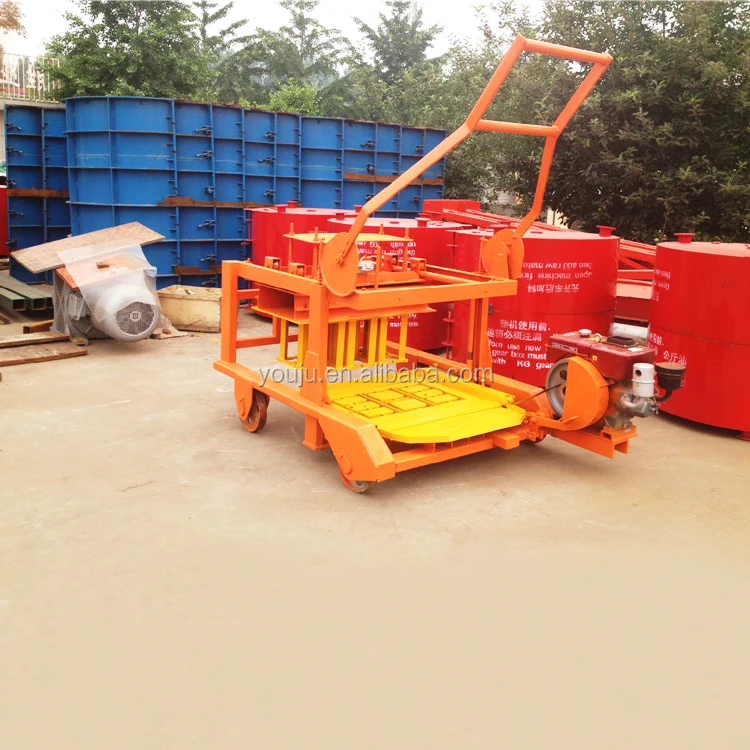
 Mobile block machine