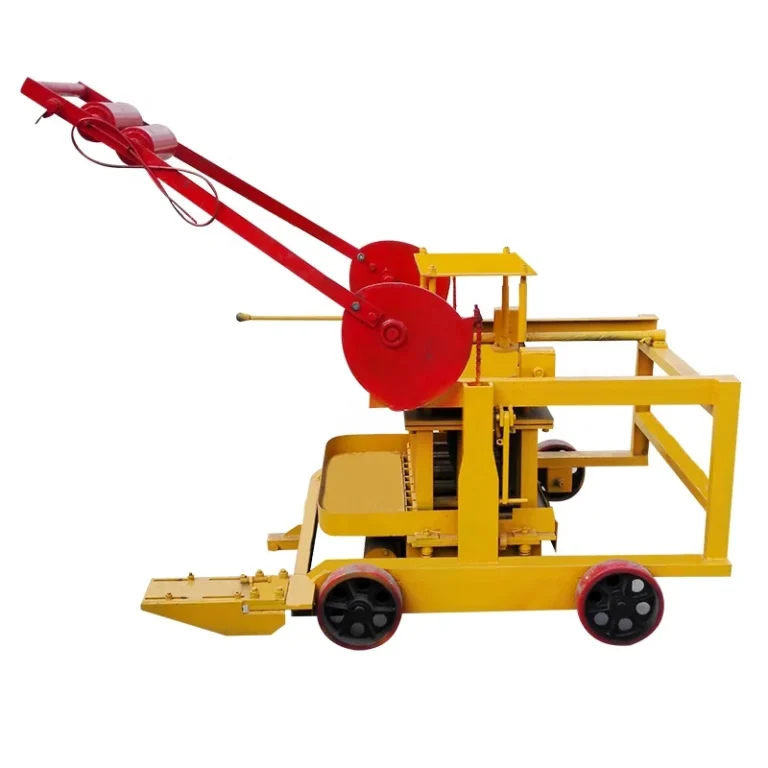
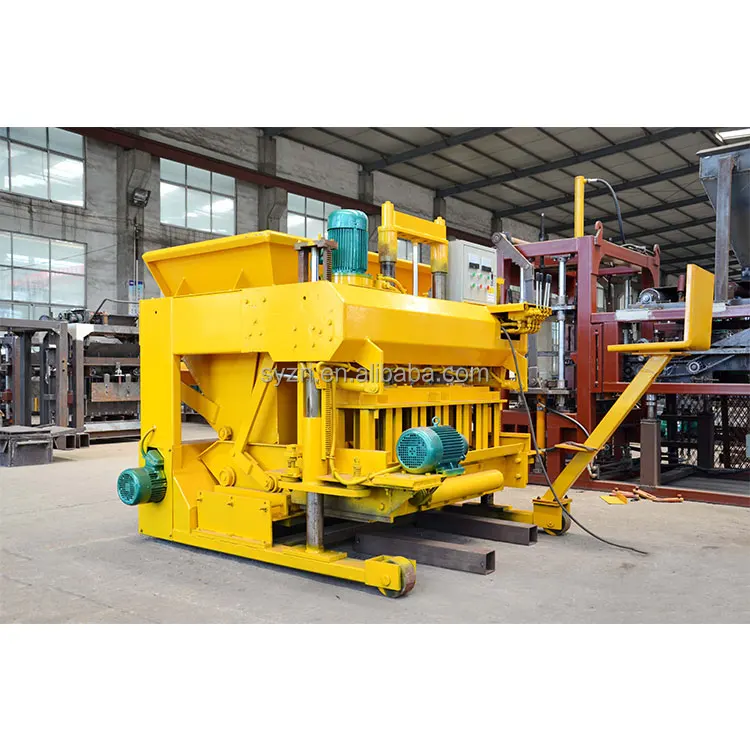
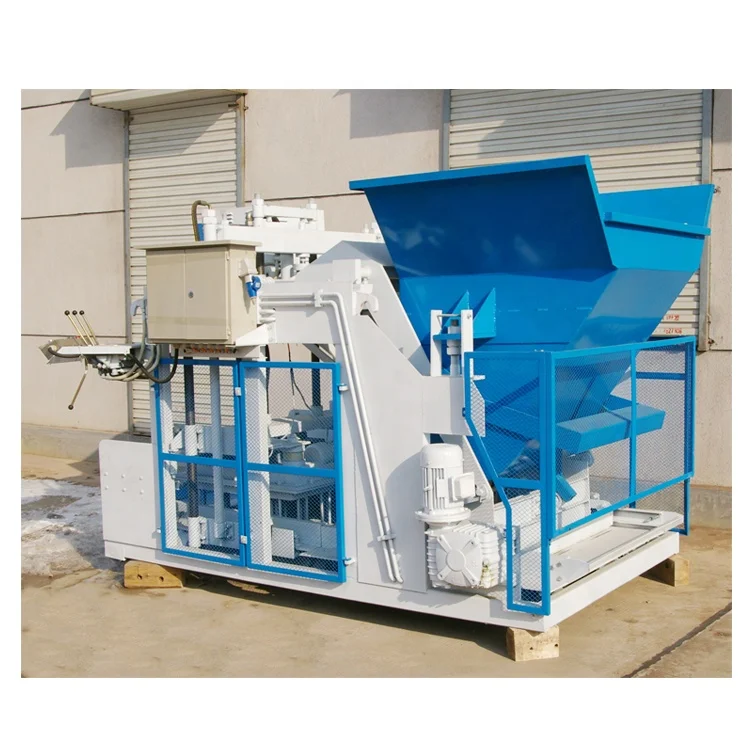
Single-focus machinery engineering — every QMJ4-45 mobile block making machine for sale ships with a capacity sheet calculated per block format, not a generic cycles-per-hour claim that collapses when your mould cavity count changes.
Technical Specifications
| Parameter |
Value |
| Product Type |
Mobile Egg Laying Block Making Machine |
| Model |
QMJ4-45 |
| Molding Capacity |
4 pcs/mould (basis not stated in source — confirm block format) |
| Vibration Frequency |
2400 r/m |
| Productivity |
2600-4000 pcs/day (basis not stated in source — confirm block format / material / thickness) |
| Hollow Block Productivity (400×200×200 mm) |
4 pcs/mould, 40-45 s cycle, approx. 3000 pcs per 8-hour shift |
| Hollow Block Productivity (400×150×200 mm) |
5 pcs/mould, 40-45 s cycle, approx. 3500 pcs per 8-hour shift |
| Hollow Block Productivity (400×120×200 mm) |
6 pcs/mould, 40-45 s cycle, approx. 4500 pcs per 8-hour shift |
| Forming Method |
Mold vibration (twice-vibration per cycle) |
| Demold Method |
Manual |
| Turning Method |
Manual |
| Total Power |
6 kW |
| Power Source |
Diesel / Petrol engine |
| Molding Cycle |
45 s |
| Automation Level |
Manual operation, egg-laying type |
| Pallet Requirement |
No pallet required (egg-laying onto ground) |
| Warranty |
One year for the whole machine |
Application Suitability
| Application |
Material or Output |
| On-site hollow block production at remote construction projects |
Crushed stone, river sand, cement mixes laid directly onto prepared ground |
| Small workshop cement product manufacturing |
Solid blocks, multicellular bricks, and standard bricks from locally sourced aggregate |
| First block plant for entrepreneurs with limited capital |
Hollow blocks and paving bricks on open lots without fixed factory infrastructure |
| Contractor-run housing development production |
Site-specific concrete masonry units using available fill material and cement |
Why the "Pieces per Day" Number Keeps Disappointing Buyers
The output figure only matters when it names the block size, mould cavity count, and cycle time behind it.
A mobile block making machine for sale listed at "4000 pieces per day" sounds like a solid return on a compact investment. Then the machine arrives, you load a 400×200×200 mm hollow block mould with four cavities, and the actual shift output settles around 3000 pieces. The machine is not broken — it was simply quoted on a smaller format with more cavities than the one your market actually buys. I have watched contractors in West Africa base their entire project timeline on a single productivity number, only to discover halfway through that the machine needs a longer cycle when the local river sand carries high silt content and the mix must run drier to hold shape [NEED_CITE: impact of aggregate silt content on block cycle time]. The QMJ4-45 does not hide behind an aggregate number. Each of the three common hollow block formats carries its own cavity count and shift output.

Where This Machine Sits on the Output Tier Ladder
The QMJ4-45 occupies the entry tier of mobile block production — below semi-automatic stationary presses with conveyor-fed pallets and well below fully automatic lines with stacking and cubing. That placement is deliberate. Buyers who need blocks on a remote job site, or entrepreneurs proving that block production can work in their market before committing to a fixed plant, do not need a conveyor line, a curing rack system, or a forklift fleet. The engine-powered egg-laying design removes the pallet entirely from the equation. If your daily volume requirement exceeds what a single-shift manual machine can deliver, the next step up is a semi-automatic stationary press with pallet circulation — and knowing where you stand on this ladder before you buy prevents over-investing in automation you cannot yet justify.
Engine Power and What It Actually Buys You
Grid electricity on remote project sites is unreliable or absent, and running a cable from the nearest transformer can cost more than the machine itself. The QMJ4-45 runs on a diesel or petrol engine delivering 6 kW total power, which is enough to drive the vibration motor and the hydraulic assist for demolding. This is not a compromise — it is a configuration choice that matches the reality of construction sites in regions where generator fuel is cheaper and more available than three-phase industrial power [NEED_CITE: diesel versus grid power economics for small block plants]. The trade-off is noise and exhaust, which matters less on an open lot than inside a workshop. Engine type must be confirmed before production so the fuel system matches what is available locally.
Vibration, Cycle Time, and Block Density
The twice-vibration molding cycle on the QMJ4-45 runs two vibration bursts per molding sequence at 2400 r/m, which compresses the mix more evenly than a single-pass vibration of the same duration. For hollow blocks in the 400×200×200 mm format, the cycle completes in 40-45 seconds — fast enough to keep operators moving but slow enough for the mix to consolidate under vibration. The 45-second nominal cycle is a baseline; actual cycle length shifts with mix workability and the operator’s feeding speed. Block density here is determined by vibration force interacting with your specific aggregate grading and cement ratio, not by a setting on a control panel. When I first calibrated a QMJ4-45 on a site where the local sand ran high in clay, the standard vibration duration produced blocks that crumbled at the edges — adjusting the water content and letting the second vibration burst run slightly longer brought the compressive strength into an acceptable range.
When a Mobile Machine Costs More Than Expected
The most common hidden cost with a mobile egg-laying machine is ground preparation. Blocks are laid directly onto the earth, which means the curing surface must be flat, firm, and level — soft or uneven ground produces blocks with warped bases that crack during handling. Buyers who budget only for the machine itself often discover that grading and compacting a curing area large enough for several thousand blocks per day requires a separate earthworks pass [NEED_CITE: ground preparation requirements for egg laying block machines]. Curing space is the second factor: each day’s output needs to remain undisturbed for initial set before the area can be cleared for the next shift, so the total curing footprint must accommodate multiple days of production simultaneously. Underestimating this space leads to a bottleneck that no machine upgrade can solve.
Why Source This Machine From Here
Block machinery is the only product category this operation builds, which means the QMJ4-45 arrives with its mould, vibration system, and engine matched as a set rather than assembled from separate suppliers who never tested the combination. Configuration starts with the buyer’s target block format and local aggregate, so the mould cavity count and vibration frequency are chosen for your mix rather than pulled from a catalogue default. Custom mould drawings are available when your market sells a format outside the standard hollow and solid range. The automation level is selectable across the full range — start with the QMJ4-45 manual egg-laying configuration and move to a stationary semi-automatic press later without discarding the engineering knowledge you gained on block density and mix design. Documentation ships with the machine: factory test records, hydraulic and electrical schematics, and packing photographs before the container is sealed.
Documentation & Verification
- Capacity calculation sheet listing output per block format with mould cavity count stated
- Mould drawing and format list matched to your target block dimensions
- Voltage and engine type confirmation record signed before production begins
- Factory test record demonstrating cycle time and block density on your mix
- Hydraulic and electrical schematic for on-site maintenance reference
- Packing photographs taken before container loading for shipment verification
Installation, Commissioning & Support
- Ground must be compacted and level across the full curing area before first operation
- Engine fuel system configured to locally available diesel or petrol grade
- Vibration motor wiring checked against site generator output where grid power is absent
- First-shift commissioning includes cycle timing and block density verification on your aggregate
- Operator training covers manual demolding technique and mould cavity filling sequence
- Wear parts list provided with reorder intervals for vibration motor and mould liners
What to Prepare Before Requesting a Quote
Tell us which hollow block format your market sells — the 400×200×200, 400×150×200, or 400×120×200 — and what daily volume you need to sustain your project. Share the type of aggregate available locally, including sand source and maximum stone size, so the vibration and mix guidance match your material. Confirm whether diesel or petrol is more practical on your site and what fuel grade you typically run.
Frequently Asked Questions
Q: Where does the QMJ4-45 sit on the block machine range, and when should I step up to semi-automatic?
A: The QMJ4-45 is the entry tier — manual, engine-powered, egg-laying with no pallets or conveyor needed. Step up to a semi-automatic stationary press when your daily volume exceeds what one manual operator can sustain across an 8-hour shift, or when you need pallet-based curing for consistent block dimensions on a larger production area.
Q: How do I verify the real daily output for my block format?
A: Request a written capacity sheet that breaks down output per block size with mould cavity count and cycle time stated — for the QMJ4-45, that means 3000 pieces per 8-hour shift for 400×200×200 mm blocks, 3500 for 400×150×200, and 4500 for 400×120×200. Any single aggregate number without these details is incomplete.
Q: What ground and site conditions does an egg-laying machine require?
A: The curing surface must be compacted, flat, and firm enough that blocks do not settle or warp during initial set. You need enough area for multiple days of production simultaneously, since yesterday’s blocks must cure before the ground is cleared. Weather exposure should be planned for with temporary shelter during rain.
Q: Can I start with the QMJ4-45 and upgrade to a stationary line later?
A: Yes. The mix design knowledge and block density targets you establish on the QMJ4-45 carry directly into a stationary press configuration. Mould designs may need adaptation for pallet-based stationary machines, but the engineering work on your specific aggregate and target format transfers to the next tier.
Q: What is the delivery arrangement and loading plan for this model?
A: The QMJ4-45 ships as a compact unit suitable for standard container loading, with the engine and vibration assembly secured for transit. Lead time depends on current stock and engine configuration — confirm dispatch timing at the quotation stage so it aligns with your project start date.

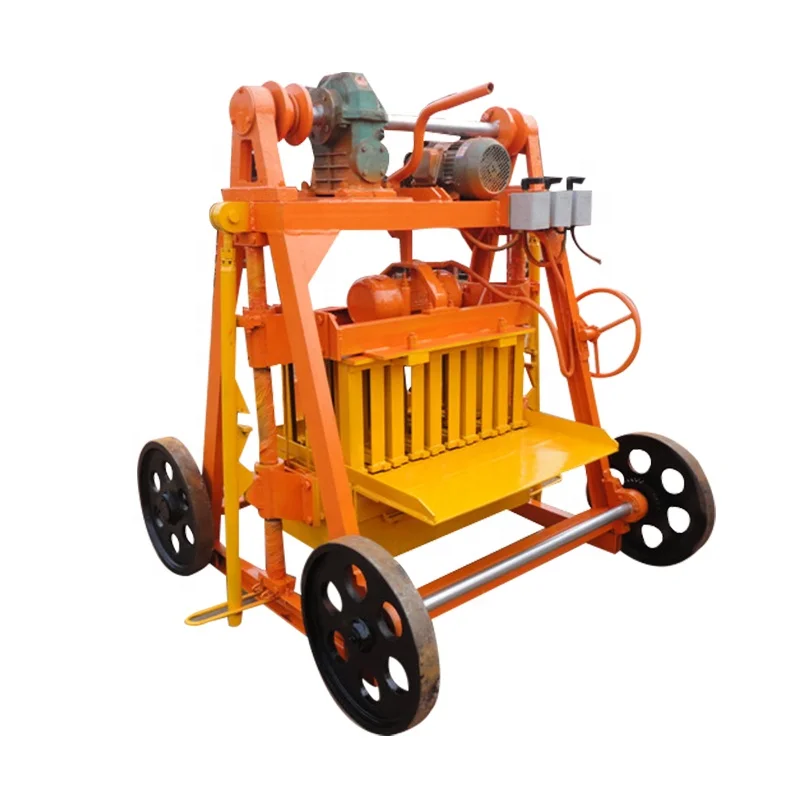
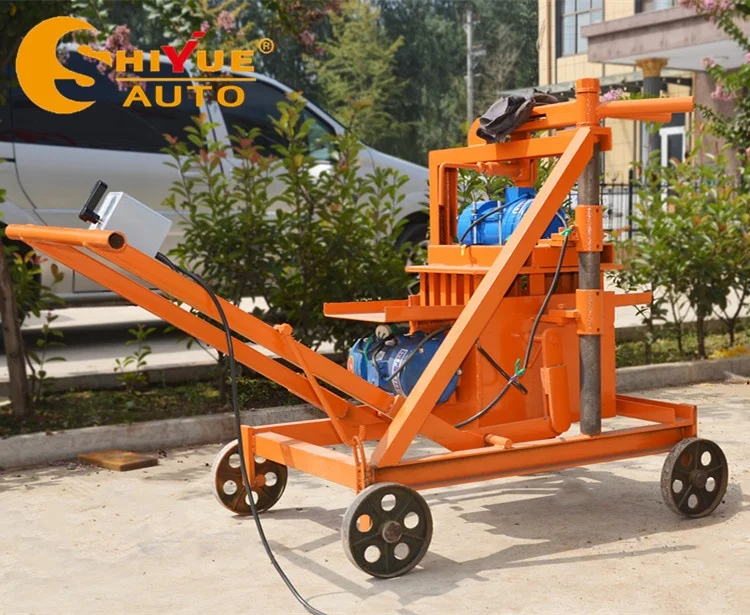 Mobile block machine