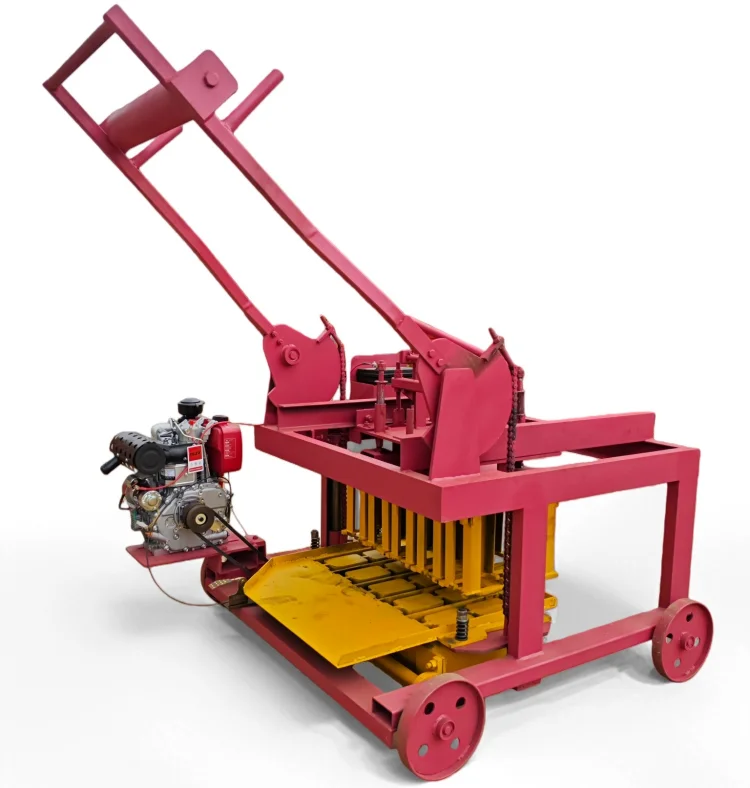
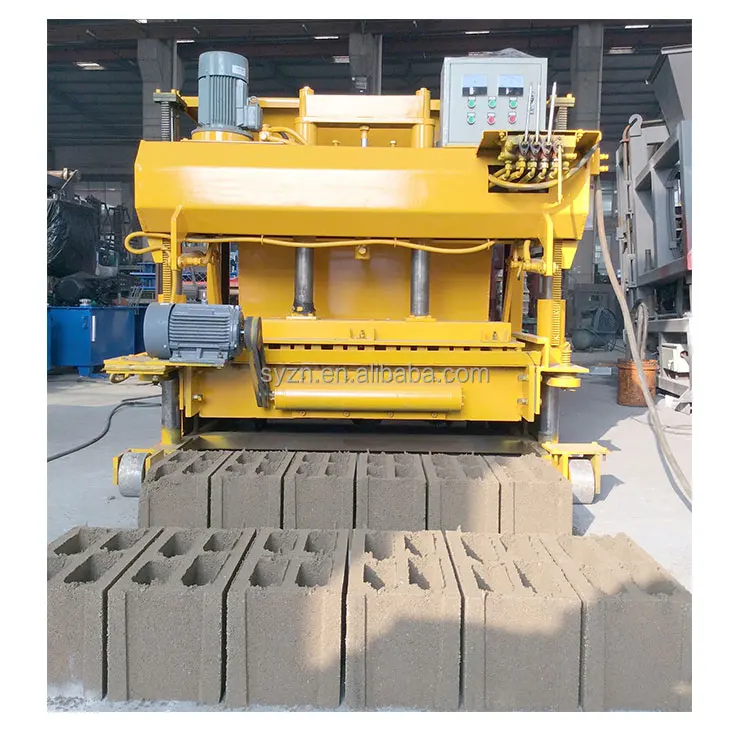
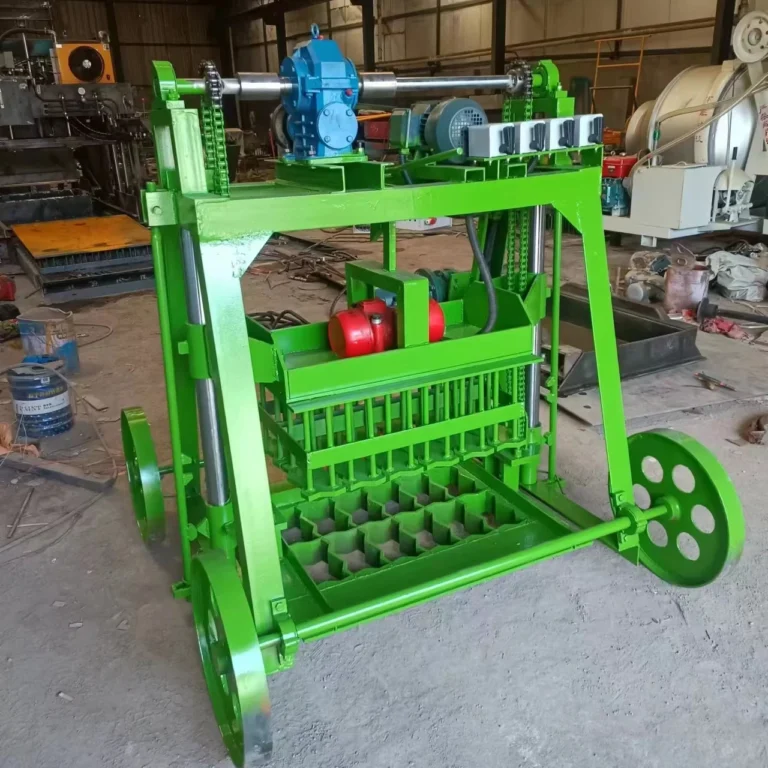
Single-Focus Block Machinery — this QMR4-45 mobile diesel egg laying block machine is specified as a matched system of press, mould and diesel power unit rather than assembled from separate suppliers.
Technical Specifications
| Parameter |
Value |
| Product Type |
Mobile Diesel Concrete Block Making Machine (Egg Laying Type) |
| Model |
QMR4-45 |
| Overall Dimensions (L×W×H) |
2420×1320×1650 mm |
| Net Weight |
810 kg |
| Rated Power |
6 kW |
| Diesel Engine |
6 kW or 6-8 HP |
| Voltage & Frequency |
220 V / 380 V or customized to client local voltage (frequency basis to be confirmed) |
| Control System |
Basis not stated in source (confirm PLC / relay / manual) |
| Moulding Cycle |
40-45 s |
| Pallet Requirement |
No pallet required (egg laying type) |
| Output Capacity (Hollow block 400×200×200 mm) |
4 pcs/mould, 3000 pcs/day (based on an 8-hour shift) |
| Output Capacity (Hollow block 400×150×200 mm) |
5 pcs/mould, 3500 pcs/day (based on an 8-hour shift) |
| Output Capacity (Hollow block 400×120×200 mm) |
6 pcs/mould, 4500 pcs/day (based on an 8-hour shift) |
| Mould Format |
Hollow block, multi-cellular bricks, paving bricks, standard bricks (mould change time basis to be confirmed) |
| Automation Level |
Manual operation with diesel hydraulic assist |
| Stacking Method |
On-site egg laying (no pallet, no automatic stacking) |
| Hydraulic Pressure |
Basis to be confirmed |
| Vibration Force |
Basis to be confirmed |
| Warranty |
1 year for whole machine |
Application Suitability
| Application |
Material or Output |
| On-site contractor block production |
Crushed stone, sand, and cement mixes laid directly on cured concrete floors |
| First-line entrepreneur plant |
Hollow and solid blocks in areas without stable three-phase grid power |
| Rural or off-grid housing projects |
Paving and standard bricks using locally sourced volcanic or river aggregate |
| Small-scale building material supply |
Multi-cellular bricks produced and cured in an open-air yard |
What a "3000 Pieces a Day" Promise Leaves Out for a Mobile Block Machine
Real daily output only means something when the block format, shift length and mix design are all stated upfront.
A mobile block machine manufacturer quoting cycles per hour without naming the block size is a common reason buyers end up disappointed at the curing yard. If the figure assumes a 400×120×200 mm hollow block but your market actually buys 400×200×200 mm, your daily volume drops by a third before you even start [NEED_CITE: honest capacity calculation practices in block making machinery]. I once had a buyer in East Africa who ordered a mobile diesel block machine off a brochure headline, ran a local volcanic aggregate that the vibration force was never tuned for, and watched half the blocks crumble during curing. That is why the format and the stone you are crushing must come before the quotation.

Placing the QMR4-45 Within the Output Tiers
The QMR4-45 sits at the entry tier of the full block machine range, aimed at buyers who need to produce on a project site without investing in a fixed plant, a pallet fleet, or a curing rack system. Its compact footprint and diesel hydraulic power unit make it the starting point before stepping up to semi-automatic or fully automatic stationary lines.
Where a Diesel Mobile Unit Fits the Site
This machine is designed for outdoor concrete floor operation where grid electricity is unreliable or entirely absent. The egg laying method means blocks are deposited directly onto the ground, eliminating the need for pallets and the handling equipment that stationary plants require, which keeps the initial capital outlay and the site footprint at the lowest tier of the range.
Reading the Core Specifications for Real Output
The moulding cycle of 40-45 seconds sets the base rhythm, but the actual output depends entirely on which mould is fitted. A 400×200×200 mm hollow block yields 4 pieces per cycle, while a 400×120×200 mm format yields 6, which is why the capacity table must be read per format, not as a single headline number. The 6 kW diesel engine provides the hydraulic pressure and vibration needed to compact local aggregate; if your stone is highly abrasive or lightweight like volcanic scoria, the mix design must be confirmed before the engine and vibration settings are finalized. The overall dimensions of 2420×1320×1650 mm and 810 kg net weight keep the unit movable by a standard site forklift, yet heavy enough to resist walking during the vibration phase [NEED_CITE: vibration isolation requirements for mobile egg laying block machines].
The Hidden Cost of Skipping the Aggregate Conversation
Ordering a mobile block machine without confirming your local aggregate and target block format often leads to inconsistent block strength and excessive mould wear. When the vibration force and hydraulic pressure are not matched to the mix, blocks crack at the curing stage or fail compression tests, forcing the producer to rework or discard entire batches [NEED_CITE: block compressive strength testing standards]. The result is lost material, lost time, and a machine that sits idle while the supplier tries to source a different mould or adjust settings remotely.
Why Source This Range Here
Block machinery is the single focus of this operation, so the QMR4-45 is not a generic catalogue item but a machine whose diesel engine, mould and hydraulic settings are discussed against your actual site conditions. Configuration is set against the buyer’s mix design and local aggregate rather than a default chart. Mould design covers the formats your market actually sells, including custom drawings if your region demands a non-standard kerbstone or interlocking profile. Automation level is selectable across the range, so a buyer starting with this mobile unit can later step up to a semi-automatic stationary line without changing suppliers. Installation support includes operator training on mould change and daily maintenance, and wear parts are listed before the machine ships.
Documentation & Verification
- Line layout and capacity calculation stating the hollow block format assumed for each output figure
- Mould drawing and format list confirming exact block dimensions for the QMR4-45
- Voltage, frequency and diesel engine specification confirmed in writing before production
- Factory test record with actual cycle time measured per mould format on your mix
- Operation and maintenance manual covering diesel hydraulic system servicing
- Packing photographs and customs documentation support for the mobile unit
Installation, Commissioning & Support
- Level concrete floor required; the 2420×1320 mm footprint needs clear space for egg laying and curing
- Diesel engine requires standard fuel supply; no electrical grid connection needed for the 6 kW unit
- Machine ships fully assembled; only mould installation and hydraulic line check on arrival
- First run includes cycle time verification on the buyer’s actual aggregate and cement mix
- Operator training covers mould change procedure and daily hydraulic system inspection
- Wear parts list provided with the QMR4-45 for planned reordering of mould liners and seals
Preparing Your Inquiry
To move from a general mobile block machine manufacturer search to a firm configuration, share the exact block formats your market sells and the daily volume you need per format. Confirm the type of aggregate you can source locally, the cement ratio you plan to use, and whether your site has any grid power available for auxiliary equipment. Finally, state the voltage and frequency of any existing electrical supply so that control components can be matched before the machine enters production.
Frequently Asked Questions
Q: How is the 3000–4500 pcs/day output calculated, and which block format does each figure assume?
A: Each output figure is based on an 8-hour shift using a specific hollow block dimension. The 3000 pcs/day assumes 400×200×200 mm blocks at 4 pieces per mould, 3500 pcs/day assumes 400×150×200 mm at 5 pieces, and 4500 pcs/day assumes 400×120×200 mm at 6 pieces, all at a 40-45 second cycle.
Q: Where does the QMR4-45 sit in the full machine range — when should a buyer step up to semi-automatic?
A: It is the entry-tier mobile unit for sites with no fixed plant and no pallet infrastructure. Buyers needing higher daily volume, consistent pallet-based stacking, or automated batching should look at semi-automatic stationary lines that add pallet feeding and stacking while keeping investment moderate.
Q: What site conditions does an egg laying machine require versus a stationary plant?
A: A level, cured concrete floor is essential for the machine to travel and lay blocks directly. Adequate open-air curing space is needed around the production path. Unlike stationary plants, no pallet storage, rack system, or covered factory building is required.
Q: How do I confirm voltage, frequency and diesel engine specification for my country before ordering?
A: Provide your local grid voltage and frequency for any auxiliary equipment, and confirm the diesel engine rating you prefer (6 kW or 6-8 HP). These details are documented in writing before production so that control components and engine supply match your market.
Q: What mould formats are available for this model, and what is the investment difference to the next tier?
A: The QMR4-45 accepts moulds for hollow blocks, multi-cellular bricks, paving bricks and standard bricks, with custom profiles available on request. Moving to the next output tier involves stepping to a semi-automatic stationary machine that adds pallet handling and higher cycle rates, requiring a larger site and capital outlay.

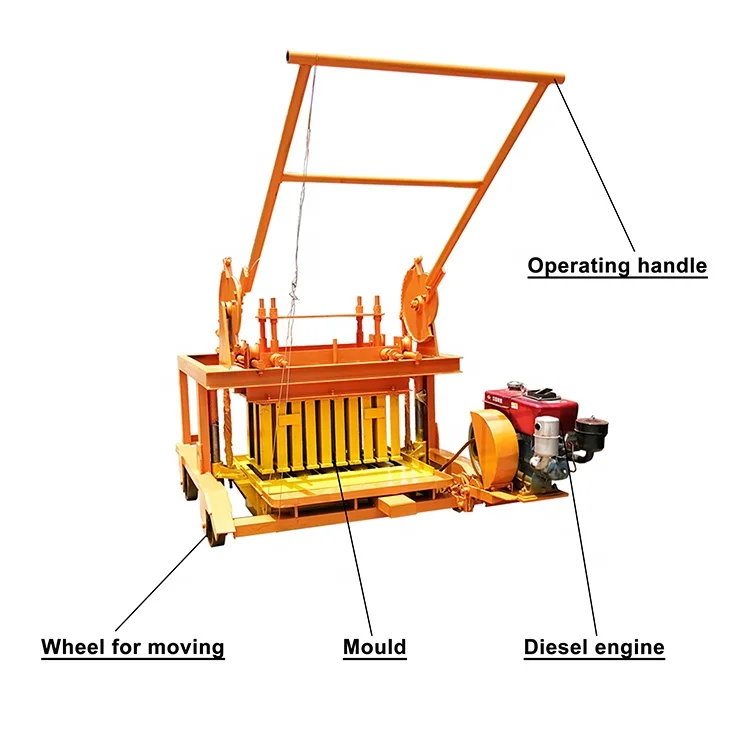
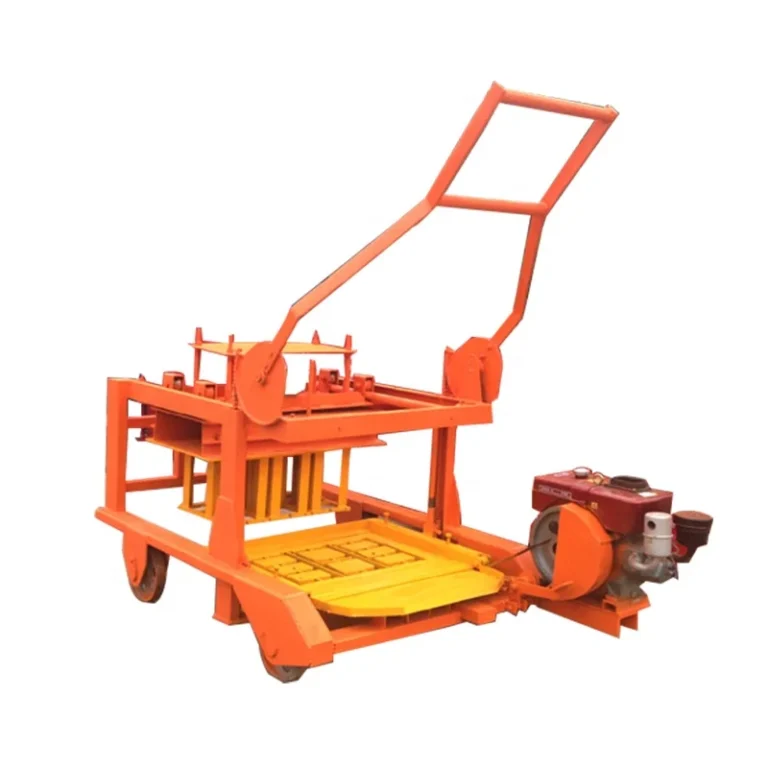 Mobile block machine