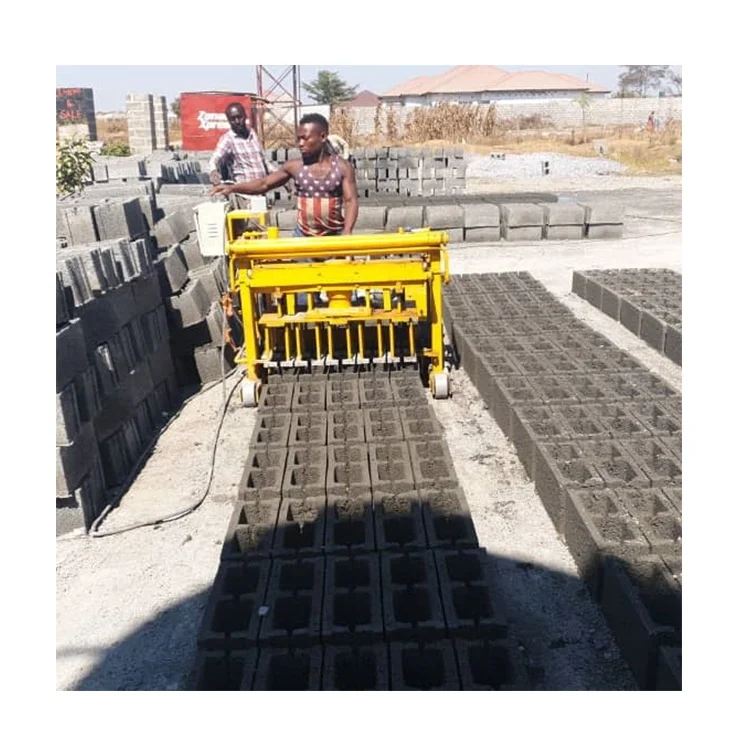
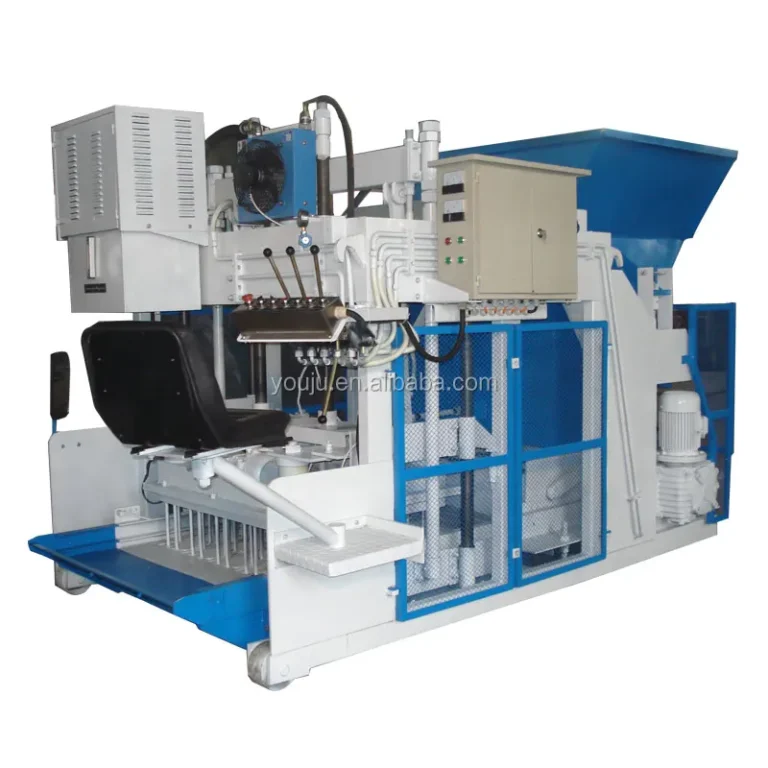
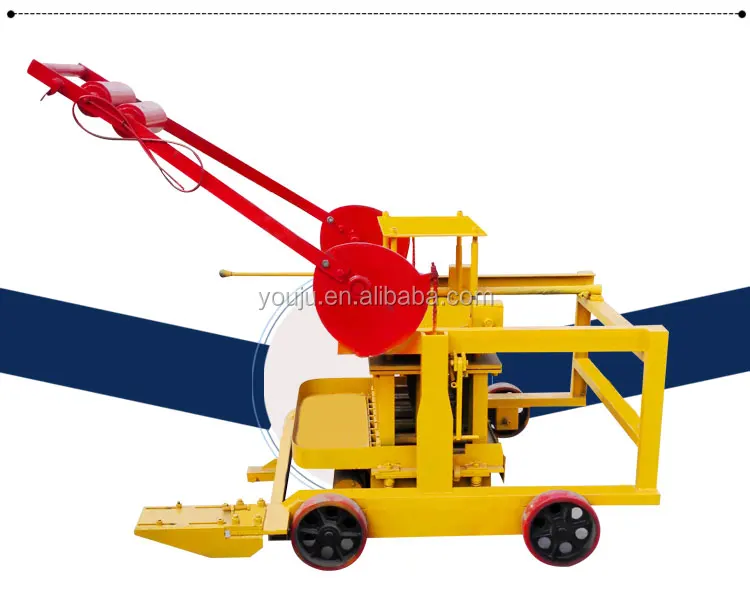
Complete Matched Mobile Unit — diesel engine, mixer and trolley leave the factory specified as one working set, so the QMR4-45 arrives on site ready to lay block without hunting for missing components.
Technical Specifications
| Parameter |
Value |
| Model |
QMR4-45 |
| Product Type |
Mobile Diesel Block Making Machine |
| Molding Cycle |
45 s (basis to be confirmed against block format and mix) |
| Power Source |
Diesel Engine |
| Rated Power |
8 hp |
| Molding Form |
Vibration and Pressure |
| Vibration Force |
60 kN |
| Total Weight |
800 kg |
| Overall Dimensions |
2420 × 1320 × 1650 mm |
| Pallet Requirement |
No pallet required (egg-laying type) |
| Mobility |
Wheeled mobile design |
| Compatible Block Formats |
Paver brick, hollow block, concrete block, solid brick, fly ash brick (basis not stated in source — confirm block format / material / thickness for output capacity) |
| Basic Equipment Included |
JZC350 Diesel Concrete Mixer or JQ350 Diesel Concrete Mixer (Electric Generating Unit); Trolley |
| Automation Level |
Manual / semi-manual operation |
| Voltage & Frequency |
Not applicable (diesel-powered) |
Application Suitability
| Application |
Material or Output |
| On-site hollow block production at housing developments |
Crushed stone, sand and cement mixes laid directly on compacted ground |
| Remote paver brick runs where grid power is absent |
Local river sand or manufactured sand with cement binder |
| First block plant for entrepreneurs with minimal infrastructure |
Fly ash or stone dust blended with cement for solid brick |
| Contractor-produced concrete block on active construction sites |
Coarse aggregate and sand available within haul distance of the job |
What "45-Second Cycle" Actually Means for Your Daily Output
Cycle time only becomes daily output once the block format, wall thickness and mix design are pinned down.
A 45-second mold close sounds straightforward on a spec sheet, but the mobile block machine manufacturer you work with must state which block that figure assumes. A 400 × 200 × 200 mm hollow block fills the mold box in one shot; a thinner paver brick may require a different feed sequence that stretches the real cycle. I once watched a contractor in West Africa plan a full project schedule around catalog output, only to find his local laterite sand needed extra water and longer vibration to reach acceptable strength — his effective daily run dropped sharply [NEED_CITE: aggregate moisture and grading effect on vibration cycle]. Until your own material is tested in the mold, treat any output figure as a starting conversation, not a delivery promise.

Diesel Independence on Unprepared Ground
The 8 hp diesel engine removes the grid from the equation entirely. For a mobile block machine manufacturer supplying contractors who follow the job rather than the power line, this means the QMR4-45 can start producing the week it arrives — no transformer application, no cable trenching, no generator rental on top of the machine itself. Fuel consumption tracks with engine load, so planning a drum supply on site is the only utility conversation you need to have.
No-Pallet Egg-Laying Logistics
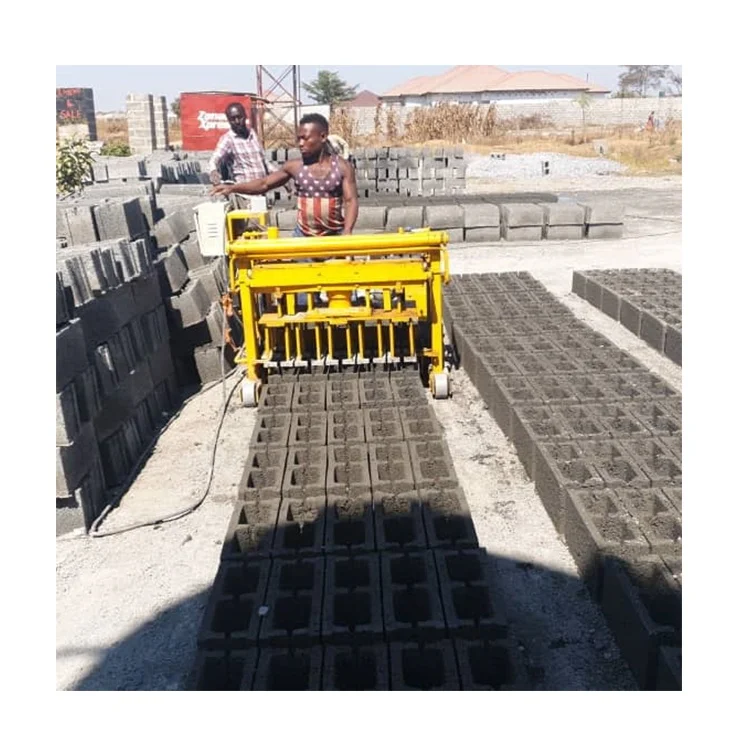
Eliminating pallets removes an entire handling layer from a mobile operation. The machine lays block directly on the ground and walks forward on its wheels, leaving the freshly pressed units to cure in place. This avoids the capital outlay for hundreds of production pallets and the curing-area racking that normally accompanies them. For a contractor moving between sites every few months, pallet recovery and transport is one less thing to lose [NEED_CITE: pallet loss rates on mobile block production sites].
Reading the Vibration and Pressure Numbers Together
The 60 kN vibration force works in concert with mechanical pressure to consolidate the mix inside the mold box. In mobile egg-laying machines, this combination determines whether a hollow block holds its webs after demolding and whether a paver reaches the density needed for vehicle traffic. Vibration alone will not compact a lean mix; pressure alone will not settle a dry one. The QMR4-45 applies both within its 45-second cycle, but the exact density you achieve still depends on your aggregate grading and cement content — which is why a trial run with your actual material remains essential before committing to a production schedule.
The Cost of Skipping the Mix Trial
Arriving on site with a machine configured for a catalog mix you cannot source locally forces a material change you did not budget for. I have seen contractors spend weeks hunting for the right sand fraction because the original specification assumed a washed quartz sand unavailable within three hundred kilometers of their project. Block strength drops, molds stick, and the daily output you planned evaporates while you reformulate [NEED_CITE: material substitution delays in remote block production projects]. A two-week trial with your actual aggregate before shipment costs a fraction of a stalled job site.
Why Source This Mobile Block Machine Manufacturer as a Single Supplier
Block machinery as a single focus means the QMR4-45, its diesel mixer and the trolley are specified as one matched set rather than assembled from separate purchase orders. Configuration is set against your local aggregate and target block format instead of a default list. Molds are designed for the formats your market actually sells, with custom drawings available when standard shapes fall short. The automation level is manual on this model, but the supplier offers a clear path if you later move to a stationary line with pallet handling. Installation guidance and operator training are included so the first week on site is productive rather than experimental.
Documentation & Verification
- Capacity calculation sheet stating the exact block format, wall thickness and mix assumed
- Machine specification confirming vibration force, cycle time and diesel engine rating
- Mold drawing and format list showing supplied block types and changeover procedure
- Diesel engine specification sheet with fuel consumption and service intervals
- Factory test record on your target block format before dispatch
- Packing photographs and customs documentation support for your port of entry
Installation, Commissioning & Support
- Level compacted ground required; the 2420 × 1320 mm footprint needs no concrete foundation
- No electrical connection; plan diesel fuel storage for the 8 hp engine and mixer unit
- Machine arrives assembled on wheeled frame; attach trolley and connect mixer before first run
- First-day trial with your aggregate to confirm cycle time and block density per format
- Mold change procedure covered during operator training, including bolt sequence and alignment
- Wear parts list with reorder codes for vibration springs and mold liner plates
Before You Send an Inquiry
Tell us the block formats your market sells — dimensions, wall thickness and whether you need hollow, solid or paver shapes — along with your target daily output so we can match mold and cycle expectations. Share a sample or description of your local sand and aggregate so the diesel mixer can be specified to handle your material’s moisture and grading. Let us know whether your site has any existing curing area or handling equipment so the no-pallet workflow can be planned around it.
Frequently Asked Questions
Q: How is daily output calculated and which block format is assumed?
A: The 45-second molding cycle is a baseline that shifts depending on block size, wall thickness and mix workability. We provide a capacity calculation sheet that names the exact format and material assumed, so you can compare it against your own product range before confirming the order.
Q: Which block formats can the QMR4-45 produce and how long does a mold change take?
A: The machine accepts molds for paver brick, hollow block, concrete block, solid brick and fly ash brick. Mold changeover involves unbolting the existing mold box and lowering in the replacement; your operator training covers the sequence and alignment checks required.
Q: What diesel engine specifications are supplied and what fuel consumption should I plan for?
A: The QMR4-45 ships with an 8 hp diesel engine matched to the vibration and pressure requirements of the press. A diesel engine spec sheet is provided with fuel consumption curves so you can plan on-site drum storage for the duration of your production run.
Q: What raw material mix design does this machine require for consistent block strength?
A: We ask buyers to send a sample or detailed description of their local aggregate so the mix can be adjusted before shipment. The JZC350 or JQ350 diesel mixer is selected to handle your material’s moisture and particle size, keeping block density consistent across shifts.
Q: What spare parts and mold replacements are available and what are the lead times?
A: A wear parts and mold list ships with the machine, identifying vibration springs, liner plates and other consumables. Replacement molds can be produced to your drawings; lead times are confirmed at inquiry stage based on current workshop scheduling and shipping route.

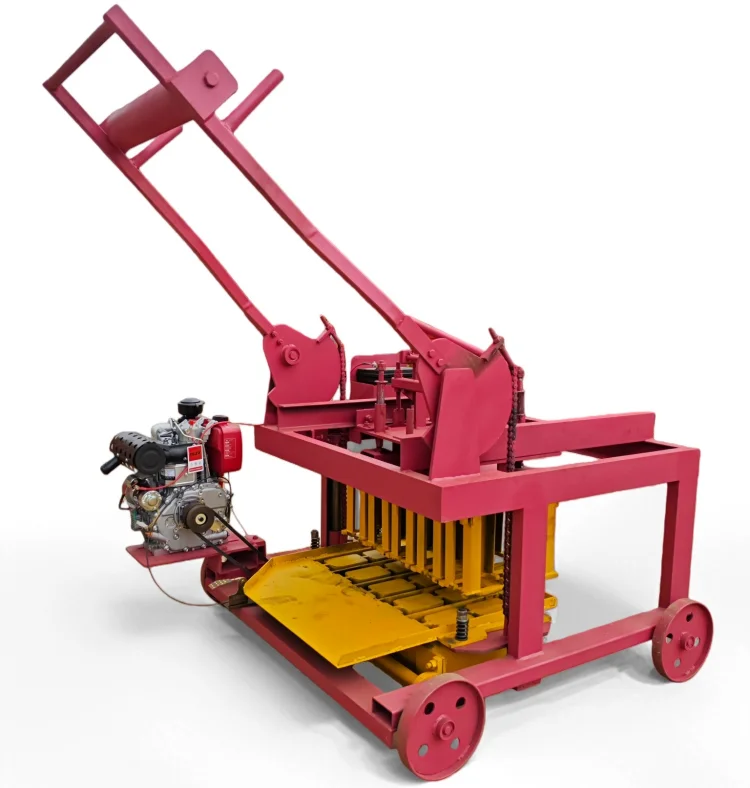
 Mobile block machine