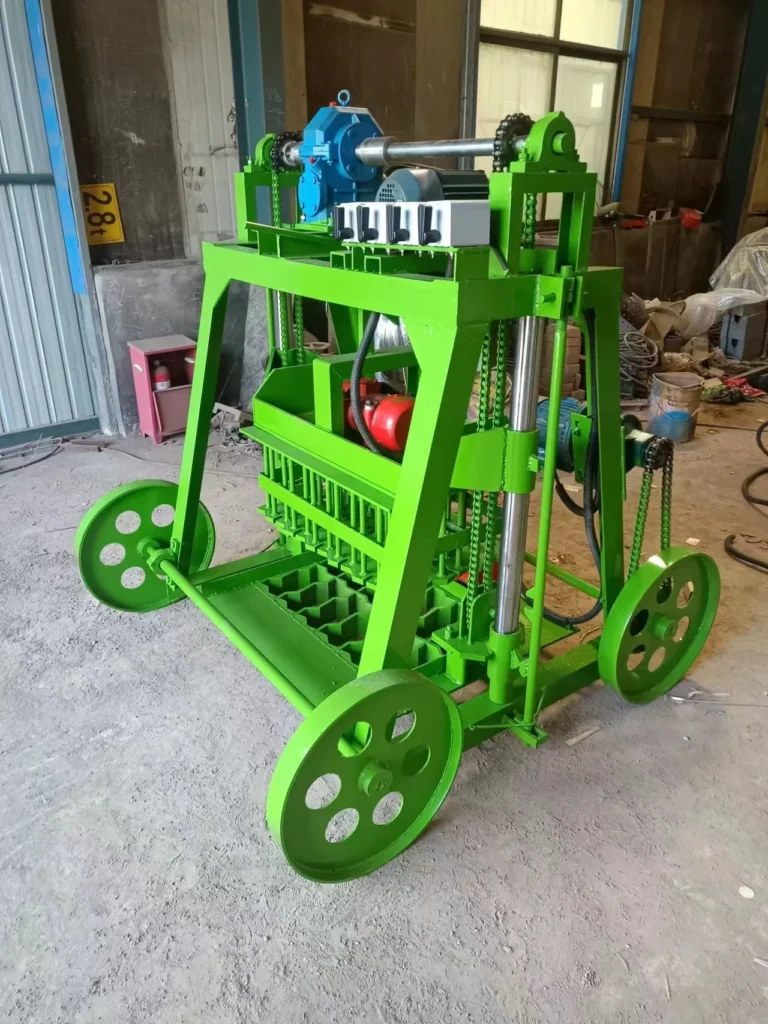
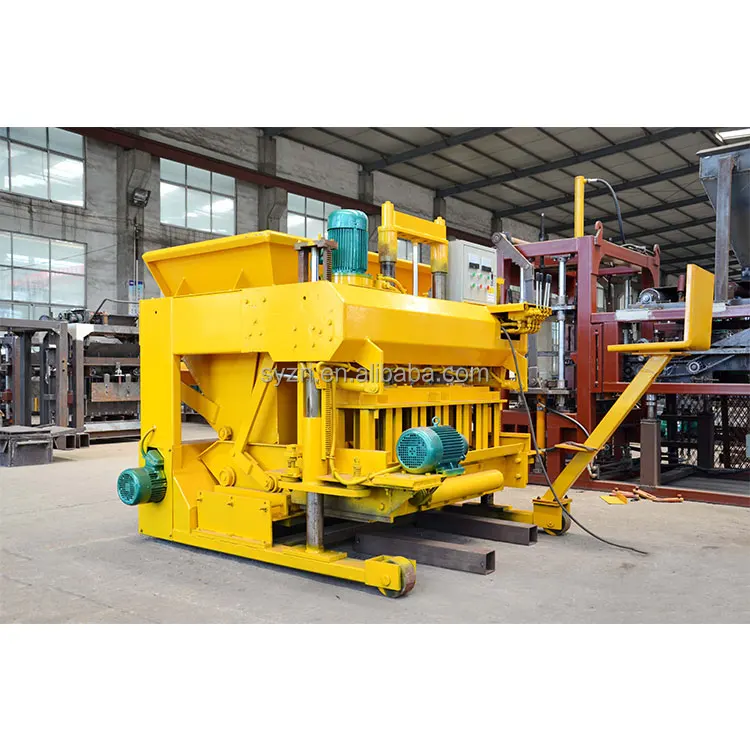
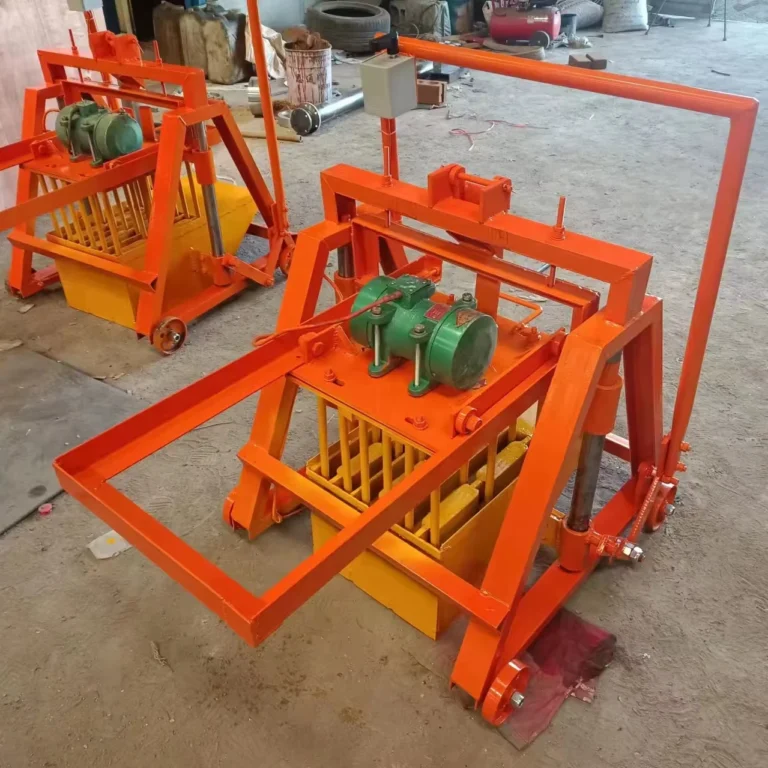
Single-Focus Block Machinery — The QMJ4-45 is specified as one matched system of machine, mould and ground-laying workflow rather than assembled from separate suppliers.
Technical Specifications
| Parameter |
Value |
| Model |
QMJ4-45 |
| Product Type |
Mobile Egg Laying Block Making Machine |
| Molding Capacity |
4 pcs/mould (basis: 400×200×200mm hollow block) |
| Vibration Frequency |
2400 r/m |
| Productivity (400×200×200mm hollow block) |
3000 pcs per 8-hour shift, 4 pcs/mould, 40–45s cycle |
| Productivity (400×150×200mm hollow block) |
3500 pcs per 8-hour shift, 5 pcs/mould, 40–45s cycle |
| Productivity (400×120×200mm hollow block) |
4500 pcs per 8-hour shift, 6 pcs/mould, 40–45s cycle |
| Molding Cycle |
40–45s |
| Vibration Method |
Mold vibration (twice-vibration molding core) |
| Demold Method |
Manual |
| Turning Method |
Manual |
| Total Power |
6 kW |
| Power Source |
Diesel / Petrol engine |
| Mould Format |
Hollow block (400×200×200 / 400×150×200 / 400×120×200mm) |
| Automation Level |
Manual (egg laying / mobile) |
| Stacking Method |
On-ground egg laying, no pallet |
| Warranty |
One year for the whole machine |
Application Suitability
| Application |
Material or Output |
| On-site hollow block production for building contractors |
Crushed stone, river sand, cement mixes laid directly on prepared ground |
| First block plant for entrepreneurs with minimal capital |
400×200×200mm to 400×120×200mm hollow blocks without pallet investment |
| Remote housing projects without grid electricity |
Diesel or petrol engine operation independent of local power infrastructure |
| Small-scale yard production for local block supply |
Manual demold workflow suited to two-operator teams |
What "3000 Blocks per Day" Actually Means on a Real Job Site
Every output number on this page names the exact block format it assumes — no blank cheques.
A mobile egg laying block making machine for sale often carries a headline daily figure that ignores format, cycle reality and ground conditions. I once watched a contractor in East Africa plan an entire housing phase around a brochure number, only to discover the machine was rated for a 200mm hollow block while the project specified 150mm walls. The cycle time stayed the same but each mould produced fewer saleable units, and the schedule slipped by weeks before anyone recalculated. [NEED_CITE: common causes of output shortfall in mobile block production]

Where the QMJ4-45 Sits in a Buyer’s First Decision
The QMJ4-45 occupies the entry-mobile tier of the range, aimed at buyers who want block production without committing to a fixed plant, pallet fleet or curing rack system. It removes pallet cost entirely by laying blocks on the ground and walking forward, which makes it the lowest-footprint option before a semi-automatic stationary line becomes necessary.
How Egg Laying Changes the Site Layout
Because blocks cure where they are laid, the site becomes a long curing floor rather than a press-and-rack arrangement. A level, hard surface is the only infrastructure the machine demands, which lets a contractor move production closer to the point of use. The trade-off is that daily output is bounded by available ground area and the curing time each block needs before it can be stacked or moved [NEED_CITE: ground preparation standards for egg laying block machines].
Vibration, Cycle Time and Block Density on a Manual Machine
The twice-vibration molding core runs at 2400 r/m and replaces older single-vibration designs that left density variation across the block face. On a 40–45s cycle the core delivers two compaction pulses, which improves particle packing in crushed-stone mixes and reduces the weak edges that single-vibration moulds often produce. Total power stays at 6 kW, keeping the diesel or petrol engine within a modest fuel envelope while still generating enough vibration force for hollow formats up to 200mm width. Demold and turning remain manual, which keeps the control system simple and eliminates PLC dependency in dusty, humid or off-grid environments.
The Hidden Cost of Skipping a Raw-Material Sample
I once shipped an egg laying machine to a West African site where the local aggregate was volcanic ash rather than the river sand the standard parameters assumed. Vibration frequency was fine on paper, but the ash absorbed water differently and the mix collapsed on demold — an entire first week of production went to waste. That is why every QMJ4-45 order now waits for a material sample before mould clearance is finalised, even when the buyer is in a hurry [NEED_CITE: aggregate variability effects on block compressive strength].
Why Buyers Choose This Tier Over a Stationary Line
The QMJ4-45 is specified as a complete matched system of machine, mould and ground-laying workflow, so the buyer receives one coherent package rather than a press plus separately sourced pallets and racks. Moulds are designed for the hollow formats the buyer’s local market actually sells, and custom drawings are available when a project calls for non-standard wall thickness. Automation level is selectable across the wider range, so a buyer can start with this mobile tier and move to a semi-automatic line later without changing block format. Installation support includes operator training on the manual demold sequence, and wear-part supply covers the first replacement cycle so the machine does not sit idle waiting for spares.
Documentation & Verification
- Line layout showing ground area needed for 3000-piece shift on 400×200×200mm hollow blocks
- Machine specification sheet confirming 6 kW total power and engine type
- Mould drawing and format list for all three hollow block sizes
- Factory test record on buyer’s submitted aggregate sample before dispatch
- Operation and maintenance manual covering manual demold and egg laying workflow
Installation, Commissioning & Support
- Level, hard-standing ground area sized to curing time and daily output of the chosen hollow block format
- Diesel or petrol engine eliminates grid connection, requiring only fuel supply and basic engine maintenance
- Machine shipped as a single assembly, reducing on-site erection to wheel and handle fitting
- First-run commissioning includes vibration frequency check at 2400 r/m with the buyer’s actual mix
- Operator training covers 40–45s cycle pacing and manual demold technique to minimise block damage
- Wear-part list supplied with first mould set so replacements are on site before the original parts reach end of life
What to Include in Your First Enquiry
Tell us the hollow block format your market sells, the daily volume your site can absorb and the aggregate you plan to use locally. Share whether your site has grid electricity or needs the diesel engine option, and describe the ground surface available for curing. With those details we can confirm realistic output per format and recommend the mould set that matches your project.
Frequently Asked Questions
Q: What block formats does the QMJ4-45 produce and what is the realistic daily output per format?
A: The machine produces 400×200×200mm, 400×150×200mm and 400×120×200mm hollow blocks. Per-format output over an 8-hour shift is 3000, 3500 and 4500 pieces respectively, each based on a 40–45s cycle and the stated mould cavity count.
Q: Where does the QMJ4-45 sit within the Shiyue block machine range?
A: It is the entry-mobile tier, designed for buyers who need production without a fixed plant or pallet fleet. Semi-automatic and automatic tiers above it add pallet handling, stacking and higher output, but require a prepared factory floor and curing racks.
Q: What site conditions and ground preparation are needed for egg laying operation?
A: A level, hard-standing surface such as compacted gravel or a concrete slab is required. The area must be large enough to hold one shift’s output until blocks reach handling strength, and drainage should prevent standing water under curing blocks.
Q: How does the diesel or petrol engine configuration affect commissioning?
A: The engine eliminates grid voltage and frequency concerns, so commissioning focuses on fuel supply, engine break-in and vibration frequency verification. No electrical cabinet or PLC language configuration is needed, which shortens time to first production.
Q: What is the investment and footprint difference between this mobile tier and a semi-automatic line?
A: The mobile tier removes pallet, rack and conveyor costs and needs only a curing floor, resulting in a smaller capital outlay and lower site preparation. A semi-automatic line adds pallet circulation, automatic stacking and higher throughput but requires a fixed building, power connection and more floor space.

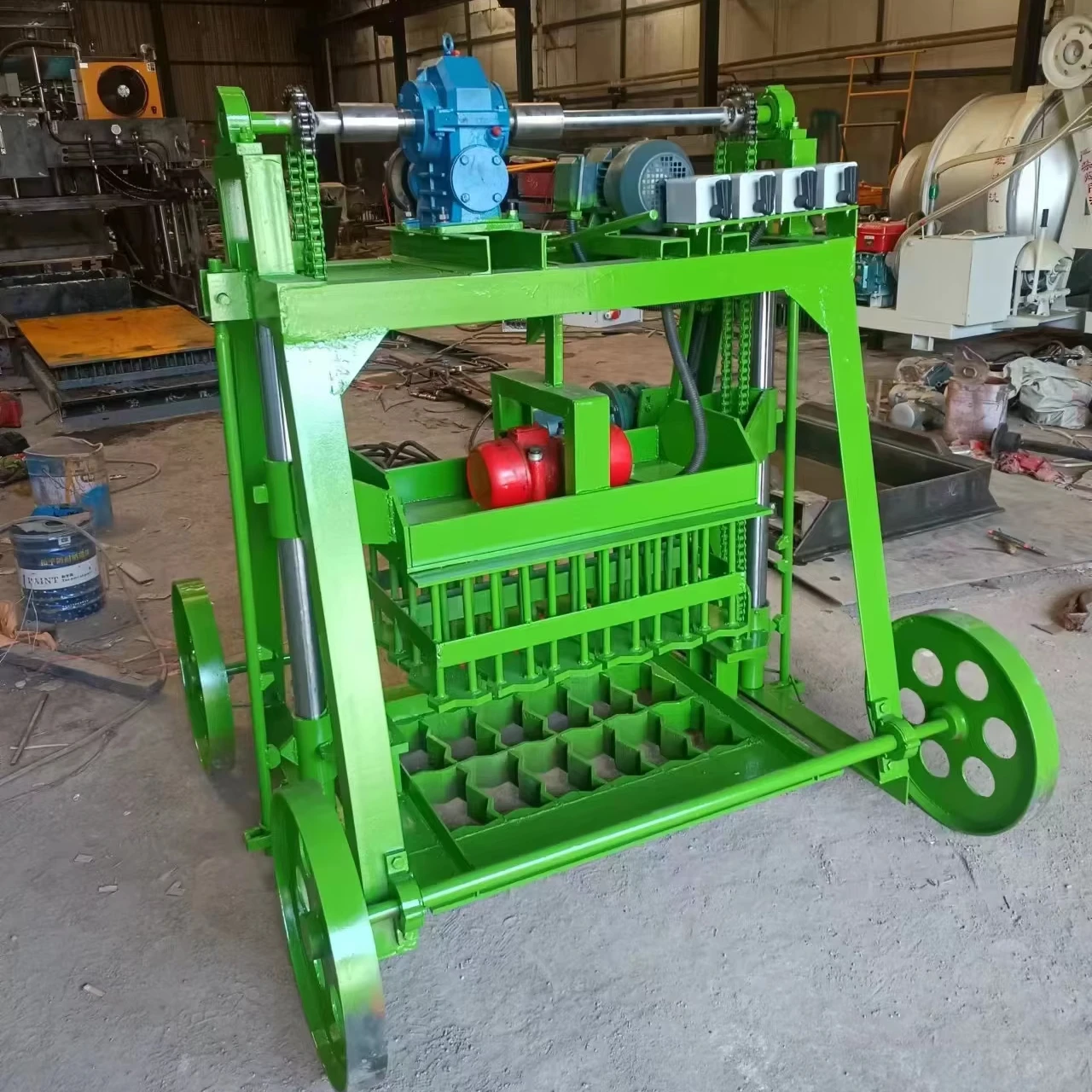
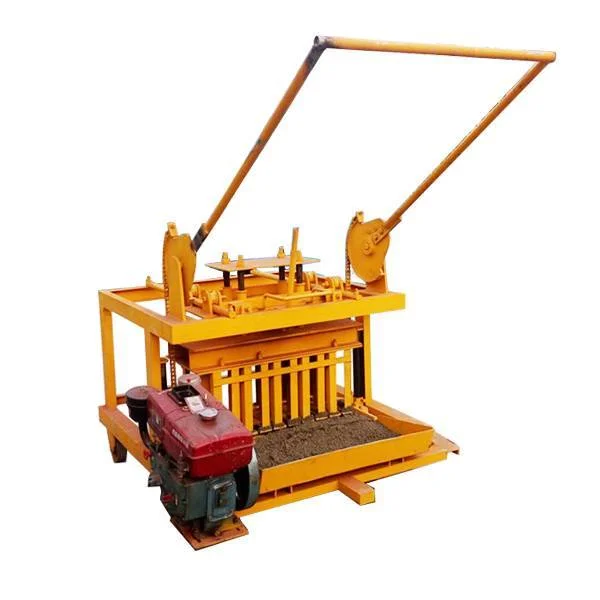 Mobile block machine