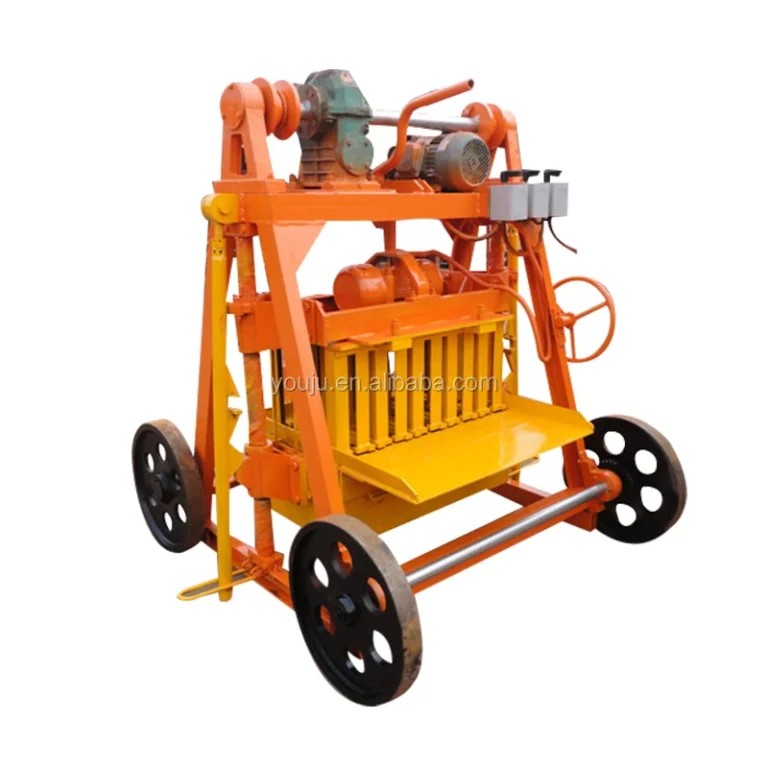
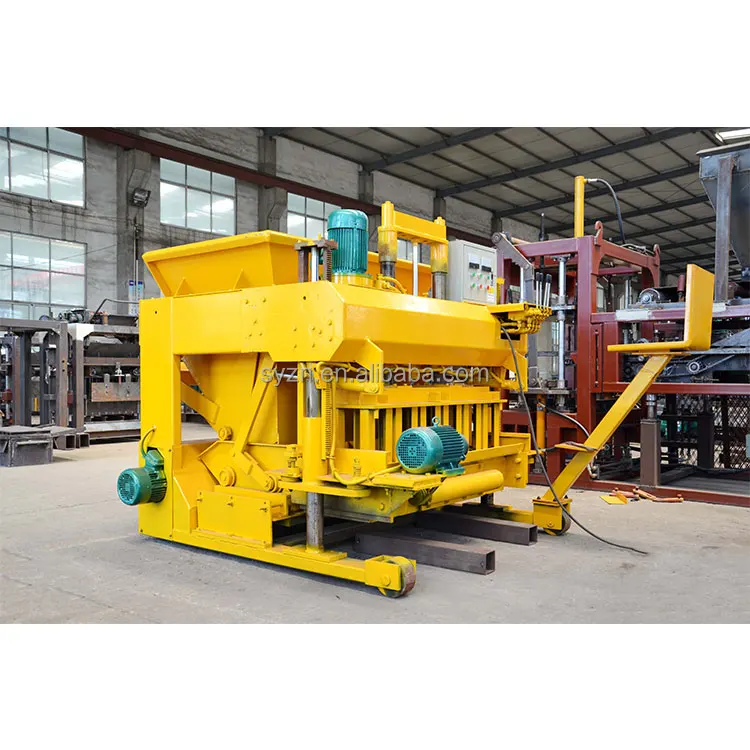
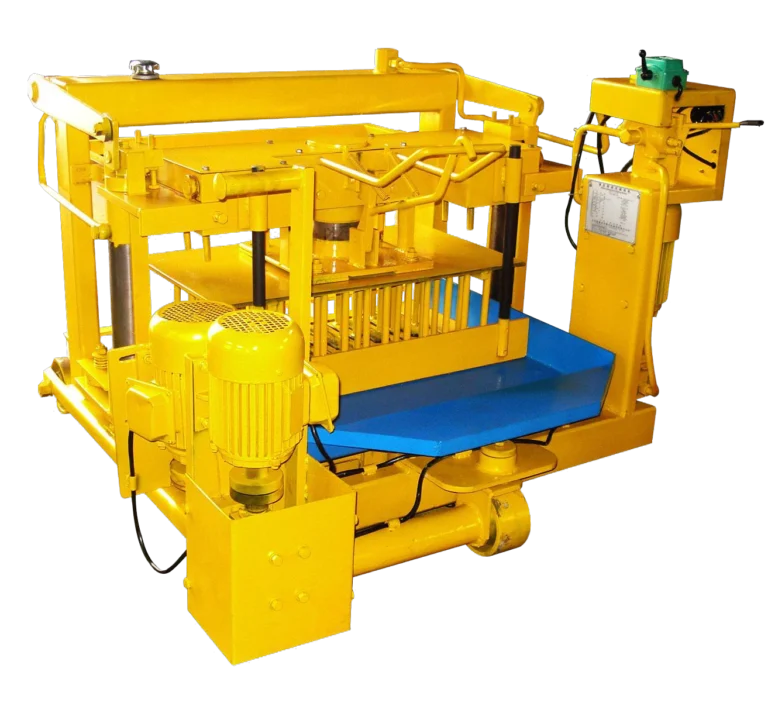
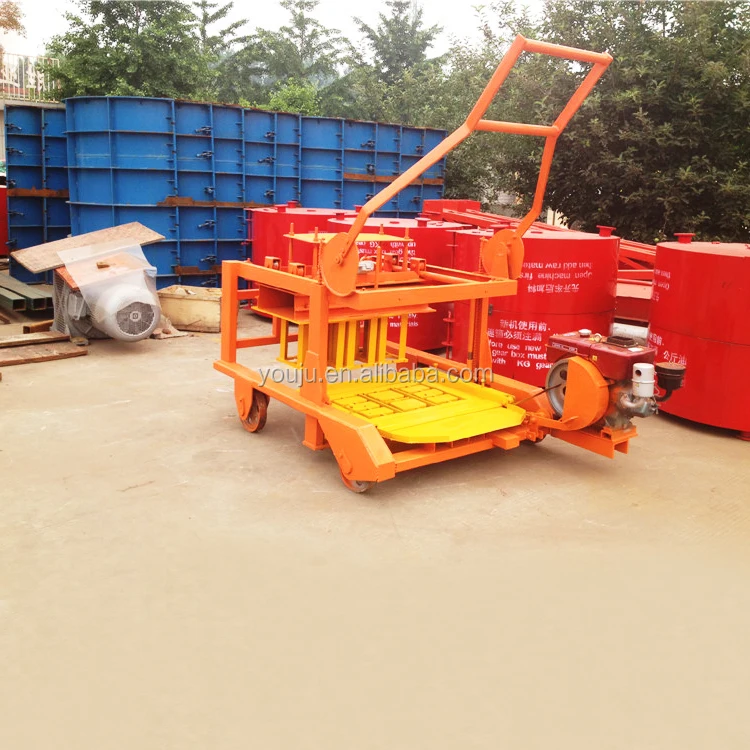
Matched System Sourcing — The QMY6-25 mobile block machine is specified as a complete egg-laying unit with mould, hydraulic steering and ground-laid output, eliminating separate pallet procurement and manual handling from your project scope.
Technical Specifications
| Parameter |
Value |
| Product Type |
Mobile Hydraulic Block Making Machine |
| Model |
QMY6-25 |
| Main Vibration Form |
Three-dimensional excitation |
| Overall Power |
9.6 kW |
| Moving Method |
Automatic movement with hydraulic steering |
| Overall Dimension (L×W×H) |
2000 × 2100 × 1650 mm |
| Moulding Cycle |
25–30 seconds |
| Vibration Frequency |
3200 Hz |
| Pallet Requirement |
None (egg-laying type) |
| Output Capacity (Hollow 400×200×200 mm) |
1080 pcs/h (basis: 6 pcs/mould) |
| Output Capacity (Hollow 400×150×200 mm) |
1260 pcs/h (basis: 7 pcs/mould) |
| Output Capacity (Solid 400×120×200 mm) |
1620 pcs/h (basis: 9 pcs/mould) |
| Output Capacity (Solid 400×100×200 mm) |
1800 pcs/h (basis: 12 pcs/mould) |
| Operator Requirement |
Single-person operation |
| Assembly State |
Fully assembled mobile unit |
Application Suitability
| Application |
Material or Output Context |
| On-site hollow block production |
Crushed stone, river sand, and cement mixtures for masonry wall construction |
| Large-format solid block manufacturing |
Dense aggregate blends for load-bearing or partition wall units |
| Housing and development project sites |
Remote locations where fixed plant infrastructure is unavailable |
| Low-investment block production |
Contractor or first-time operator producing blocks directly on prepared ground |
What "1800 Pieces per Hour" Actually Means for Your Site
The capacity figure only holds if your block format, mix design, and floor flatness all align with the machine’s mould and cycle assumptions.
I once stood on a project site in Java watching a mobile block machine crawl through half its quoted output because the local river sand had a clay content that slowed the moulding cycle. The contractor had ordered based on a single headline number without checking which block format that number assumed. When buying a mobile block machine manufacturer quote, the gap between catalogue output and actual daily production almost always comes down to unconfirmed variables: aggregate grading, floor condition, and operator pacing. [NEED_CITE: effect of aggregate clay content on concrete block cycle time]

The Full Range: Where the QMY6-25 Sits
The Shiyue mobile block machine range spans egg-laying units designed for ground-laid production without pallets or fixed conveyor lines. The QMY6-25 occupies the mid-output tier within this mobile category, suited to contractors who need hollow and large solid blocks directly at the construction site. Below it sit smaller mobile units for lower daily volumes; above it, larger egg-laying models handle higher throughput. This tier structure lets a buyer match investment and footprint to the actual block volume a project demands.
How the Mobile Tier Eliminates Pallet Logistics
Every pallet-based block line requires ongoing pallet investment, a curing rack system, and forklift handling between press and yard. The QMY6-25 removes that entire chain. Its hydraulic steering moves the unit forward after each cycle, laying blocks directly on a prepared concrete floor. A mobile block machine manufacturer typically quotes the press alone, but here the absence of pallets means your curing area only needs flat, level ground — no rack steel, no pallet return conveyor, no dedicated forklift operator. [NEED_CITE: pallet cost as percentage of total block plant operating expense]
Reading the Vibration and Cycle Specs
The three-dimensional excitation system operates at 3200 Hz, compacting the mix from multiple axes rather than a single vertical shake. For hollow blocks, this matters because thin shell walls require even density distribution to survive demoulding without cracking. The 25–30 second moulding cycle covers the full sequence: feed, vibrate, strip, and move. A shorter cycle on paper means little if the vibration force is insufficient for your local aggregate; the QMY6-25’s frequency rating should be checked against your mix design to confirm that compaction energy reaches the required block strength. Pallet-free operation also means floor flatness directly affects dimensional tolerance — an uneven surface introduces height variation across successive blocks.
The Cost of Skipping Voltage Confirmation
I have seen mobile units arrive at Southeast Asian sites with motor windings rated for 380V/50Hz while the local grid ran 220V/60Hz, delaying commissioning by weeks while a replacement motor was air-freighted. Voltage, frequency, and control display language are not details to settle after the machine ships. Confirming these before production starts prevents the most common on-site electrical failure and ensures the operator can read the interface from day one. [NEED_CITE: voltage and frequency standards by export market]
Why Source This Mobile Block Machine Manufacturer
Shiyue treats block machinery as a single focus, so the QMY6-25 arrives with its mould matched to your target block format rather than a generic default. Configuration is set against your actual mix design and local aggregate, not a catalogue assumption. Mould design supports the formats your market sells, with custom drawings available for non-standard dimensions. The machine ships fully assembled, reducing on-site setup to floor preparation and electrical connection. Installation support and operator training are included so the single-operator design works as intended from the first shift.
Documentation & Verification
- Line layout drawing confirming production floor area and curing space required for the QMY6-25 footprint
- Capacity calculation sheet stating the block format and mould cavity count behind each output figure
- Machine specification sheet listing vibration frequency, overall power, and hydraulic steering ratings
- Mould drawing and format list verifying hollow and solid block dimensions before production
- Voltage and frequency confirmation record signed off prior to motor winding
- Factory test record showing cycle timing on the mould ordered
Installation, Commissioning & Support
- Prepared concrete floor required; surface tolerance affects block height consistency across the 2000 × 2100 mm operating path
- 9.6 kW total power draw requires a dedicated circuit matching confirmed voltage and frequency
- Fully assembled delivery — no structural reassembly, only electrical connection and mould mounting on site
- First-run commissioning includes cycle adjustment to match local aggregate and mix moisture content
- Single-operator training covers hydraulic steering control, mould change procedure, and daily maintenance checkpoints
- Wear parts list with mould and hydraulic component reorder references provided at handover
Preparing Your Inquiry
To move from a general mobile block machine manufacturer quote to a matched configuration, specify the block formats your market requires, the daily volume you plan to sustain, and the aggregate sources available at your site. Include your local voltage and frequency standard, plus the control display language your operator will use. If you have an existing curing yard, share its dimensions so the pallet-free layout can be planned around it.
Frequently Asked Questions
Q: How is the output capacity calculated, and which block format does each figure assume?
A: Each output figure on the specification sheet is tied to a specific block dimension and mould cavity count. For example, 1080 pieces per hour assumes a 400×200×200 mm hollow block with six cavities per mould. Changing the block format changes the cycle and cavity count, so always confirm which figure matches your target product before comparing machines.
Q: What voltage and frequency options are available, and is the control display language configurable?
A: Motor winding and control components can be configured to match your local grid standard. Voltage, frequency, and display language must be confirmed before production begins to avoid commissioning delays. State your site standard at the inquiry stage so the electrical package is built to match.
Q: What block formats can the QMY6-25 produce, and how long does a mould change take?
A: The machine supports hollow blocks and large solid blocks within its moulding envelope, with custom moulds available for market-specific dimensions. Mould change time depends on the bolt pattern and alignment system of the specific mould supplied. Request the mould drawing to verify changeover procedure and tooling requirements.
Q: What site conditions are needed for egg-laying operation?
A: The production floor must be flat, level concrete to maintain consistent block height as the machine moves. A curing area adjacent to the production path is needed since blocks remain on the ground until sufficiently set. Raw material feed is typically arranged along the production path to keep the single-operator workflow efficient.
Q: How are moulds and hydraulic wear parts supplied for the first replacement cycle?
A: A wear parts list is provided at delivery, identifying mould components and hydraulic seals by part number. First replacements should be ordered based on observed wear rates during the initial production period rather than a fixed calendar schedule, since local aggregate abrasiveness varies significantly by source.

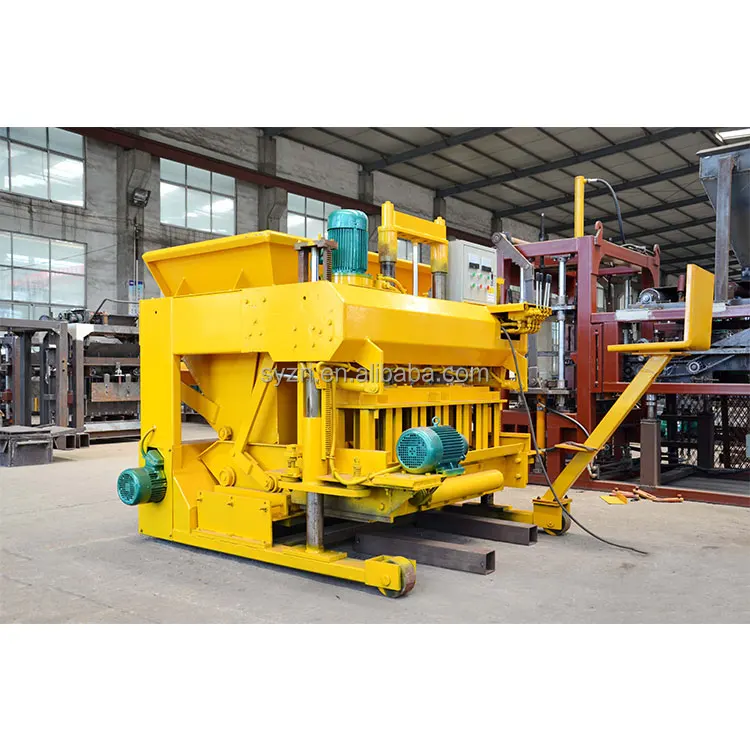
 Mobile block machine