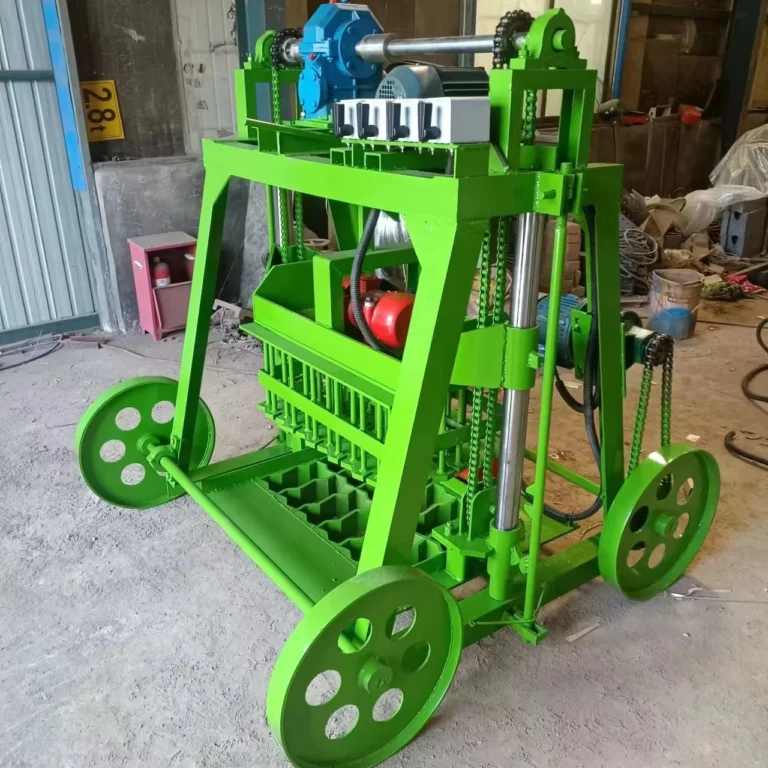
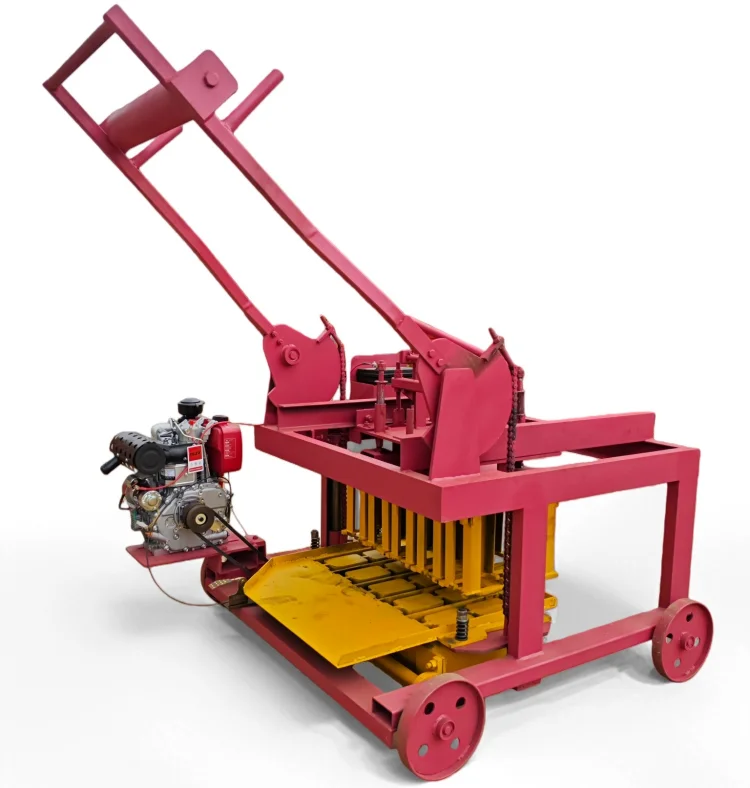
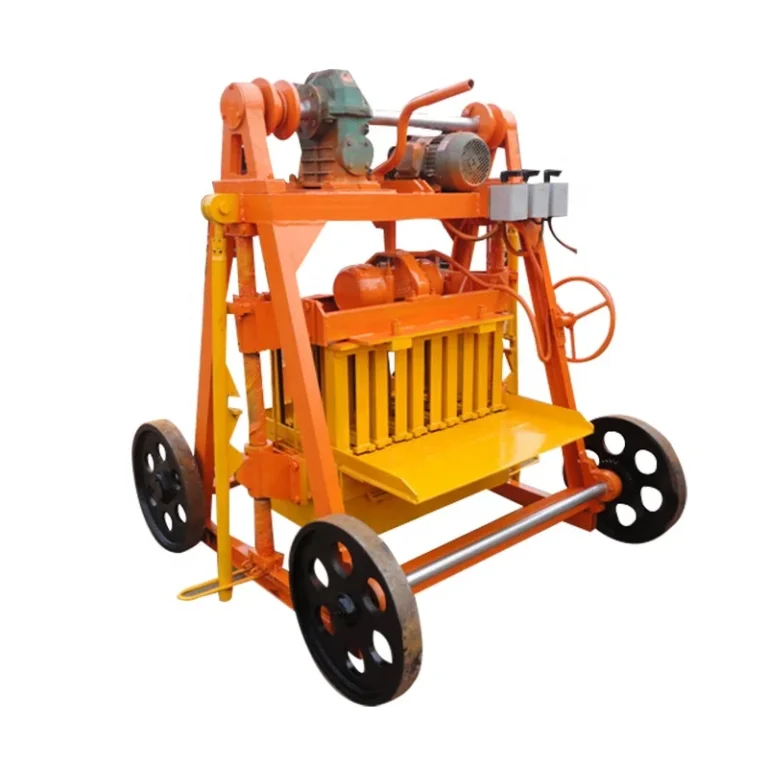
Configuration matched to local aggregate — the QMJ4-45 is specified against the buyer’s actual mix design and target block format, not a catalogue default, so the machine arrives ready to produce blocks that meet site strength requirements from day one.
Technical Specifications
| Parameter |
Value |
| Model |
QMJ4-45 |
| Product Type |
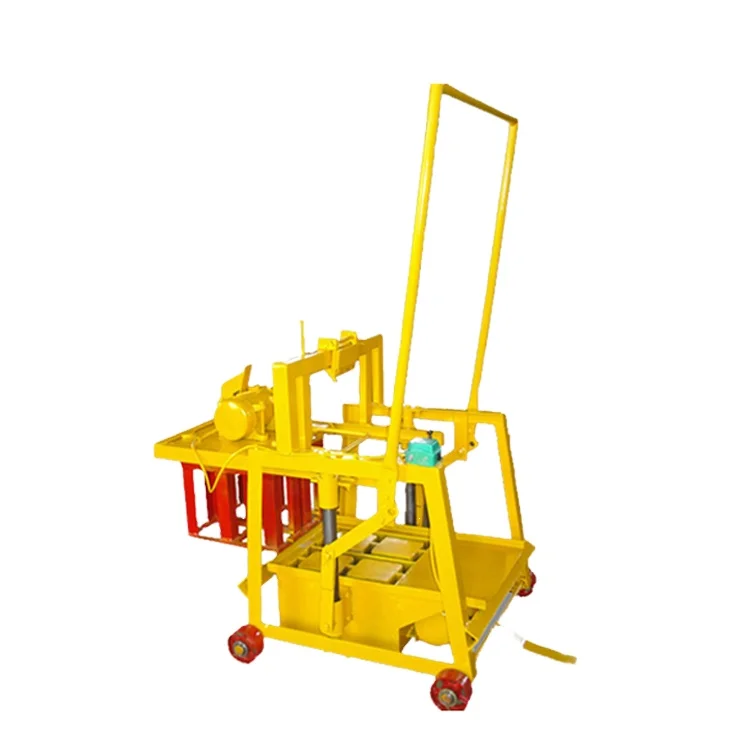
Mobile Egg-Laying Concrete Block Making Machine |
| Rated Power |
7.4 kW |
| Molding Cycle |
45 s |
| Output Capacity (400×200×200 mm hollow block, 4 pcs/mould) |
2,400 pcs / 8 h |
| Output Capacity (400×150×200 mm block, 5 pcs/mould) |
3,200 pcs / 8 h |
| Raw Materials |
Concrete, sand, cement, fly ash, lime, gypsum |
| Guidance Mechanism |
Four-pole orientation with extended guide bearings |
| Control System |
Manual force control with jog control |
| Automation Level |
Semi-automatic |
| Pallet Requirement |
None (egg-laying operation) |
| Overall Dimensions (L×W×H) |
1,550 × 1,335 × 1,580 mm |
| Net Weight |
1 T |
| Mould Formats Supported |
Hollow, solid, paver, kerbstone, interlocking |
| Voltage |
Configured to buyer’s local standard (basis to be confirmed) |
| Electrical Components |
Imported |
| Hydraulic & Sealing Components |
Imported |
Application Suitability
| Application |
Material or Output |
| On-site housing project block production |
Hollow blocks from local sand, crushed stone and cement |
| Small plant paver and kerbstone runs |
Concrete pavers and kerbs from cement and aggregate blends |
| First-line entrepreneur setup |
Solid and interlocking bricks from fly ash, lime and gypsum |
| Remote infrastructure site supply |
Mobile egg-laying output without pallet or curing rack logistics |
| Seasonal overflow capacity |
Format changes via mould swap across hollow, solid and paver types |
What the "2,400 Blocks per Shift" Promise Actually Means
Capacity only matters when the block format and cycle time behind it are stated clearly.
The QMJ4-45 is a mobile block machine manufacturer option frequently quoted at a flat daily figure. That number almost always assumes a 400×200×200 mm hollow block at four pieces per mould and a 45-second cycle. Swap to a thinner wall format or a paver, and the output per shift changes. I once watched a contractor in Southeast Asia plan an entire foundation pour schedule around a quoted capacity, only to discover the supplier’s figure assumed a block format they were not even producing. The daily plan fell apart within the first week [NEED_CITE: common misalignment between quoted capacity and actual block format on mobile machines].

Where the QMJ4-45 Fits in the Machine Range
The QMJ4-45 occupies the entry tier of the mobile block machine manufacturer lineup. It is designed for buyers who need to produce blocks on a flat concrete slab without investing in pallets, curing racks, or a fixed plant building. The egg-laying method means the machine moves forward after each press cycle, depositing blocks directly on the ground. This keeps the initial footprint small and the capital requirement low, making it a practical starting point before volume justifies a semi-automatic or fully automatic line.
The Upgrade Path from Mobile to Automatic
Starting with a mobile egg-laying machine does not lock a buyer into manual operation indefinitely. When daily demand grows, the transition to a pallet-based semi-automatic or fully automatic line becomes viable. The mobile block machine manufacturer range includes these higher tiers, so the mould knowledge and mix design work done on the QMJ4-45 carries forward. Buyers who begin here often return for a stationary press once their market stabilises, and the earlier format decisions inform the new line’s configuration [NEED_CITE: block plant upgrade paths from mobile to stationary systems].
Reading the Specs That Actually Shape Output
The 7.4 kW rated power drives both vibration and the mechanical press stroke. On a mobile egg-laying machine, vibration force and pressure must match the buyer’s aggregate — coarse crushed stone requires a different vibration profile than fine river sand with high clay content. The four-pole guidance with extended guide bearings keeps the pressure head aligned with the mould cavity across all supported formats, which matters when swapping between a hollow block mould and a paver mould on the same shift. The 45-second molding cycle is achievable with the 400×200×200 mm hollow block at four cavities; denser mixes or larger formats may extend this. Manual jog control gives the operator direct feel over the press stroke, which is useful during the first days of production when the local mix is still being dialled in.
When the Wrong Mould Choice Kills the Day
A mobile egg-laying machine can produce multiple formats, but each mould swap takes the press offline. If the buyer orders only one mould and later discovers the local market also demands pavers or interlocking bricks, every format change becomes an unbudgeted delay. The QMJ4-45 supports mould swaps across hollow, solid, paver, kerbstone, and interlocking formats, but the changeover time and tooling needed must be understood before the first production day. I have seen sites lose half a shift because the mould bolts and alignment pins were not included in the initial order [NEED_CITE: mould changeover downtime on mobile egg-laying block machines].
Why Buyers Come Back for the Second Machine
Block machinery is the single focus here, which means the QMJ4-45 arrives as part of a matched system — machine, mould, and material profile specified together rather than sourced separately. The configuration is set against the buyer’s actual mix design and local aggregate, not a default catalogue setting. Mould design covers the formats the buyer’s market actually sells, including custom drawings when standard options do not fit. Voltage, frequency, and control language are confirmed before production, so commissioning is not delayed by electrical mismatches. Factory testing runs the exact block format the buyer intends to produce, and the test record ships with the machine.
Documentation & Verification
- Line layout showing QMJ4-45 egg-laying path and curing area dimensions
- Capacity calculation stating block format, mould cavity count, and cycle time assumed
- Mould drawing and complete format list for every block type ordered
- Voltage and control language confirmation sheet signed before production
- Factory test record on the buyer’s specified block format before dispatch
- Packing photographs and customs documentation support for shipment
Installation, Commissioning & Support
- Flat concrete slab of sufficient length for egg-laying travel path of the QMJ4-45
- Power supply matching confirmed voltage and frequency with dedicated circuit for 7.4 kW load
- Mould alignment check using four-pole extended guide bearings during first assembly
- Mix design adjustment session with local sand and aggregate on commissioning day
- Operator training on jog control, mould swap procedure, and daily greasing points
- Wear parts list covering mould liners and guide bearing seals for first-year spares
Before You Request a Quote
Send the block format or formats your market demands, along with the target daily output and the type of local aggregate available. Confirm your site’s voltage and frequency, and whether the control panel language needs to match a specific operator group. If you already have a concrete mixer or raw material feeder on site, share its capacity so the line can be balanced around the QMJ4-45 cycle time.
Frequently Asked Questions
Q: How is the daily output figure verified for the QMJ4-45?
A: Output is stated per block format. For the 400×200×200 mm hollow block at four pieces per mould, capacity is 2,400 pieces over an 8-hour shift at a 45-second cycle. For the 400×150×200 mm block at five cavities, the figure is 3,200 pieces. These assume continuous operation with prepared material and no unplanned stops.
Q: What voltage options are available for different export markets?
A: Voltage and frequency are configured to the buyer’s local standard before production. This must be confirmed during the quotation stage so the motor, control panel, and wiring are built to match the destination site’s electrical supply.
Q: How does the QMJ4-45 compare to semi-automatic models in the range?
A: The QMJ4-45 is an entry-tier mobile egg-laying machine with no pallet requirement and a small footprint. Semi-automatic and automatic models use pallets and fixed stations with higher throughput, suited for buyers who have outgrown mobile production and need consistent daily volume.
Q: What site preparation does the egg-laying operation require?
A: A flat, hardened concrete surface long enough for the machine’s travel path is needed. No curing racks or pallet return logistics are required, but the curing area must accommodate blocks left in place until initial set is achieved.
Q: Which moulds and spare parts should I order initially?
A: Order every block format mould the local market demands at the time of the machine purchase, along with mould liners and guide bearing seals. This avoids downtime waiting for replacement parts during the first months of production.

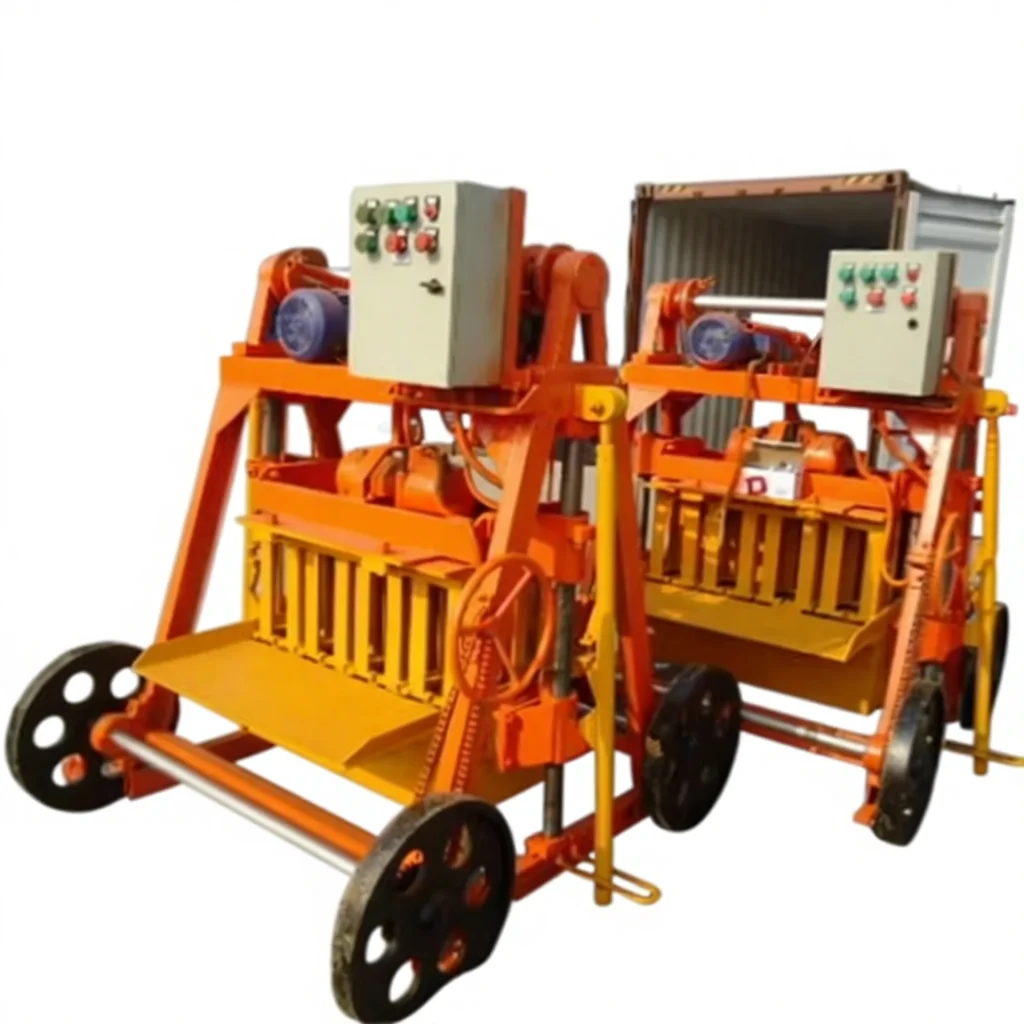
 Mobile block machine