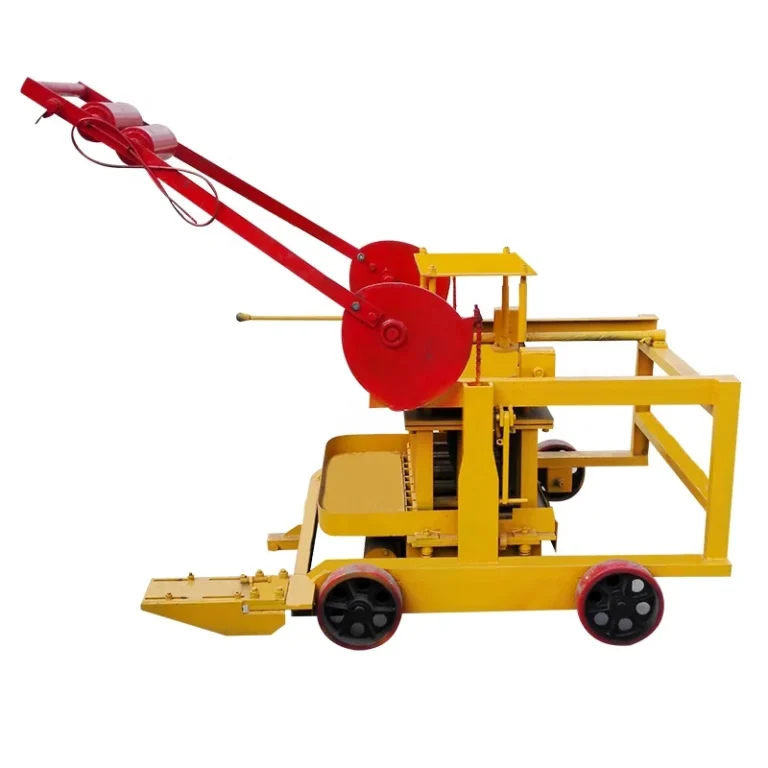
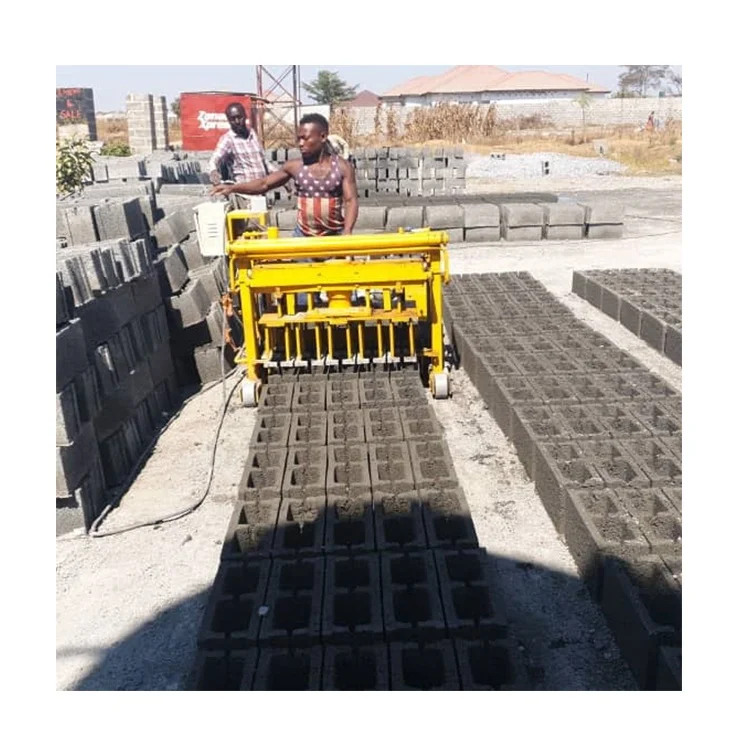
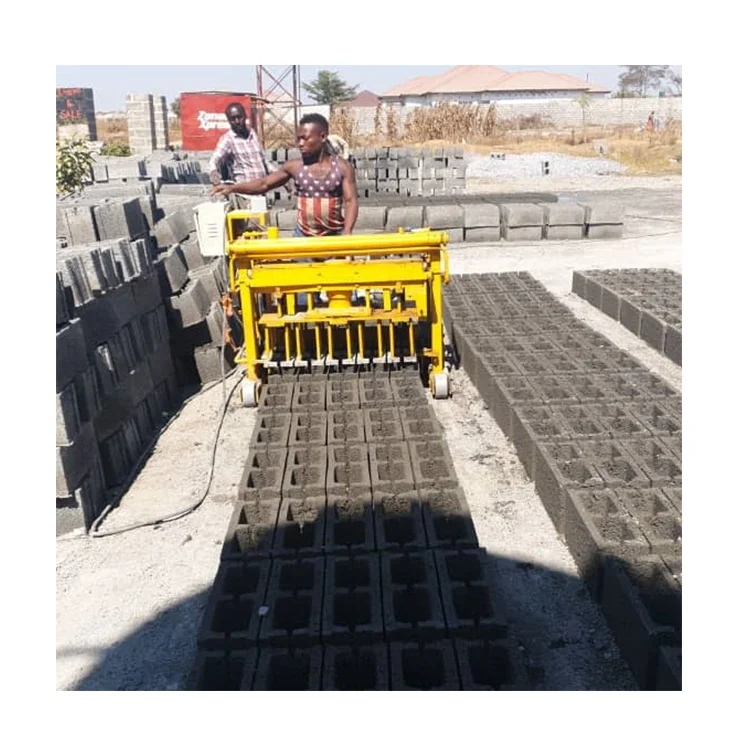
Mould and Machine Matched as One System — Every QMJ4-45 configuration is built around your actual block format and local aggregate, not pulled from a generic catalogue.
Technical Specifications
| Parameter |
Value |
| Model |
QMJ4-45 |
| Product Type |
Egg Laying Block Making Machine |
| Molding Capacity |
4 pcs/mold (basis: 400×200×200mm hollow block) |
| Vibration Frequency |
2400 r/m |
| Productivity (400×200×200mm hollow block) |
3000 pcs/day (8-hour shift, 4 pcs/mould, 40–45s cycle) |
| Productivity (400×150×200mm hollow block) |
3500 pcs/day (8-hour shift, 5 pcs/mould, 40–45s cycle) |
| Productivity (400×120×200mm hollow block) |
4500 pcs/day (8-hour shift, 6 pcs/mould, 40–45s cycle) |
| Vibration Method |
Mold vibration |
| Molding Cycle |
40–45 s |
| Demold Method |
Manual |
| Turning Method |
Manual |
| Total Power |
6 kW |
| Power Source |
Diesel / Petrol engine or Electric motor |
| Automation Level |
Manual / egg-laying (mobile, pallet-less) |
| Warranty |
One year for the whole machine |
Application Suitability
| Application |
Output or Material |
| On-site hollow block production for masonry walls |
Crushed stone, sand, cement mixes on existing ground surfaces |
| Small-scale garden path and pavement projects |
Lightweight aggregate and cement blends for pedestrian paving |
| Remote construction sites without grid power |
Local river sand or quarry dust with diesel engine operation |
| First block plant setups with minimal footprint |
Standard cement and aggregate mixes in open-yard curing |
Why "4000 Pieces per Day" Means Nothing Without the Block Format
Daily output only matters when tied to the exact hollow block size you intend to sell.
A mobile egg laying block machine manufacturer will often quote a single peak number. In my experience visiting sites across Shandong and beyond, buyers frequently discover their real daily tally falls well short because the quoted figure assumed a thinner wall format they never planned to produce. The QMJ4-45 block machine for sale here lists three distinct output tiers, each tied to a specific hollow block dimension and mould cavity count. A 400×200×200mm block yields around 3000 pieces per 8-hour shift at four per mould, while stepping down to a 120mm wall thickness pushes that figure toward 4500 pieces with six per mould. The cycle remains in the 40–45 second window across all formats, so the difference is purely about how many cavities the thinner wall allows. [NEED_CITE: block format assumptions in capacity quotations across the industry]

Placing the QMJ4-45 Within the Full Machine Range
The QMJ4-45 occupies the entry point of the mobile block machine category. Above it sit semi-automatic stationary lines with pallet conveyors and batch mixers, and further up, fully automatic plants with stacking and cubing systems. This machine asks for none of that infrastructure. It lays blocks directly onto the ground and moves forward — no pallets, no curing racks, no fixed factory floor. For a contractor or entrepreneur evaluating where to enter the range, the QMJ4-45 represents the lowest investment threshold and smallest site footprint available.
What Egg-Laying Operation Actually Demands From Your Site
Egg-laying means the machine deposits each freshly pressed block onto the existing ground and advances one mould-length forward. The surface must be level, firm, and free of debris. There is no pallet consumption, which removes a significant recurring cost, but it also means block quality depends heavily on ground preparation and the operator’s pacing. [NEED_CITE: ground surface requirements for pallet-less block production] The QMJ4-45 block machine for sale here runs a twice-vibration moulding core — an upgrade from single-point vibration — which improves density uniformity across the block face, particularly important when the curing surface is natural ground rather than a steel pallet.
How Vibration, Power, and Mould Cavities Interact on Site
The 2400 r/m vibration frequency acts directly on the mould cavity, compacting the mix around the core pins. On a machine with only 6 kW total power, the vibration system must be efficient — there is no surplus energy to waste. The twice-vibration design addresses this by delivering two compaction pulses within each 40–45 second cycle, which helps achieve consistent wall density even with locally sourced sand that may carry higher clay content. I have seen sites where a single-vibration machine produced crumbly block faces when the sand contained excess fines; switching to a dual-pulse cycle and adjusting the water-cement ratio brought strength back within acceptable limits. The mould cavity count — four, five, or six depending on wall thickness — directly determines output per cycle, so choosing the right mould for your market’s dominant block format is the single biggest capacity decision you will make.
The Cost of Overlooking Mould and Power Configuration
When a buyer selects a mould format without confirming that the local aggregate can fill thinner wall cavities cleanly, demoulding problems follow. Walls tear, corners chip, and the operator spends more time cleaning the mould than pressing blocks. I recall a municipal paving project where the contractor ordered a 120mm wall mould for higher output, but the local sand was too coarse to hold a clean edge at that thickness — daily usable output actually dropped below what a 200mm mould would have delivered. Equally, specifying an electric motor in an area with frequent outages leaves the machine idle for hours. [NEED_CITE: aggregate gradation impact on thin-wall block demoulding]
Why Sourcing This Mobile Egg Laying Block Machine Manufacturer Matters
Block machinery is our single focus, which means the QMJ4-45 is specified alongside its mould, power source, and operating conditions as one matched package rather than a press sold in isolation. We set the vibration frequency and mould cavity count against your actual mix design and target block format, not a default catalogue entry. Moulds are designed for the formats your local market sells, and custom drawings are available when standard sizes do not match. The automation path remains open — buyers who start with the QMJ4-45 can later step into semi-automatic or fully automatic tiers without relearning an entirely different control philosophy. Installation guidance, operator training, and a full wear parts list accompany every shipment.
Documentation & Verification
- Capacity calculation sheet stating output per block format and mould cavity count
- Machine specification confirming power source option and vibration frequency
- Mould drawing and format list with wall thickness and pieces-per-cycle data
- Operation and maintenance manual covering daily lubrication and mould care
- Wear parts list identifying consumable components and replacement intervals
Installation, Commissioning & Support
- Level and compact the ground surface across the full production lane before first operation
- Confirm diesel engine fuel supply or electric motor voltage matches site conditions
- Run initial test cycles with your local mix to verify demoulding and block density
- Train operators on manual turning and forward pacing to maintain consistent cycle rhythm
- Stock recommended wear parts for mould liners and vibration motor brushes
- Schedule periodic mould cavity inspection to catch wall erosion before it affects block dimensions
What We Need to Size Your QMJ4-45 Correctly
To configure a mobile egg laying block machine manufacturer package that matches your project, share your target block dimensions, the sand or aggregate type available locally, and whether grid electricity is reliable at your site. Let us know the daily volume you need and the curing space you can allocate, so we can confirm the mould cavity count and power source that will actually deliver on your site.
Frequently Asked Questions
Q: How is QMJ4-45 daily output calculated, and which block format does each figure assume?
A: Each output figure is tied to a specific hollow block size and mould cavity count over an 8-hour shift. For a 400×200×200mm block at four per mould with a 40–45 second cycle, daily output is approximately 3000 pieces. Thinner wall formats increase cavity count and push output higher, but only if your local mix can hold the thinner wall cleanly during demoulding.
Q: Where does the QMJ4-45 sit compared to semi-automatic and automatic block machines?
A: The QMJ4-45 is the entry-level mobile option requiring no fixed plant, no pallets, and minimal infrastructure. Semi-automatic lines add pallet conveyors and mixers for higher throughput, while automatic plants include stacking and cubing. The QMJ4-45 suits contractors and first-time plant owners who need the lowest investment and smallest footprint.
Q: What investment and site footprint does an egg-laying setup require?
A: An egg-laying QMJ4-45 setup eliminates pallet costs, curing racks, and a dedicated factory building. You need a level, compacted ground area long enough for a day’s production lane and space for blocks to cure in place. Total footprint is significantly smaller than any stationary line with conveyor and stacking equipment.
Q: Can the QMJ4-45 run on diesel engine power where grid electricity is unreliable?
A: Yes. The QMJ4-45 block machine for sale is available with a diesel or petrol engine as an alternative to an electric motor. This makes it viable for remote construction sites, rural housing projects, or any location where grid supply is intermittent or absent entirely.
Q: How does block wall thickness affect pieces per cycle and daily capacity?
A: Thinner walls allow more cavities per mould — four for 200mm, five for 150mm, and six for 120mm wall thickness. More cavities mean more pieces per cycle at the same cycle time, raising daily output. However, thinner walls demand a well-graded aggregate mix to demould cleanly, so confirm your local material suits the format before choosing.

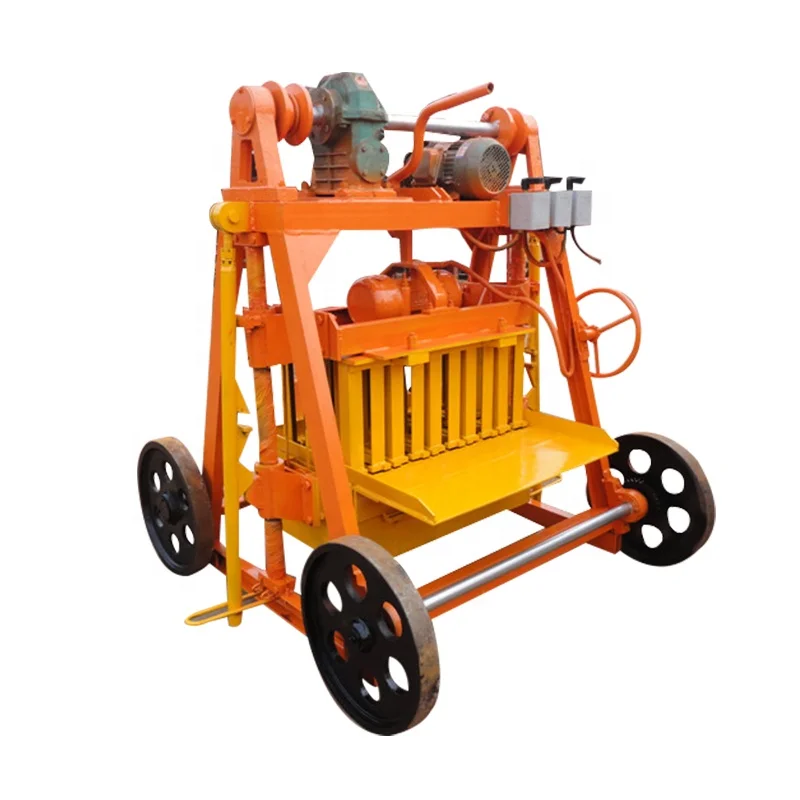
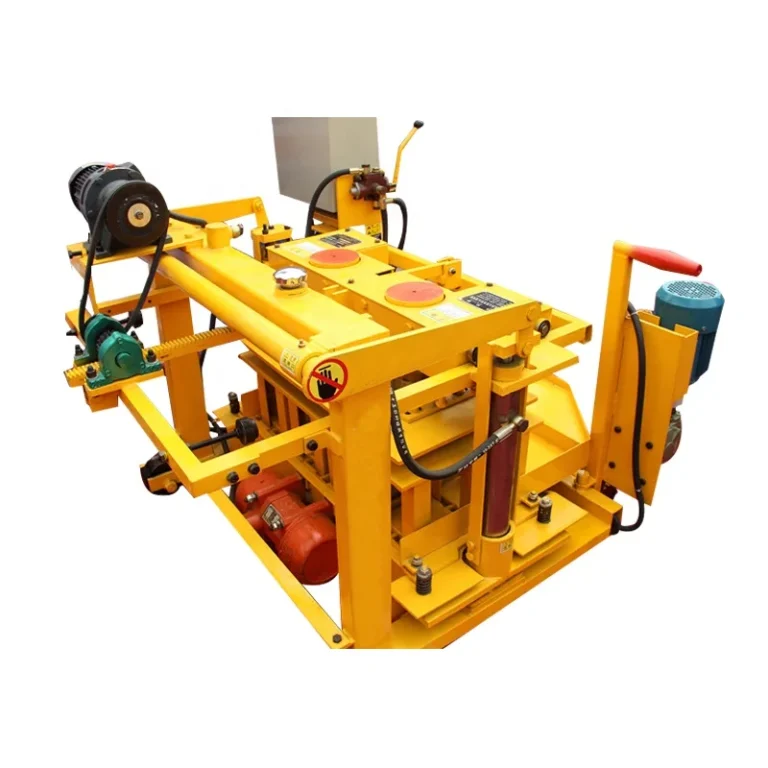 Mobile block machine