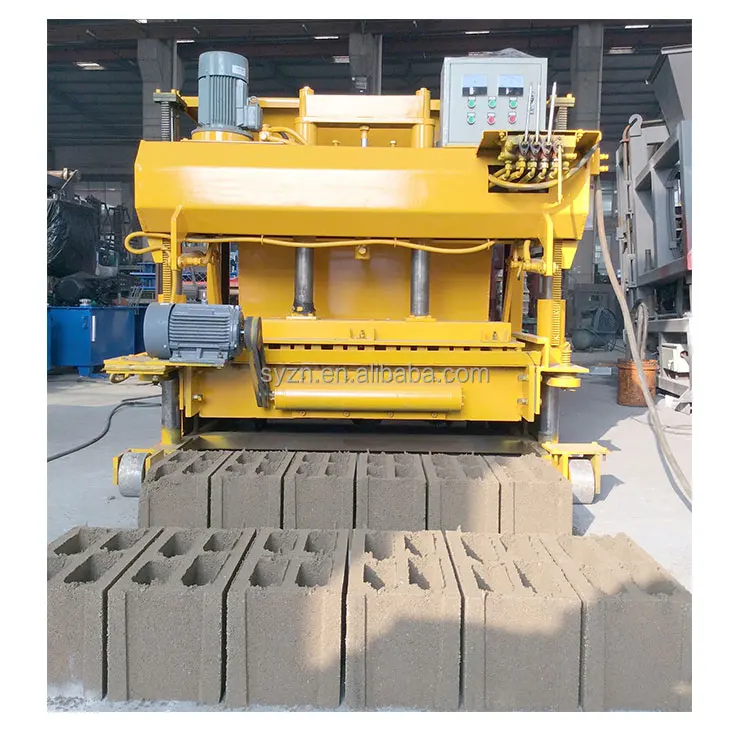
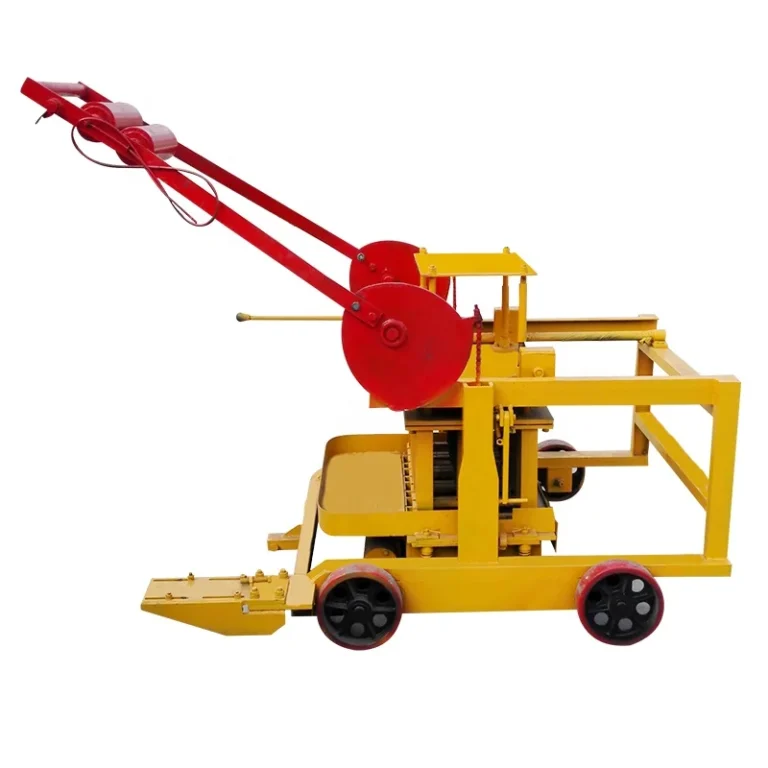
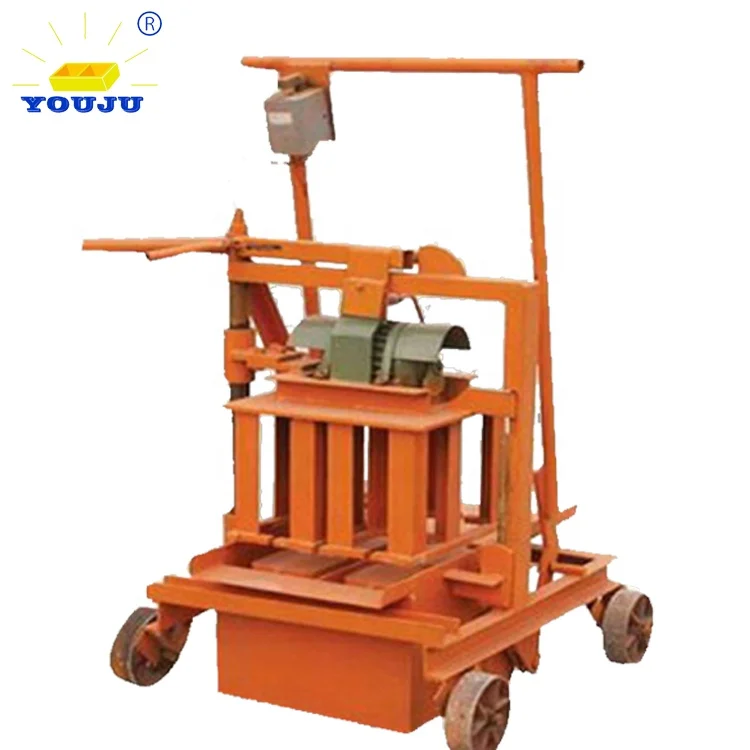
Single-Machine Focus — every mould, pallet requirement and output figure for the QMJ2-45 is verified against your actual block format before shipment, not pulled from a generic catalogue.
Technical Specifications
| Parameter |
Value |
| Model |
QMJ2-45 |
| Product Type |
Mobile Concrete Block Making Machine |
| Machine Class |
Mobile / egg-laying |
| Automation Level |
Manual operation |
| Mould Format (400×200×200 mm) |
2 pcs/mould, 25–30 s cycle, 160 pcs/h, 1280 pcs/8 hr |
| Mould Format (400×150×200 mm) |
3 pcs/mould, 25–30 s cycle, 240 pcs/h (basis not stated in source) |
| Mould Format (400×100×200 mm) |
4 pcs/mould, 25–30 s cycle, 320 pcs/h, 2560 pcs/8 hr |
| Mould Change System |
Interchangeable moulds for different hollow brick sizes |
| Pallet Requirement |
No pallets required |
| Workforce |
1 to 3 workers |
| Mobility |
Free-moving on site |
| Footprint |
Small space requirement |
| Control System |
Manual |
| Power Source |
Electric motor or diesel (basis not stated in source) |
| Hydraulic Pressure |
Not stated in source |
| Vibration Force |
Not stated in source |
| Overall Dimensions |
Not stated in source |
| Net Weight |
Not stated in source |
Application Suitability
| Application |
Material or Output |
| On-site hollow block production for small building projects |
Cement, sand, crushed stone or local aggregate |
| Remote construction without a fixed block plant |
Standard concrete mix adapted to local materials |
| First block plant for entrepreneurs |
Hollow bricks in 400×200×200, 400×150×200 or 400×100×200 mm formats |
| Contractor self-supply on housing developments |
Daily output matched to project pace with 1–3 workers |
Why Quoted Output Rarely Matches What You Actually Produce
Capacity only means something when tied to the exact block format you intend to sell. A mobile block making machine for sale might be advertised with a single headline number, but that figure almost always assumes the smallest or lightest mould available. Switch to a larger hollow brick and the pieces-per-mould count drops, cycle behaviour changes, and daily throughput shifts significantly [NEED_CITE: block format impact on mobile machine throughput].
I saw this happen on a site in West Africa where the buyer was told the machine would deliver a certain volume per shift. That number was based on a smaller hollow format, but the local market only bought the larger 400×200×200 mm block. The real output fell well short of expectation, and the project schedule slipped. Since then, I always ask for the buyer’s target format before quoting any capacity figure. The QMJ2-45 produces 1280 pieces per 8-hour shift on the 400×200×200 mm mould at 2 pcs/mould, and 2560 pieces on the 400×100×200 mm mould at 4 pcs/mould — a meaningful difference that must be factored into your plan before the machine leaves the factory.

Where a Mobile Machine Fits in Your Operation
The QMJ2-45 occupies the entry tier of the mobile block machine range. It is designed for buyers who need hollow block production directly on a construction site or in a yard where building a fixed plant is not justified. Because it is an egg-laying design, the machine moves forward after each press cycle, laying blocks directly on a prepared ground surface without pallets. This eliminates the cost and handling labour of pallet systems entirely.
For a buyer surveying options across the full machine range, the QMJ2-45 represents the lowest investment entry point. It requires minimal site infrastructure — a level, firm ground area for production and curing — and can be operated by a small crew. The trade-off is output volume: this manual mobile block making machine for sale is sized for project-scale demand, not for commercial block supply at scale.
How the Range Steps Up From Here
If your daily volume requirement exceeds what a single mobile unit delivers, the next tier is a semi-automatic stationary line with pallet handling and a fixed press position. Further up, fully automatic lines add batching, pallet feeding, stacking and cubing for continuous high-capacity output. Each step increases investment, footprint and workforce [NEED_CITE: block plant investment tiers and output comparison].
The QMJ2-45 is the right starting point when your priority is getting production running quickly on a project site with limited capital. Buyers who later need to scale can transition to a stationary configuration while retaining the mould knowledge and market relationships built on the mobile unit. The machine sits at the base of a range that extends through to fully automatic high-capacity lines, so your path forward is defined once you know where your volume needs will settle.
Reading the Specs That Actually Matter for Mobile Production
The cycle time of 25–30 seconds across all three hollow brick formats determines your shift output directly. On the 400×200×200 mm mould, two pieces are pressed per cycle, yielding 160 pieces per hour. The smaller 400×100×200 mm mould produces four pieces per cycle at 320 per hour. These figures assume consistent material feeding and uninterrupted operation — in practice, material preparation and block handling between cycles affect real throughput.
The no-pallet design is the defining engineering choice of this class. The machine’s own weight and vibration settle the block on the ground surface, so block density depends on both the mix design and ground firmness. A soft or uneven curing area will cause block deformation before the concrete sets. The interchangeable mould system lets you switch between three hollow brick sizes, but each change requires the operator to physically swap the mould box and adjust the feed — this is a manual process, not a quick-release system.
What Happens When You Skip the Detail Work
The most common problem with mobile machines is not the machine itself but the preparation around it. A buyer who does not confirm the ground condition will find blocks cracking or deforming on soft soil. A buyer who does not verify the power source specification before shipment may receive a motor that does not match the site voltage, leaving the machine idle while a replacement is sourced [NEED_CITE: motor voltage mismatch in exported machinery].
I have seen projects stall because the mould formats supplied did not match what local builders actually specified. The QMJ2-45 ships with interchangeable moulds, but if you need a format outside the three standard hollow brick sizes listed, that must be confirmed before production. Ordering additional moulds after delivery means waiting for manufacturing and shipping, during which the machine can only produce the formats it arrived with.
Why Buyers Specify This Machine Through Our Range
Block machinery is our single product focus, which means the QMJ2-45 is not assembled from generic components sourced across different suppliers — the machine, moulds and operating method are specified as a matched system. We configure the machine against the buyer’s actual mix design and local aggregate, not a default setting, because the vibration and material behaviour on a mobile egg-laying machine are especially sensitive to mix consistency.
Mould design covers the formats your local market actually buys, and custom mould drawings can be developed from buyer specifications. The automation level is selectable across our full range, so a buyer starting with the manual QMJ2-45 today can move to a semi-automatic or fully automatic configuration as demand grows. Every shipment includes factory test records and installation guidance so the machine is producing blocks within its first days on site [NEED_CITE: block machine commissioning standards].
Documentation & Verification
- Machine specification sheet listing all three hollow brick mould formats and cycle times
- Mould drawing and format list confirming dimensions match your local block standards
- Voltage and power source confirmation document before production begins
- Factory test record showing the machine running with your specified mould set
- Operation and maintenance manual covering mould change and daily servicing
- Packing photographs and customs documentation support for shipment
Installation, Commissioning & Support
- Level, compacted ground surface required — soft soil will deform freshly pressed hollow blocks before curing
- Power source and voltage confirmed before dispatch to match your site electrical supply
- Mould installation and first-run adjustment performed during commissioning with operator present
- Cycle timing verified on your specific mix design to establish realistic shift output
- Mould change procedure trained so operators can switch between the three hollow brick sizes independently
- Wear parts list provided with recommended replacement intervals for mould liners and vibration components
What to Include in Your Inquiry
When you are ready to specify this mobile block making machine for sale, the most useful information starts with the exact hollow brick format your market demands — dimensions and wall thickness determine which mould is configured as standard. Share your local aggregate type and any available mix proportion so the machine can be set up for your material rather than a generic recipe. Your site voltage and frequency are needed before production begins to ensure the motor specification matches your electrical supply.
Frequently Asked Questions
Q: How is the daily capacity figure calculated for each block format?
A: Each output figure is tied to a specific mould. The 400×200×200 mm mould presses 2 pieces per cycle at 25–30 seconds, giving 160 pieces per hour or 1280 pieces over an 8-hour shift. The 400×100×200 mm mould presses 4 pieces per cycle for 320 per hour and 2560 per shift. Real output depends on material feeding pace and operator workflow.
Q: What power source does the QMJ2-45 use and can voltage be matched?
A: The power source must be confirmed before production — the machine can be configured with an electric motor or diesel drive depending on site conditions. Voltage and frequency are specified to match your local supply. This confirmation step is part of our sales process to prevent motor mismatch after the machine arrives at your site.
Q: Which mould formats are included and can I add sizes later?
A: The standard configuration includes moulds for 400×200×200 mm, 400×150×200 mm and 400×100×200 mm hollow bricks. Additional mould formats can be designed and manufactured to your drawings. Mould interchangeability is manual, so operators are trained on the change procedure during commissioning.
Q: What site preparation is needed before the machine arrives?
A: You need a level, firm ground area for production and an adjacent curing zone. The no-pallet design means blocks are laid directly on the ground, so surface condition affects block quality. Material storage for cement and aggregate should be close to the production area to keep the manual feeding cycle within the 25–30 second target.
Q: How does this compare to a semi-automatic stationary line in output and labour?
A: The QMJ2-45 requires 1 to 3 workers and produces hollow blocks at a volume suited to project-scale demand. A semi-automatic stationary line uses pallet handling and higher automation to increase output and consistency but requires more capital, a fixed plant footprint and additional infrastructure. The mobile unit is the entry point in a range that extends to higher tiers.

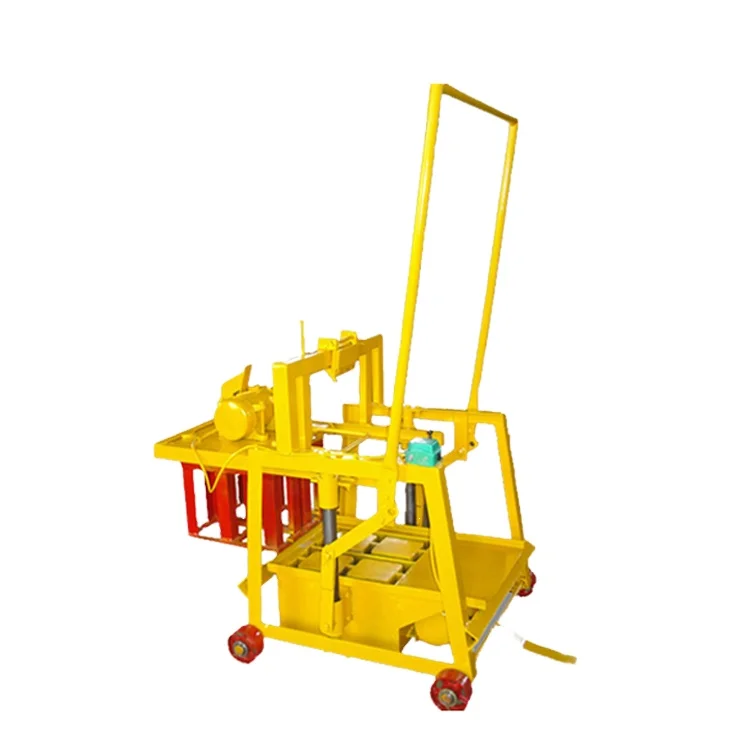
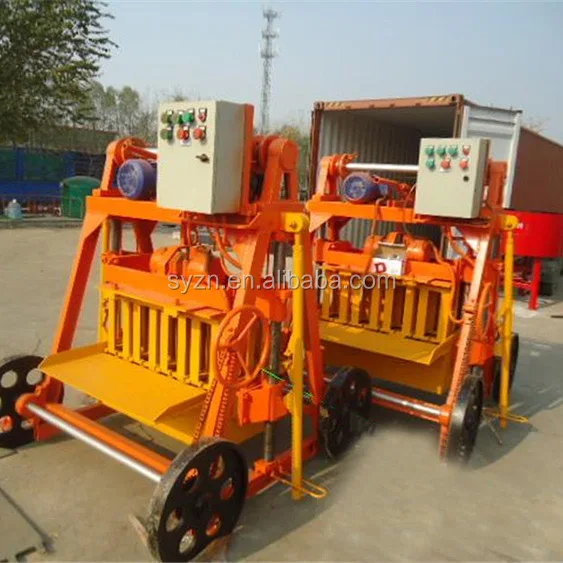 Mobile block machine