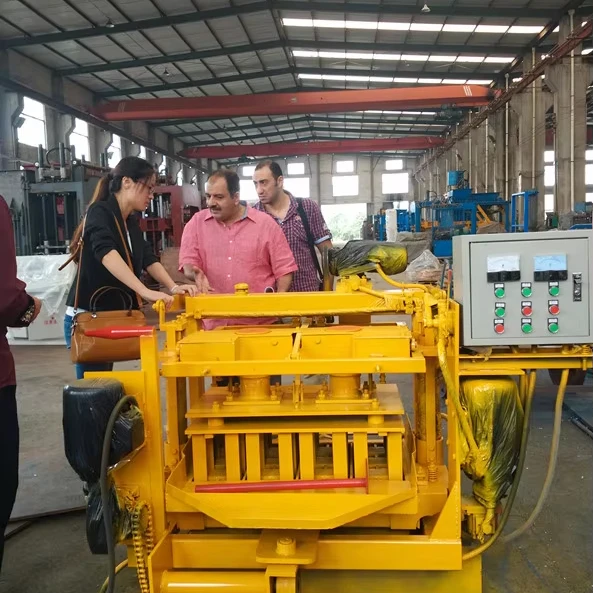
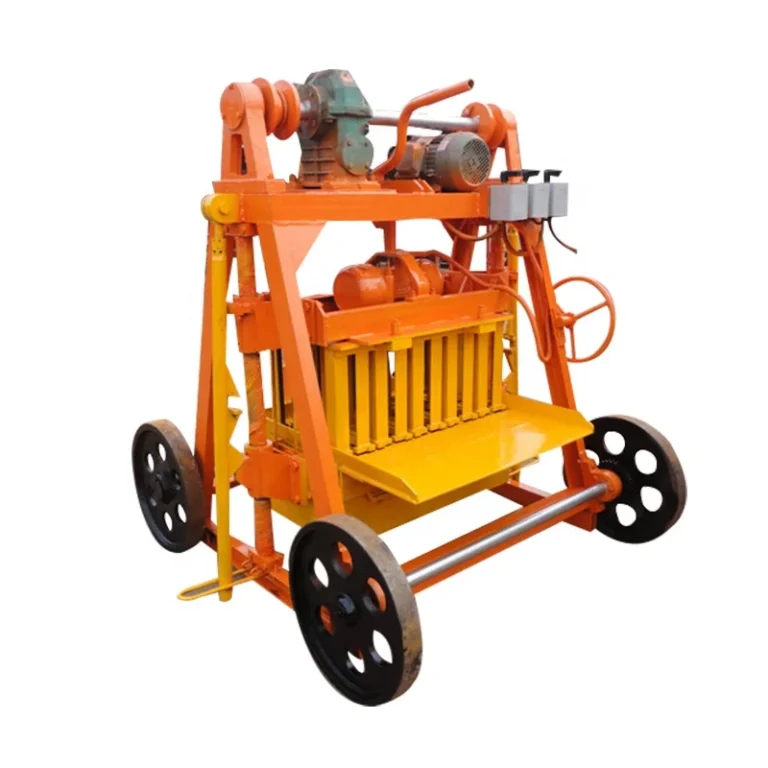
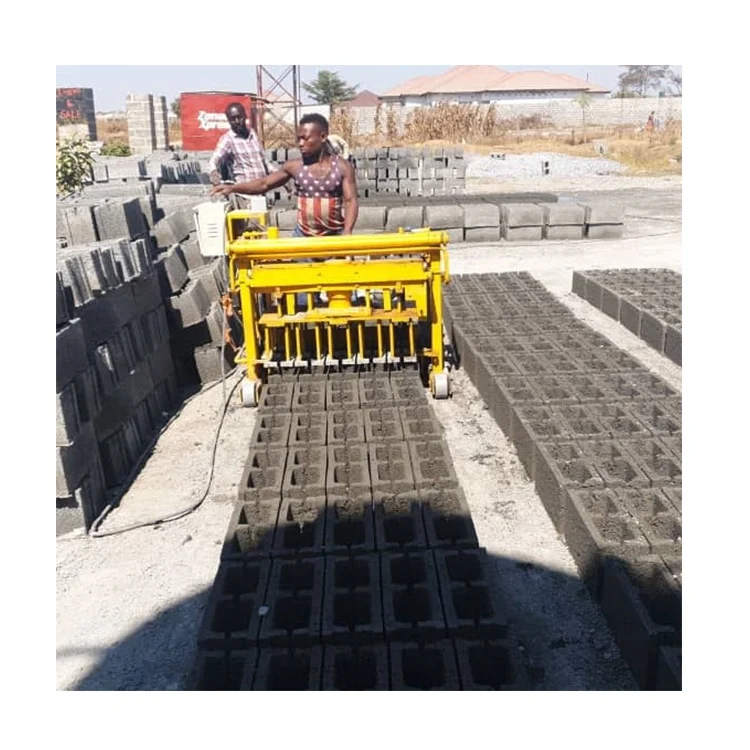
Format-Matched Range Entry — the QMY4-30 is positioned within a full mobile-to-automatic block machine lineup so buyers see exactly where this tier sits and what an upgrade path looks like before committing capital.
Technical Specifications
| Parameter |
Value |
| Model |
QMY4-30 |
| Product Type |
Mobile Block Making Machine |
| Rated Power |
5 kW |
| Overall Dimensions (L×W×H) |
1200 × 1200 × 1100 mm |
| Net Weight |
950 kg |
| Cycle Time |
30 seconds |
| Output (400×200×200 mm hollow block) |
480 pcs/hour, 3,840 pcs per 8-hour shift |
| Output (400×150×200 mm hollow block) |
600 pcs/hour, 4,800 pcs per 8-hour shift |
| Output (400×100×200 mm hollow block) |
840 pcs/hour, 6,720 pcs per 8-hour shift |
| Mould Format |
Interchangeable moulds for hollow block and solid brick |
| Raw Materials |
Cement, sand, crushed stones, slag |
| Automation Level |
Manual / mobile (egg-laying type) |
| Assembly State |
Fully assembled, mobile on-site operation |
| Warranty |
One year guarantee |
| Certification |
To be confirmed with manufacturer (CE or equivalent) |
Application Suitability
| Application |
Material or Output |
| On-site block production without a fixed plant |
Hollow blocks and solid bricks from cement, sand, and crushed stone |
| First block plant for entrepreneurs |
Low-volume hollow block runs on slag-cement mixes |
| Housing project contractor self-production |
400×200×200 mm hollow blocks at up to 3,840 pcs per 8-hour shift |
| Small-scale brick manufacturing |
Solid brick formats via interchangeable mould |
| Distributor adding mobile capability |
Supplementary output alongside existing fixed-plant equipment |
Why "Pieces per Hour" Means Nothing Without the Block Format
Many mobile block machine quotations advertise a single output figure, but that number only holds true for one specific block size. Buyers who arrive on site to find their local market demands a different format quickly learn the gap between a catalogue claim and real daily production.
The QMY4-30 addresses this by publishing output capacity against three separate hollow block dimensions. A mobile block making machine manufacturer should always state which block format each figure assumes — anything less leaves you guessing whether the machine can actually meet your daily target once you start producing the product your customers buy. Capacity quoted in cycles per hour without format context is the single most common source of buyer disappointment in this equipment class [NEED_CITE: common causes of block machine output shortfalls in small-scale operations].

Where the QMY4-30 Sits in the Full Machine Range
The QMY4-30 occupies the entry-mobile tier of a complete block machine lineup. Above it sit semi-automatic machines with pallet feeding systems and batching stations, and at the top end, fully automatic lines with stacking and cubing. A mobile block making machine manufacturer that only offers one tier cannot show you what your operation might look like two years from now when demand grows.
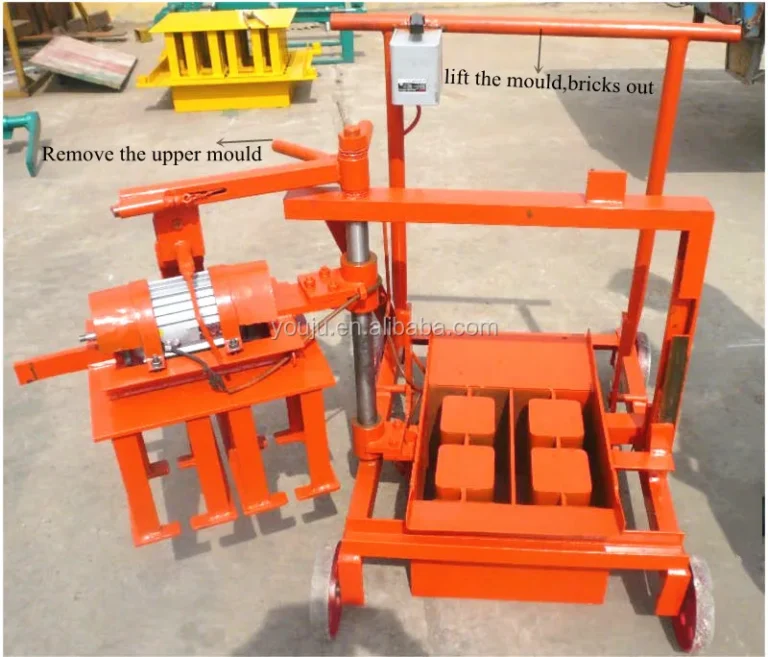
This tier is designed for buyers who need on-site flexibility without fixed-plant infrastructure. The compact 1200 × 1200 × 1100 mm footprint and 950 kg net weight mean the machine can be positioned on a prepared concrete floor and moved between production zones as a project requires.
Understanding the Upgrade Path Before You Buy
Starting with a mobile machine does not lock you into manual operation forever. The QMY4-30 uses the same mould format philosophy as the higher tiers — interchangeable moulds designed around specific block dimensions. When you eventually move to a semi-automatic or fully automatic line, the mould engineering knowledge you build now carries forward [NEED_CITE: block machine upgrade paths from mobile to automatic production].
Buyers who skip this planning step often find that their initial machine investment becomes stranded equipment rather than a stepping stone. Knowing the full range before choosing your entry point keeps options open.
Reading the Specifications That Actually Matter
The 5 kW rated power requirement is deliberately low, which reduces the utility infrastructure a new plant needs to install before production can begin. In many project locations, a high-power machine would demand a dedicated transformer or three-phase supply that simply is not available.
The 30-second cycle time applies across all three quoted block formats. What changes is the number of blocks per mould cavity — the 400×100×200 mm format produces more units per cycle because the mould holds more cavities in the same pallet area. This is why output jumps from 480 to 840 pcs/hour when you switch from the largest to the smallest hollow block.
The egg-laying operating principle means the machine lays blocks directly onto the ground surface and moves forward, eliminating the need for pallets entirely. This removes an entire material handling step and the associated curing rack infrastructure that fixed-plant machines require.
What Happens When Mould Format Is Ignored Before Shipment
A mobile machine that arrives with the wrong mould is effectively a heavy paperweight. We have seen contractors in African project sites discover after delivery that the standard hollow block mould does not match the thick solid brick their local market demands. The machine sits idle while a replacement mould is designed, manufactured, and shipped — a delay measured in weeks, not days.
Confirming mould format against your actual local product before the order is placed is the single most important step in the procurement process for any mobile block machine [NEED_CITE: block machine mould mismatch delays in overseas projects]. The cost of a custom mould is small relative to the cost of a stalled construction schedule.
What This Manufacturer Actually Brings to the Table
Block machinery is the sole product focus here, which means the machine, mould, pallet specification, and handling equipment are designed as one matched system rather than assembled from unrelated suppliers. When you select the QMY4-30, the interchangeable mould is engineered for the block formats your market actually sells, not a generic default.
Configuration is set against your actual mix design and local aggregate rather than a catalogue assumption. The automation level is selectable — you can begin with this mobile tier and move to semi-automatic when volume justifies it. Installation support and operator training are included, and mould plus wear parts availability is confirmed before the machine leaves the factory.
Documentation & Verification
- Capacity calculation document stating which block format each output figure assumes
- Machine specification sheet confirming voltage, frequency, and control language before shipment
- Mould drawing and format list matched to your local market block dimensions
- Factory test record with photographs showing the QMY4-30 running your specified format
- Packing photographs and customs documentation support for export clearance
Installation, Commissioning & Support
- Prepared concrete floor required; the 1200 × 1200 mm footprint needs a level surface for egg-laying operation
- 5 kW power supply must be confirmed at the site before delivery; voltage and frequency verified pre-shipment
- Machine arrives fully assembled and mobile; no on-site mechanical assembly required
- First-run commissioning includes cycle time verification on your chosen block format
- Operator training covers mould change procedure and raw material feed adjustment
- Wear parts list and mould maintenance schedule provided with delivery documentation
What We Need From You to Move Forward
To size this machine correctly against your project, provide the specific block format your local market sells, your target daily output, and the raw materials available on site. Confirm your local voltage and frequency supply so the electrical system is configured before the QMY4-30 leaves the factory.
If you are comparing this mobile tier against a semi-automatic line, share your available floor space and whether you already have pallet handling or curing rack infrastructure in place.
Frequently Asked Questions
Q: How is the output capacity calculated, and which block format does each figure assume?
A: Each output figure is calculated from a 30-second cycle time and the number of cavities in the mould for that specific block size. The 480 pcs/hour figure applies to 400×200×200 mm hollow blocks, 600 pcs/hour to 400×150×200 mm, and 840 pcs/hour to 400×100×200 mm. No single generic figure is quoted without its format assumption.
Q: Where does the QMY4-30 fit in the full machine range, and what is the upgrade path?
A: It sits at the entry-mobile tier, below semi-automatic machines with pallet systems and fully automatic lines with stacking and cubing. The mould format engineering carries forward across tiers, so upgrading later does not mean starting from scratch on product specification.
Q: What voltage and frequency options are available before shipment?
A: Voltage, frequency, and control display language are confirmed during the quotation stage based on your local supply standards. The electrical system is configured at the factory so commissioning on arrival is not delayed by mismatched power specifications.
Q: Can custom moulds be designed if my local market requires a non-standard block format?
A: Yes. Mould design covers the formats your market sells, and custom moulds can be engineered to buyer drawings. Providing your local block dimensions and strength requirements early in the inquiry ensures the correct mould is shipped with the machine.
Q: What site conditions are needed to operate the QMY4-30 on site?
A: A level concrete floor is required for egg-laying operation. The machine needs a confirmed 5 kW power supply at the correct voltage and frequency. No fixed plant, pallet system, or curing rack infrastructure is required for mobile production.

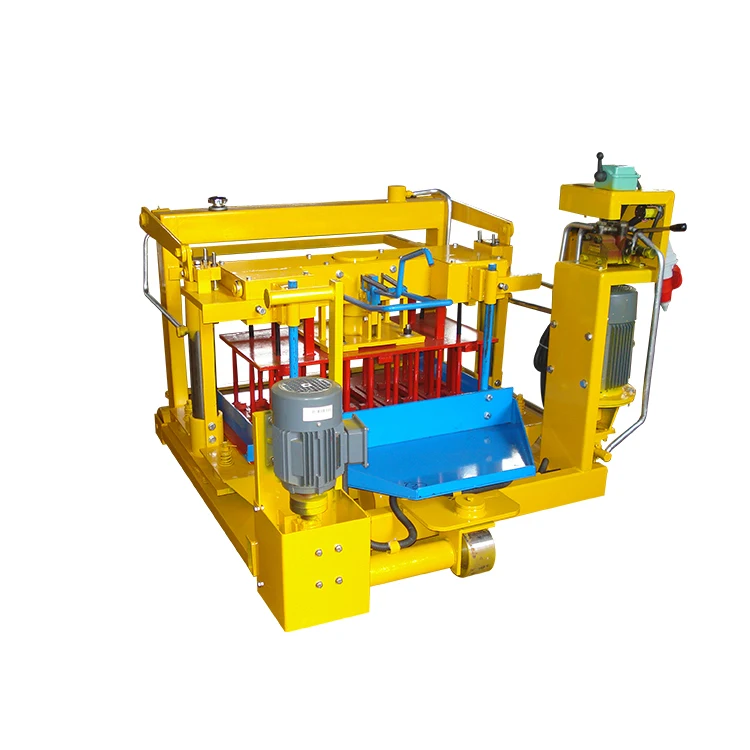
 Mobile block machine