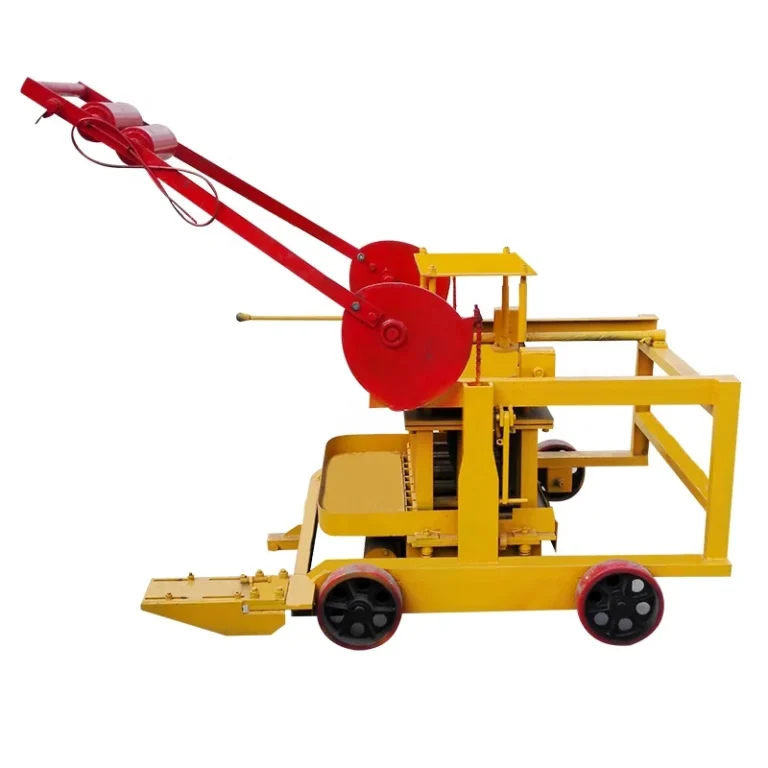
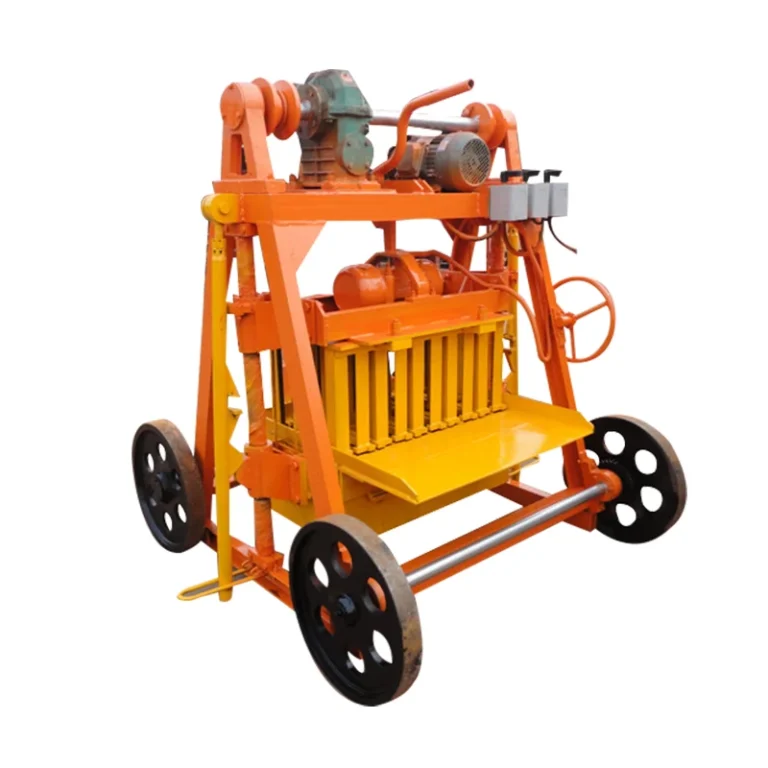
Matched System Sourcing — specifying the egg-laying QMJ2-45 and its interchangeable moulds as a single verified package so the block format, cycle time, and on-ground curing footprint align before the machine leaves the factory.
Technical Specifications
| Parameter |
Value |
| Model |
QMJ2-45 |
| Product Type |
Mobile Block Making Machine |
| Machine Operation |
Manual egg-laying (pallet-free) |
| Standard Mould Formats |
400×200×200mm, 400×150×200mm, 400×100×200mm hollow brick |
| Mould Change Mechanism |
Manual interchangeable moulds |
| Output Capacity (400×200×200mm hollow brick) |
1,280 pieces per 8-hour shift (basis: 2 pcs/mould, 25–30s cycle) |
| Output Capacity (400×100×200mm hollow brick) |
2,560 pieces per 8-hour shift (basis: 4 pcs/mould, 25–30s cycle) |
| Pallet Requirement |
None (on-ground production) |
| Power Source |
Electric engine |
| Labor Requirement |
1 to 3 workers |
| Automation Level |
Manual |
| Mobility |
Free movement on-site, no fixed foundation |
| Certification |
ISO 9001:2000, CE |
Application Suitability
| Application |
Material or Output |
| Remote Housing Project Production |
Hollow blocks from local crushed stone, sand, and cement |
| Entrepreneurial Block Yard Startup |
Standard 200mm and 150mm hollow blocks for local masonry |
| Supplemental On-Site Contractor Output |
100mm hollow partition blocks produced adjacent to the build zone |
| Space-Constrained Urban Infill Sites |
Low-volume production without pallet storage infrastructure |
Why "Pieces Per Hour" Can Be Misleading Without the Block Format
Every capacity figure for the QMJ2-45 mobile block making machine must be tied to the exact brick size being produced to be meaningful.
It is common in this industry to see a machine advertised with a single headline output number. In reality, switching from a 200mm thick hollow block to a 100mm partition block effectively changes the machine’s daily output because the mould cavity count changes [NEED_CITE: standard block mould cavity configurations]. When a supplier quotes a cycle time without stating the format it assumes, buyers often find their real daily volume falls short of what the proforma invoice suggested. Specifying the format upfront prevents this mismatch.

Understanding the Mobile Block Machine Range
The QMJ2-45 sits at the entry tier of our mobile range. It is a manual, pallet-free unit designed for buyers who need to start production on-site with a small footprint. As volume requirements grow, buyers can step up to semi-automatic units that introduce pallet-based handling and higher vibration force. This machine serves as the starting point for contractors who want immediate block production capability without the capital outlay of a fixed plant.
How the Egg-Laying Mechanism Works
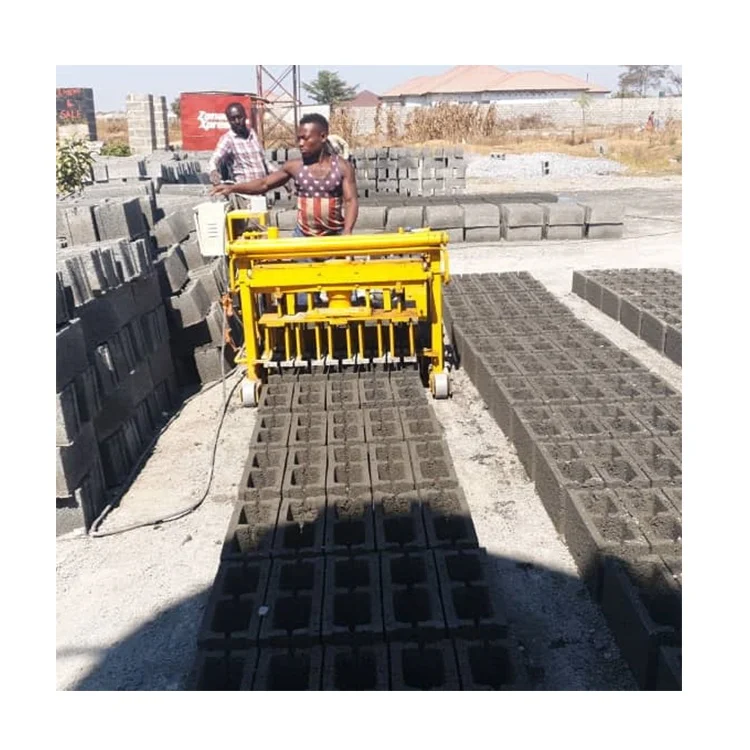
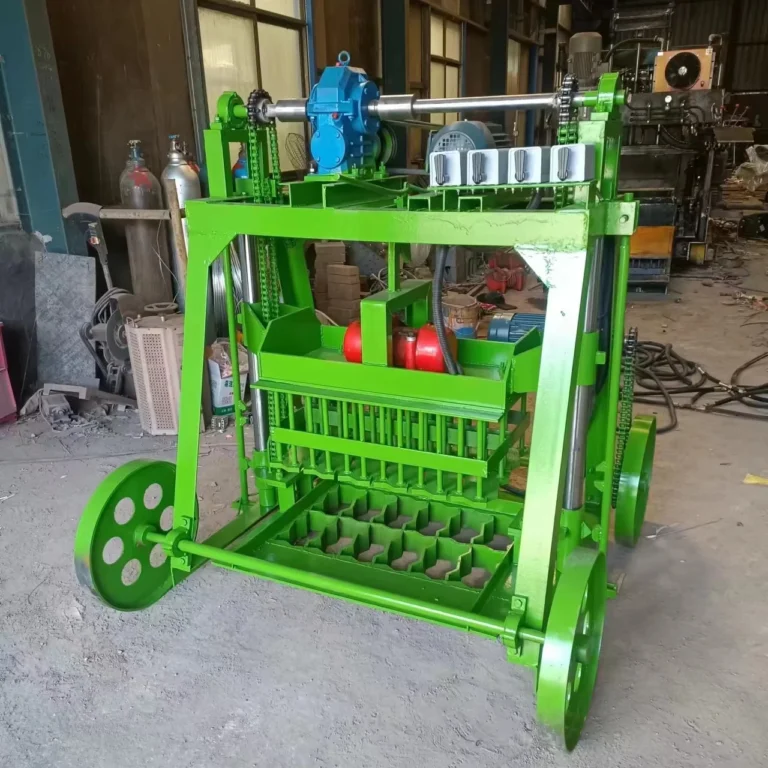
This Mobile Block Making Machine for sale operates by extruding blocks directly onto the ground and then moving forward to repeat the cycle. Because no pallets are required, the buyer avoids the logistics of purchasing, storing, and rotating hundreds of wooden or PVC pallets [NEED_CITE: pallet handling logistics in block production]. The trade-off is that production speed is limited by manual movement and the need for the operator to guide the machine. The ground surface must be level and cured concrete to ensure block flatness.
Interpreting the Core Mechanical Specifications
The cycle time of 25–30 seconds is consistent across the three hollow formats because the motor vibration duration and manual repositioning time remain constant, regardless of whether the mould holds two or four cavities. The electric engine provides the vibration force necessary to consolidate the concrete mix; however, without a hydraulic press, the final block density relies heavily on the operator’s mix design and the quality of local aggregate. The manual mould change system requires physical lifting of the mould box, which dictates that format switches are practical at the start of a shift rather than multiple times per day.
The Hidden Cost of Ignoring Site Voltage
A frequent pain point occurs when a Mobile Block Making Machine for sale arrives at a site where the voltage frequency or phase does not match the electric engine specification. This oversight delays commissioning, sometimes for weeks while a replacement motor or transformer is sourced [NEED_CITE: electrical commissioning delays in machinery imports]. Confirming the local power grid standard before production begins ensures the motor wiring and control box are configured correctly at the factory.
Why Source This Configuration Here
We treat the machine, the moulds, and the operating environment as a single system. Rather than shipping a default unit, we confirm the specific hollow block formats that sell in your local market and match the vibration characteristics to the aggregate you can actually source. This approach prevents the scenario where a machine arrives configured for a raw material mix that is unavailable or prohibitively expensive locally. Our documentation includes a capacity calculation that clearly states which block format was used for every output figure.
Documentation & Verification
- Capacity calculation sheet stating the block format assumed for each output tier
- Mould drawing and format list confirming included and optional hollow brick sizes
- Voltage and control language confirmation record signed before dispatch
- Factory test record demonstrating cycle time on the specified brick format
- CE declaration of conformity and ISO 9001:2000 manufacturing standard documentation
- Operation manual detailing mix design ratios for manual egg-laying production
Installation, Commissioning & Support
- Site prep requiring a level, cured concrete floor area for egg-laying mobility
- Power supply verification to match the electric engine voltage and frequency rating
- On-site assembly of the interchangeable mould boxes and vibration motor mounts
- First-run commissioning to calibrate vibration duration against your local cement mix
- Operator training focused on manual mould change safety and ground leveling techniques
- Wear parts list identifying high-friction components in the manual drive mechanism
Preparing Your Inquiry
To ensure the QMJ2-45 is the correct fit for your project, please specify the exact dimensions of the hollow blocks you intend to sell and the daily volume you target per format. We also need your site’s available voltage and phase, as well as the general characteristics of your local sand and aggregate. This data allows us to configure the electric engine and recommend the correct mould set before we quote a lead time.
Frequently Asked Questions
Q: How is output capacity calculated for the QMJ2-45?
A: Capacity is calculated by multiplying the number of cavities in the specific mould by the number of cycles possible in a shift. For example, the 400×200×200mm mould holds 2 pieces per cycle at 25–30 seconds, resulting in approximately 1,280 pieces per 8-hour shift. Different block sizes will yield different totals based on cavity count.
Q: What site preparation is needed for this pallet-free machine?
A: The QMJ2-45 requires a flat, level, and hardened concrete surface to lay blocks directly on the ground. Without a smooth floor, the blocks may settle unevenly or crack during the egg-laying movement. Sufficient space is also needed for the blocks to cure in place before being moved.
Q: Can I upgrade from this mobile machine to an automatic line later?
A: Yes, the QMJ2-45 is designed as an entry-level unit. Many buyers start with this manual mobile machine to establish their market and secure cash flow, then transition to a semi-automatic or fully automatic stationary plant that uses pallets and hydraulic stacking as their volume requirements increase.
Q: Which mould formats are included with the machine?
A: The standard configuration covers 400×200×200mm, 400×150×200mm, and 400×100×200mm hollow bricks. Additional custom sizes can be manufactured if the buyer provides specific drawings or local market requirements, though each new mould requires a separate manual changeover process on the machine.

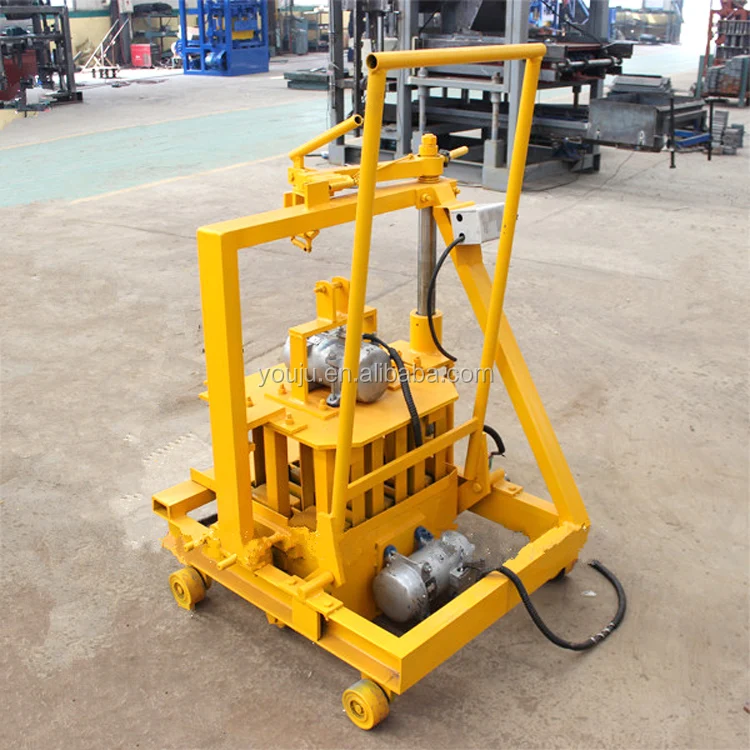
 Mobile block machine