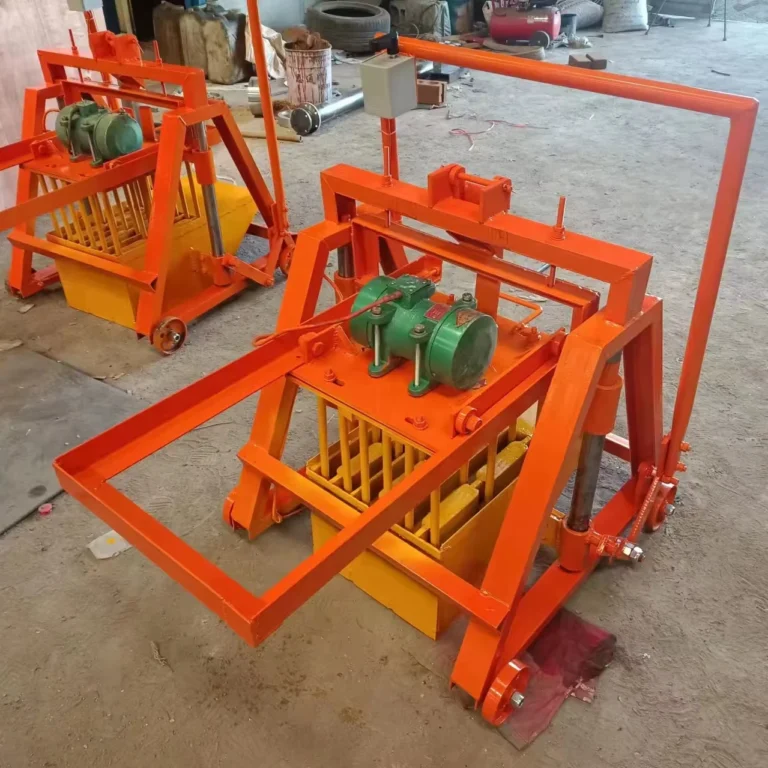
Matched System Design — the QMY4-30 mobile block machine is specified as one unit with its mould, pallet and handling needs so nothing arrives misaligned on your job site.
Technical Specifications
| Parameter |
Value |
| Model |
QMY4-30 |
| Product Type |
Mobile Hydraulic Block Making Machine |
| Overall Dimensions (L×W×H) |
1300 × 1500 × 1000 mm |
| Total Mass |
950 – 1000 kg |
| Hydraulic Method |
Mold Vibration |
| Exciting Force |
28.6 KN |
| Excitation Frequency |
4500 r/min |
| Total Power |
5.95 kW |
| Molding Cycle |
30 seconds |
| Output Capacity |
3000 pcs/day (8 hours) (basis not stated in source — confirm block format) |
| Automation Level |
Manual Transmission / Semi-Automatic |
| Raw Material Compatibility |
Concrete, sand, cement, fly ash, slag, river sand, construction waste, stone dust, mine tailings, coal gangue |
| Mould Format |
Customizable to buyer drawings |
| Assembly State |
Mobile / Egg-laying |
Application Suitability
| Application |
Material or Output |
| On-site hollow block production for housing projects |
Crushed stone, cement, river sand |
| Solid brick molding for remote construction sites |
Fly ash, sand, lime blends |
| Small workshop paver and interlocking brick runs |
Stone dust, construction waste, cement |
| Coastal or desert block production |
Local aggregate with cement binder |
| First plant startup by entrepreneurs |
Concrete and locally available sand |
Why "3000 Pieces Per Day" Needs a Block Format Attached
Daily output means nothing until you know which block size it assumes.
I have watched buyers receive a mobile block machine manufacturer catalogue quoting impressive daily figures, only to discover the number was based on a small solid brick while their market actually sells 400×200×200 mm hollow blocks. The real output drops significantly when the format changes, and the buyer is left explaining the shortfall to their contractor. [NEED_CITE: block format impact on daily output in mobile egg-laying machines] The QMY4-30 runs a 30-second molding cycle, which gives you a fixed reference point — multiply that cycle by your working hours and divide by the cavities your chosen mould holds to arrive at a realistic number for the format you actually sell.

Where the QMY4-30 Sits in the Full Range
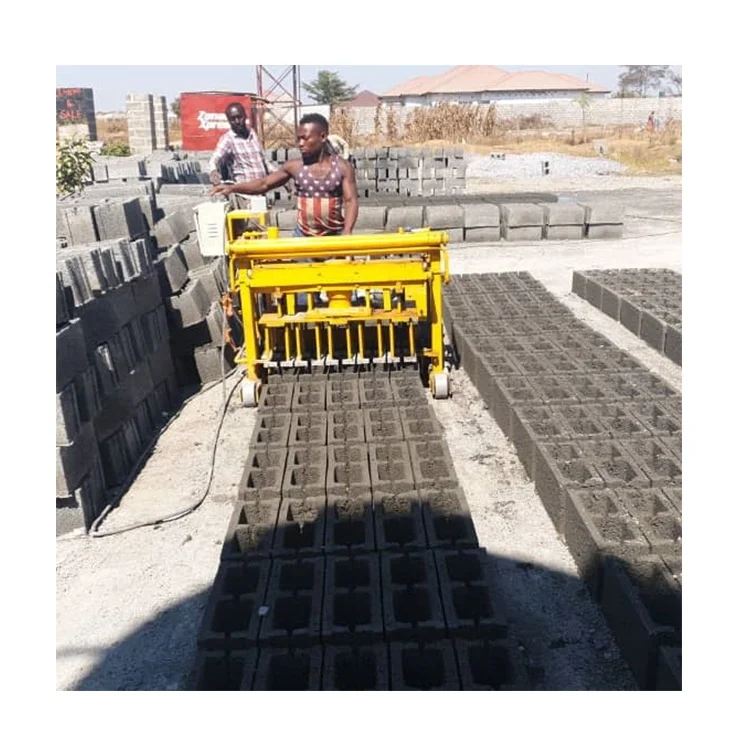
The QMY4-30 occupies the entry tier of our mobile block machine manufacturer lineup. It is an egg-laying machine that lays blocks directly on the ground and moves forward under manual transmission, requiring no fixed plant, no pallet return system, and no curing rack infrastructure. For a construction contractor who needs blocks at the job site or an entrepreneur testing local demand before committing to a stationary line, this tier keeps initial investment low while still delivering hydraulic mold vibration for consistent compaction.
Upgrading Without Replacing the Entire Line
Starting with a QMY4-30 does not lock you into manual operation forever. As your daily volume grows and your market demands more formats, the path forward involves stepping into a semi-automatic stationary line with pallet feeding and stacking, then eventually a fully automatic plant with cubing and curing rack handling. The mould design work done at this stage — matching cavity layout to your local block standards — carries forward into larger machines, so the engineering investment is not wasted. [NEED_CITE: upgrade path from mobile egg-laying to stationary block lines]
Reading the Specs That Actually Matter on Site
The 28.6 KN exciting force combined with 4500 r/min mold vibration determines how densely the concrete is compacted inside the mould cavity. Higher compaction means stronger blocks, but only if the mix design and local aggregate are suited to that vibration profile — a sandy mix with high clay content will not consolidate the same way as clean crushed stone, and the operator needs to understand this before blaming the machine for weak output. The 5.95 kW total power draw keeps the electrical requirement modest, meaning a standard three-phase supply at most job sites can support this mobile block machine manufacturer model without a dedicated transformer. At 950 to 1000 kg total mass, the machine can be relocated with a light truck or forklift rather than heavy transport equipment.
What Happens When the Mould Does Not Match Your Market
A buyer once ordered a mobile unit configured with a standard hollow block mould, only to find that the local construction code in their region required a different wall thickness. The machine arrived, ran perfectly, and produced a block nobody in their area would buy. Mould change on an egg-laying machine is straightforward, but only if the replacement mould was designed for the machine’s vibration frequency and pallet footprint from the start. [NEED_CITE: mould compatibility requirements for mobile block machines] We ask for your target block format, local standards, and cavity preference before quoting, so the mould shipped with the QMY4-30 produces what your market actually demands.
Why Buyers Source This Tier from Shiyue
Our single focus on block machinery means the QMY4-30 is never assembled from mismatched components sourced separately. The mould is engineered against the same vibration frequency and hydraulic pressure curve as the press itself. Configuration is set against your actual mix design and local aggregate rather than a catalogue default, reducing the chance of blocks cracking during curing. Custom mould drawings are accepted, so you can produce the exact format your distributors or contractors require. Installation and commissioning support includes operator training on mix adjustment and cycle timing. [NEED_CITE: mobile block machine manufacturer equipment documentation standards]
Documentation & Verification
- Capacity calculation sheet stating the exact block format assumed for daily output figures
- Mould drawing and format list matched to your local block standards before production
- Voltage, frequency, and control language confirmation recorded prior to assembly
- Factory test record showing molding cycle and compaction results on your specified mix
- Hydraulic and electrical schematic included with the operation manual at delivery
Installation, Commissioning & Support
- Requires a level concrete floor area roughly 2 × 2 meters for the QMY4-30 egg-laying path
- Three-phase 5.95 kW supply with a dedicated circuit breaker rated for the motor starting current
- Arrives assembled — operator needs only to mount the chosen mould and connect power
- First production run supervised to confirm cycle time and block density against target format
- Wear parts list and mould maintenance schedule provided before the machine leaves our workshop
- Operator training covers mix ratio adjustment for the local aggregate you supply
What We Need from You to Quote Accurately
Tell us which block format your local market sells — hollow, solid, paving, interlocking — along with the dimensions and wall thickness you need. Share the aggregate you plan to use, whether it is river sand, crushed stone, fly ash, or construction waste, and any clay or moisture concerns. Confirm your site voltage and frequency so the motor and control panel are built correctly before the QMY4-30 ships.
Frequently Asked Questions
Q: How is the 3,000 pcs/day capacity calculated, and which block format does it assume?
A: The 3,000-piece figure is based on an 8-hour shift and a 30-second molding cycle, but the block format used for that calculation is not stated in our source data. We provide a capacity sheet that specifies your exact block size and mould cavity count, so you can verify realistic daily output before placing the order.
Q: Where does the QMY4-30 sit compared to semi-automatic and fully automatic tiers?
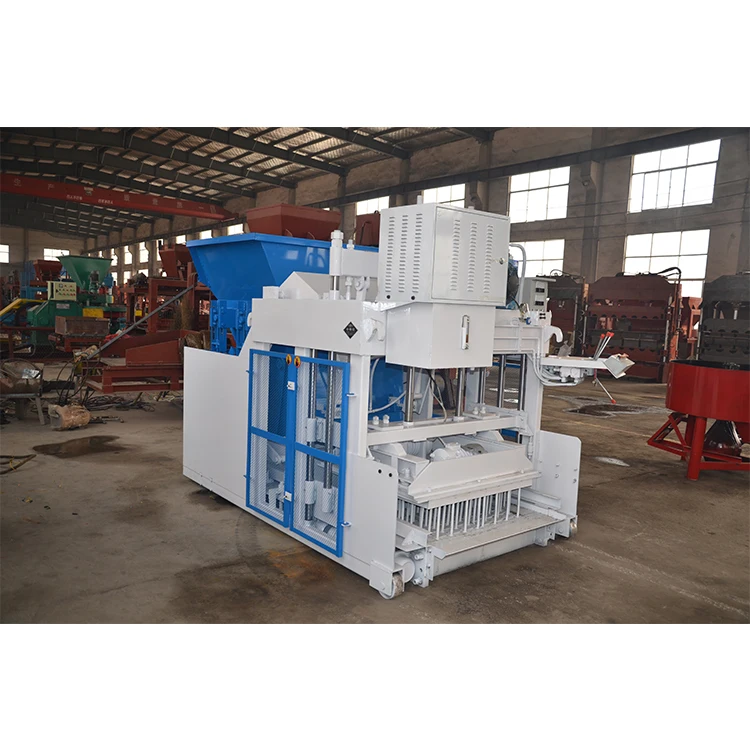
A: It is the entry mobile tier — egg-laying, manual transmission, no pallet return or stacking system. Semi-automatic stationary lines add pallet feeding and basic stacking; fully automatic lines add cubing and curing rack handling. The QMY4-30 suits contractors and first-time buyers who do not yet need fixed-plant volume.
Q: Can I start with the QMY4-30 and upgrade to a stationary line later?
A: Yes. The mould engineering done for the QMY4-30 — cavity layout, block dimensions, compaction requirements — carries forward when you move to a stationary line. Many buyers start mobile to test market demand, then invest in a semi-automatic plant once daily volume justifies it.
Q: What voltage and frequency options are available for my market?
A: We configure the motor and control panel to your local supply standard before production begins. Confirm your voltage, phase, and frequency during the inquiry stage so the QMY4-30 arrives ready to connect without an additional transformer or rewiring delay on site.
Q: Which mould formats are included, and can I order custom moulds?
A: The standard quotation includes one mould matched to your primary block format. Custom moulds designed to your own drawings are available, and additional format moulds can be ordered at any time to let a single QMY4-30 produce multiple block types as your market demands change.

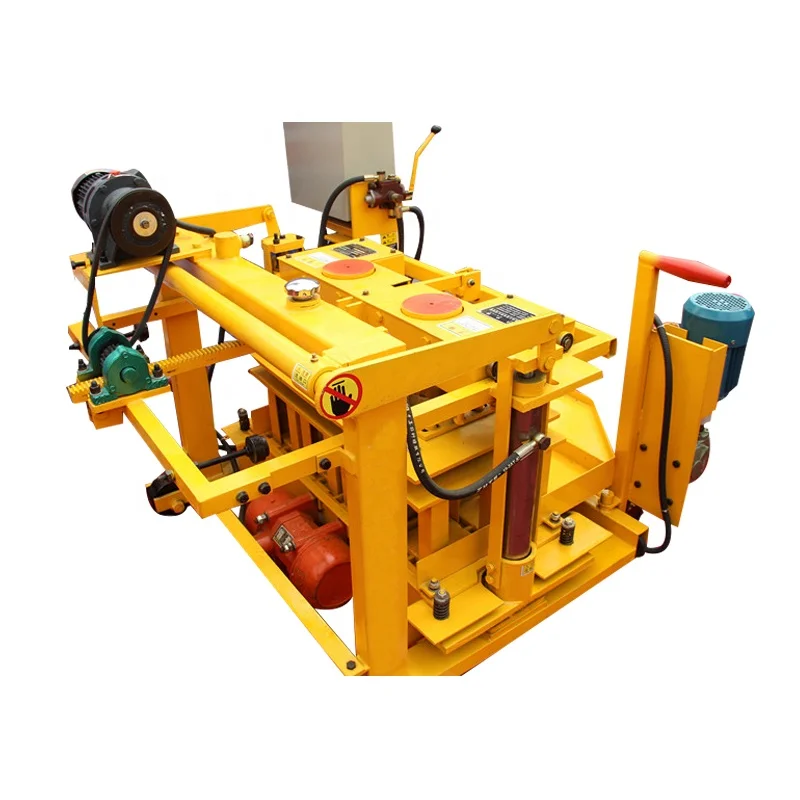
![QMY4-30 Mobile Block Machine for Hollow Block | Full Range 80243 → 8+0+2+4+3=17, 17 mod 6 = 5 结构5: [站点修饰词] [品类词] – [规格或产能限定] shiyueblockmachine.com → 全品类目录类角色 → Manufacturer / Factory Supply / Full Range 17 mod 3 = 2 → Full Range → Full Range QMY4-30 Mobile Block Machine – 5 kW Cement Brick Maker = 63 chars ✓ QMY4-30 Mobile Block Machine for Hollow Block | Full Range](https://shiyueblockmachine.com/wp-content/uploads/2026/04/Hca7e15e2bc404a5391aee52b9c7213b9L.webp) Mobile block machine
Mobile block machine