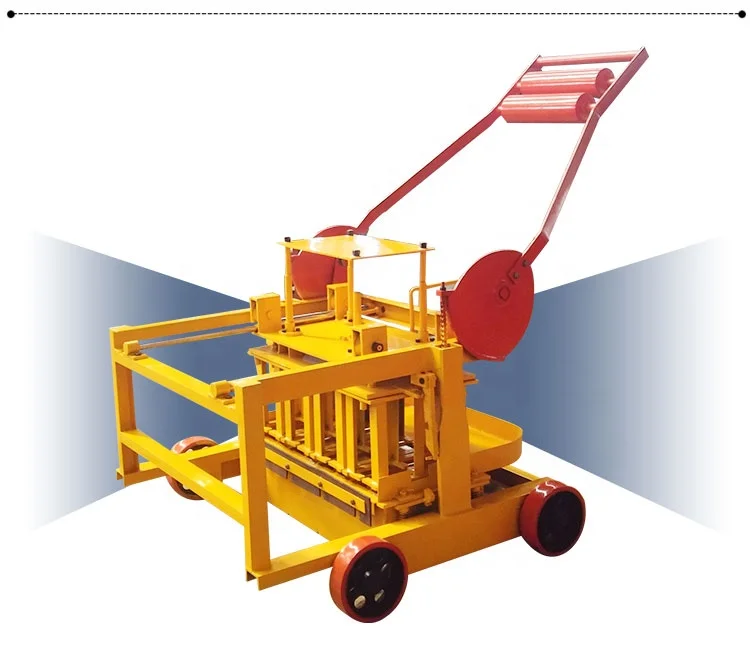
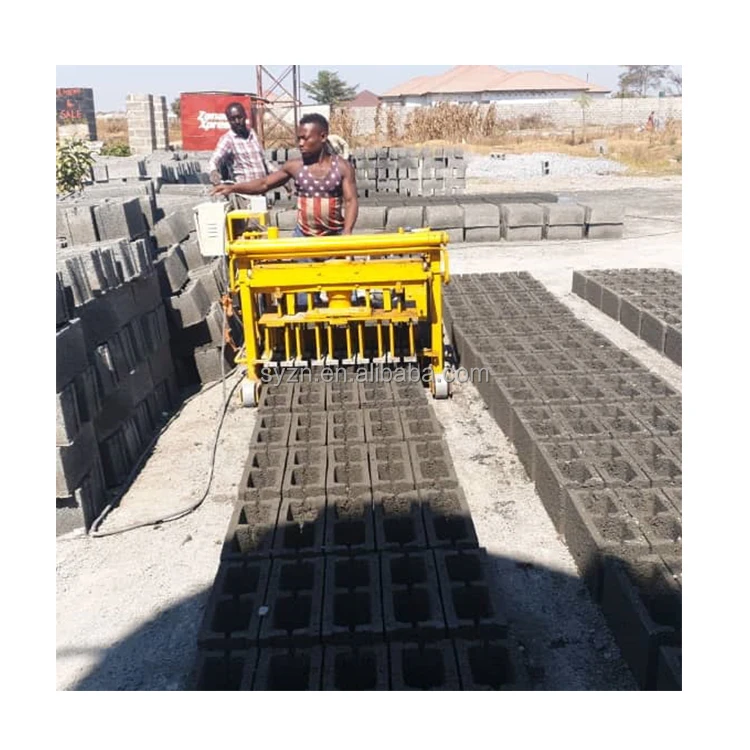
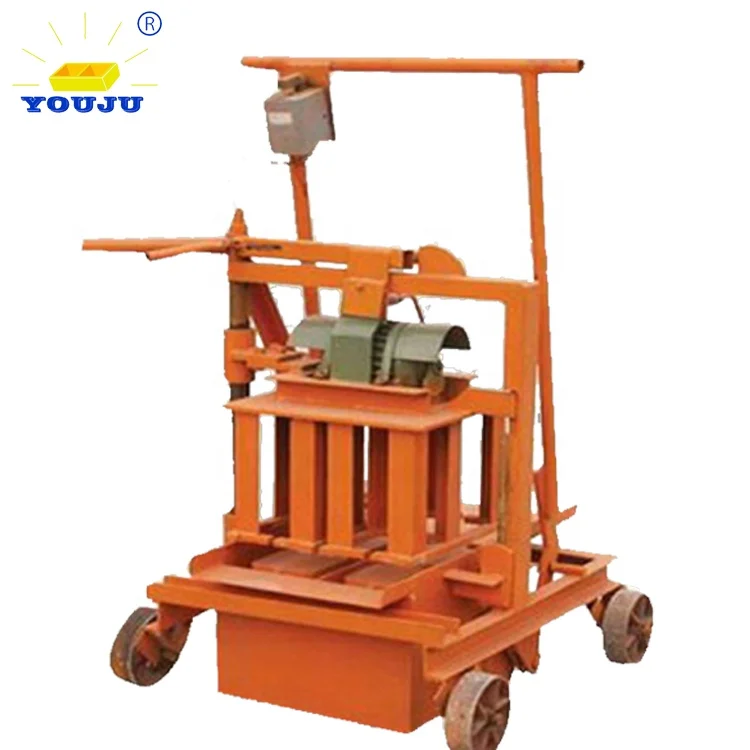
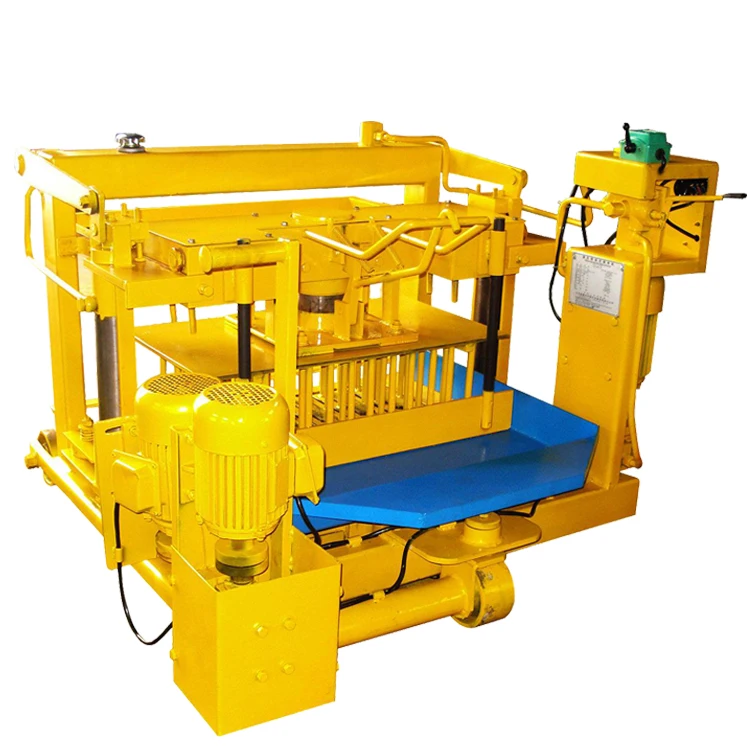
Egg-laying simplicity — the QMY4-30 mobile block machine places concrete blocks directly on the ground, removing pallet investment and curing rack logistics from your project budget.
Technical Specifications
| Parameter |
Value |
| Model |
QMY4-30 |
| Product Type |
Mobile Hydraulic Block Making Machine |
| Overall Dimensions (L×W×H) |
1300 x 1500 x 1000 mm |
| Net Weight |
950 kg – 1000 kg |
| Total Installed Power |
5.95 kW |
| Vibration Force |
28.6 kN |
| Excitation Frequency |
4500 r/min |
| Vibration Method |
Mold Vibration (Hydraulic Assist) |
| Molding Cycle |
30 seconds |
| Output Capacity |
Rated 3000 pcs/day (8-hour shift, basis not stated in source — output varies by block format and thickness) |
| Acceptable Raw Materials |
Concrete, sand, cement, fly ash, lime, gypsum, stone dust, construction waste, slag, mine tailings, river sand, coal gangue |
| Pallet Requirement |
None (Egg-laying type) |
| Automation Level |
Manual / Semi-manual with hydraulic assist |
| Mould Format |
Customizable (hollow, solid, paving, interlocking) |
| Control System |
Manual hydraulic control with vibratory motor |
| Assembly State |
Mobile / Egg-laying (no fixed plant required) |
| Voltage & Frequency |
Configurable per destination grid (to be confirmed at order) |
Application Suitability
| Application Scenario |
Typical Output Material |
| Remote building site block production |
Hollow and solid concrete blocks using local river sand or crushed stone |
| Rural housing project supply |
Fly ash and cement solid bricks from locally available industrial waste |
| Mountainous or hillside construction |
Interlocking and paving blocks produced where fixed plant access is limited |
| Individual entrepreneur startup |
Standard hollow blocks using basic cement and aggregate mixes |
| On-site contractor self-production |
Load-bearing blocks produced adjacent to the construction footprint, avoiding transport costs |
What "3000 Blocks per Day" Actually Means for Your Site
That daily figure only holds true when the machine runs a specific block format on a consistent 8-hour shift with prepared aggregate.
Catalogue capacity numbers almost always assume a standard hollow block under factory-controlled conditions. I have stood on job sites in West Africa where the quoted output evaporated by midday because the local red soil aggregate carried a clay content the vibration system was never adjusted for. The QMY4-30 mobile block machine for sale here is rated at a 30-second molding cycle, but real-world throughput depends entirely on the block size your market demands, the consistency of your material feed, and how quickly your crew can reposition the machine between lay-down strips. [NEED_CITE: aggregate gradation impact on concrete block compressive strength]
Why On-Site Production Removes Pallet Logistics Entirely
The defining advantage of an egg-laying mobile block machine is that it never uses pallets. The press lowers the mould onto a prepared concrete floor, vibrates and compresses the mix, then lifts away leaving the finished block in place. This eliminates the single largest recurring cost and operational headache of stationary block plants — purchasing, maintaining, and cycling hundreds of wooden or steel pallets through production, curing, and stripping. For a contractor working a remote site or a housing development far from industrial supply chains, removing pallet logistics from the equation changes the economics of the entire operation.
Footprint and Mobility for Constrained Sites
At under one tonne and roughly 1.3 by 1.5 metres, this mobile block machine for sale can be loaded onto a standard flatbed truck or repositioned around a job site with a site forklift. There is no fixed foundation to pour, no curing rack framework to erect, and no pallet return conveyor to wire. The machine arrives, is placed on a level concrete strip, connected to power, and begins producing. When the project moves to the next phase or the next location, the unit moves with it. [NEED_CITE: mobile versus stationary block plant setup requirements]
Vibration Force, Hydraulic Assist, and the 28.6 kN Reality
The QMY4-30 delivers 28.6 kN of exciting force through mold vibration at 4500 r/min, with hydraulic assist handling the mould clamping and lifting rather than leaving the operator on a manual lever. This force level is sufficient for standard hollow blocks and solid bricks using crushed stone or river sand aggregates, but it sits below the threshold needed for high-density paving blocks requiring sustained hydraulic pressure in the 50 kN range and above. The hydraulic assist matters most over a full shift — a fully manual lever machine of this class demands continuous physical input that degrades block consistency as the operator tires, whereas the QMY4-30’s hydraulic circuit holds the mould closure pressure constant across every cycle. The 5.95 kW total power draw keeps the machine within reach of standard diesel generator sets commonly available on remote sites, avoiding the need for dedicated high-capacity electrical infrastructure. [NEED_CITE: vibration force requirements by block format and density class]

The Mismatch Nobody Mentions Until the First Shift
Buying a block machine without first confirming which block format the quoted daily capacity is based on is the most common error I see at this investment tier. A buyer reads 3000 pieces per day and budgets accordingly, only to discover that the figure assumed a small solid brick while the local market actually buys 200mm hollow blocks — where the same 30-second cycle produces a fraction of that daily total. The gap between quoted and actual output then gets blamed on the machine rather than on the specification that was never matched to the product. Voltage and frequency misalignment causes a different kind of delay: the machine arrives, the motor is wired for a frequency the local grid does not supply, and commissioning stalls for weeks while a replacement motor is shipped.
Why This Machine Range Stands Behind Its Specifications
Our block machinery focus means the QMY4-30 is configured against the buyer’s actual mix design and target block format, not shipped from a generic catalogue line. Mould design and supply covers the specific formats the buyer’s market sells, with custom drawings available for non-standard sizes. Automation level remains selectable at the line level, so a buyer starting with the mobile tier can transition to semi-automatic stationary production later without replacing the entire operation. Installation support includes operator training at the job site, covering mix ratio adjustment, vibration timing, and mould change procedure. [NEED_CITE: block machine configuration against local aggregate testing]
Documentation & Verification
- Capacity calculation sheet stating the block format and shift length used for the output figure
- Mould drawing and format list confirming dimensions of each cavity before production
- Voltage and control language confirmation recorded before the machine enters assembly
- Factory test record documenting cycle timing and block release quality on the specified format
- Operation manual covering mould change sequence and vibration motor maintenance intervals
- Wear parts list with first-replacement intervals for hydraulic seals and vibration components
Installation, Commissioning & Support
- Requires a level concrete strip at least 50mm thick as the egg-laying production surface
- Power connection must match confirmed voltage and frequency before the 5.95 kW motor is energized
- Machine ships fully assembled within its 1300×1500×1000mm frame, requiring only hydraulic fluid fill on arrival
- First-run commissioning covers vibration timing, mould release, and hydraulic cycle adjustment on the buyer’s actual mix
- Operator training includes mould change procedure, hydraulic seal inspection, and daily vibration motor checks
- Wear parts package includes hydraulic seals and mould liner inserts sized to the confirmed block format
Before You Request a Quotation
Send us the block format and dimensions your local market actually purchases, along with a sample or description of the aggregate you plan to use. Confirm the voltage and frequency at your site or generator set, and let us know whether the machine will operate on a dedicated slab or on prepared ground at a construction location. With those details we can confirm whether the QMY4-30’s vibration force and cycle timing match your output requirement, or whether a different tier in the mobile block machine range is the correct fit.
Frequently Asked Questions
Q: What block format is the 3000 pcs/day capacity based on?
A: The published figure is based on a standard block format, but the actual output changes with every mould size and block thickness. We provide a per-format capacity calculation with your quotation so you know exactly what the QMY4-30 mobile block machine for sale produces on an 8-hour shift with the specific hollow, solid, or paving mould your market requires.
Q: Which voltage and frequency configurations are available for my country?
A: The QMY4-30 can be configured for various voltage and frequency standards at the time of order. Confirming your local grid specification or generator output before production prevents motor rewinding or replacement delays on arrival. We record the agreed voltage and control language on the order documentation before assembly begins.
Q: What raw materials work best with the QMY4-30’s vibration force?
A: The 28.6 kN vibration system handles crushed stone, river sand, fly ash, and cement mixes common in on-site production. Aggregates with high clay or silt content require mix adjustment and vibration timing changes. We request a material sample or gradation description before finalizing the configuration to ensure block strength meets local building standards.
Q: How long does a mould change take on this machine?
A: Mould change on the QMY4-30 involves releasing the hydraulic clamp, lifting the existing mould, and seating the replacement — a process operators complete within a standard shift break once trained. Additional mould formats can be ordered separately and are matched to the machine’s mould table dimensions and vibration transfer points.
Q: What is the upgrade path from this mobile machine to a stationary line?
A: The QMY4-30 serves as an entry point for on-site production. Buyers who outgrow the mobile tier and need pallet-based stationary output can move to a semi-automatic block line that accepts higher vibration force, automated pallet feeding, and stacking equipment. The mould formats and mix design knowledge developed on the QMY4-30 carry directly into the stationary line specification.

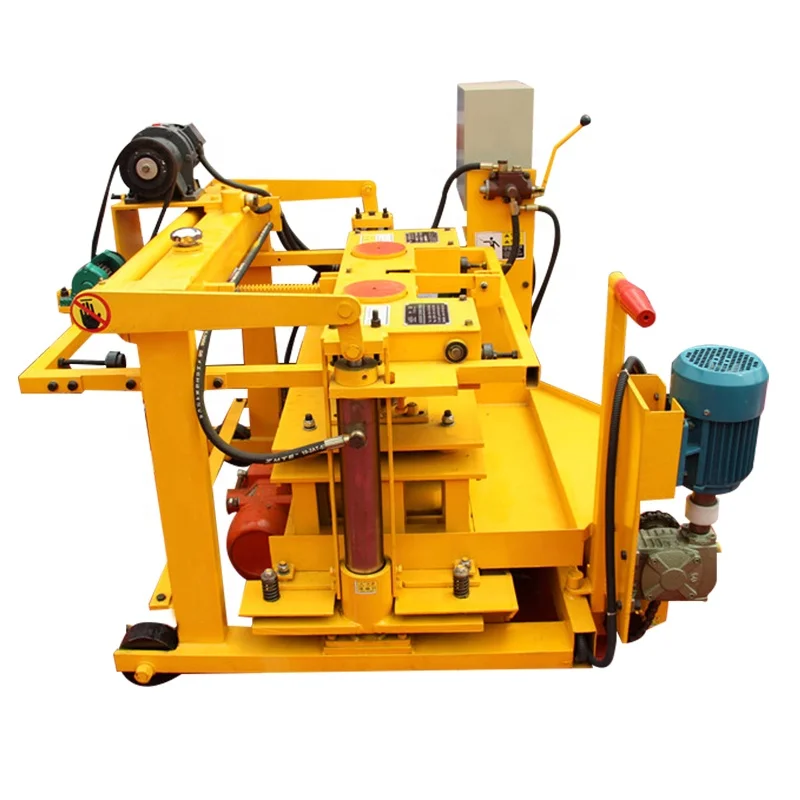
 Mobile block machine