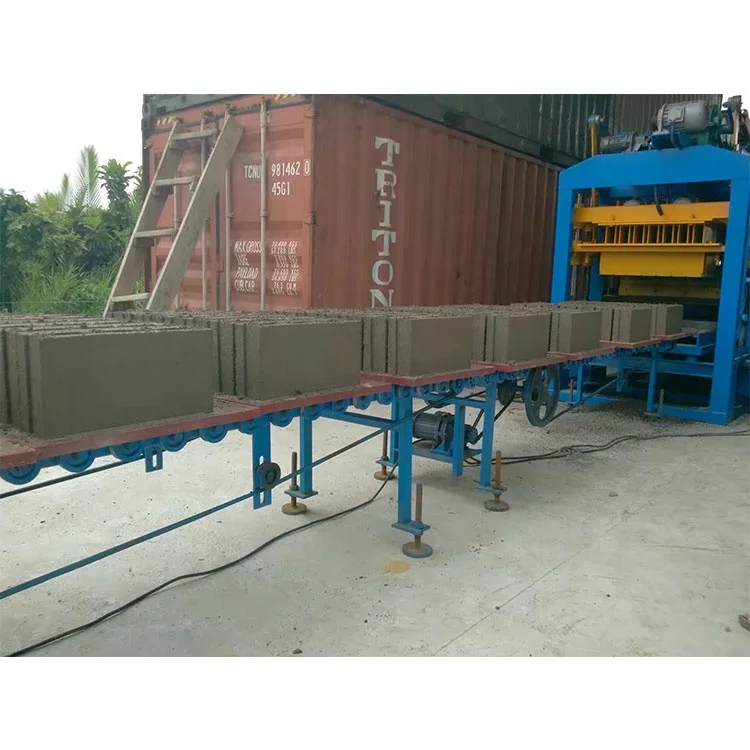
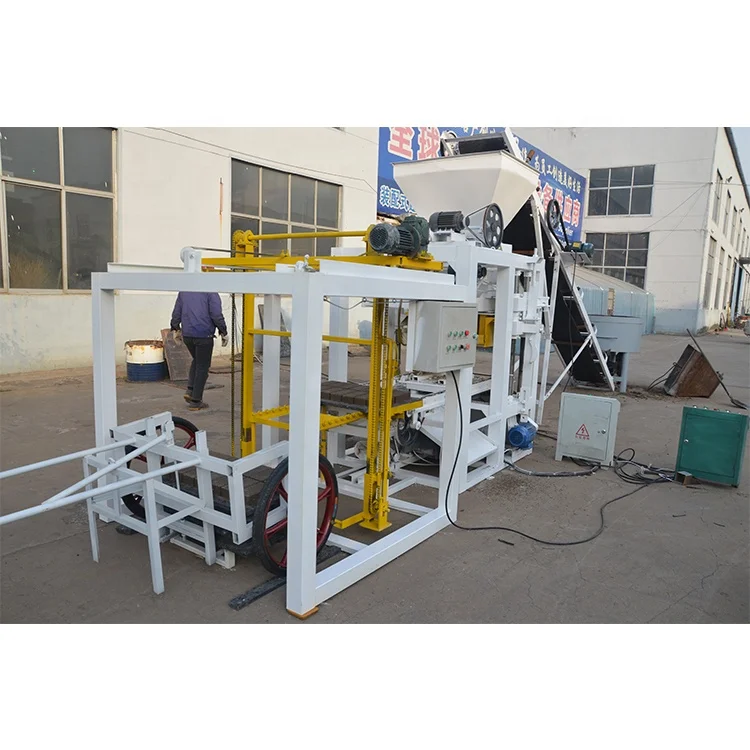
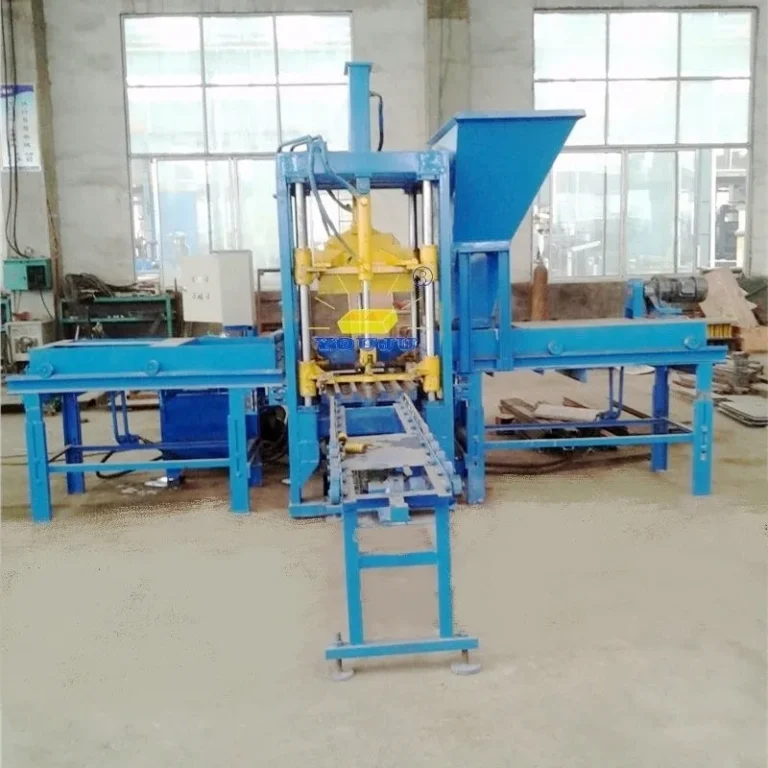
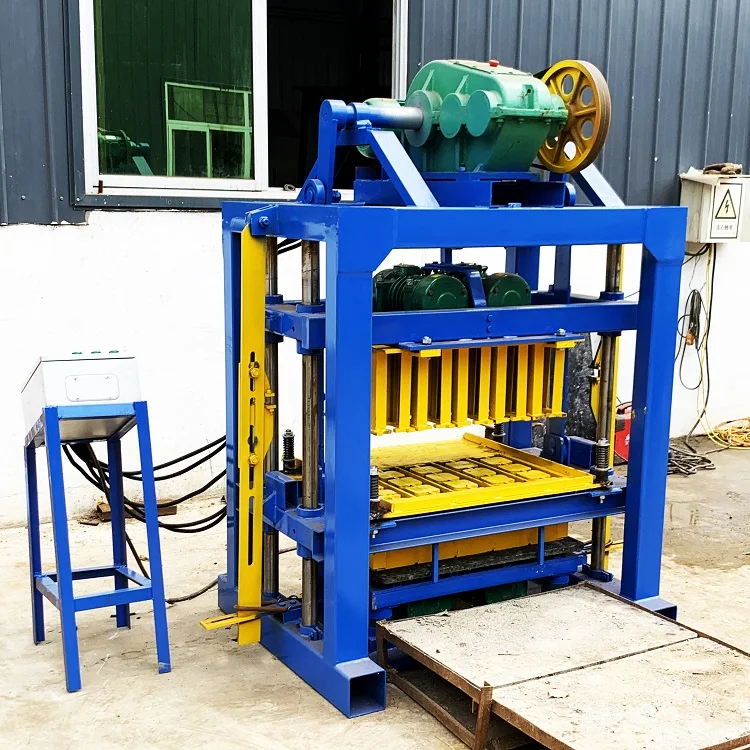
Complete Starting Tier — the QTJ4-25 semi-automatic block machine is specified as one matched system with mould, pallet, and mixer rather than a standalone press, so buyers can evaluate its true daily footprint before moving up the range.
Technical Specifications
| Parameter |
Value |
| Model |
QTJ4-25 |
| Product Type |
Motor Concrete Block Making Machine |
| Rated Power |
17.9 kW |
| Overall Dimensions (L×W×H) |
6400 × 1500 × 2700 mm |
| Total Mass |
2500 kg |
| Molding Cycle |
25 s |
| Vibration Frequency |
2800 r/min |
| Vibration Force |
60 kN |
| Pallet Size |
850 × 550 × 20 mm |
| Output Capacity |
960 pcs/h, 7680 pcs/day (based on 400×200×200 mm hollow block, 4 pcs/mould) |
| Mould Format |
400×200×200 mm hollow block (4 pcs/mould); supports solid, hollow, paver, curbstone via mould change |
| Automation Level |
Semi-automatic |
| Control System |
Not stated in source (confirm PLC / manual relay) |
| Hydraulic Pressure |
Not stated in source (confirm MPa rating) |
| Mould Change Time |
Not stated in source (confirm with manufacturer) |
| Configuration Included |
Host machine 1 set, block mould 1 set, JQ350 mixer |
| Voltage & Frequency |
Not stated in source (confirm before order) |
| Certification |
CE declaration where applicable (verify model-specific) |
Application Suitability
| Application |
Material or Output |
| Small-to-medium hollow block plant |
Crushed stone, sand, cement, fly ash aggregate |
| On-site solid block production |
Local sand and gravel with Portland cement |
| Paving block for walkways and yards |
Fine aggregate with pigment additive |
| Curbstone for road edging |
Coarse aggregate with higher cement ratio |
What the "7680 Pieces per Day" Figure Actually Means for the QTJ4-25 Block Making Machine Manufacturer Quote
Output is only honest when tied to a specific block format and mix.
I have watched buyers compare two quotations side by side, both claiming similar daily numbers, only to discover one was calculated on a small solid paver and the other on a 400 mm hollow block. The gap between those formats can cut real daily throughput in half once curing, pallet turnover, and mix consistency enter the picture [NEED_CITE: block format impact on realistic daily throughput]. The QTJ4-25 block making machine manufacturer listing here states its capacity explicitly against the 400×200×200 mm hollow block at four pieces per mould, so you can scale the number up or down for the formats your market actually buys.

Where the QTJ4-25 Sits in the Stationary Range
Shiyue organizes its stationary machines by output tier, automation level, and plant footprint. The QTJ4-25 block making machine manufacturer offering occupies the semi-automatic entry tier, meaning the press cycles automatically while pallets are still fed and collected by hand. This keeps the initial investment and workshop space lower than a full automatic stacking line, which suits entrepreneurs setting up a first block plant or contractors who need blocks directly on a job site.
Understanding the Tier Boundaries Before You Decide
Moving one tier up adds automatic pallet feeding and stacking, which removes the manual pallet handler from the cycle and shortens the effective molding interval. Moving down to a mobile egg-laying machine eliminates pallets entirely but restricts you to a single format at a time and requires a flat concrete floor for curing. Knowing where the QTJ4-25 sits lets you weigh labour cost against capital outlay before the quotation stage [NEED_CITE: automation tier comparison in block plant planning].
Vibration Force, Pressure, and Pallet Size Explained
The 60 kN vibration force paired with the 2800 r/min frequency is tuned for semi-dry concrete mixes typical of hollow block production. Vibration alone does not determine block density; the hydraulic pressure must match the mix stiffness so that the upper compression head consolidates the material before the vibration liquefies it. If pressure is too low, the block surface stays porous; if too high, the mix is squeezed out of the mould box. The 850 × 550 mm pallet size is chosen to fit standard curing racks and small forklifts common in first-stage plants, avoiding the cost of oversized handling equipment. A 25-second molding cycle on this format leaves room for the operator to place and retrieve pallets without the press waiting idle.
The Hidden Cost of Ignoring Local Aggregate
A Middle Eastern buyer once received a machine configured for clean river sand, but his local quarry supplied crushed limestone with a high clay fraction. The vibration force that worked perfectly in the factory test could not compact the sticky mix, and block strength fell below the local standard. He spent weeks adjusting water content by hand before requesting a redesigned mould box [NEED_CITE: effect of aggregate clay content on block compaction]. Confirming your raw material report before the QTJ4-25 block making machine manufacturer builds your configuration prevents this kind of on-site troubleshooting.
Why Procure This Tier from a Single-Focus Supplier
Block machinery is the only product line here, so the host machine, mould, pallet, and JQ350 mixer are specified as one matched set rather than sourced from separate vendors. The mould drawing is prepared against the block formats your market sells, including custom shapes if needed. Voltage, frequency, and control language are confirmed before production, not discovered at commissioning. Factory test records are taken on your exact block format, and the packing photographs show the dismantled machine loaded for the container size you agreed on. This single-supplier approach removes the gaps that appear when press, mould, and handling come from different sources.
Documentation & Verification
- Line layout drawing showing QTJ4-25 footprint with curing rack placement
- Capacity calculation sheet stating the 400×200×200 mm hollow block as the basis
- Mould drawing and format list covering every block type in your quotation
- Hydraulic and electrical schematic with confirmed voltage and frequency
- Factory test record on your specified mix design before dispatch
- CE declaration documentation where applicable to the destination market
Installation, Commissioning & Support
- Foundation plan sized for the 6400 × 1500 mm machine footprint and 2500 kg mass
- Power supply circuit rated for 17.9 kW with confirmed voltage and frequency
- Machine arrives dismantled; reassembly and alignment supervised on site
- First-run parameter setting for vibration force, molding cycle, and hydraulic pressure
- Operator training covering mould change procedure and daily maintenance points
- Wear parts list with mould plate and hydraulic seal reorder references
What to Prepare Before Requesting a Quotation
Send the block formats your customers buy most often, together with a raw material test report from your local quarry. State your available workshop length and width so the line layout can include pallet storage and curing rack rows. Confirm the local voltage and frequency, and let the supplier know whether the PLC display needs to be in a specific language for your operators.
Frequently Asked Questions
Q: How does the QTJ4-25 semi-automatic tier compare to higher tiers in the range?
A: The QTJ4-25 keeps press cycling automatic while pallets are handled manually, reducing initial capital and workshop length. Higher tiers add automatic pallet feeding and stacking, which shortens the effective cycle and removes the manual pallet handler. Buyers often start at this tier and add automation modules once daily volume justifies the investment.
Q: What block format is the stated output based on?
A: The 7680 pieces per day figure is calculated on the 400×200×200 mm hollow block at four pieces per mould and a 25-second cycle. Switching to a smaller solid paver or a larger curbstone changes the pieces-per-mould count and may alter the cycle time, so daily capacity must be recalculated for each format you plan to produce.
Q: What plant footprint does the QTJ4-25 require?
A: The host machine occupies 6400 × 1500 mm, but the total footprint must include raw material storage, the JQ350 mixer position, pallet return path, and curing rack rows. A typical first-stage plant needs roughly a longer workshop bay to allow pallets to cure without blocking the press output area.
Q: Can automation be upgraded after the machine is running?
A: The semi-automatic configuration leaves space in the layout for an automatic pallet feeder and stacker to be added later. Electrical and hydraulic interfaces are planned during the initial build so that upgrading does not require replacing the host machine or redesigning the foundation.
Q: Which mould formats are available from stock versus custom design?
A: Standard hollow and solid block moulds matching common regional sizes are typically in stock. Paving patterns, interlocking shapes, and special curbstone profiles are produced against buyer drawings. Confirming the format list before order ensures the mould change system is matched to the number of formats you will rotate through.

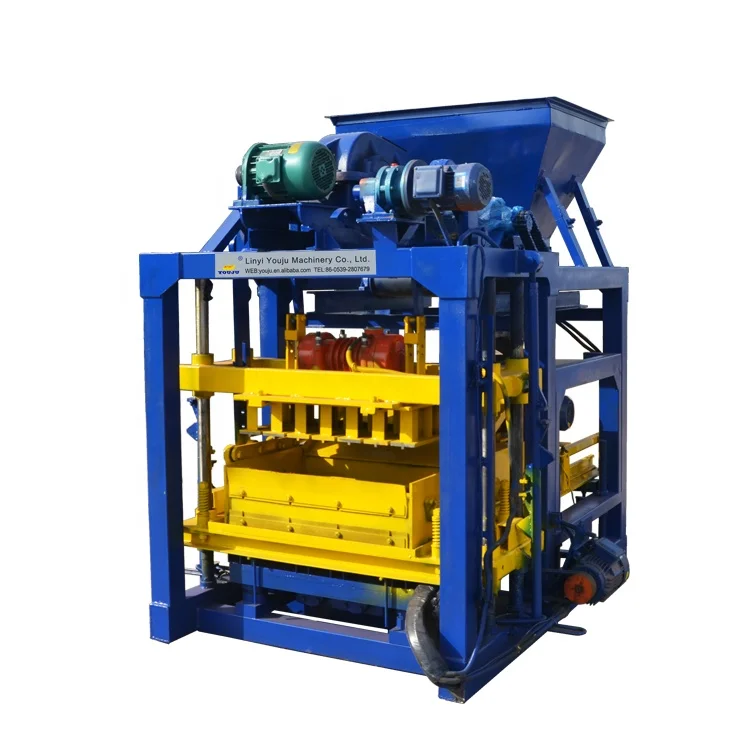
 Stationary block machine