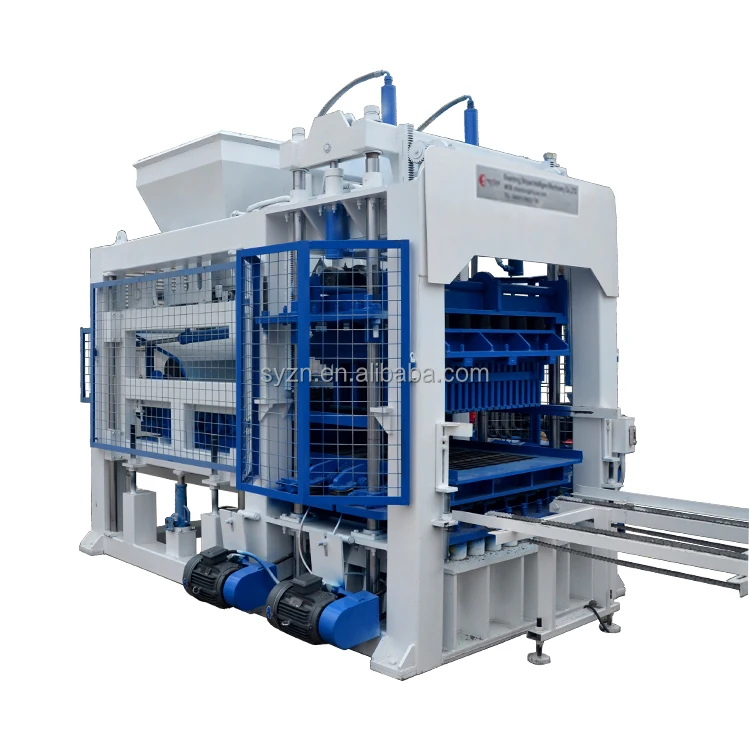
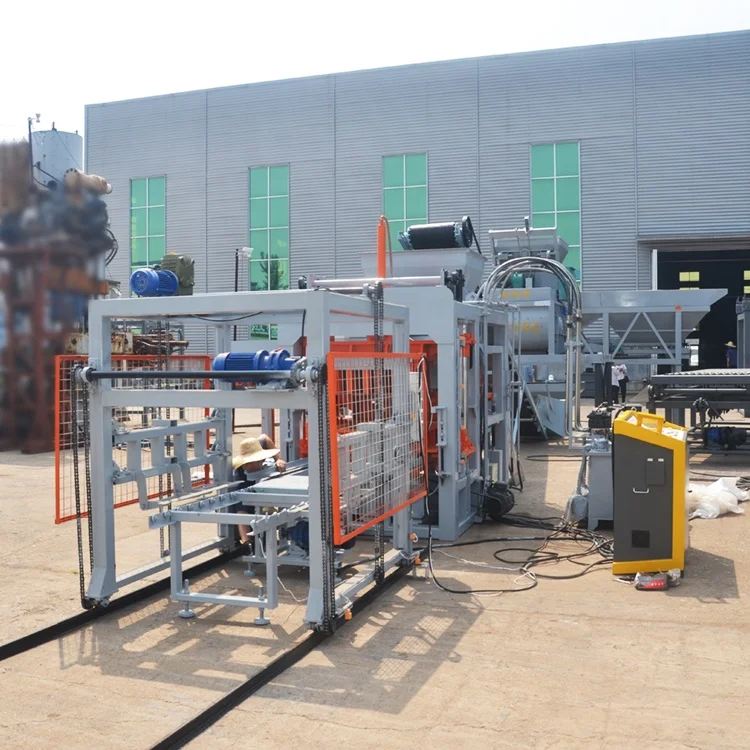
Matched System Sizing — Every QT6-15 proposal starts from your target block format and local aggregate, not a catalogue default.
Technical Specifications
| Parameter |
Value |
| Model |
QT6-15 |
| Product Type |
Hollow Block Making Machine |
| Overall Dimensions (L×W×H) |
8200×1700×2950 mm |
| Vibration Form |
Platform Vibration |
| Vibration Frequency |
0–60 Hz |
| Vibration Force |
45 kN |
| Moulding Mode |
Automatic loading, vibration moulding |
| Demolding Method |
Hydraulic |
| Pallet Size |
880×850 mm |
| Molding Cycle |
15–20 s (basis not stated in source) |
| Overall Power |
37 kW |
| Total Mass |
7 T |
| Control System |
PLC with touch screen HMI, fault diagnosis, safe logic interlock |
| Hydraulic System |
Independent integrated hydraulic station (isolated from dust and main vibration) |
| Raw Material Compatibility |
Waste ash, slag, and other aggregates; reduced cement dosage supported |
| Output Capacity (Hollow block 400×200×200 mm) |
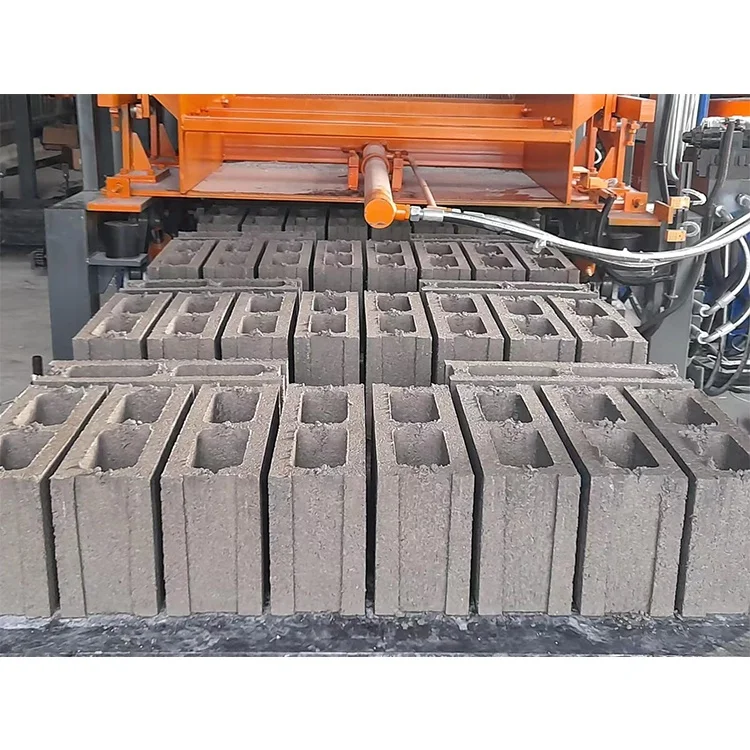
6 pcs/mould, 1080–1440 pcs/h, 8640–11520 pcs/8 hr |
| Output Capacity (Hollow block 400×150×200 mm) |
8 pcs/mould, 1440–1920 pcs/h, 11520–15360 pcs/8 hr |
| Output Capacity (Solid brick 240×115×53 mm) |
32 pcs/mould, 5760–7680 pcs/h, 46080–61440 pcs/8 hr |
| Output Capacity (Rectangular brick 200×100×60 mm) |
21 pcs/mould, cycle 20–25 s, 2160–2880 pcs/h, 17280–23040 pcs/8 hr |
| Output Capacity (Zigzag brick 225×112.5×60 mm) |
15 pcs/mould, cycle 20–25 s, 2160–2880 pcs/h, 17280–23040 pcs/8 hr |
| Factory Area |
1200 m² |
| Warranty |
1 year for whole machine (excluding spare parts) |
| Assembly State |
Factory-assembled, container-shipped |
Application Suitability
| Application |
Material or Output |
| Block production plants |
Hollow and solid blocks from crushed stone, cement, waste ash, and slag |
| On-site construction projects |
Hollow blocks produced locally for housing and development sites |
| Concrete product manufacturers |
Expanding format range with rectangular and zigzag pavers on the same press |
| Building material distributors |
Supplying mixed hollow block and interlocking brick inventories from a single line |
What "Cycles Per Hour" Leaves Out When Sizing a Hollow Block Making Machine Manufacturer
Capacity is meaningless unless the block format is named beside the number.
When a hollow block making machine manufacturer quotes output in cycles per hour, the figure often assumes a single standard hollow block size. Switch to a thinner block or a paver and the cycle time stretches while the per-mould piece count changes, so daily output drifts far from the headline number. I have watched buyers sign off on a machine expecting one throughput level, only to discover during commissioning that their primary selling format produces noticeably less. [NEED_CITE: block format impact on cycle time in concrete block production]

Mapping the QT6-15 to the Automatic Range
The QT6-15 occupies the mid-tier of the Shiyue automatic block machine range, sitting above small-workshop semi-automatic presses and below high-capacity fully automatic lines. For a buyer surveying options, this model bridges entry-level investment and larger plant footprints, making it a practical choice when the target daily volume is beyond what a semi-automatic setup can sustain but does not yet justify a high-capacity line. The 1200 m² factory area requirement and 880×850 mm pallet size give a clear baseline for site planning before committing further.
Where the QT6-15 Fits in Investment and Footprint
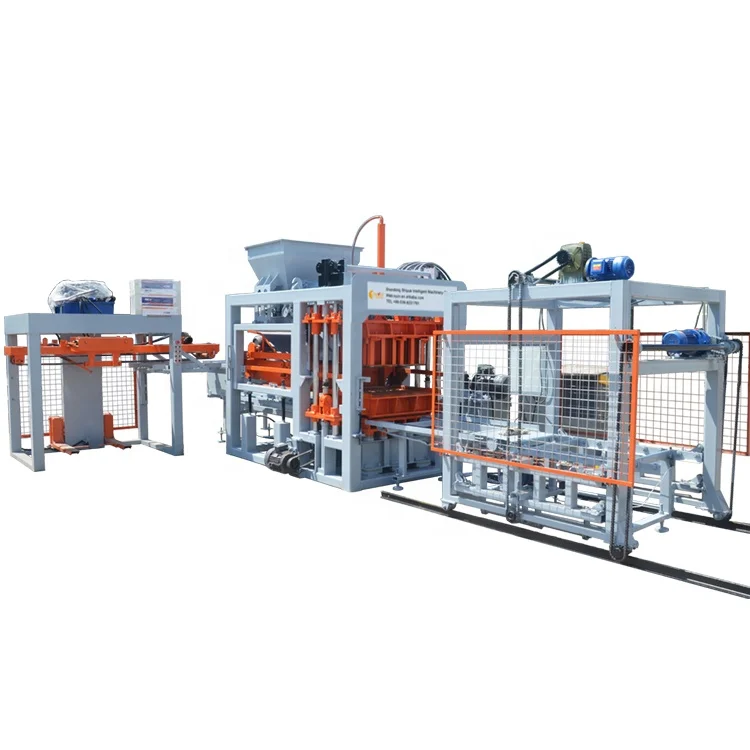
A first-time block plant buyer often needs enough output to serve a local market without taking on the operating complexity of a fully automatic stacking and cubing line. The QT6-15 delivers automatic loading and vibration moulding with PLC control, yet leaves room to add pallet handling and stacking automation later as volume grows. [NEED_CITE: typical block plant layout progression from semi-automatic to automatic] This upgrade path matters because the initial capital outlay stays contained while the press itself does not become the bottleneck once the surrounding line catches up.
Reading the Specs That Matter on the Shop Floor
The 45 kN vibration force and adjustable 0–60 Hz frequency determine how densely the concrete mix packs into the mould, which directly influences block compressive strength. Hollow blocks demand consistent vibration across the pallet surface; the platform vibration form on the QT6-15 addresses this by transmitting force through the table rather than relying solely on the mould. The independent integrated hydraulic station sits apart from the main frame, keeping dust and press vibration away from the valve block — a layout choice that extends seal life and keeps demolding pressure stable over long production runs. Pallet size at 880×850 mm must align with the curing racks and forklift tines already on site; specifying this before production avoids a mismatch that would force costly pallet replacement after arrival. The 37 kW overall power draw dictates cable sizing and dedicated circuit planning at the factory stage, not after the container is opened.
The Cost of Skipping the Format Conversation
Buyers who lock in a machine without confirming their primary block format and local aggregate often face inconsistent block strength once production starts. The vibration force and hydraulic pressure need matching to the specific mix design; if the aggregate is lightweight volcanic ash or heavy river gravel, the same machine settings will yield different densities. [NEED_CITE: effect of aggregate type on concrete block compressive strength] Moulds ordered without a format list lead to changeover downtime that erases the flexibility the buyer paid for. Pallet handling left out of the quotation means output piles up at the press exit, requiring manual stacking that negates the automation investment.
Why Source This QT6-15 Through Shiyue
Block machinery is our single focus, so the QT6-15 press, mould, pallet, and handling equipment are specified as one matched system rather than assembled from separate suppliers. Machine configuration is set against the buyer’s actual mix design and local aggregate, not a catalogue default. Mould design covers the formats the buyer’s market sells, including custom drawings to buyer specifications. Automation level is selectable, allowing a start at semi-automatic with a clear upgrade path to full automatic stacking and cubing. Installation and commissioning support includes operator training so the line runs at rated cycle time from the first week.
Documentation & Verification
- Line layout and capacity calculation stating the block format assumed for each output figure
- Machine specification sheet covering vibration force, hydraulic pressure, and pallet dimensions
- Mould drawing and format list with cycle time notes per block type
- Voltage and control language confirmation record signed before production
- Factory test record on the buyer’s specified block format before dispatch
- Wear parts and mould list with replacement intervals for planning first spare orders
Installation, Commissioning & Support
- 8200×1700 mm footprint requires a level concrete slab within the 1200 m² factory area before arrival
- 37 kW overall power needs a dedicated circuit with breaker sizing confirmed against local supply
- Factory-assembled machine is dismantled for container loading and reassembled on site by our technicians
- PLC touch screen HMI is set to the buyer’s confirmed language before commissioning begins
- First production run verifies cycle time against the target block format and mix design
- Hydraulic wear parts and mould spares list handed over at installation for forward planning
What to Include in Your Inquiry
To configure the QT6-15 correctly, share the target block format and dimensions you intend to produce, your expected daily output, and the local raw materials available including aggregate type and cement grade. Specify the voltage and frequency at your site along with the preferred PLC display language. If you already have curing racks and forklifts, provide the pallet size they accept so the 880×850 mm standard can be confirmed or adjusted before production.
Frequently Asked Questions
Q: How do I verify real daily output for my specific block format?
A: Request the capacity calculation sheet that lists output per block format, not just a single headline figure. The QT6-15 produces different piece counts for hollow blocks, solid bricks, and pavers because mould cavity count and cycle time vary by format. We provide this breakdown with every quotation so you can match it to your production plan.
Q: Where does the QT6-15 sit compared to semi-automatic and higher-tier automatic models?
A: The QT6-15 is the mid-tier automatic press in the Shiyue range. It offers more output and PLC-controlled consistency than semi-automatic models while requiring a smaller factory area and lower investment than high-capacity fully automatic lines, making it suitable for growing block plants.
Q: Are voltage and PLC display language confirmed before the machine ships?
A: Yes. Voltage, frequency, and PLC touch screen language are confirmed in writing before production begins. This step prevents commissioning delays that occur when a machine arrives with the wrong electrical configuration or an unfamiliar display language for the operating team.
Q: How much factory space does a QT6-15 line need?
A: The QT6-15 requires approximately 1200 m² for the press, raw material storage, pallet circulation, and curing area. The exact layout depends on the automation level chosen and the curing method used, which we detail in the line layout document provided with each proposal.
Q: Can I start with semi-automatic pallet handling and upgrade later?
A: The QT6-15 supports selectable automation levels. You can begin with manual pallet handling and add automatic pallet feeding, stacking, and cubing as production volume grows, without replacing the press itself. The upgrade path is planned into the initial configuration.

 High quality block machine